

Associate Professor and Neuroscientist at McGill University https://xitter.cf/t.co/xjzOfSHwLN https://xitter.cf/t.co/DmMYVJkUCP
Montréal, Québec
Joined April 2017
- Tweets1.6K
- Following326
- Followers1.1K
- Likes2.2K




Pinned Tweet
Now published @Nature, we used miniscopes to study the thalamic head direction system during drift and reorientation.
Paper: nature.com/articles/s41586-0…
Summary: douglas.research.mcgill.ca/n…
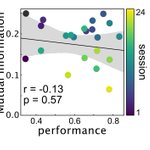
There’s a lot in the paper, but my favorite piece to share/highlight is in figure 2:
Mark Brandon, PhD. retweeted

1/3 We built COMET (Cortex-wide Observational Miniature Epifluorescence Technique), a 3.75-g head-mounted mesoscope for cortex-wide, cellular-resolution calcium imaging in freely moving mice.
φ10-mm FOV, single-cell resolution.
biorxiv.org/content/10.64898…
#neuroscience #miniscope
Pleased to announce our new paper in @NatureNeuro, led by Robert Rozeske (former postdoc, now faculty at U of Toronto) and Léonie Runtz (former PhD student in the lab). Proud of both of them.
nature.com/articles/s41593-0…

We imaged dorsal and ventral CA1 with miniscopes during a context fear "teleportation" task. After conditioning, vCA1 retrieved the threatening context faster than dCA1, and the balance between the threatening and neutral representations predicted freezing.
To our surprise, conditioning also pulled the two context representations closer together in vCA1. That overlap may be what makes the switch to the threatening context so fast. Thanks to @McGill_VPRI @DouglasResearch @FondationDouglas @CIHR_IRSC for their support.
Mark Brandon, PhD. retweeted

Large-scale neural activity data across wakefulness, sleep, and anesthesia are now open. Includes EEG/EMG, brain states, Ca²⁺ traces, and spikes. Please download and play with the data!
Cell Reports: doi.org/10.1016/j.celrep.202…
Scientific Data: doi.org/10.1038/s41597-026-0…

Mark Brandon, PhD. retweeted

Miniscope Zero, the first fully wireless Miniscope, is on @biorxivpreprint!
Wireless power + data enable neural recordings in enclosed mazes, 3D environments & from two animals at once! @BroschMarcel @MiniscopeTeam
Paper: doi.org/10.64898/2026.09.05.…
Wiki: miniscope.org/wiki/Miniscope…
Mark Brandon, PhD. retweeted

🎉 Congratulations to Zach Pennington on receiving this year's @BantingResearch Discovery Award!
I worked closely with Zach when he was a postdoc in my lab and I know he is incredibly deserving of this award.
Read more about his award here: psych.ubc.ca/news/zachary-pe…

Mark Brandon, PhD. retweeted

Not all neurons were created equal. Our marmoset cell type V1-LPFC resource is available and ready to serve the community. We used the same stimulation protocols as @AllenInstitute celltypes.brain-map.org/expe…, so the data can be compared to mice and humans
primatedatabase.com/ephysCT.…
Mark Brandon, PhD. retweeted

A partial list of speakers for our 2027 Gordon Conference on Entorhinal-Hippocampal Memory Circuit in California is up!
grc.org/entorhinal-hippocamp…
Speakers, please retweet!!
@brainrhythms @Serenadudette @pgolshani @Franklandlab @mazen_kheirbek @MacAskillAF @aa_fenton @LMPrida

Mark Brandon, PhD. retweeted
🌎 Check out the new GLOBE tool that uses protein tape recorders to measure single-cell activity on a brain-wide scale.
Congratulations to Changyang and team on developing and sharing this platform. Let us know what you think!
biorxiv.org/content/10.64898…


Introducing GLOBE—a new technology for brain-wide, single-cell recording of cellular activity in vivo. GLOBE can continuously record from nearly a quarter million individual neurons simultaneously across a mouse brain.
Preprint out on bioRxiv: doi.org/10.64898/2026.05.21.…
🧵(1/6)

ALT Recording scalability in vivo
Mark Brandon, PhD. retweeted

#MayThe4th be with you! Meet FORCE1s, a new positive‑going, ultrasensitive voltage indicator. Optimized for 2P imaging at slower acquisition speeds, FORCE1s is easy to use on almost any microscope. Bonus: it even powers 2P miniscope experiments!📄Preprint: biorxiv.org/content/10.64898…
Mark Brandon, PhD. retweeted

computational neuroscience has always known that real computation is spatial, temporal, and deeply non-linear. but for 30 years, simulating that reality meant relying on CPU-bound, non-differentiable tools. we built the engine to break that bottleneck.
Mark Brandon, PhD. retweeted

Sharing the latest from the lab. Led by Yunlong Liu, this work explores how microglia and engram neurons interact during fear extinction in the hippocampus.
rdcu.be/fgNH7
Mark Brandon, PhD. retweeted

🧵 Our new review is out in @AnnualReviews of Neuroscience. We examine path integration in Alzheimer’s disease and ask what early navigational changes can reveal about the underlying brain circuits.
Co-first-authored with Misun Kim and senior-authored by @NeilBurgess10
/1

Mark Brandon, PhD. retweeted

New preprint from our lab on 3‑photon microscopy with deep, fast, Ca-imaiging on a large field of view. It started with @a_negrean and @tgeiller and was led by an outstanding student, Tiberiu Mihaila, with major collaboration with
@DarcyPeterka.
biorxiv.org/content/10.64898…

Mark Brandon, PhD. retweeted

Functional neuromics in 3D... honored to be part of this team!

Excited about this project combining 2-photon imaging & spatial transcriptomics:
biorxiv.org/content/10.64898…
Lead scientist: @jason_hc_yong
Collaborator: @erdem___varol
Video: memorylongevity.org
Website: memorylongevity.org/merscope…
This is really incredible work, and opens up so many possibilities! Congrats @attila_losonczy @jason_hyun_yong and co-authors!
Excited about this project combining 2-photon imaging & spatial transcriptomics:
biorxiv.org/content/10.64898…
Lead scientist: @jason_hc_yong
Collaborator: @erdem___varol
Video: memorylongevity.org
Website: memorylongevity.org/merscope…
Mark Brandon, PhD. retweeted
Excited about this project combining 2-photon imaging & spatial transcriptomics:
biorxiv.org/content/10.64898…
Lead scientist: @jason_hc_yong
Collaborator: @erdem___varol
Video: memorylongevity.org
Website: memorylongevity.org/merscope…
Mark Brandon, PhD. retweeted

The Lippi lab is hiring a postdoctoral associate! We built new technologies to study post-transcriptional regulation in the healthy and diseased brain. We are recruiting motivated and talented scientists who will use these tools to discover new biology and new therapies.
Mark Brandon, PhD. retweeted

New paper out @NatureNeuro! Congrats to @EmilyAeryJones & team! The brain doesn’t just map where you are, it maps where it matters. Entorhinal cortex represents important, distant reward locations. A step toward understanding how experiences are linked across space.
rdcu.be/fbcS4