

PhD student in the Hellmann Lab at the University of Dayton. BU’20. ﹌ 🐡 ﹌
Joined October 2021
- Tweets28
- Following38
- Followers32
- Likes61






Michaela Rogers retweeted

Nocturnal parental care in clownfish: Parents assist in the hatching process! A lovely piece of work led by undergraduate/masters student Madison Pacaro with @BarbaschTina, @mikillinthegame, Juan Chavez, @Goby_Wan. With support from @BUMPatBU @BU_Biology tinyurl.com/mrxxr8t5
Michaela Rogers retweeted

how do you know if you're an actual impostor or if it's impostor syndrome? asking for myself


Michaela Rogers retweeted

I think we could all use some Portuguese man o’ war color palettes 🎨 these animals have some of the most incredible colors. It’s even cooler that some of their coloration is affected by their diets!


Michaela Rogers retweeted

Habitat change alters the expression and efficiency of a female ornament #anthopogenicEffects #mateChoice
academic.oup.com/beheco/arti…


Michaela Rogers retweeted

You can apply for student loan debt relief now.
Takes about 30 seconds:
studentaid.gov/debt-relief/a…
Michaela Rogers retweeted

Made a motivational poster for spawning salmon😌

ALT A salmon majestically leaps up a cascade of water. The inspiring words "Live, Laugh, Lay eggs and die" are written in script over the picture. The salmon has a look in its eye that says: If you can't handle me at my worst, you don't deserve me at my best.
Time for #ABS2022 !! 🦜🐠🌴
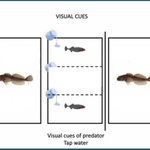
I’ll be presenting tomorrow on how Paternal Effects Vary in Response To Cue Types in Threespined Stickleback (Gasterosteus aculeatus) #paternaleffect #fishbehavior @AnimBehSociety


Michaela Rogers retweeted

Had a dream where I started selling this hat and it gradually took over my life

Michaela Rogers retweeted

Excited to celebrate all the cool research being done in the lab this year at the @univofdayton #StanderSymposium today!


Michaela Rogers retweeted
I'm recruiting for a fully-funded masters or PhD student to work in my lab starting August 2022! The specific project is up to the student, but should broadly focus on the role of developmental and transgenerational plasticity in helping organisms cope with environmental change.
Offspring may respond more strongly to a predator if their father received both visual and olfactory cues of a predator before mating… my research as a thread (pt.1)🧵⬇️:
Cue integration models are important for helping to explain why developing organisms sometimes pay more attention to their parents or to their own personal experience to produce adaptive responses in changing environments. 11/12