


ₘₐₙₙᵧₑₗ retweeted

You can spend 5 years, working harder than anyone else, writing the best book in the world, but if nobody knows about it, then you will not be a successful author.
This is the downfall of most creatives. They hate marketing, but marketing is 80% of their success.



ₘₐₙₙᵧₑₗ retweeted

Hello computer.
Decompile and distill Grand Theft Auto.
Make the game set in my hometown -- use Google Earth to reconstruct it in pixel-perfect detail.
Make the character me and have my spawn point be in the mansion I always look at on Zillow.
Review my chat memory and make every mission about my hopes and dreams.
Make it playable online so my friends can join.
When you're done, sell all my video games on Ebay and use that money to fund tokens for my next game.
ₘₐₙₙᵧₑₗ retweeted

I don't recommend anyone scramble to move their funds to new wallets today. But we should take the risks to cryptography from AI-accelerated math seriously, and minimize our exposure to not just quantum-vulnerable cryptography, but also potentially AI-vulnerable cryptography.
The core new area of risk from this viewpoint is, unfortunately, ML-DSA / FHE / lattices.
(and it's also another reason, along with quantum, why ECDSA might fall even faster than expected, hence the "fresh address" recommendation)
So far most people have been in the mode of thinking "elliptic curves broken, hashes safe, lattices safe". But there is a good chance that the concrete security of lattices will take serious hits from the next two years of AI math.
The basic threat model is: factoring is something that naively takes 2^(n/2) time, but over decades smart people have found and optimized number field sieves, and degraded that to 2^O(n^(1/3)), which is why RSA keys and signatures need to be ~400 bytes (and not 64 bytes). What if there are skeletons in the closet like that, both for elliptic curves and lattices, that we are simply not smart enough to discover - but bots soon will be?
This is a major part of the reason why for the past year ethereum's lean roadmap has been going in the "hash-only" direction: no lattices, no ML-DSA, no Falcon, no lattice-based commitments inside ZK proofs, etc. Signatures in lean ethereum are all hash-based, either WOTS or SPHINCS-.
For signatures and proofs, we already know how to go hash-only. The bigger challenge is for *public-key encryption* - and this goes far beyond blockchains. Secure communication, anonymizing protocols, lots of things need public-key encryption.
And unfortunately there are long-standing mathematical theorems showing why public-key encryption cannot be done with hashes alone. You have to have some kind of trapdoor object that has at least one form of usable "structure" - either group theory (incl. isogenies) or lattices or code-based or potentially in the future even more newfangled and spooky things (local mixing?). But for anything that has structure, you should assume that AI will make at least some progress in breaking that structure. Here, one reasonable inference is that if you want to make something plausibly long-term secure, multiply the key sizes by 10.
To me that's a very plausible world and something not at all extreme to predict. If AI will bring us 50 years of math in 2 years, then that 50 years of math may very plausibly include a "naive factoring -> GNFS" level of improvement to our ability to break lattices. In that world, lattices will still exist, but they will have to be significantly bigger to guarantee the same level of safety.
And at those new larger sizes, hash-based constructions will beat lattice-based constructions on concrete efficiency in every use case where hash-based constructions are possible at all.
Theoretically, of course it's possible that hashes are broken too (eg. P = NP would imply that). But I think P = NP is very unlikely. And intuitively, it's much more likely that a mathematical object has exactly no exploitable structure (like hashes are intended to), than that a mathematical object has exactly ~3 forms of exploitable structure (for elliptic curves: associativity, Schoof, pairings) and not some secret fourth form of structure we have not yet discovered that greatly degrades its security (for elliptic curves, ECDLP and pairing security). Similar for LWE, SVP, RLWE and the zoo of lattice problems.
For this reason, we do not yet see any reason to worry and start padding the byte size of hashes (if we start to worry more, we would pad the round count first before doing anything to the byte size).
Concrete TLDR, my own personal views:
* Hash-based > lattice-based, in those situations where hash-based is possible at all
* For anything lattice-based, be much more paranoid on param sizes. Remember that blockchains are only a small portion of the cryptography story; this point goes far beyond blockchains and applies to eg. access to websites, secure messaging, Tor / VPNs ...
* For privacy protocols, strongly favor NOT putting encrypted notes onchain. Instead, send them offchain through some third-party mechanism.
* If it's not difficult for you, keeping your funds in addresses which have not yet been used to make a transaction is a good idea. If it's easy for you, do it. **But be careful about migrations; I personally have lost more money in botched migrations than I have lost in all hacks combined**.
* For multisig wallets, doing confirmations offchain is better than onchain, because this way the signatures of signer wallets do not get exposed to the public, so if ECDSA falls to AI much faster than expected, at least the multisig "gracefully degrades" to a 1-of-1 where the 1 is whoever was gathering the signatures - a much better place to be than "anyone can take the money"
firefly.social/post/x/210783…

ₘₐₙₙᵧₑₗ retweeted

I put the entire game of Minecraft inside twitter.. with WORKING multiplayer 💀 tweetcraft.jai.vin/r/ti9bwes…


ₘₐₙₙᵧₑₗ retweeted

Over 1 million players in 3 days!
I asked @Shalom_HeyEliy how it happened for Lagos Life, what broke, and if she’s selling for $100,000.

ₘₐₙₙᵧₑₗ retweeted

in a stanford study, developers using ai assistants wrote less secure code, while becoming more confident in their security.
your use of ai shapes what it infers. ai should be used as an instrument, not a pilot.
i just published a research paper on this:
zenodo.org/records/23153224

ALT "Use Inference of Artificial Intelligence: The Pilot Model." It shows the formula e × (1 − d) × I, with e as context, d as checking, and I as limits, and the line "ai is inference. you are the pilot."
ₘₐₙₙᵧₑₗ retweeted

We are making Markdown files work natively across Google Drive and Docs.
You can now preview .md files in Drive, open them in Docs, edit them, comment on them, and collaborate without converting the file into a Google Doc!

ₘₐₙₙᵧₑₗ retweeted

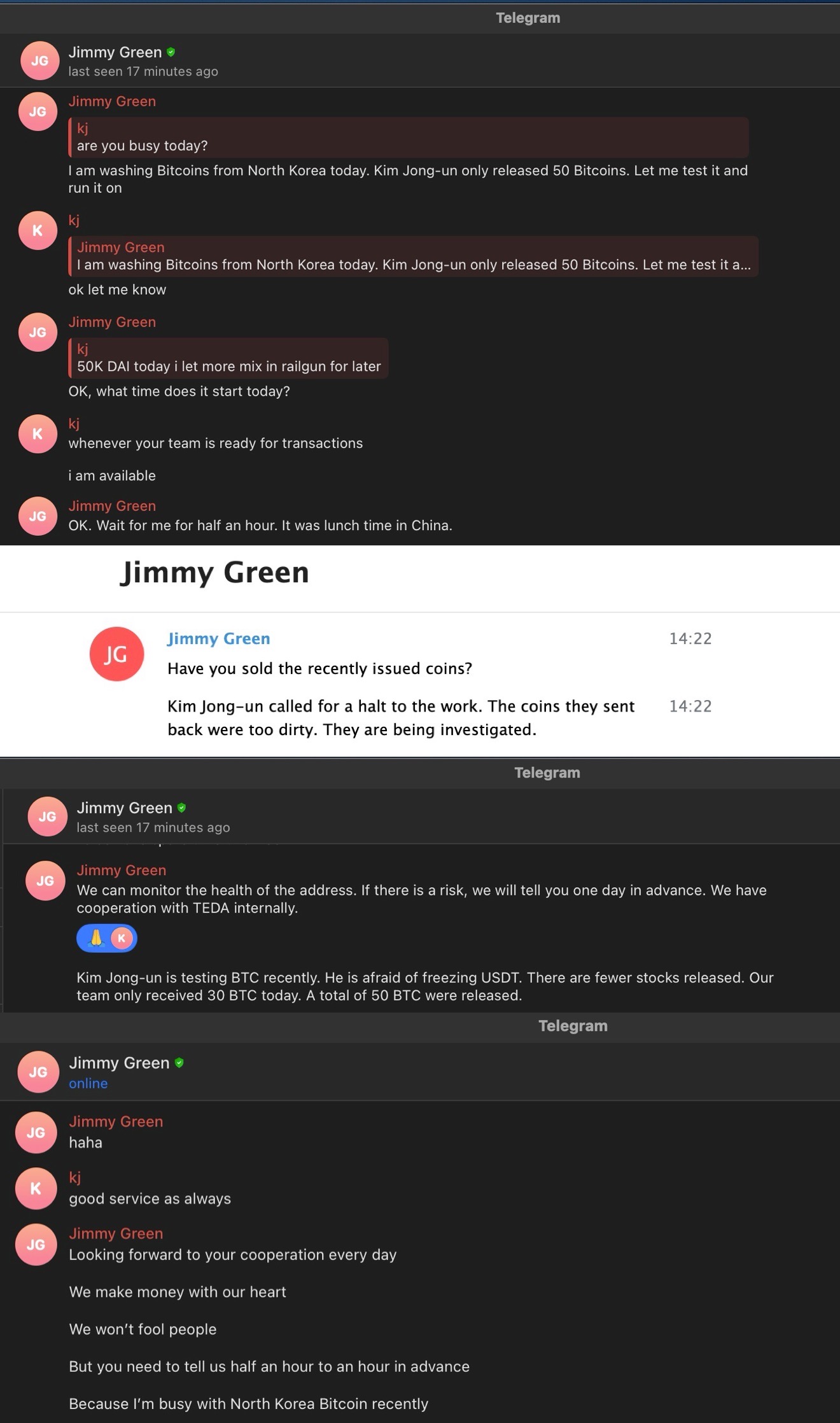
1/ How I infiltrated a Chinese organized crime syndicate that has laundered $1B+ across multiple exploits for Lazarus Group.
Posing as a client, I gathered intel that helped action freezes for the Feb 2025 Bybit exploit and attribute illicit activity onchain.

ₘₐₙₙᵧₑₗ retweeted

I Learned This the Hard Way
Last year, I worked with a founder building several products on the NEAR blockchain.
I think he was building more than 10 products at the time. I was hired as a community manager for one of his products.
I only worked with him for 1 month, but that month felt like 8 months of work.
He turned me into a social media manager, content strategist, and graphic designer.
Every morning, I would ideate at least 5 content ideas, then draft 3 pieces of content for each day, design graphics for them and then post on all social media pages.
I was doing this across 3 of his products, I was everywhere, my attention was divided, no clear focus on what & where I should put my most resources and energy, I got drained from that job.
Looking back, that experience taught me something I now understand much better: Clear FOCUS
Don't get me wrong, focus doesn't mean you can do only one thing.
It means knowing what matters most right now and giving it your best energy.
When you have a clear focus, you can go deeper, get better, and build momentum around one thing instead of constantly splitting your attention.
You don't have to chase everything at once.
Pick what matters most, double down on it, and give it enough time to compound.


