




Malan retweeted

Spent the weekend on my Pons risk-check MCP and realized.
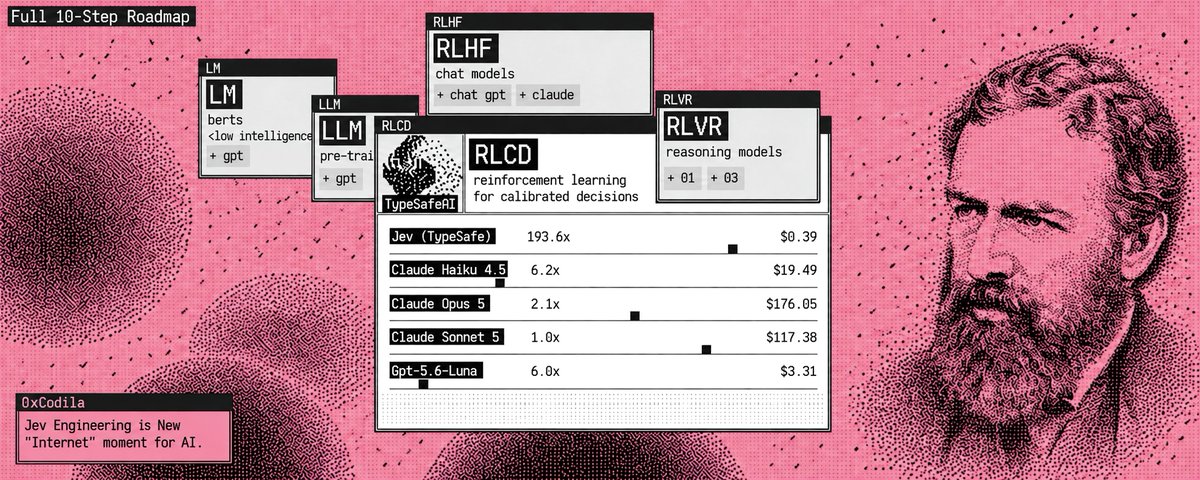
Every "is this launch risky, y/n" call was hitting a full LLM - paying frontier prices for a decision that's really just a classifier.
Here is the the fix:
1. Cheap decision layer (Choice/Score/Noul).
2. No generation.
3. $0.042 per 1M input tokens, zero output cost.
Real numbers people are posting:
1,018 papers classified for $0.08
500 emails triaged for 3.5 cents
1M-token Claude session compacted to 86K in ~1 second.
The split that matters: LLM does the researching and writing, a cheap router does the deciding, code executes it.
I was burning generation tokens on decisions that never needed generation.
Rebuilding the holder-concentration + deployer-history checks on this pattern this week.
Will post real cost numbers once it's live, not just vibes.


Malan retweeted
A wallet made ~$150K this week launching its own tokens, buying its own supply, then dumping into whoever showed up next.
65 of its 82 launches never even graduated.
0xdeaa8c051053074b61f5d09b6543feabdf3f605a - check it yourself on Robinhood Chain.
Took me 20 minutes of manual digging on-chain to catch the pattern.
So I built this instead - paste an address, get bonding curve status, LP lock, holder concentration, and the deployer's own launch history.
Same check, instant.
Code: github.com/alekscrpt/Pons-Ch…
How is this different from checkers already existing on platforms ?
Individuality - the agent writes conclusions based on previously verified addresses and the trader's own experience.
Which tokens they entered, what their win rate is, and where they got rugged most often).
Still rough. Demo below - real checks on real fresh Robinhood Chain launches, nothing cherry-picked.
WE CAN LIVE IN A LIGHT VACUUM.
In 1904, George Ellery Hale picked a bare peak above Los Angeles for one reason: dark sky.
The 100-inch Hooker telescope built there let Edwin Hubble prove in 1929 that the universe is expanding.
By the 1980s, the same city that funded Hale had grown bright enough to drown the sky he chose it for.
The Hooker went quiet for faint work, buried under a glow it was never built to fight.
Either the lights below keep spreading, or astronomy keeps moving away from them.
There was never a third option.
So it moved: to the Atacama desert, to Mauna Kea, and eventually past the atmosphere itself, where Hubble and now JWST see skies no city glow will ever reach.
The newest lights make the retreat worse, not better.
Sodium vapor was one narrow color astronomers could filter out.
The LEDs replacing it scatter across the spectrum and cannot be filtered at all.
An astronaut can now watch that spread live, from orbit, over cities that used to be dark enough to matter.


Malan retweeted

ONE RULE DECIDES WHO SURVIVES THE SAME BET.
In 1733, a penniless French exile named Abraham de Moivre was pricing bets for pennies a question in a London coffee house - no bank behind him, no fortune of his own, just a mathematician nobody would hire.
He wasn't trying to predict one coin flip.
He was trying to find the shape a thousand of them make together.
Flip a coin a thousand times and count the wins.
Do it again.
The counts scatter - but never randomly.
They bunch in the middle and thin at the edges, tracing the same curve every time.
De Moivre measured exactly how much of that curve sits where. About 68% of outcomes land within one "spread" of the average. About 95% within two. About 99.7% within three.
Flip that around and it gets uncomfortable.
One result in twenty lands beyond two spreads.
One in 370 lands beyond three - not impossible.
Just rare. And rare isn't the same as never.
That measurement has a name: the 68-95-99.7 rule.
In October 1994, J.P. Morgan did something unusual for a Wall Street risk model: it published the whole thing free, alongside volatility data for about 20 markets, as RiskMetrics.
Within a few years it was the default way banks priced how much they stood to lose in a day.
Two hundred and sixty years after a broke mathematician worked it out for pennies a question, it's still the math sitting under every risk desk on Wall Street.
Most people trading against that desk have never heard of it.


CHEAP DOES NOT MEAN SMALL.
On 5 November 2013, ISRO launched the Mangalyaan orbiter toward Mars on a budget of about $74 million, less than Hollywood spent filming Gravity that same year.
Only one other space agency had ever reached Mars orbit on a first try, Europe's Mars Express a decade earlier.
Every nation that got there before that had failed at least once along the way.
On 24 September 2014, Mangalyaan slipped into Mars orbit on its first attempt.
India became the first Asian nation to get there. The orbiter was built to last six months. It kept transmitting for almost eight years.
Different payload, same arithmetic: do more with less, then do it again.

One day to go!
GSLV-F17/EOS-05 is scheduled for launch on 04 Sept 2026 at 02:55 AM IST from SDSC-SHAR, Sriharikota.
Livestreaming starting from 02:25 AM IST onwards
youtube.com/live/Q9OdYc3KpEw
For more information:
isro.gov.in/Mission_GSLVF17.…
#GSLVF17 #EOS05 #ISRO

IMPOSSIBLE HAS AN EXPIRATION DATE.
In 2013, Freeman Dyson, one of the architects of modern quantum electrodynamics, did the math on whether a single graviton could ever be measured directly.
He found two dead ends.
Free-floating detector masses, pushed to the needed precision, would sit closer than their own Schwarzschild radius and collapse into a black hole before the measurement finished.
Rigid detectors hit the same wall from quantum jitter in the apparatus itself.
Even a perfect detector near the sun would catch about 4 gravitons over its 5-billion-year lifetime, buried under a neutrino background roughly 10^34 times louder.
Not hard. Impossible, by the physics of the detector itself.
Twelve years later, a team at Stevens Institute and Yale is building the experiment anyway, just not the one Dyson ruled out.
Instead of measuring position at the Planck scale, they cool a gram of superfluid helium to its quantum ground state and watch for one quantum of vibration, kicked loose by a passing gravitational wave.
Dyson did not get the physics wrong. He analyzed detectors that no longer exist.


SOMETHING IS WRONG WITH THE UNIVERSE.
For a while, cosmologists had an escape hatch: maybe the Hubble tension wasn't real, just a systematic error in one set of measurements.
A new result just welded that hatch shut.
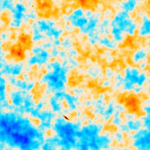
The Atacama Cosmology Telescope, sitting at 16,400 feet in the Chilean desert, spent years mapping the polarization of the cosmic microwave background, the afterglow of the Big Bang, at far higher resolution than anything before it.
If the tension were a measurement artifact, ACT's independent numbers should have landed somewhere different from Planck's.
They did not. ACT's Hubble constant matches Planck's almost exactly.
That agreement is the real news.
It rules out an entire category of theories that tried to patch the tension by tweaking how the early universe behaved.
Two independent instruments, two different eras of cosmic history, one number.
Which leaves the harder question standing: not whether the universe expands at two different rates depending on how far back you look, but why physics allows that to happen at all.


THIS MACHINE WILL MAKE ASTRONAUTS SICK AS F*CK.
Picture the fastest carousel you rode as a kid, the one that made you grab the bar and shut your eyes.
Now imagine living on it for months, because it is the only way your body remembers what gravity feels like.
That is basically what Airbus is building.
Not a city in the sky, just a compact centrifuge bolted onto a future station: two exercise-bike pods on an 8-meter arm, spinning at 9.2 RPM to fake Mars gravity, or slower at 6 RPM for the Moon.
Here is the part that sounds backwards.
The smaller the ride, the harder it hits you.
Gravity scales with radius times spin speed squared, so shrink the arm from kilometers to meters and you have to spin brutally fast just to feel anything, your inner ear violently disagreeing with your eyes about which way is down.
The giant rotating cities from old NASA-era studies were slow and gentle by design.
Airbus went the other way: small, cheap, buildable this decade.
No megastructure. Just brute-force spin, aimed at the fewest people possible.


IN 1783, A SCIENTIST CALCULATED THE RADIUS OF A BLACK HOLE.
The Schwarzschild radius - the distance from a black hole's center past which nothing, not even light, can escape - is given by
R = 2GM/c²
This is a result from general relativity, where gravity is the curvature of spacetime, not a force in the usual sense.
So why does it fall out of a formula that has nothing to do with curved spacetime ?
Start with the classical escape velocity - the speed needed for an object to break free of a gravitational field entirely.
Kinetic energy at launch equals the gravitational potential energy binding it:
½mv² = GMm/r
The mass m cancels:
v² = 2GM/r
Now ask: at what radius r does the escape velocity equal the speed of light ?
Set v = c:
c² = 2GM/r
Solve for r:
r = 2GM/c²
That's the Schwarzschild radius. Exactly.
This calculation was done in 1783 by John Michell, using nothing but Newton.
He called the object a "dark star" over a century before Einstein, and 130 years before Schwarzschild actually solved the field equations of general relativity.
Michell's physics was wrong.
Light isn't a particle that slows down and falls back like a thrown ball. Newtonian gravity isn't even the right theory here.
But the answer came out exactly right anyway - because once you force G, M, and c to combine into a length, there's only one way the units fit together.
He got the right number for the wrong reason.

EVERYTHING YOU HAVE EVER SEEN, TOUCHED, OR BEEN IS LESS THAN 5% OF WHAT EXISTS.
In the 1970s, astronomer Vera Rubin was measuring how fast stars orbit at the edges of spiral galaxies.
Newton said outer stars should move slower, like planets far from the sun. Instead, every single galaxy she checked showed the same thing: stars at the edge moved just as fast as stars near the core.
She wasn't discovering new physics.
She was measuring the gap left over after every known source of gravity had been subtracted.
That leftover has a name: dark matter.
It doesn't emit light, doesn't block it, and has never been directly detected.
But it makes up roughly 27% of the universe - and every confirmation since Rubin has used the same method: subtract what you can explain, then take the leftover seriously.
This quoted post is unavailable.