
Accidental Investor. I like to read, trade ,invest , speculate. Not Sebi Registered. On X to share my thesis and connect with similar minds. Ex Product Manager.
Pune, India
Joined March 2014
- Tweets1.6K
- Following873
- Followers19.3K
- Likes4K







Pinned Tweet
Esconet Technologies — Operating leverage + Optionality At Play
About Esconet - A System Integrator with its own Hexadata line of servers and a sovern cloud platform.
Market Cap -230 cr.
Part 1- Operating Leverage starting to kick in finally
1. Q1 FY27 was interesting.
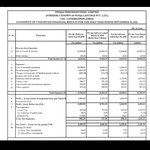
Standalone revenue ₹61 Cr.(Hexadata+ SI)
Adjusted operating EBITDA ~₹7.8 Cr → ~12.8% margin after removing ₹1.9 Cr other income.
Consolidated revenue ₹116 Cr.
Adjusted operating EBITDA ~₹8.2 Cr → ~7% margin.
2. FY26 consolidated EBITDA was only ~₹12 Cr for the full year at 350 cr rev.
So The margin inflection is real.
3. FY26 had component-cost pressure, ZeaCloud infrastructure/depreciation and Fluidech team-building.
Now the same cost base can support a much larger revenue pool.
That is Operating Leverage at Play.
Then comes the optionality.
Part 2 -Optionality in Zeacloud+ Cybersecurity
1. ZeaCloud is currently small. Fluidech is currently small.
But both are being built in markets with structurally attractive economics.
2. ZeaCloud = cloud / IaaS / BaaS / DRaaS / sovereign infrastructure.
3. Fluidech = cybersecurity consulting → implementation → managed security → recurring revenue.
4. The fascinating part is that these businesses don't need to become huge for the group margin to change.
If the core business does ₹400–450 Cr at ~10% EBITDA, you already have ₹40–45 Cr of EBITDA.
5. Then add a gradually scaling ZeaCloud and cybersecurity business at higher margins.
The mix itself can push consolidated margins higher.
6. ZeaCloud is the bigger optionality for me as of now.
7. India's data-centre cycle is still in the early innings. AI workloads, cloud adoption, data localisation, and sovereign infrastructure are driving a major capacity build-out.
This will need
Compute,
Storage,
Sovern Cloud,
Cybersecurity,
Managed services.
Part 3 : Hexadata Servers (Fastest Growing)
1. HexaData is another piece I find underappreciated.
AI infrastructure is moving from experimentation to deployment.
2. HexaData is providing workstations, server, super computers , HPC Servers and object storage devices.
3. Every AI workload needs compute infrastructure around it.
Servers → networking → storage → integration → cloud → security → support.
4. Esconet got upgraded to Nvidia Elite Partner in April which helps it get early access to latest Tech for its Hexadata servers.
5. And if the company can convert more of Hexadata customers into cloud, cybersecurity and managed-service relationships, the economics of the customer improve materially.
6. Hardware can bring the customer in.
Services can monetise the customer for years.
That is a much better business model.
Part 4 : The Catalyst- MEITY empanelment
1. Zeacloud MEITY audit has most likely started.
2. If ZeaCloud gets empanelled, the addressable government/public-sector cloud opportunity could expand materially.
3. Capacity and infra is built, Once utilisation rises, incremental revenue can carry much better contribution margins.
4.I would therefore watch: ZeaCloud revenue + utilisation + MeitY empanelment
more closely than just consolidated revenue.
5. The key is the mix shift.
The core Esconet business can potentially settle around ~10% EBITDA as scale, procurement, mix and fixed-cost absorption improve.
6. HexaData + Esconet get better margins with scale.
Zeacloud + Cybersecurity bring very high EBIDTA margins as they mature.
PART 5 - The Risks
1. Management's continuing Fiscal discipline and Margins accretive business model
2. Tech Capabilities not yet fully built to become a server OEM, HPC orchestration stack development and plaform for AI/ML deployment are most critical things to watch out for.
3. Zeacloud not scaling.
FY 27 at ₹500 Cr revenue: ~₹40-50 Cr EBITDA potential and 30-35 cr PAT possible.
In 3 years can they do 1000 cr sales at 12-13% margins ?
Now Q2/Q3 need to prove that the margin expansion is sustainable.
Concall Tomorrow. Lets see.
DYDD.
Ashish Malani retweeted

This morning’s rally may look impressive, but this is exactly why I covered the shorts. The market had gotten oversold enough to produce a rip-your-face-off rally. After capturing nearly 7R on the downside, there was no reason to overstay the trade.
That said, keep this morning’s action in perspective. A number of stocks are up a whopping 10%-30%, but most are barely a blip on the charts. For now, they’re counter-trend rallies in stocks that are still in significant downtrends, particularly in Technology.
The S&P 500 fell 11.6% from its October 6 record high, the first 10% correction since the February-April 2025 selloff, but we are not out of the woods. There’s still work to do before we can say an effective bottom is in place. One strong day doesn’t suddenly create a new uptrend.
For now, I expect volatility to remain elevated. Enjoy the rally, but keep it in context. The market still has to prove itself. Prepare for backing and filling, and even lower lows in the major indexes before this correction is over.
The tricky thing about an oversold market is that it can always get more oversold. And even after momentum bottoms, price can still go on to make lower lows while divergences develop.
What I want to see now is whether this rally can last more than a day or two and broaden out beyond the most beaten-down stocks. That would increase the odds that a sustainable year-end rally can develop. If it can’t, then what we’re seeing is probably just short covering with more selling still to come.
Stronger signals have come from upside breadth thrust signals than downside oversold readings. For example, returns after 10:1 upside volume days have been higher than after big downside volume days. An even stronger message would come from two 10:1 up days without an intervening 10:1 down day. It pays to wait for upside confirmation.
A follow-through day (+1% on higher d/d volume) could occur as early as this Friday, assuming Friday’s lows hold. That would be an initial step in determining a low has been made.
During corrections, my focus ultimately turns to individual stocks and market leadership. Currently, our list of potential candidates is small. A market cannot carry itself very far on the backs of counter trend rallies in broken leaders. To get bullish, we need to see more. minervini.com

If you starting with a huge allocation(40-50%) on a stock, yes you can lose some money and some sleep ,when you go wrong.
But if you average up (pyramid) your best bet and build a big position over time, it is actually a beautiful thing.
Doesnt take away your sleep or kill your portfolio . Also gives you enough time to build more conviction and see the company perform.
For someone who has made big money and wants to compound , losing sleep over money is bad. And yes there is a lot to lose!
But for someone in their early years, starting with small capital, you should size big on your top ideas no matter what, losing some sleep and some money is okay if you want to make a killing and not just beat the indices.
25% compounding is awesome if you do it for 20 years but extremely mediocre for a investor starting new with a small capital.
I would say be ready to lose some sleep and endure some pain, if you really have any skin in the game.
Infact sizing small on ideas you believe can be big ,but are mispriced and not buying more as they perform is a bigger mistake than any other mistake of commision.
It is not going be very often that you find such companies, one must try to make sure you make it big when you hit the bulls eye.
How to hold on to big positions as they keep going up and become 50-70-80% of your portfolio is another ball game!

Covid and my highly concentrated position in Bajaj finance taught me a lesson I’ve not forgotten since. If you have a habit of over allocating to any idea or theme it’s a matter of time before the market finds you and kills you. It’s a certainty.
What’s more painful is that your thesis may be right and the stock eventually bounces back but the over allocation forces your hand.
So the lesson I learnt is actually as old as the hills. It is to never be in a position where the market can force your hand.
Whether you own Gold, silver or global AI - if you didn’t over allocate not only are you living to fight another day but you have a fair chance to participate in the bounce back.
Ashish Malani retweeted

In this inaugural issue of The O-Signal, we use data to separate signal from noise.
Most commentators quote the index multiple and stop there. Instead, we decompose the data into meaningful observations. An average is easy to quote, but it hides the distortions. Investment decisions depend on those differences.
Three findings for India today:
a) Ex-financials, oil, IT, Nifty 50 trade at 29 X; 15% of total market cap trades above 10x sales.
b) Promoters + Fresh issuance each supplied >2× FII selling.
c) Indian banks: the best EM bank market to own.
oaklanecapital.com/wp-conten…


Ashish Malani retweeted

BREAKING: The US Securities and Exchange Commission (SEC) is launching an investigation into "potential accounting issues" at Nvidia.
Nvidia stock, $NVDA, extends losses to over -8% on the day and -45% since October 6th.

Ashish Malani retweeted
Sahajanand Medical Technologies (SMT): From a Vision in Surat to a Potential Billion-Dollar Global MedTech Company.
Thanks to @arvind_kothari @niveshaay , had the chance to meet the management and interact with them before ipo at The Dhando Valley.
Lets start with the story!
In the late 1990s, when India was largely dependent on expensive imported cardiac stents, an entrepreneur from Surat saw an opportunity to change that.
Dhirajlal Kotadia, an engineer and entrepreneur who had already built a successful precision-engineering and laser-technology business serving the diamond industry, believed India could manufacture world-class cardiovascular devices at affordable prices.
The vision was ambitious: develop life-saving medical technology in India, reduce dependence on imported devices and make advanced cardiac treatment accessible to more patients.
That vision led to the creation of Sahajanand Medical Technologies, whose origins go back to 1999 and which was incorporated in 2001.
What started with coronary stents has evolved into something much bigger.
Over the next 25 years, SMT invested heavily in research, clinical trials, product development and international expansion.
Today, the company has:
Presence across 77 countries
Approximately 25% share of India’s drug-eluting stent market by volume
119 granted patents and 78 pending patent applications
75 clinical studies, including 66 completed
Manufacturing capabilities across India and Thailand
Products spanning coronary stents, balloons, occluders and transcatheter heart valves
The company has also transitioned to its next generation of leadership, with Bhargav Kotadia taking over as CEO in April 2025.
But what interests me most is the economics of this 25-year journey.
My reconstruction of SMT’s historical filings suggests that the company has spent approximately(min) ₹950 crore cumulatively on R&D and clinical development, with ₹631 crore identifiable across disclosed financial periods.
In today’s purchasing-power terms, that historical R&D investment could be worth approximately ₹1,300 crore.
Add acquisitions, international distribution, manufacturing infrastructure and the time required to establish clinical credibility, and the barriers to recreating this business become significant.
Despite all this investment, SMT currently operates at only around 14% consolidated EBITDA margins.
Europe, now its largest market, has only recently reached operating breakeven, while India and the Rest of the World already operate above 20% EBITDA margins.
This raises an interesting question.
What happens when a company that has spent 25 years developing technology, products and global distribution finally starts monetising those investments at scale?
At ₹2,000 crore revenue and 20–25% EBITDA margins, SMT could potentially generate ₹400–500 crore EBITDA, compared with ₹171 crore in FY26.
And the company is no longer dependent only on coronary stents. Structural Heart, TAVI, occluders, drug-coated balloons and next-generation devices could provide the next leg of growth.
I spent time studying SMT’s RHP, its older DRHPs, acquisition history, R&D spending, product pipeline and global cardiovascular markets.
Here is my detailed thesis on why Sahajanand Medical Technologies could become one of India’s most interesting global MedTech businesses.
A deep dive into SMT’s business, R&D moat, acquisitions, products, margins and what could change over the next 3–5 years.
1. First, understand the business.
SMT is much more than an Indian coronary stent manufacturer.
It operates across two major categories:
* Vascular Intervention: Coronary stents, balloons and related devices.
* Structural Heart: TAVI valves, occluders and other devices.
FY26 revenue: ₹1,211 Cr
EBITDA: ₹171 Cr
EBITDA margin: 14.1%
PAT: ₹69 Cr
The business is already global, but profitability could be at an inflection point.
Ashish Malani retweeted

Fighter jets, naval ships, tanks and drones are incredibly sophisticated machines.
... But what happens when their radar misses a threat, communications are jammed, or electronic systems fail?
Even the most advanced platforms lose their edge…
Because in modern warfare, often the war is won before it even begins.
That is where defence electronics comes in 📡

Ashish Malani retweeted

Good #Q2FY27-23/10/26 from 4pm till 8pm
Coforge Ltd
#CoForge
Good Q2FY27 with big YoY growth, decent QoQ uptick
Nos slightly below estimates,but margin guidance revised upwards to 16% for Q3 and 17% for Q4
FY28 margins targetted at 17%
Q2 is the highest large deal signing quarter in comps history
Rev⏫40% YoY, ⏫ 10% QoQ
EBIT ⏫53% YoY, ⏫ 10% QoQ
PAT ⏫43% YoY, ⏫ 12% QoQ
Increases EBIT margin guidance from 15.5% to 16%
Solid dealwins and pipeline
Rev at 6170cr vs 4016cr, Q1 at 5527cr
PBT at 855cr vs 558cr, Q1 at 758cr
PAT at 605cr vs 425cr, Q1 at 531cr
OCF at 1081cr vs 787cr
Executable orderbook ⏫45.4%
Fresh intake ⏫51% QoQ
8 large deals signed in a single qtr
Order intake ⏫102% at 1 billion USD
8 or more large deals aimed for Q3 as well
Dr Reddys
#DrReddys
Bouncing back, big QoQ improvement in nos
Big beat vs estimates on revenue, EBITDA,margins, PBT and PAT
200cr revenue beat and 500+cr EBITDA beat vs estimates
Esconet Technologies
#Esconet
Highest ever set
Blockbuster H1FY27 with solid growth vs H2FY26 and H1FY26
Rev at 242cr vs 145cr, Q1 at 116cr
EBITDA at 19cr vs 2cr Q1 at 8cr
PBT at 19cr vs 9cr QoQ
OPM at 7.8% vs 1.5%, Q1 at 7%
More than 2x QoQ
PAT at 14cr vs 1cr, Q1 at 6.5cr
OCF at 51cr vs -9cr
Cubex Tubings
#Cubex
Solid Q2FY27 with big QoQ and YoY uptick across all parameters
Solid margin expansion
Rev at 83cr vs 74cr, Q1 at 65cr
PBT at 6.2cr vs 2.4cr, Q1 at 1.8cr
PAT at 4.5cr vs 1.7cr, Q1 at 1.4cr
OCF at -5.4cr vs 0.4cr
Vivid Electromech
#Vivid
#VividElectro
H2 heavy business as H2 forms 60-65% of total
Rev at 92cr vs 71cr, H2 at 130cr
EBITDA at 18.3cr vs 13.5cr, H2 at 32cr
PAT at 13cr vs 9cr, H2 at 22cr
OCF at -55cr vs 9cr
Tata Motors
#TMCV
Rev at 23930cr vs 16861cr, Q1 at 19329cr
PBT at 2660cr vs 1757cr, Q1 at 2057cr
OCF at 6538cr vs 1596cr
Automotive Stampings and Assemblies
#ASAL
Rev at 336cr vs 221cr, Q1 at 253cr
PBT at 13.6cr vs 4.3cr, Q1 at 6.2cr
PAT at 10cr vs 4.3cr, Q1 at 4.6cr
OCF at 20cr vs 44cr
Hypersoft Technologies
#Hypersoft
Rev at 82cr vs 17cr, Q1 at 78cr
PBT at 11cr vs 3cr,flat QoQ
PAT at 8cr vs 2.4cr, Q1 at 10cr
OCF at 2cr vs -13cr
Bank of India
#BankIndia
PPOP flat QoQ
Rev at 23999cr vs 20625cr, Q1 at 22598cr
PPOP at 5089cr vs 3820cr, Q1 at 5051cr
PBT at 1010cr vs 472cr, Q1 at 1144cr
GNPA and NNPA down QoQ and YoY
RoA at 1.01% vs 0.91%
Decent:
IndusInd Bank
#IndusInd
Rev flat,NII flat
Higher other income
PPOP at 2874cr vs 2047cr, Q1 at 2773cr
PBT at 1651cr vs loss, Q1 at 1389cr
#TorrentPharma
Higher depreciation and finance costs
Lead to PBT and PAT degrowth
Esconet — Q2 follow-up on my “Operating Leverage + Optionality” thesis.
I ended my earlier note saying Q2/Q3 need to prove that the earnings inflection can sustain.
Q2 provides stronger evidence.
Standalone — Hexadata + System Integration:
• Revenue ₹165.24 Cr, +171% QoQ
• Operating EBITDA ~₹18.08 Cr, +132% QoQ, excluding other income
• PAT ₹14.21 Cr, +108% QoQ
Employee + other expenses increased only 17.5%. The same cost base is supporting a much larger revenue pool — exactly the operating leverage discussed earlier.
Operating EBITDA margin was ~10.9%, broadly around the ~10% core-business assumption in my thesis, though below Q1’s 12.8%.
Standalone matters more here. Singapore adds substantial consolidated revenue at thin margins.
The interesting part: this profit growth has come while ZeaCloud and Fluidech remain loss-making at PBT level.
So the core earnings engine is delivering; the cloud + cybersecurity optionality has yet to contribute meaningfully.
MeitY empanelment remains the next catalyst to watch. Approval, utilisation and recurring revenue must follow.
Q2 strengthens Part 1 of the thesis. Part 2 still needs execution.
The business seems to have reached at inflection point.
Solid execution by the company.
Huge tailwinds, jus the beginning.
DYODD.

Esconet Technologies — Operating leverage + Optionality At Play
About Esconet - A System Integrator with its own Hexadata line of servers and a sovern cloud platform.
Market Cap -230 cr.
Part 1- Operating Leverage starting to kick in finally
1. Q1 FY27 was interesting.
Standalone revenue ₹61 Cr.(Hexadata+ SI)
Adjusted operating EBITDA ~₹7.8 Cr → ~12.8% margin after removing ₹1.9 Cr other income.
Consolidated revenue ₹116 Cr.
Adjusted operating EBITDA ~₹8.2 Cr → ~7% margin.
2. FY26 consolidated EBITDA was only ~₹12 Cr for the full year at 350 cr rev.
So The margin inflection is real.
3. FY26 had component-cost pressure, ZeaCloud infrastructure/depreciation and Fluidech team-building.
Now the same cost base can support a much larger revenue pool.
That is Operating Leverage at Play.
Then comes the optionality.
Part 2 -Optionality in Zeacloud+ Cybersecurity
1. ZeaCloud is currently small. Fluidech is currently small.
But both are being built in markets with structurally attractive economics.
2. ZeaCloud = cloud / IaaS / BaaS / DRaaS / sovereign infrastructure.
3. Fluidech = cybersecurity consulting → implementation → managed security → recurring revenue.
4. The fascinating part is that these businesses don't need to become huge for the group margin to change.
If the core business does ₹400–450 Cr at ~10% EBITDA, you already have ₹40–45 Cr of EBITDA.
5. Then add a gradually scaling ZeaCloud and cybersecurity business at higher margins.
The mix itself can push consolidated margins higher.
6. ZeaCloud is the bigger optionality for me as of now.
7. India's data-centre cycle is still in the early innings. AI workloads, cloud adoption, data localisation, and sovereign infrastructure are driving a major capacity build-out.
This will need
Compute,
Storage,
Sovern Cloud,
Cybersecurity,
Managed services.
Part 3 : Hexadata Servers (Fastest Growing)
1. HexaData is another piece I find underappreciated.
AI infrastructure is moving from experimentation to deployment.
2. HexaData is providing workstations, server, super computers , HPC Servers and object storage devices.
3. Every AI workload needs compute infrastructure around it.
Servers → networking → storage → integration → cloud → security → support.
4. Esconet got upgraded to Nvidia Elite Partner in April which helps it get early access to latest Tech for its Hexadata servers.
5. And if the company can convert more of Hexadata customers into cloud, cybersecurity and managed-service relationships, the economics of the customer improve materially.
6. Hardware can bring the customer in.
Services can monetise the customer for years.
That is a much better business model.
Part 4 : The Catalyst- MEITY empanelment
1. Zeacloud MEITY audit has most likely started.
2. If ZeaCloud gets empanelled, the addressable government/public-sector cloud opportunity could expand materially.
3. Capacity and infra is built, Once utilisation rises, incremental revenue can carry much better contribution margins.
4.I would therefore watch: ZeaCloud revenue + utilisation + MeitY empanelment
more closely than just consolidated revenue.
5. The key is the mix shift.
The core Esconet business can potentially settle around ~10% EBITDA as scale, procurement, mix and fixed-cost absorption improve.
6. HexaData + Esconet get better margins with scale.
Zeacloud + Cybersecurity bring very high EBIDTA margins as they mature.
PART 5 - The Risks
1. Management's continuing Fiscal discipline and Margins accretive business model
2. Tech Capabilities not yet fully built to become a server OEM, HPC orchestration stack development and plaform for AI/ML deployment are most critical things to watch out for.
3. Zeacloud not scaling.
FY 27 at ₹500 Cr revenue: ~₹40-50 Cr EBITDA potential and 30-35 cr PAT possible.
In 3 years can they do 1000 cr sales at 12-13% margins ?
Now Q2/Q3 need to prove that the margin expansion is sustainable.
Concall Tomorrow. Lets see.
DYDD.
Ashish Malani retweeted
Esconet Technologies — Operating leverage + Optionality At Play
About Esconet - A System Integrator with its own Hexadata line of servers and a sovern cloud platform.
Market Cap -230 cr.
Part 1- Operating Leverage starting to kick in finally
1. Q1 FY27 was interesting.
Standalone revenue ₹61 Cr.(Hexadata+ SI)
Adjusted operating EBITDA ~₹7.8 Cr → ~12.8% margin after removing ₹1.9 Cr other income.
Consolidated revenue ₹116 Cr.
Adjusted operating EBITDA ~₹8.2 Cr → ~7% margin.
2. FY26 consolidated EBITDA was only ~₹12 Cr for the full year at 350 cr rev.
So The margin inflection is real.
3. FY26 had component-cost pressure, ZeaCloud infrastructure/depreciation and Fluidech team-building.
Now the same cost base can support a much larger revenue pool.
That is Operating Leverage at Play.
Then comes the optionality.
Part 2 -Optionality in Zeacloud+ Cybersecurity
1. ZeaCloud is currently small. Fluidech is currently small.
But both are being built in markets with structurally attractive economics.
2. ZeaCloud = cloud / IaaS / BaaS / DRaaS / sovereign infrastructure.
3. Fluidech = cybersecurity consulting → implementation → managed security → recurring revenue.
4. The fascinating part is that these businesses don't need to become huge for the group margin to change.
If the core business does ₹400–450 Cr at ~10% EBITDA, you already have ₹40–45 Cr of EBITDA.
5. Then add a gradually scaling ZeaCloud and cybersecurity business at higher margins.
The mix itself can push consolidated margins higher.
6. ZeaCloud is the bigger optionality for me as of now.
7. India's data-centre cycle is still in the early innings. AI workloads, cloud adoption, data localisation, and sovereign infrastructure are driving a major capacity build-out.
This will need
Compute,
Storage,
Sovern Cloud,
Cybersecurity,
Managed services.
Part 3 : Hexadata Servers (Fastest Growing)
1. HexaData is another piece I find underappreciated.
AI infrastructure is moving from experimentation to deployment.
2. HexaData is providing workstations, server, super computers , HPC Servers and object storage devices.
3. Every AI workload needs compute infrastructure around it.
Servers → networking → storage → integration → cloud → security → support.
4. Esconet got upgraded to Nvidia Elite Partner in April which helps it get early access to latest Tech for its Hexadata servers.
5. And if the company can convert more of Hexadata customers into cloud, cybersecurity and managed-service relationships, the economics of the customer improve materially.
6. Hardware can bring the customer in.
Services can monetise the customer for years.
That is a much better business model.
Part 4 : The Catalyst- MEITY empanelment
1. Zeacloud MEITY audit has most likely started.
2. If ZeaCloud gets empanelled, the addressable government/public-sector cloud opportunity could expand materially.
3. Capacity and infra is built, Once utilisation rises, incremental revenue can carry much better contribution margins.
4.I would therefore watch: ZeaCloud revenue + utilisation + MeitY empanelment
more closely than just consolidated revenue.
5. The key is the mix shift.
The core Esconet business can potentially settle around ~10% EBITDA as scale, procurement, mix and fixed-cost absorption improve.
6. HexaData + Esconet get better margins with scale.
Zeacloud + Cybersecurity bring very high EBIDTA margins as they mature.
PART 5 - The Risks
1. Management's continuing Fiscal discipline and Margins accretive business model
2. Tech Capabilities not yet fully built to become a server OEM, HPC orchestration stack development and plaform for AI/ML deployment are most critical things to watch out for.
3. Zeacloud not scaling.
FY 27 at ₹500 Cr revenue: ~₹40-50 Cr EBITDA potential and 30-35 cr PAT possible.
In 3 years can they do 1000 cr sales at 12-13% margins ?
Now Q2/Q3 need to prove that the margin expansion is sustainable.
Concall Tomorrow. Lets see.
DYDD.

Ashish Malani retweeted

No need to switch between tabs while trading anymore.
Introducing Workspaces in Pivot where you can build your custom workspace and share it out with others.
Check it out - pivotnow.in/
Sahajanand Medical Technologies (SMT): From a Vision in Surat to a Potential Billion-Dollar Global MedTech Company.
Thanks to @arvind_kothari @niveshaay , had the chance to meet the management and interact with them before ipo at The Dhando Valley.
Lets start with the story!
In the late 1990s, when India was largely dependent on expensive imported cardiac stents, an entrepreneur from Surat saw an opportunity to change that.
Dhirajlal Kotadia, an engineer and entrepreneur who had already built a successful precision-engineering and laser-technology business serving the diamond industry, believed India could manufacture world-class cardiovascular devices at affordable prices.
The vision was ambitious: develop life-saving medical technology in India, reduce dependence on imported devices and make advanced cardiac treatment accessible to more patients.
That vision led to the creation of Sahajanand Medical Technologies, whose origins go back to 1999 and which was incorporated in 2001.
What started with coronary stents has evolved into something much bigger.
Over the next 25 years, SMT invested heavily in research, clinical trials, product development and international expansion.
Today, the company has:
Presence across 77 countries
Approximately 25% share of India’s drug-eluting stent market by volume
119 granted patents and 78 pending patent applications
75 clinical studies, including 66 completed
Manufacturing capabilities across India and Thailand
Products spanning coronary stents, balloons, occluders and transcatheter heart valves
The company has also transitioned to its next generation of leadership, with Bhargav Kotadia taking over as CEO in April 2025.
But what interests me most is the economics of this 25-year journey.
My reconstruction of SMT’s historical filings suggests that the company has spent approximately(min) ₹950 crore cumulatively on R&D and clinical development, with ₹631 crore identifiable across disclosed financial periods.
In today’s purchasing-power terms, that historical R&D investment could be worth approximately ₹1,300 crore.
Add acquisitions, international distribution, manufacturing infrastructure and the time required to establish clinical credibility, and the barriers to recreating this business become significant.
Despite all this investment, SMT currently operates at only around 14% consolidated EBITDA margins.
Europe, now its largest market, has only recently reached operating breakeven, while India and the Rest of the World already operate above 20% EBITDA margins.
This raises an interesting question.
What happens when a company that has spent 25 years developing technology, products and global distribution finally starts monetising those investments at scale?
At ₹2,000 crore revenue and 20–25% EBITDA margins, SMT could potentially generate ₹400–500 crore EBITDA, compared with ₹171 crore in FY26.
And the company is no longer dependent only on coronary stents. Structural Heart, TAVI, occluders, drug-coated balloons and next-generation devices could provide the next leg of growth.
I spent time studying SMT’s RHP, its older DRHPs, acquisition history, R&D spending, product pipeline and global cardiovascular markets.
Here is my detailed thesis on why Sahajanand Medical Technologies could become one of India’s most interesting global MedTech businesses.
A deep dive into SMT’s business, R&D moat, acquisitions, products, margins and what could change over the next 3–5 years.
1. First, understand the business.
SMT is much more than an Indian coronary stent manufacturer.
It operates across two major categories:
* Vascular Intervention: Coronary stents, balloons and related devices.
* Structural Heart: TAVI valves, occluders and other devices.
FY26 revenue: ₹1,211 Cr
EBITDA: ₹171 Cr
EBITDA margin: 14.1%
PAT: ₹69 Cr
The business is already global, but profitability could be at an inflection point.
9. What would it cost to build another SMT today?
The estimated ₹950 Cr historical R&D spend would represent roughly ₹1,300 Cr in 2026 purchasing-power terms under illustrative inflation assumptions.
Major historical acquisitions add approximately ₹260 Cr of nominal consideration.
Inflation-adjusted R&D and acquisition investment together could be approximately ₹1,600 Cr.
This still excludes substantial manufacturing, distribution and working-capital investments.
A new entrant attempting to replicate a similar global cardiovascular-device platform could require ₹1,200–2,300 Cr of funding and potentially 8–12 years or longer.
These are analytical replacement-cost estimates, not audited figures.
The biggest barrier is not just money.
It is time, clinical evidence, approvals and physician adoption.
10. Acquisitions have played a major role.
SMT acquired capabilities rather than simply buying revenue.
Key transactions include:
* Imex, Spain: European distribution and hospital access.
* Zarek, Brazil: Latin American distribution.
* Vascular Concepts: Occluder technology.
* Vascular Innovations: TAVI technology and manufacturing.
The four original acquisitions involved approximately ₹200–230 Cr of historical consideration, depending on currency conversion.
A subsequent Brazilian minority-stake acquisition added approximately ₹32 Cr.
These acquisitions helped SMT expand both its product portfolio and geographical presence.
11. The results are visible in Structural Heart.
Structural Heart revenue:
FY24: ₹110 Cr
FY25: ₹157 Cr
FY26: ₹203 Cr
The company sold occluders in 50 countries and TAVI devices in 35 countries during FY26.
It has combined acquired technology with internal R&D and its international distribution network.
This is a potentially repeatable growth model.
12. The global market opportunity is substantial.
The global vascular-intervention device market is estimated at approximately $14.2 Bn in 2025, potentially growing to $20.8 Bn by 2030.
The global Structural Heart market is approximately $12.1 Bn, projected to reach $17.1 Bn by 2030.
TAVI alone represents approximately $6.9 Bn of the Structural Heart market.
These are enormous markets relative to SMT’s current revenue base.
SMT does not address every category within them, but it has established products in several important segments.
13. Structural Heart could be the next major growth engine.
The global TAVI market is projected to approach $9.4 Bn by 2030.
India’s Structural Heart market is expected to grow much faster than mature markets, albeit from a smaller base.
SMT’s Hydra TAVI platform and newer Hydra Elevate product provide exposure to this opportunity.
Hydra Elevate has received Indian regulatory approval and is expected to undergo post-market clinical evaluation.
The potential upside depends on clinical adoption, further approvals and international commercialization.
14. Products worth tracking
Supraflex Cruz:
SMT’s flagship drug-eluting stent, generating approximately ₹450 Cr FY26 revenue.
Its EU MDR certification strengthens its position in Europe.
Sironity:
A sirolimus-coated coronary drug-coated balloon, with Indian approval and ongoing clinical follow-up.
POT Balloon:
A specialty balloon for complex coronary procedures, under regulatory review.
Cocoon:
An established occluder portfolio with growing international reach.
The next leg of growth is not dependent on one product alone.
1
7
1,545
15. The EU MDR opportunity
Supraflex Cruz and product family has received EU MDR certification just few weeks ago.
This matters because Europe’s medical-device regulatory requirements are increasingly demanding.
The certification supports continued market access and strengthens the product’s competitive position.
SMT already has direct operations in major European countries.
The opportunity is to use regulatory credibility, clinical evidence and distribution to gain market share.
However, certification alone does not guarantee higher sales or pricing.
16. What happens at 20–25% EBITDA margins?
At ₹2,000 Cr revenue:
* 14% margin: ₹280 Cr EBITDA
* 18% margin: ₹360 Cr
* 20% margin: ₹400 Cr
* 22% margin: ₹440 Cr
* 25% margin: ₹500 Cr
Compare this with FY26 EBITDA of approximately ₹171 Cr.
A move to ₹400–500 Cr EBITDA would represent 2.3–2.9x growth.
The key drivers would be European profitability, operating leverage, Structural Heart growth and new-product commercialization.
17. FY29 scenarios
Bear case:
₹1,650 Cr revenue
16% EBITDA margin
₹264 Cr EBITDA
Base case:
₹2,000 Cr revenue
20% EBITDA margin
₹400 Cr EBITDA
Bull case:
₹2,250 Cr revenue
24% EBITDA margin
₹540 Cr EBITDA
These are independent estimates, not management guidance.
The base case requires approximately 18% revenue CAGR from FY26 to FY29.
18. The risks cannot be ignored.
Supraflex Cruz still contributes around 37% of revenue.
European pricing pressure could limit margin expansion.
New-product approvals and commercialization may take longer than expected.
FY26 operating cash flow was ₹105 Cr, but cash capex was approximately ₹98 Cr.
Receivables and bad debts also need monitoring.
And the IPO is entirely an OFS, with no fresh capital going into the company.
Strong EBITDA growth must eventually translate into free cash flow.
19. Why this company could become much bigger?
SMT has already spent 25 years building the difficult parts of a global medical-device business.
The R&D, clinical evidence, manufacturing, regulatory approvals, products and international distribution are largely established.
Europe has become its largest market.
Structural Heart is growing much faster than the traditional vascular business.
The company has multiple newer products that could expand its addressable market.
And consolidated margins remain well below the levels achievable by some established global MedTech companies.
The opportunity is not just revenue growth. It is the possibility that earnings start growing significantly faster than revenue.
At ₹2,000 Cr revenue and 20–25% EBITDA margins, SMT could generate ₹400–500 Cr EBITDA.
That would be a very different business from the one reporting ₹171 Cr EBITDA today.
The next three to five years could determine whether SMT evolves into one of India’s important global cardiovascular-device companies.
A billion-dollar valuation is plausible, but the IPO entry valuation, cash-flow conversion and execution will ultimately determine shareholder returns.
Disclosure: This is Independent research based on SMT prospectuses and industry analysis, my interaction with management ,historical R&D reconstruction, replacement-cost estimates and FY29 projections are my estimates, not company guidance.
E2E Networks Q2 FY27: Blockbuster Numbers!
Strong revenue growth with significant operating leverage.
Q2 FY27 Highlights (YoY):
• Revenue: ₹224 Cr, up 411%
• Operating Profit: ₹172 Cr, up 853%
• Operating Margin: 76.6% vs 41.1%
• PAT: ₹73 Cr vs loss of ₹14 Cr
• EPS: ₹3.5 vs negative ₹0.7
QoQ Performance:
• Revenue growth: 43%
• Operating Profit growth: 45%
• PAT growth: 66%
• OPM improved 137 bps
Key Observations:
Revenue has grown from ₹44 Cr to ₹224 Cr in just one year, reflecting significant scaling of the business.
Operating margins expanded from 41.1% to 76.6%, demonstrating substantial operating leverage. Thanks to solid gpu pricing n new assets going live.
PAT has jumped from ₹6 Cr in Q4 FY26 to ₹44 Cr in Q1 FY27 and ₹73 Cr in Q2 FY27.
Quarterly revenue has more than doubled from ₹96 Cr in Q4 FY26 to ₹224 Cr in Q2 FY27.
A long Thread on new addition to portfolio.
Stock Name : E2E Networks
Sector - AI/ML Cloud
Potential 10x candidate
Current Valuation is 300 cr approx.
Fy 23 Revenue is 65 Cr.
OPM is 50 percent
Operating Profit 33 Cr
FY 23 PAT is approx 10 cr.
BUT
FY 23 Cash profits are 30+ cr.
3
33
4,597
Ashish Malani retweeted

UPDATE
#SEBI @SEBI_updates proposes a major overhaul of #SMEIPO rules!
Average operating profit of at least ₹3 crore over the preceding 3 years proposed
Mandatory market-making requirement to go
Market cap-based migration to Main Board
Minimum application size: ₹1 lakh
Trading lot reduced to 1 share
Minimum allottees raised to 500 from 200
Public comments invited till Nov 4.
#SMEIPO #SEBI #stockmarket #TuhinKantaPandey #NSE #BSE #Ipoalert @PTI_News

What an amazing experience at The Dhandho Valley 3.0 hosted by @niveshaay last weekend!
Fantastic panels, companies and industry experts covering everything from SpaceTech to Data Centers, AI and emerging opportunities, all under one roof.
The best part was listening to different perspectives, exchanging ideas and having some really insightful conversations with fellow investors.
A big thank you to @niveshaay , @KabraGunjan and @arvind_kothari for bringing together such a wonderful investing community. The food, the management and everything was top notch.
Great listening to and catching up with @MashraniVivek , @jitenkparmar, @GovindParikh2 , @Anand_shah07 ,@cavipulmakwana , @ishmohit1, @KhivrajNaresh with many other passionate investors.
Looking forward to the next edition!
