

Deep Histories of the User Experience
Philadelphia
Joined December 2015
- Tweets91
- Following76
- Followers28.5K
- Likes700
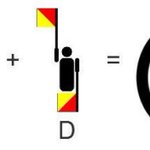





The peace symbol was based the semaphore signals for "N" and "D," the initial letters in "nuclear disarmament."


These are Brahmi numerals from the 1st century. The glyphs for 1, 2, and 3 are based on tally marks. 4 is an intersection. The rest may have been based on visual metaphors, but of what we can no longer tell.


Can you think of any recently coined morphemes (word parts)?
For example...
- the prefix "-e" ("email," "ecommerce")
- the suffix "-gate" ("Monicagate," "Russiagate")
Here is a new episode of my video series, Origins of the User Experience. youtu.be/swqd2zMunow via @YouTube
The first touchscreen user interface was developed in 1972 for the control room of the particle accelerator at CERN (The European Organization for Nuclear Research).

The Making of Sense retweeted

How did everything come to be the way it is? Check out our fascinating chat with Kevin Knabe of @makingofsense allthingsrisk.co.uk/2016/05/…

The earliest known use of the ♡ symbol for love appears in a 13th-century manuscript of the Romance of the Pear, in which a lover hands his heart to his beloved.

“We speak a language that other people developed. We use a mathematics that other people evolved. I mean, we’re constantly taking things. It’s a wonderful, ecstatic feeling to create something that puts it back in the field of human experience and knowledge.”
- Steve Jobs
The expression, “close, but no cigar,” originated when it was common to win cigars as prizes at carnival games.

The names of the countries "Iran" and "Ireland" are cognate. Both are derived from the Proto-Indo-European word "arya," which means "noble."

One of the oldest written stories is the Epic of Gilgamesh, the Sumerian legend of an actual historical king who lived around 2100 B.C.
