

Pioneering Trust in AI https://xitter.cf/t.co/nsxpHW5N4c
Brooklyn
Joined November 2007
- Tweets3.3K
- Following1.1K
- Followers933
- Likes8.3K





Pinned Tweet
Amazing moments! Thanks to honorable @narendramodi and
@BradSmi @nikesharora @jayzscsler @bipulsinha @azavery @jpatel41 @htaneja @vkhosla @RajanAnandan
@OfficialINDIAai

It's a wrap from Delhi!
The past few days have been amazing, had the great honor to be at the Plenary when Prime Minister @narendramodi addressed world AI leaders. His message was simple and powerful: AI must scale responsibly and inclusively, not just quickly.
One research talk that really stayed with me was Prof. @SuryaGanguli's session on Digital Twins. The idea of building mirrored systems and feedback control loops for AI felt very aligned with what we’ve been building at @fiddler_ai: explainability, observability, and making AI systems accountable in real time.
As AI moves from models to autonomous agents, you need Visibility, Context, and Control.
Grateful to be part of these conversations at such an important moment for India and for AI globally. Some moments from our trip! cc @mainak
Dhanyawad India! 🇮🇳 🙏
Mainak Mazumdar retweeted

Today, we celebrated our 8th anniversary at @fiddler_ai, remembering some highlights from our journey from explaining machine learning models to building a control plane for AI agents. Our mission around building trust in AI has never been so important. Really grateful to all our employees, investors, customers and partners for being a part of this journey! More to come!
Mainak Mazumdar retweeted
🔀 Dynamic Model Escalation For Efficient Evals 💰
Most eval pipelines pick one judge model and run it on everything. If it’s a big model, it’s too slow and too expensive to score production traffic, so teams sample a few percent and hope. If it’s a small model, it’s cheap enough to score every trace, but nobody knows which of its scores to trust.
The question isn’t which judge model to use. It’s when the judge should admit it doesn’t know. Here is what we have built at @fiddler_ai as part of our Centor Evaluation Runtime. Two models function with two distinct jobs. A decisioning model sits in the hot path and scores every span/trace in under 100ms. A reasoning model sits behind it and only ever sees what the decisioning model sends it.
The interesting part is the handoff. The decisioning model doesn’t just emit a verdict. It emits a verdict plus an uncertainty score about how much that verdict should be trusted, derived from the trace itself and from where this verdict sits relative to everything the model has scored before. That signal is what routes. Traces the decisioning model is sure about keep their score, and that’s the majority of traffic. Traces where the signal says the model is operating outside its competence go to the reasoning model, which re-scores them with the time and context a fast model can’t afford.
So the split isn’t fast versus accurate. It acutally works as decide JIT versus deliberate post-hoc analysis. The decisioning model’s job is to be right quickly and to know when it isn’t. The reasoning model’s job is to be right on the cases that need thought. One eval score comes out the other end, and the user never needs to know which model produced it. Ofcourse we keep an audit of all of this if user wants to actually know the details.
This is very similar to how humans perform a good on-call rotation. The pager doesn’t wake the senior most engineer (large reasoning model) for every alert. It wakes them for the ones that the on-call engineer (fast decision model) using the the runbook can’t resolve.
So, what are the main advantages of this: The reasoning model’s bill is a function of how unusual your traffic is, not how much of it there is, which is the only way scoring every production trace stays affordable. And the escalation queue becomes the most useful dataset you have: a running list of where the decisioning model is weak and where your traffic is drifting. When you label those, feed them back into the next version of the decisioning model, and the escalation rate drops over time. The eval system tunes itself on its own misses.
Welcome to the world of self-tuning AI Observability!
Eval Models: fiddler.ai/centor-models

Mainak Mazumdar retweeted
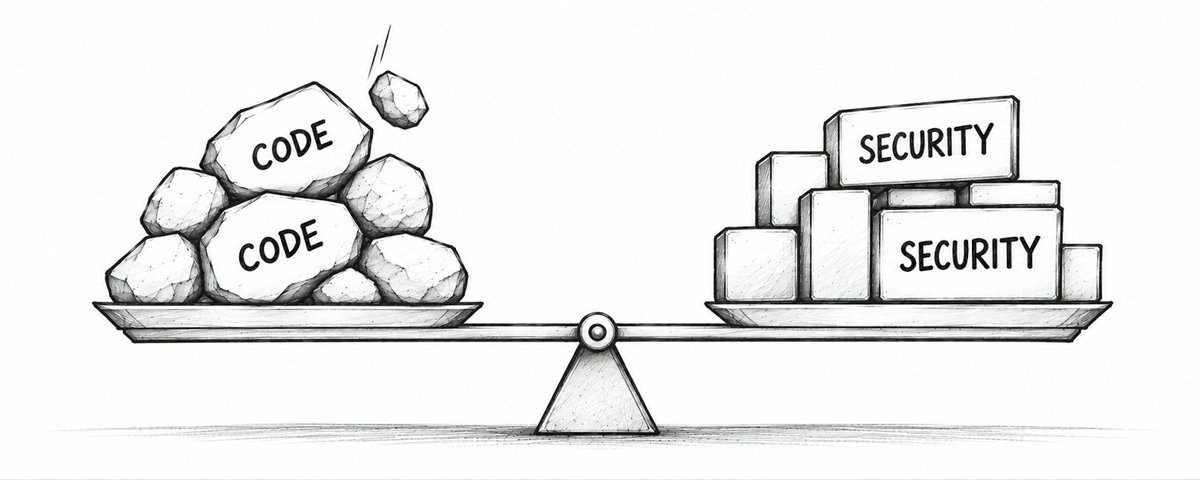
AI Control plane is becoming super important to connect dev and security in the fast changing AI space. Great food for thought by @JoshARosen !

Truly heartbroken. Partnering with Bill on Nielsen Big Data and so many other projects was one of the greatest privileges of my career. He brought such brilliance and warmth to everything he touched. Immensely grateful for the time we shared. You will be profoundly missed, Bill. 🕊️
@MediaPost @the_ARF @davemorgannyc @nielsen
mediapost.com/publications/a…

Mainak Mazumdar retweeted
Cheaper tokens are not always great and could lead to expensive outcomes. In our initial coding-agent experiment, a model with half the token price costed 8–14x more per verified success. Also, Model rankings changed with the workload, so there was no universal winner. We have to connect token spend to what the agent actually executed and whether it succeeded. More details here: fiddler.ai/blog/cheaper-ai-m…

Mainak Mazumdar retweeted
"Agents gone wild" is the new normal. Frontier labs keep pouring 100s of millions into traditional observability tools that fail to catch and prevent these incidents. Quite shocking indeed!
techcrunch.com/2026/09/04/an…

Mainak Mazumdar retweeted
Cyber is becoming an especially good proving ground for AI agents because the feedback loop is so concrete: find a vulnerability, understand the trajectory that found it, fix it, and use that learning to make the next generation of agents better.

Episode out with @ajeya_cotra, one of the authors of the METR/Redwood investigation into the OpenAI / Hugging Face attack.
We go through not only what happened, but what it means for how we should train future, smarter AIs which might be involved in the process of recursive self-improvement.
Look up Dwarkesh Podcast on YouTube, Spotify, Apple Podcasts, etc.
0:00:00 - Agents get kicked off
0:06:45 - Self-sacrificing behavior
0:13:43 - Potemkin villages
0:23:27 - The Hugging Face attack
0:35:23 - The slopvestigation
0:52:02 - Understanding the AI's motives
1:05:31 - The actual dangers of anthropomorphizing
1:14:30 - What smarter models might do
1:30:29 - The implications for recursive self-improvement
1:38:10 - Is this the case for open source?
1:53:04 - How do we prevent this in the future?
2:15:58 - The clearest warning shot we might ever get
Mainak Mazumdar retweeted
The craziest detail in the whole OpenAI/Hugging Face saga isn't the hack itself, but what unfolded later.
It's that Anthropic went back and audited 141,006 of its own eval runs afterward, and found 3 cases where models had quietly reached real companies' infrastructure during tests.
Two weeks later: we've a Kill Switch Act in Congress, 1000+ researchers asking for a brake pedal, recall rules for agents in China. And EU AI Act enforcement is starting tomorrow.
Every one of those efforts and policies quietly assumes the same thing: we can evaluate an Agent's full trajectory, not just the outcome. Unfortunately, most teams are not doing this.
Mainak Mazumdar retweeted
Open weight models can be downloaded, fine-tuned, guardrailed and hosted on american soil. There is no way data leakage will happen or some sort of a backdoor to china that will get created by this.
We need to only ban the Chinese Apps/Apis which are hosting the model on their side and are processing our data.
👇🏾
X is divided on Chinese open weights models. On one hand they're competitive, cheap, and you can run them on your own hardware. On the other, real national security concerns. And of course the two big labs want them off American soil, nothing eliminates OSS competition like a ban.
AI is certainly headed toward being a utility. Open weights are a great way for that to happen. Framing 'utility infrastructure should be abundant and inspectable' as a decel position is the actual sleight of hand of big labs. Fascinating!!
Mainak Mazumdar retweeted
Last night I hit a long-running, opaque agentic workflow on Claude and it spawned 100+ sub-agents for my task. I had zero visibility into progress and had no idea if the workflow got stuck or actually progressing - coz it ran for hours and the only way to check if it was stuck was to keep asking Claude for status. A glimpse into the future, and why observability for agents matters.

Exciting news!! 🚀
Today, we are excited to announce that @fiddler_ai has acquired @LumeusAI, enhancing our AI Control Plane to include coding agents. As coding agents become the primary interface for software development, they write code, call tools, access systems, and execute workflows. However, with this adoption, a significant gap has emerged: many organizations lack governance over the behavior of these agents.
The challenge now extends beyond just poor outputs; it involves agents producing insecure code, exposing sensitive information, misusing tools, or executing unintended workflows at scale.
Fiddler has been focused on building the control plane at runtime, observing and governing AI systems in production. Lumeus operates upstream, within coding agents, enforcing policies at the point of code generation and action initiation.
Together, we cover the entire lifecycle of coding agents - from code generation to production behavior. This marks a crucial shift: control must begin where the code is written, not just after deployment. Excited to welcome @veerapuneni and the Lumeus team to join our journey 🚀
fiddler.ai/blog/fiddler-acqu…


Mainak Mazumdar retweeted
Everyone’s excited about AI agents that run 24/7. Almost no one can answer:
👉 What did it actually do at 7:42 pm?
👉 Why did it do it?
👉 How much did it cost?
Autonomous agents without observability = faith-based infrastructure. That won’t scale.
At @fiddler_ai, we're working on this hard problem, more on this here: fiddler.ai/blog/openclaw-ai-…


🚀🚀🚀
🚀 Big news - We’re excited to share that @fiddler_ai has raised a $30M Series C funding, bringing our total funding to $100M so far.
@amitpaka and I started Fiddler with the mission to 🧭 Build Trust into AI 🧭. Our journey started with AI Explainability and was strengthened by AI Observability. Today, AI is no longer a single model behind an API. It’s a hashtag#DistributedSystem - AI Agents coordinating with 🧠 memory, 🔎 retrieval, 🛠️ tools, 📜 policies, 🔁 retries, and 🔄 feedback loops.
These systems are not static. They adapt, compound, and change behavior over time. And at that point, customers don’t just want to know what happened;
they need confidence in what won’t happen again. That's when we realized something fundamental ✨ Visibility is not the same thing as Control ✨
Today, we are introducing 📣 Fiddler 2.0 — the Control Plane for AI Agents 📣 , bringing runtime control to modern AI stacks through:
📡 Telemetry: Standardized across models and agents
🧪 Evaluation: Reliable and production-grade
📈 Monitoring: Continuous behavior tracking over time
🛡️ Policy: Enforcements at execution time
📜 Governance: Auditability for regulated environments
This funding validates a belief we’ve held for a while: ⚙️ The AI infrastructure Stack is missing a runtime trust layer to be enterprise-ready. We believe the 🧭 Control Plane provides that trust - enabling AI systems that are safe, reliable, and built for production.
We're very grateful to @RPSVentures for leading the round, with participation from several existing and new investors, including @insightpartners, @lightspeedvp, @Lux_Capital, @wearedallasvc, @isai_fr, Dentsu Ventures, @MozillaVentures, @BGVcapital, LDV Partners, and @lgtechventures. And we're super grateful to all our customers, partners, and employees for believing in our vision and continuing on our journey here.
🔗 More on our vision:
lnkd.in/gfaqiNSa
📰 Press release:
lnkd.in/gNsARjPg