

AI design tool loved by enterprises and startups to go from idea to production. Try for free.
San Francisco, CA
Joined October 2023
- Tweets1.4K
- Following2
- Followers11K
- Likes3.1K






Pinned Tweet
We completely reimagined how you design in Magic Patterns.
Everything. Everywhere. All at once.
MagicOS is out today.

Today we're launching MagicOS. And we've come to the conclusion that designers are NOT getting replaced.
most of the industry moved to the same answer this year: give the agent its own canvas, let it run, hand you the output.
we made a different bet: the canvas should be yours and the agent is your collaborator. that’s MagicOS.
most AI design tools are a linear conversation: prompt, generate, iterate, repeat. a hundred prompts in, you might have a great final design, but the reasoning, rejected directions, and inspiration that got you there are buried in a chat log nobody will ever scroll back through.
MagicOS is a persistent, spatial canvas. Your PRD, inspiration images, design system, variations, rejected directions, final picks - all of it lives together, all in one place, instead of stacked on top of itself and lost.
it’s voice-first. talk to it in real time and watch work land directly on the canvas as you speak.
it’s also multiplayer. your whole team works on the same canvas together.
and it still runs on your design system and components because none of this matters if the output doesn’t look like your actual product.
three months ago, this was internal only at Magic Patterns, my co-founder's weekend project. it’s now live for everyone.
Design everything, everywhere, all at once.
What happened when Claude Design came out?
Alex and Dalton discuss what it means to build an AI company when the foundation models keep getting better.
They also dive into why we built MagicOS and our vision for the future of AI-powered design.
Thanks for having us, Dalton!

The question on a lot of founders minds: What do you do when Claude enters your market?
I sat down with @alexdanilowicz from @magicpatterns to provide some thoughts and advice for founders imagining how they would react and rise to the occasion.
In addition, we talk about Magic Patterns new MagicOS launch, a design agent built for the future.

Magic Patterns retweeted

The question on a lot of founders minds: What do you do when Claude enters your market?
I sat down with @alexdanilowicz from @magicpatterns to provide some thoughts and advice for founders imagining how they would react and rise to the occasion.
In addition, we talk about Magic Patterns new MagicOS launch, a design agent built for the future.
We launched MagicOS this week.
- Markdown, PDFs, images in the canvas
- Agent has context on everything
- Export to code, use your design system
Live and free to try today.
Here's a walkthrough to get you started:
Ok, launch went WAY BETTER than expected.
Here's a walkthrough on how to use MagicOS:
If I were on a product team at YouTube shipping a new feature (say 'creator plus') here's how I'd design it in 5 mins:
1. Drop in a PRD, a screenshot, and existing product states
2. Tell MagicOS to build a modal referencing the PRD
3. Fire off 2 more threads in parallel
4. Ask it to audit the modal against the PRD
5. Publish the final version as a live interactive url
6. Check different states and share with stakeholders
This is how most teams use @magicpatterns today.
xitter.cf/alexdanilowicz/status/…


Magic Patterns retweeted
Ok, launch went WAY BETTER than expected.
Here's a walkthrough on how to use MagicOS:
If I were on a product team at YouTube shipping a new feature (say 'creator plus') here's how I'd design it in 5 mins:
1. Drop in a PRD, a screenshot, and existing product states
2. Tell MagicOS to build a modal referencing the PRD
3. Fire off 2 more threads in parallel
4. Ask it to audit the modal against the PRD
5. Publish the final version as a live interactive url
6. Check different states and share with stakeholders
This is how most teams use @magicpatterns today.
xitter.cf/alexdanilowicz/status/…
Today we're launching MagicOS. And we've come to the conclusion that designers are NOT getting replaced.
most of the industry moved to the same answer this year: give the agent its own canvas, let it run, hand you the output.
we made a different bet: the canvas should be yours and the agent is your collaborator. that’s MagicOS.
most AI design tools are a linear conversation: prompt, generate, iterate, repeat. a hundred prompts in, you might have a great final design, but the reasoning, rejected directions, and inspiration that got you there are buried in a chat log nobody will ever scroll back through.
MagicOS is a persistent, spatial canvas. Your PRD, inspiration images, design system, variations, rejected directions, final picks - all of it lives together, all in one place, instead of stacked on top of itself and lost.
it’s voice-first. talk to it in real time and watch work land directly on the canvas as you speak.
it’s also multiplayer. your whole team works on the same canvas together.
and it still runs on your design system and components because none of this matters if the output doesn’t look like your actual product.
three months ago, this was internal only at Magic Patterns, my co-founder's weekend project. it’s now live for everyone.
Design everything, everywhere, all at once.
Magic Patterns retweeted

The team just doesn't miss.
Holy shit.
Today we're launching MagicOS. And we've come to the conclusion that designers are NOT getting replaced.
most of the industry moved to the same answer this year: give the agent its own canvas, let it run, hand you the output.
we made a different bet: the canvas should be yours and the agent is your collaborator. that’s MagicOS.
most AI design tools are a linear conversation: prompt, generate, iterate, repeat. a hundred prompts in, you might have a great final design, but the reasoning, rejected directions, and inspiration that got you there are buried in a chat log nobody will ever scroll back through.
MagicOS is a persistent, spatial canvas. Your PRD, inspiration images, design system, variations, rejected directions, final picks - all of it lives together, all in one place, instead of stacked on top of itself and lost.
it’s voice-first. talk to it in real time and watch work land directly on the canvas as you speak.
it’s also multiplayer. your whole team works on the same canvas together.
and it still runs on your design system and components because none of this matters if the output doesn’t look like your actual product.
three months ago, this was internal only at Magic Patterns, my co-founder's weekend project. it’s now live for everyone.
Design everything, everywhere, all at once.
Magic Patterns retweeted

introducing MagicOS
I watched designer after designer send prototype links as the only handoff, just to hear:
- "have you tried ___", when they'd already tried 50 versions of that exact thing (but the variants are just deep in the version history)
- "this button doesn't work?", when it's irrelevant to what the prototype was actually trying to show
- "oh, I also implemented this *completely other unaudited thing that AI vibe coded in*"
We built MagicOS for this. Ship the story behind your design decisions, not just the link.
Today we're launching MagicOS. And we've come to the conclusion that designers are NOT getting replaced.
most of the industry moved to the same answer this year: give the agent its own canvas, let it run, hand you the output.
we made a different bet: the canvas should be yours and the agent is your collaborator. that’s MagicOS.
most AI design tools are a linear conversation: prompt, generate, iterate, repeat. a hundred prompts in, you might have a great final design, but the reasoning, rejected directions, and inspiration that got you there are buried in a chat log nobody will ever scroll back through.
MagicOS is a persistent, spatial canvas. Your PRD, inspiration images, design system, variations, rejected directions, final picks - all of it lives together, all in one place, instead of stacked on top of itself and lost.
it’s voice-first. talk to it in real time and watch work land directly on the canvas as you speak.
it’s also multiplayer. your whole team works on the same canvas together.
and it still runs on your design system and components because none of this matters if the output doesn’t look like your actual product.
three months ago, this was internal only at Magic Patterns, my co-founder's weekend project. it’s now live for everyone.
Design everything, everywhere, all at once.
Celebrating ALL designers!
Today marks roughly 3 years since the first line of code for @magicpatterns was written.
For our birthday, we wanted to celebrate all types of designers and creatives, so we:
- got a custom piñata made (of our logo)
- ordered it from a shop in Tijuana, Mexico
- I drove it across the border
- filled it with candy
- wrapped pieces with the names of our earliest users
- the team took turns swinging until it broke
- for every name that fell out, we wrote a handwritten thank you card
3 years ago, we started as just two people with a vision. Big thank you to our earliest power users who stuck around long enough to help us figure the rest out.
belated happy birthday, magic patterns!
Magic Patterns retweeted

Turns out @magicpatterns is goated here. Thanks to @Teddarific for getting me onboarded

I'm desperately looking for a platform that lets me create slides programmatically with a few key features.
1. Lets you use your own design system to a good, customized degree.
2. Has a real MCP (Not just a Claude or Codex Connector)
3. Lets you use custom domains.
4. Lets you use the MCP from Muse
I've tried 10 systems, and they all fail at least one of these tests. If you have something you like, let me know.
Magic Patterns retweeted

Empece a usar @magicpatterns y es lo mejor que descubrí en el año

Magic Patterns retweeted

Founders are locked in.
@magicpatterns
@trycardinalai
@proto_labs_inc
@betterdesign_
@pika_labs and more!
We're ready to invite the sickest designers in SF for our inaugural speed dating event.
Designers in school, juniors and fresh grads welcome!
@designmeetuphq @ilyssa_yan @chiquwch
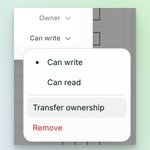
Tip: You can transfer ownership of any design in Magic Patterns. Just add the new owner to the design, then click “Transfer ownership.”

Magic Patterns retweeted
When @ESO_Solutions tested nearly every AI design tool, they ended up choosing Magic Patterns.
Designers, PMs, and engineers scored the tools on impact, confidence, and effort to adopt. The deciding factor? Magic Patterns was a valuable tool their entire team could actually use.
In this clip from @jayneil, ESO shares how they evaluated the options and why Magic Patterns was the right fit.
How does a fast-moving fintech actually leverage AI design tools?
This Thursday, Roberto (Roe) Mendoza, Founding Product and Growth Lead at Kordis, walks through his team’s product development workflow.
Oct 1 · 10am PT / 1pm ET
luma.com/event/evt-WD0p8AWSX…
Can’t make it live? Register and we’ll send you the recording.
