

Linguist @UofT and @MQLinguistics. Co-EiC @glossa_oa. Child language development, Semantics, Pragmatics, Gesture
Toronto, Canada
Joined January 2018
- Tweets113
- Following448
- Followers395
- Likes339







Lyn Tieu retweeted

"Grammar Across Perceptual Dimensions", forthcoming in Open Mind, led by Lyn Tieu and Emmanuel Chemla:
lingbuzz.net/lingbuzz/008850
We explore non-signers' intuitive understanding of loci and Role Shift, two key properties of sign language based on locations in signing space.
Lyn Tieu retweeted

📢 Join us for the "Puzzles of Agreement" Online Workshop! 🧩
🗓️ When: October 24-25
🎓 Co-organizers: Univ. of Bucharest, Univ. of Toronto, UMass Amherst, ZAS Berlin
💡 Dive into intriguing puzzles about agreement. There's something for everyone! sites.google.com/view/puzzle…

New paper out in Natural Language Semantics with Cory Bill & Jacopo Romoli: we present 4 experiments comparing how people treat free choice inferences in positive and negative environments, compared to standard scalar implicature baselines (preprint below) link.springer.com/article/10…
(main finding: they don't treat them the same! which has implications for implicature-based vs. homogeneity-based analyses of free choice)
Preprint here: ling.auf.net/lingbuzz/007279
107
Lyn Tieu retweeted
New entry on sign language semantics in the Stanford Encyclopedia of Philosophy (with Jonathan Lamberton and Jeremy Kuhn; this is the very first entry on sign language in this encyclopedia). plato.stanford.edu/entries/s…
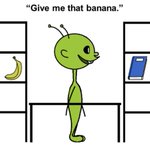
Check out our new short paper on how people integrate visual (gaze) and linguistic (determiner) cues when interpreting demonstratives (bonus: features a very cute alien named Waba Waba!) drops.dagstuhl.de/entities/d…

Lyn Tieu retweeted
What is the role of incompatible disjuncts in deriving exclusivity? In line with recent corpus studies (Jasbi et al 2018, 2022), we show experimentally that children that are inclusive and conjunctive with compatible disjuncts are nonetheless exclusive on incompatible disjuncts.

Lyn Tieu retweeted
Consider submitting to the online conference "Puzzles of Agreement: Syntactic, Semantic, and Psycholinguistic Perspectives" (October 24-25 2024), organized by the Univ. of Bucharest, Univ. of Toronto, UMass Amherst, ZAS Berlin, Deadline: 20 September linguistlist.org/issues/35-2…
Our new open access article is out in QJEP! 4 experiments showing: (i) emoji make different semantic contributions depending on their placement; (ii) like gestures, they can lead people to draw linguistic inferences typically associated with normal words journals.sagepub.com/doi/10.…

Lyn Tieu retweeted
Presenting a poster today entitled "Not all complex disjunctions are alike: On inclusive and conjunctive interpretations in child Romanian" (Adina Camelia Bleotu, Rodica Ivan, @hybridhhoney , Gabriela Bîlbîie, @AntonBenz2, Mara Panaitescu, @lyn_tieu #CogSci2023

Lyn Tieu retweeted
Check out our remote poster at @HSP2023 today, 8 a.m. (Pittsburgh) on how adult Romanian speakers understand various disjunction markers in Romanian: they tend to be more exclusive (A or B but not both) with morphosyntactically marked "sau...sau" or prosodically marked "sau" :)

Lyn Tieu retweeted

Vous commencez la dernière année de votre B.A. et vous vous spécialisez en études françaises ⁉️ Nous prévoyons avoir une séance d’information sur les programmes de maîtrise le vendredi 18 novembre prochain. La date limite pour faire la demande d’admission est fixée au 15 janvier

Lyn Tieu retweeted

Proud supervisor shout out to @Nichola_SP presenting her PhD research. Well done! @JuliaStarling4 @lynguiste @DrMelKeep @syd_health #SPAConf

New paper with Rob Pasternak out in the Quarterly Journal of Experimental Psychology - we find that co-speech gestures, (co-speech) sound effects, and emoji show strikingly similar patterns of a linguistic behaviour known as presupposition projection. journals.sagepub.com/doi/10.…
#ScalarImplicature folks - our new paper looks at children’s interpretation of “some” embedded under “every” - we find children and adults access implicatures at similar rates but differ in their preferred interpretations
doi.org/10.1093/jos/ffab016
@rlycorybill @jacopo_romoli

4
Late night conferencing week continues with a short talk at #AMLaP2021 with TingXu on the presupposition of “again” in English and “you” in Mandarin Chinese — how do adults interpret the trigger and how is it acquired by children? amlap2021.github.io/

7
Loved participating in the Symposium on Gestures, Signs & Meaning w/ JeremyKuhn @TeaAnd_OrCoffee & HerbertClark. All about depictive meanings, iconicity, and how iconicity interacts w/ grammar. Bonus: lots of fun data points with embedded GIFs! #ESPP2021 espp2021.com
1
2