

Director, Asia Engagement at Defense Priorities. I am an expert on both China and Russia, as well as security issues across the Asia-Pacific and Eurasia.
Joined October 2021
- Tweets4.9K
- Following4.9K
- Followers11.5K
- Likes719





Finally got the job done last week -- Barton's Raid Reenactment #8. Forgot the tricorn hats, but otherwise all went smoothly, pretty much. Next year is a big one: the 250th Anniversary since the epic "snatch" raid was July 1777.
I'm looking for a few more patriotic paddlers to join -- seriously. Our training will begin in earnest next May. Drop me a line if interested. I will get you trained up -- no sweat.
My summer was so busy that we ended up delaying til Oct. Yes, it was chilly, but still so very beautiful (under the stars), contemplative, and rewarding. I will say we faced some challenges -- yes. One of our team capsized in the oceanic froth late at night off of Portsmouth. Ugh. But we were trained properly and had the right equipment for the rescue -- throw rope very handy. We were able to continue the mission.
There are many reasons to dig into this vitally important history: to honor the bravery of our country's founders; to reflect on the challenges and hardships these original patriots faced; and to try to recall what kind of country they were setting out to create back then. While I think our founders would like very much some things about contemporary America, I think they would be aghast by our "forever wars" and the global empire that is everywhere fraying at the seams.
This multi-day reenactment is a positive exercise that requires training, careful preparation and tests one's physical and mental stamina. We are interacting with the elements in this 'multi-domain' operation. If you study the route, across Narragansett Bay, you will see the brilliance of the strategic conception of the night raid. I encourage all patriots, including particularly our young people, from around Southern New England and beyond, to join this epic quest for July 2027. Putting my local friends @RINationalGuard @RIHistory @Watson_School @projo @MullowneyPeter @AmRevMuseum @NavalWarCollege @FortAdamsTrust @SalinaBBaker @USSConstitution @BattleshipCove @TheNewportDaily @RIFoundation @RIMonthly @BrownHist @ConcordMuseum @Battlefields @AmRevMuseum on notice.


A major theme of my 2026 book is assessing what the Chinese are learning from Soviet/Russian submarine operations, including SSBN doctrine.

Chinese naval strategists study Russian SSBN ('boomer') development. Jianchuan Zhishi, 8.2026. The focus of this article is on under-ice operations. I will take a closer look.


Speaking of umanned... [On the Feasibility of Developing Heavy Remotely Operated Vehicles for the Special Military Operation [title]
The Emergence of New Tactics
The primary conclusion drawn from the experience of the Special Military Operation—albeit a preliminary one—is that automation and robotics are here to stay in warfare, in all their forms. Since 2022, we have witnessed the progressive integration of remote-control systems, first into small aerial platforms and subsequently into ground-based systems. Today, the presence of ground drones along the contact line is no longer surprising; these vehicles not only transport military supplies and engage enemy personnel but are also capable of combat against other drones. Wheeled platforms have begun to feature miniature net launchers designed to disable nearby rotary-wing aircraft.
The logical next step in these trends is the development of heavier remotely operated vehicles. A prime example is the "Shturm" heavy robotic assault system, which debuted in Chebarkul but has already been dismissed by many as having arrived too late for the war. Several reasons are cited for this view. First, the battlefield is already saturated with various types of drones, leaving no room for tanks—even unmanned ones—as they would likely be destroyed during the initial deployment phase. Second, radio-based communication is considered a critical vulnerability, significantly limiting the vehicle's effective operational range. Third, remote tank operation presents challenges, as operators cannot maintain full situational awareness of the battlefield. These are indeed significant points that warrant detailed analysis.
Let us begin with the claim that drones have definitively and irrevocably driven tanks off the battlefield. This is not the case. The primary role of tanks today—like that of any other armored vehicle equipped with weaponry—is to provide rear-area security for the line of contact. What does this mean in practice? Tank crews on both sides of the front stand ready in concealed positions, rushing to intercept the enemy in the event of a breakthrough. In their downtime, they practice firing from indirect fire positions. In this context, the combat vehicles operate in a defensive capacity and do so quite successfully. It is safe to say that tanks have been a contributing factor to the static nature of the front line in the Special Military Operation.
Massive breakthroughs have become impossible for either side; without aerial drone support—which is inevitably lost during a deep penetration—vehicles and personnel risk being crushed by heavy armor. However, with adequate support (at the brigade level or higher), tanks do launch attacks—which is precisely why they are still fitted with massive "cope cages" and anti-drone netting.
The Ukrainian operation "Vivaldi"—which the adversary describes as an offensive and a resounding success—is an interesting case study in this regard. While that characterization is highly exaggerated, that is not the main point. From July to October 2026, the Armed Forces of Ukraine (AFU) made active use of heavy armor, effectively overturning the notion that tanks were being driven off the battlefield by swarms of drones. All in all, it is far too early to write off heavy combat vehicles in modern warfare—especially when considering unmanned platforms like the TShRK "Shturm."
Incidentally, this vehicle occupies a very specific niche: it is designed for urban combat, and deploying it in open terrain is not practical—at least not for the time being. As is well known, the effectiveness of drones drops significantly in urban environments: visibility is poor, communication is problematic, and the small explosive payload carried by such a "bird" is often insufficient. A 125mm gun, however, is a highly effective asset in urban combat—and the unmanned "Shturm" delivers exactly that.
A second misconception regarding the unmanned tank concept is the idea that it operates in isolation from other combat assets. The "Shturm" and similar vehicles are merely components of a vast modern warfare system, even if they operate at the very tip of the spear. A full division would support just two or three attacking "Shturm" units, providing air cover and reconnaissance, electronic warfare (EW), artillery support, and engineering assistance. This mirrors current tank attack tactics—the only difference being the absence of human crews inside the vehicles. Furthermore, given the right level of motivation and logistical support, unmanned vehicles could achieve a breakthrough of the front line. Such breakthroughs are possible today if one is willing to accept heavy personnel casualties; a fleet of several hundred "Shturms," however, would eliminate the need to factor in such losses. That said, this remains the stuff of science fiction for now—we have yet to see the mass deployment of unmanned tanks at the front...] VO-Rus, 16 Oct


Lyle Goldstein retweeted

"American foreign policy in the 21st century violates all the Founders’ prescient warnings," write @CatoFP's @brandan_buck and @Hoffman8Jon. "US interests abroad are now determined by immense, unconstitutional warmaking power vested in the president, fostered by a web of entangling alliances that make American neutrality impossible and sacrifice liberty in the name of security."
Read here:
cato.org/free-society/spring…

Lyle Goldstein retweeted

"While Trump claims he acted to prevent Iran from acquiring nuclear weapons, the war has made that outcome more likely, not less…'The clear lesson coming out of this for countries that are not friends of the United States would be: get a nuclear weapon,'" @RKelanic told @amconmag.
Story by @AKDay89: theamericanconservative.com/…


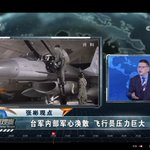
Chinese commentator discusses situation in Taiwan's armed forces and defense policy. CCTV7, Guofang Junshi, 16 Oct. Among other points, it is noted that Taiwan pilots are under extraordinary pressure. It's relatively unusual to have such discussions about Taiwan in the Chinese media (aside from official pronouncements). Is this a new trend?


"... Moreover, one must not forget who commands the most effective and well-trained units of the Armed Forces of Ukraine fighting in the Donbas. These include, in particular, members of the Azov unit (designated a terrorist organization in the Russian Federation), for whom Zelensky is certainly not viewed as an unquestionable authority figure.
Another significant domestic political factor working against the country's current leader is public fatigue regarding the conflict and the desire of the majority—according to sociological surveys conducted in Ukraine—to make far greater compromises to end the conflict than Zelensky is willing to accept.
However, the key point here is the lack of tools and mechanisms for Ukrainian citizens to influence political decisions. Elections are suspended, and any protests, demonstrations, or rallies against the authorities are immediately equated to treason—with all the attendant consequences. Consequently, this factor is unlikely to play a decisive role in shifting the Ukrainian leadership's stance on ending the conflict.
It is safe to say that the current cooling of US-Ukrainian relations is undoubtedly a significant factor that could contribute to ending the conflict. Yet, given the volatility of American approaches in recent years—including regarding the conflict in Ukraine—one should not expect the current situation to inevitably lead to Kyiv’s capitulation at Washington's behest." Izvestiya-Rus, 15 Oct

Chinese PLA trains for amphibious assault with vertical characteristics. Zhongguo Junwang, 4 Oct. I note the use of ground forces helos aboard PLA Navy ships for joint drills.


Some of the people I most admire in this world are Yale graduates, so I am really excited for this engagement in New Haven, where I do hope to spread some good 'ol veritas 🤣
Perhaps I would even meet a few of those most influential Yale profs like @TimothyDSnyder or even @DavidBrooks224? Am definitely hoping to re-connect with my good friend @mbrenes1 -- a major leader in the foreign policy restraint movement.
I had wanted to speak about my 2026 book on China-Russia relations. However, they asked specifically for me to discuss this new article I published @TWQgw (summer 2026). Well, that's also an important issue, so I agreed.

Speaking of Russian firepower, here Chinese strategists keep a close eye on the on-going, anxious nuclear saber dance that is unfolding in Europe. CCTV7, Guofang Junshi, 14 Oct. The specialists are Du Wenlong and Wu Dahui. They know what they are talking about. What do you surmise that Beijing is learning about managing nuclear rivalry and nuclear crises?


"Three-ton FABs Obliterate Enemy Deployment Points and UAV Control Centers [title]
The past 24 hours saw not only new Russian army attacks on various targets deep within territory controlled by the Kyiv regime but also powerful strikes by the Russian Aerospace Forces (VKS) on the enemy's near-rear areas using three-ton high-explosive aerial bombs equipped with UMPK (unified planning and correction modules).
The Russian Ministry of Defense reports that 3,000-kg FABs with UMPK kits destroyed several enemy temporary deployment points. In the occupied part of the Zaporizhzhia region, strikes hit the location of the 65th Separate Mechanized Brigade of the Armed Forces of Ukraine (AFU). In the enemy-controlled part of the DPR, aerial bombs struck a UAV control center belonging to the 1st Separate Brigade of the National Guard of Ukraine. Additionally, Russian Aerospace Forces destroyed several deployment points of the 80th Separate Air Assault Brigade in the Dnipropetrovsk region.
Reports indicate a strike on a data center located in the "Prestige-Center" business complex in Kyiv's Solomianskyi district. This marks the second strike on this capital-city data center within a month. A fire broke out in the administrative and office building—which houses the information and computing center's equipment—following the impact of an attack drone.
Strikes also reached Ukraine's western regions today. Local sources report at least one explosion near Melekhiv, a suburb of Lviv. Impacts were also recorded within the regional center itself. "White mushrooms"—plumes of smoke rising above the struck targets—were visible over the city. Another Baltic prime minister has made headlines. Previously, Estonian Prime Minister Michal called for helping Ukraine "turn Russian oil refineries into ruins." Now, Lithuanian Prime Minister Sinkevičius has echoed this sentiment, urging Kyiv to launch new strikes against data centers in Russia in response to Moscow's "interference" in European elections." VO-Rus, 13 Oct

China shows off its ever-expanding collection of combat drones. CCTV7, Junshi Baodao, 13 Oct. Seems the PLA seems to be at or near the frontier of drone warfare, the idea that Taiwan's 'hellscape strategy' is going to stop the PLA has always struck me as fanciful, wishful thinking. Take on a drone superpower and get out-droned, it seems to me.


Right on @jekavanagh ! This debate is long overdue.

"The U.S. foreign policy is in a period of flux. And people are debating what the U.S. role in the world should be.…Being clear and direct about alternatives and options that the U.S. has, and making a strong case for why this is in the U.S.'s interest contributes to the debate."
Director of Military Analysis @jekavanagh quoted @SCMPNews: scmp.com/news/china/military…

"Against this backdrop, South Korea is moving beyond the mere export of finished weapon systems; it aims to establish industrial partnerships with NATO members across areas such as joint research and development, co-production, and equipment maintenance and support.
On one hand, South Korea is continuously increasing its engagement with NATO’s multilateral mechanisms. It has initiated negotiations on a "Basic Procurement Agreement" with NATO and released guidelines on adopting and managing NATO standards, thereby aligning domestic defense products more closely with NATO requirements and paving the way for South Korean companies to enter the NATO joint procurement market. South Korea participates as an observer in NATO projects concerning defense raw materials—covering areas such as ammunition, propellants, and specialty metals—and has joined NATO’s "SpaceNet" initiative, collaborating on satellite imagery sharing and space situational awareness. Furthermore, in April of this year, South Korea hosted a delegation of ambassadors from all 30 NATO member states, organizing tours of defense production lines and discussions on cooperative strategies to explore opportunities for multilateral collaboration. Meanwhile, South Korean companies are accelerating the establishment of localized equipment support systems across Europe. Currently, Hanwha Group is building a production plant in Romania for K9 self-propelled howitzers and ammunition resupply vehicles; Hyundai Group has partnered with Polish firms to undertake the local production and maintenance of armored vehicles; and Hanwha Aerospace is advancing the local construction of a missile final assembly plant in Poland.
Moving forward, South Korea plans to continue negotiating procurement framework agreements to enable its companies to participate in NATO joint procurement; expand the scope of joint R&D, focusing on areas such as long-range precision munitions, ground-based air defense systems, and space situational awareness systems; and establish a mechanism for regular meetings between the South Korean and NATO defense industries to create a platform for normalized cooperation.
**Emerging Geopolitical Security Risks**
South Korea’s continued alignment with NATO and the expansion of cooperation aim to integrate domestic defense firms into NATO’s long-term supply chains, thereby converting its production capacity advantages into stable, long-term export revenue. At the same time, South Korea hopes to leverage its status as a NATO industry partner to enhance its international influence.
However, South Korea’s push for deep cooperation with NATO’s defense industry is likely to trigger a geopolitical chain reaction with trans-regional implications, giving rise to multiple security risks.
For South Korea, tying itself to NATO’s defense industry could curtail its strategic autonomy. Should NATO initiate wartime mobilization of its defense supply chain, some of South Korea’s defense production lines and ammunition supply chains might be incorporated into NATO’s procurement and logistics networks, effectively linking the South Korean defense industry to NATO’s security architecture. Defense industry strengths originally intended to bolster national power could transform into strategic constraints; South Korea might be compelled to prioritize NATO equipment and ammunition orders, passively sharing the burden of supplying defense materiel to the European theater. Furthermore, deep industrial integration requires South Korea to disclose certain equipment performance specifications and obtain NATO system certification. The development of domestic defense equipment would need to align with NATO’s unified technical specifications and equipment data interface standards, thereby restricting choices regarding technical pathways and component selection.
For NATO, defense industry cooperation with South Korea represents a key step in implementing its strategic posture in the Indo-Pacific region. Defense industry cooperation, characterized by relatively low barriers to entry and strong ties between partners, serves as a common pathway for strengthening military linkages. By leveraging South Korea’s mature defense industrial base and unique geostrategic location, NATO could extend its European supply chains—covering weapons production, ammunition resupply, and maintenance and support—into the Asia-Pacific region. This would deepen security ties between Europe and Asia while establishing regular communication channels through industrial cooperation, thereby providing a pretext for NATO to intervene in Asia-Pacific security affairs.
Viewed within the broader regional landscape, the mutual alignment between South Korea and NATO is poised to exacerbate the polarization of global defense blocs and heighten uncertainty regarding the global security situation." GFB-China, 14 Oct, p.4

"As of October 8, 2026, Japan has not yet finalized decisions regarding the next-generation submarine's displacement, the number of vertical launch cells, missile selection, propulsion configuration, construction budget, or entry-into-service schedule—though this remains subject to change.
The issue of propulsion is particularly critical for Japan, as its submarines may need to traverse distances from the Japanese islands to the East China Sea, the Philippine Sea, and the western Pacific; in these regions, transit times and environmental conditions during battery charging significantly influence deployment planning.
This naturally raises the question of what interests Japan holds in the aforementioned areas. We shall pass over the Kuril Islands—best not to stir up trouble, as the saying goes. But operations at a range of 2,000 to 3,000 kilometers from its own shores...
Consequently, nuclear propulsion remains under consideration, as a larger submarine equipped with vertical launch cells would require greater electrical power and sustained underwater speed than Japan's current diesel-electric vessels.
In September 2025, an advisory group recommended proceeding with the development of a next-generation propulsion system, and on September 11, 2026, Defense Minister Shinjiro Koizumi confirmed that nuclear-powered submarines would not be ruled out. The operational difference can be illustrated by looking at sustained transit speed: a submarine traveling at 20 knots covers 480 nautical miles (889 kilometers) in 24 hours and 2,400 nautical miles (4,445 kilometers) in five days. A nuclear-powered submarine can maintain high underwater speeds and sustain crew life-support systems using energy from its nuclear reactor, whereas a *Taigei*-class submarine must carefully manage its battery reserves and surface—or rise to a shallow depth—whenever recharging becomes necessary.
Is there any doubt that the Japanese will build nuclear-powered submarines? Probably not. The country’s level of engineering and industrial development suggests that this poses no real challenge. A different question, however, is against whom Japan’s impressively and dynamically evolving navy is directed, and just how far this expansion will go.
It is often said that much of life in Japan is still guided by the spirit of *Bushido*—particularly within the armed forces. Yet, it is important to understand that *Bushido* was never a single, official code of conduct; it remains in history as the cultural ethos of the samurai and does not serve as a foundational value system for the majority of modern Japanese people.
The modern military, however, is a different matter. Among the Japanese military, *Bushido* is intertwined with a desire for national resurgence—a sentiment that has become increasingly apparent in recent years.
In their sense of grievance and perceived deprivation following defeat, the Japanese bear a certain resemblance to the Germans during the interwar period: there is a powerful urge to seek vindication and prove to the world that Japan is a great nation. In this context, *Bushido*—with its noble and inspiring tenets—fits the situation perfectly. Justice, mercy, honor, courage, loyalty, and courtesy—all these tenets of Bushido, if properly adapted (as is the global norm today), can serve as powerful tools for steering people in the right direction.
It is a pity, however, that *seppuku*—once an integral part of the samurai era’s legal and value systems—is no longer popular. It was inextricably linked to Bushido, acting as a mechanism to uphold reputation, accountability, and social order within the warrior class; today, one can cherry-pick the useful aspects of the Bushido path while discarding inconvenient elements like accountability.
The result is a kind of "Bushido-style" pacifism: armed with katanas, *yari* spears, and *naginata*—yet devoid of the slightest sense of responsibility.
Japan is set to build a formidable navy. Within just 10 to 15 years, it will possess a fleet that adversaries will find difficult to contend with. It is quite possible that the Japanese navy will rank among the top three globally, alongside the Chinese and American fleets—or, more precisely, alongside the American fleet in opposition to the Chinese.
There is a strong desire in Japan for a "second Tsushima." Revanchist sentiment is taking deeper root in the minds of politicians, driving the construction of ever more warships. Yet, even as they pursue this path—dreaming of Tsushima and the Java Sea—they would do well to remember Midway and Leyte Gulf.
None of this, however, will stop Japan from building its new fleet." VO-Rus, 13Oct
