

Noteworthy follows for stock market, AI-leveraged trading and crypto.
New York, NY
Joined January 2024
- Tweets594
- Following10
- Followers16
- Likes395

MarketLurker retweeted

ex-Jane Street trader who trained their Quants called poker sh*t for trading, then revealed what they train Quants instead
Jane Street finally made it public...
It's called Figgie and you can apply for your AI trading setup:
4 players, 10 cards each - one suit is revealed, the biggest holder takes the rest of the pot
why it beats poker:
• poker shows you ~2 hands an hour, Figgie shows you 36
• poker takes 500-1,000 hours to get food, Figgie takes a few dozen
• poker players fold 75% of hands, in Figgie you're in the action 75% of the round
what it drills into you:
• if someone's desperate to buy from you, ask what they know
• update the second the order flow changes
now the twist: it works on AI agents too
someone already sat GPT, Claude, Gemini and Grok at one table, Grok cornered the goal suit in 6 of 10 games and still finished dead last
so your agents can master this game and carry the same skills into real trading
try it now, then read article below on building the best AI trading setup:


MarketLurker retweeted

Automated Claude funnel produced a pretty decent strategy yesterday.
I've put a lot of work into the funnel recently to reduce the output but increase the quality of strategies.
Trying to find the balance between trade frequency and quality of signal is tough, but I feel I have it semi-nailed now.
Source of the idea below 👇


MarketLurker retweeted

They pulled every prediction market into one layer and route each trade to wherever it's actually better
Tomorrow the Founder of Agg Market joins our live stream. Zach will show the same market across several venues at once, how Agg decides where to execute, and why the venue with the best price can sometimes be the worst place to trade. We'll open a live market, break down how to split a large order across venues, and place a trade together - and that's not all.
Live on PredictTime -
@ZHeerwagen, founder @Agg_Market
October 8, 4:00 PM UTC

MarketLurker retweeted

I asked Opus 5.5 to make me the strategy that @MrMilkTrading shared in this tweet.
I then let my own engine run it through 1-5min all of the timeframes and run all of the settings through the Optimizer and this is the result that I got.


MarketLurker retweeted

Its fun to just ask claude to find you profitable wallets , build a full profile page, and optimize your copy strategy based on what the wallet is actually good at trading.
best part is it actually works cause you're not trading against some extractive token launch farm


MarketLurker retweeted

Two things I heard this month:
1. "The institutional allocator I work for will immediately skip any fund who uses Interactive Brokers."
and
2. "Market makers consider the trade flow from Interactive Brokers to be toxic, because it has the highest likelihood of being a skilled counterparty."
MarketLurker retweeted

准备把这个在实盘跑了2个月的
盈利策略公开了
胜率80%,本来最大回撤是7%。
也经历了多持仓情况下市场下跌到9%
依旧是很优秀的回撤比例
这个是比较复利,做量化交易的都应该来看看:vergex.trade/register?ref=6P…

MarketLurker retweeted

This article is criminally underrated.
Defi guy spends 1k/day on infra and still makes money.
I've talked to the guy, and apparently he spent 12k in 1 month doing agentic engineering, based. and he got 35 features predicting spread. also based
Smart lad.


MarketLurker retweeted

So you want to build a strategy, but are not sure where to source inspiration or ideas from? Here are some top sources I have found overtime. Many of these will provide full strategy parameters, some will spark ideas, some will simply teach you things you didn't know.
SSRN (ssrn.com)
A main home for academic finance papers, free to read. Search specific keywords for things of interest.
arXiv (arxiv.org/archive/q-fin)
A main home for academic finance papers, free to read. Search specific keywords for things of interest.
Concretum Group (concretumgroup.com/papers)
The authors have published several intraday papers on various things including opening range breakout and intraday momentum.
Ernie Chan's blog (epchan.blogspot.com)
Free posts on mean reversion and momentum from a well known quant.
Quantocracy (quantocracy.com)
A daily aggregator of quant blog posts. Good way to discover new authors.
QuantConnect (quantconnect.com/research)
Research articles written by various traders sharing ideas, strategies, and concepts.
Unger Academy (ungeracademy.com/blog)
Free articles from a well known futures systematic traders covering strategy breakdowns and concepts.
Robot Wealth (robotwealth.com/blog)
Free practical, code driven articles.
Alvarez Quant Trading (alvarezquanttrading.com/blog…)
Free blog with tested equity and futures ideas.
MarketLurker retweeted

我让 Astra 给我想的一个波动率的因子,这么简单的逻辑我过去那么久居然都没想到过,实在是无语...
加入这个因子后,策略整体表现获得了明显提升,简单说来就是趋势追踪策略在震荡行情里不开大仓位...
只有那种持续慢涨或有明显涨跌的行情才会被视为潜在趋势,同时即使连涨一周,但每天仅涨0.1%,在这里也会被视为趋势早期阶段,吊打很多波动率指标!
毕竟缩量震荡上行在我之前用的波动率指标里都是判断震荡而不是趋势Regime的...

MarketLurker retweeted

你好,我的中国朋友!
你的套利工具做得非常好,不过你的列表里只有11家交易所,而我的有51家。
我觉得我的工具对你们会很有帮助:
perpdexlist.com


做跨所套利最累的,往往不是下单,而是盯盘。
PERP 产品 越来越多,价差可能只出现几十秒,也可能持续几个小时。单看某一刻的数字没有意义,更重要的是:
• 价差是否持续存在
• 相比历史均值是否明显扩大
• 盘口深度是否支持真实成交
• 扣除资金费率后是否仍然值得关注
所以我做了 Panda Pulse——一个专门面向 PERP DEX 的持续价差监控工具。
它不是又一个交易所数据排行榜,而是一个可以持续替你盯盘的价差雷达:
⚡ 每秒采集各平台买一卖一
⏱ 记录价差连续持续时间
📊 对比历史均值与扩大幅度
💧 计算保持目标 BPS 的最大容量
💰 同时展示双方资金费率
🤖 条件达标后推送至 Telegram
目前已经接入 11 个交易平台,包括 Lighter、Robinhood Lighter、HyperLiquid、PopDEX、Vanta、Aster、edgeX、GRVT 等。
Free 版
免费查看 BTC、ETH、HYPE、ZEC、SNDK 五个标的的实时机会。
Pro 版
解锁全部标的、自定义交易所组合、监控阈值、持续时间、历史基准周期和 Telegram 提醒;也支持韩国海力士与美国海力士等不同标的之间的倍率换算比较。
Panda Pulse 只提供数据监控和提醒,不自动下单,也不会接触用户资产。
🚀 Pro 早鸟订阅现已开放。
如果你正在做跨所价差、资金费率套利或 RWA 定价交易,欢迎体验并提出建议。
👉 pandazhai.com/monitor/
#PerpDEX #CryptoTrading
@HyperliquidX @entropyIO @QFEX @Lighter_xyz

MarketLurker retweeted

A大太厉害了,无私地分享了“0风险的LP” 🤣
Arc 上有一个有意思的池子:USDC/USDC,手续费 1%,24h 交易量约 27.7 万美元,收了2.77 k美元的手续费,APR 527%。
离谱的是,这个池子中的两个币竟然是同一个USDC,同一个币自己换自己是怎么做到的?为什么还有人付手续费?
我刚刚去学习了一下,谈谈我的理解,不对请轻拍
1️⃣ 池子的两边分别是什么?
一边是原生 USDC,用来支付 Gas;另一边是 USDC 的 ERC-20 接口。
它们不是两个发行版本,也不是 USDC 和跨链 USDC,而是同一份余额的两个操作入口,不需要 wrap/unwrap。
2️⃣ 为什么能放进同一个池子?
因为 Uniswap v4 按资产标识区分币种:
原生 USDC 用零地址表示
ERC-20 USDC 用 0x360…000 表示
对池子来说,这是两个不同的标识;但在 Arc 底层,它们对应同一种资产。于是就出现了这个“自己和自己组 LP”的池子。
3️⃣ 交易量从哪里来?
这个池子是三池套利中的一环:
pool 1: COIN A/原生USDC
pool 2: 原生USDC/ERC-20 USDC
pool 3: COIN A / ERC-20 USDC
以一个tx为例拆解:
explorer.arc.io/tx/0xfa8af7e…
220.079 USDC(ERC-20)
→ 217.560 USDC(原生)
→ 约 20.77 万枚 Minara
→ 221.007 USDC(ERC-20)
第一步拿 USDC 换 USDC,亏了约 2.519 USDC;但后两步利用 Minara 两个池子的价差,把这笔成本赚了回来。整条路线在后续分配和 Gas 之前,剩下约 0.928 USDC。
所以,这个池子的作用,是被交易程序当成了连接“原生 USDC 池”和“ERC-20 USDC 池”的中转池,顺便收取 1% 的过路费。
但这个中转并不是 Arc 的必要步骤。 两边本来就是同一份钱,是当前这笔套利程序选择了绕路。Arc 官方甚至明确提醒,不要把这两个接口配成池子。
这也解释了它为什么能出现高 APR:赚的是部分交易路线绕路的手续费。至于全部交易量有多少来自这种套利,还需要更多样本。
如果程序优化路线、其他池子的价差收敛,这部分交易量和收益也可能很快消失。
这里只做原理分析,小白不要去操作,前端添加/移除LP可能会出错的!!!!!!!
不要去操作
不要去操作
不要去操作
DYOR
DYOR
DYOR


MarketLurker retweeted

“Why do you need the government to stop AI progress inside your private company when you are the CEO of the company already?”

MarketLurker retweeted

Brilliant paper by NVIDIA.
they found a way to make KV cache transferable between models.
the target model skips prefill entirely, and the conversion runs 2.7 to 25x faster than processing the context again.
let's understand why this is so important today.
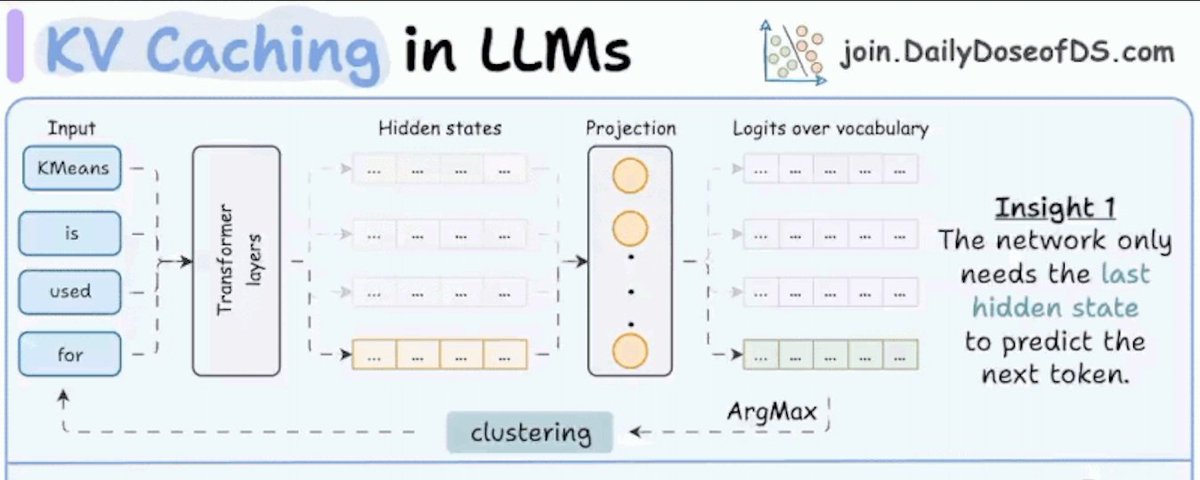
LLM APIs are stateless, so every turn sends the entire conversation back to the model. the model reads it again before generating a new token, and all of it is billed as input.
prompt caching lets providers hold the KV cache for a stable prefix and bill cache hits at roughly 10% of the base input rate because that compute was already done.
this 90% reduction is one of the biggest levers in LLM serving.
but the cache only works on the model that produced it. since keys and values depend on that model's weights, another model cannot directly reuse them.
this becomes a problem with LLM routing.
if traffic moves to another model for cost or capability reasons, the accumulated KV cache becomes invalid.
the entire context must be processed again and billed at full rate.
NVIDIA's recent paper treats this as a representation problem.
prefill's main output is the KV cache, so transferring it means converting one model's cache into the representation another model expects.
they first checked whether this conversion had enough structure to exploit.
for Qwen3 14B → 32B, a linear regression from a single source layer reconstructed 56% of the variance in the target model's keys.
because models can have different layer counts, there is no natural one-to-one layer mapping.
so, for every target layer, they rank the source layers by predictive power and use the top eight together.
that pushes reconstruction to 79%.
the mapper has three parts:
> each target layer and head gets its own linear map, solved in closed form instead of with gradient descent.
> cross-layer selection chooses the source layers that best predict each target layer. their ablation shows this contributes the most.
> RoPE adds a position-dependent rotation to keys. they remove it, fit the mapping in position-free space, then apply the target model's rotation again at inference.
across six model pairs from Qwen3, Llama 3.1, and Ministral 3, four retain 73 to 98% of the receiving model's standalone accuracy.
conversion is also 3 to 25x faster than processing the context again.
prior cross-model KV reuse methods either train a neural adapter for every pair or require architecturally identical models.
this approach is closed-form and training-free, but there are still important limitations.
every tested pair belongs to the same model family, such as Qwen → Qwen or Llama → Llama.
cross-family transfer is still future work.
the tested pairs also share KV head count and per-head dimension. mismatched configurations remain untested.
and the work currently covers dense full-attention models only, not sliding-window or attention-recurrent hybrids.
link to the paper: arxiv.org/abs/2608.03893
i wrote a first-principles breakdown of how KV caching works
the article is quoted below.

MarketLurker retweeted

The SEC assembled 17 of Wall Street's biggest names to prepare for 24-hour stock trading
Here's what you need to know:
• The SEC is hosting a roundtable on September 17 to prepare for round-the-clock stock trading in the US.
• Nasdaq wants 23-hour trading by late 2026, NYSE has proposed 22-hour sessions
• Panelists include: Citi, UBS, Cboe, NYSE, DTCC, Invesco, Nasdaq, Schwab, Samsung, Blackrock, Robinhood, Jane Street, State Street, BNP Paribas, BNY Pershing. Citadel Securities, and Interactive Brokers

MarketLurker retweeted

链上知名套利团队 @Cbb0fe 总结了他们过去 10 个月用 2 人团队,在 Hyperliquid(HIP-3 / TradeXYZ)与传统券商 IBKR 之间跑美股/大宗商品合约 Delta-Neutral 套利的全部内幕:
10 个月、跑出 $32B(320亿美元) 成交量、拿下 TradeXYZ 全平台 1.5% 的份额、净利润超 $1,000 万美元、资本真实年化 35% - 45% APY。
更传奇的是:两兄弟此前从未做过美股,甚至不知道期货合约怎么交割,完全靠把 IBKR 界面截图喂给 Claude 边问边自学……
以下是他们从起步、策略、事故到退场的全流程核心细节拆解:
1. 零基础冷启动
两兄弟此前从未交易过美股甚至不知期货机制,全靠把 IBKR 界面截图喂给 Claude 边问边学,7 天搭出原型在生产环境实盘跑通。
2. 核心套利逻辑
跨市场 Delta-Neutral(中性对冲):在 HL 挂单做市或激进吃单,IBKR 同步对冲。针对传统券商痛点,设置了 55 股起投对冲(避开最低手续费)、单笔限额以及 800 股绝对敞口自动熔断。
3. 踩中三大宏观浪潮
• 黄金白银创历史新高:链上散户狂热追多,单月仅吃资金费就收割超 $60 万;
• 中东冲突油价破百:波动加剧,日净利飙至 $6万-$12万美元;
• 芯片股当土狗爆炒:SNDK、MU 爆拉,周净利稳定在 $40万-$50万美元。
4. 差点归零的惊魂时刻
1 月因 IBKR API 数据中断刷新,Bot 误以为未完成对冲,死循环做空了 1.2 亿美元黄金期货,面临强平风险紧急手动砍仓,单日暴亏 -$110 万。当天紧急加装数据鲜活性心跳检测,次日抓住白银 3% 畸变价差单日赚回 $60 万回血。
5. 机构进场,从容退场
随着 Jump(被扒出刷了 $89B)、Wintermute、Ethena 等数十亿美金巨头大举进场抹平利差,他们选择在 9 月优雅收官。
💡 核心思考
敏捷压倒规模:大机构有繁琐的审批合规流程,小团队 48 小时生产上线,把蓝海期最肥沃的利润全部落袋;


MarketLurker retweeted

There is a new LP meta game on @RobinhoodCrypto of using @Uniswap uniV4 hooks as a substitute for mempool JIT (just in time) liquidity as this isn’t possible on arbitrum orbit with to fifo ordering
So you use a v4 hook to mint a tight range from inside it and get infront of the swap. Sometimes with a 5% pool fee lol
Especially useful for tokenized equities if you have access to a nasdaq feed or powerful predictive models like we do @SynthdataCo
Gg

有科学家Robinhood的LP里面狂掏钱,投入3wu一天的手续费就掏了28.6wu
Pool地址:0x374531f25cfb1b92f6d03b946598d53dd934fba6e138bcece153a52113aa73a5
hook地址:0x1191Ac2561817686EFE4296B37BA5a5419Eaa880
我尝试过添加流动性但是被拒绝了,应该就是这个哥们的hook设定拦截掉的
谁能告诉我这是怎么做到的?
在线等很急!!!
@0xphilo PP哥有说法吗
