

Educator. Researcher. Game brain. Design eye. Send coffee.
United States, South Carolina
Joined February 2009
- Tweets27.1K
- Following3.1K
- Followers765
- Likes238K




making an effort retweeted

🚨NEWS: Pete Hegseth wanted a priceless World War II-era globe used by Dwight Eisenhower displayed in his Pentagon office, but instead of waiting for professional curators, his staff attempted to move the historic artifact themselves and DROPPED IT, puncturing the globe near Antarctica and breaking its mounting, according to The Washington Post. The Pentagon confirms the damage.


This is really, really bad

For 70 years, we were told plastic was safe because it doesn't react with anything.
Nature just published proof that it does. And the trigger is water.
Researchers at Columbia University and UC Berkeley took six of the most common plastics on Earth.
Polyethylene. Polypropylene. Polystyrene. PVC. PET. Acrylic.
The stuff in your water bottles, food containers, pipes and packaging.
They ground them into microplastics and dropped them into plain water.
Nothing else. No sunlight. No chemicals. Just plastic and water.
And the water started changing.
At the surface of every single plastic, it began producing hydroxyl radicals. One of the most reactive and destructive molecules in chemistry.
All six plastics did it. Every one.
To prove it, they added a yellow dye to water with polystyrene. Over 10 days, nearly 90% of the dye was destroyed. The water turned almost clear.
In other liquids, the dye survived. Only water made the plastic active.
In plain English:
The plastic isn't leaking a toxic chemical.
It is turning the water around it into something that attacks.
Then they tested what that does to living things.
DNA and proteins got pulled onto the plastic surface like magnets.
Proteins started clumping together.
And red blood cells that touched the particles were torn into broken fragments.
But here is the twist.
The most dangerous plastics were the ones we trusted most.
Polyethylene and polypropylene, the "safe" plastics in bottles and food containers, were the most reactive of all.
The effect was weaker in blood serum. But it was still there.
And microplastics have already been found in human blood, brains, placentas and arteries.
The lead researcher said it plainly: "Water is a key active player here, rather than just a spectator."
We spent decades asking what chemicals leak out of plastic.
Nobody thought to ask what plastic does to the water inside us.
How many times have you sipped from a plastic bottle today?

making an effort retweeted

For 70 years, we were told plastic was safe because it doesn't react with anything.
Nature just published proof that it does. And the trigger is water.
Researchers at Columbia University and UC Berkeley took six of the most common plastics on Earth.
Polyethylene. Polypropylene. Polystyrene. PVC. PET. Acrylic.
The stuff in your water bottles, food containers, pipes and packaging.
They ground them into microplastics and dropped them into plain water.
Nothing else. No sunlight. No chemicals. Just plastic and water.
And the water started changing.
At the surface of every single plastic, it began producing hydroxyl radicals. One of the most reactive and destructive molecules in chemistry.
All six plastics did it. Every one.
To prove it, they added a yellow dye to water with polystyrene. Over 10 days, nearly 90% of the dye was destroyed. The water turned almost clear.
In other liquids, the dye survived. Only water made the plastic active.
In plain English:
The plastic isn't leaking a toxic chemical.
It is turning the water around it into something that attacks.
Then they tested what that does to living things.
DNA and proteins got pulled onto the plastic surface like magnets.
Proteins started clumping together.
And red blood cells that touched the particles were torn into broken fragments.
But here is the twist.
The most dangerous plastics were the ones we trusted most.
Polyethylene and polypropylene, the "safe" plastics in bottles and food containers, were the most reactive of all.
The effect was weaker in blood serum. But it was still there.
And microplastics have already been found in human blood, brains, placentas and arteries.
The lead researcher said it plainly: "Water is a key active player here, rather than just a spectator."
We spent decades asking what chemicals leak out of plastic.
Nobody thought to ask what plastic does to the water inside us.
How many times have you sipped from a plastic bottle today?
Accurate

Security called me at 6:12 AM today.
"Patch every PHP server immediately."
I asked what happened.
"Two critical vulnerabilities. Remote code execution. No authentication required."
Cool.
How many PHP servers do we have?
According to inventory: 12
According to reality:
Nobody knows.
We found one running WordPress.
Three running old internal tools.
One under someone's desk.
Two inside vendor appliances.
A forgotten employee directory from 2016.
And a server named:
PHP-OLD-DO-NOT-TOUCH
Naturally, that one runs payroll exports.
Then we found a PHP 5.6 box.
I asked who owned it.
The documentation said:
BRIAN.
Brian left in 2019.
We called Brian.
He said:
"Oh wow, that's still running?"
Excellent.
By 8 AM, leadership joined the incident call.
CEO:
"Can hackers actually get in?"
Security:
"Potentially yes."
CEO:
"Without a password?"
Security:
"Yes."
CEO:
"Then why do WE need passwords?"
Not the lesson.
Finance asked if we could wait until the weekend to patch because downtime affects revenue.
Security explained that the alternative was letting strangers execute code on our servers.
Finance asked for a cost comparison.
At 9:17, someone suggested temporarily taking the vulnerable websites offline.
Marketing refused.
"Our campaign is live."
So for the next hour, the company officially decided maintaining a landing page for 20% off webinar registration was more important than preventing remote server takeover.
We finally patched everything we could find.
Then our scanner discovered another PHP server.
Hostname:
TEMP-PHP-2014
Uptime:
4,512 days.
Nobody knows what it does.
Nobody owns it.
Nobody can shut it down.
But every time we block network access, the warehouse stops printing shipping labels.
Security has classified it as critical infrastructure.
It is running PHP 5.4.
The vulnerability has existed longer than half our employees.
The emergency patch took four hours.
Finding out what PHP actually runs took eleven.
The internet isn't held together with code.
It's held together with servers everyone is afraid to turn off.
making an effort retweeted

🚨 BREAKING: Meta has suspended the No Kings Instagram account.
This comes as 3,000 protests are scheduled to take place today.

making an effort retweeted
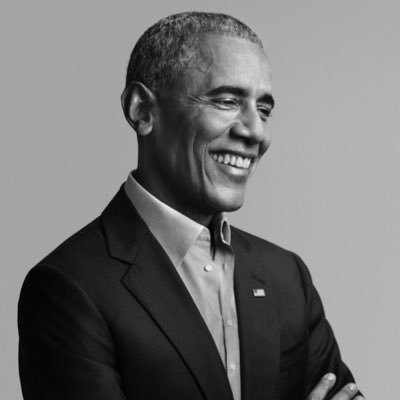
It is a basic principle of American democracy that the government can’t selectively target individuals simply because of their political beliefs or what they say. But that’s exactly what the Trump Administration is doing to Congresswoman Ilhan Omar of Minnesota.
To understand why this is so appalling, it’s important to know the facts. Congresswoman Omar came to this country with her father when she was 12 years old. Five years later, her father became a naturalized citizen. If Ilhan had been 18 at the time, she would have had to apply for citizenship separately. But because she was 17, she became a naturalized citizen automatically.
Congresswoman Omar went on to graduate from college, work as a community organizer, become the first Somali-American legislator elected to public office in the U.S., and win a seat in Congress. There, she has been one of the Trump Administration’s fiercest critics, which has led the president to repeatedly single her out as someone who he believes does not belong in this country.
Now the Administration is actively trying to deport Congresswoman Omar, seemingly based solely on the unsubstantiated theory that she was actually 18 when her father was naturalized, and therefore is not a citizen. Federal agents have raided her home, confiscated personal records, and seized her phone — all to try and uncover a nonexistent smoking gun from 20 years ago that will somehow make their case.
Think about that. The full weight of the federal government is being brought down on a law-abiding elected official because she has dared to criticize the president. And it’s not the first time this has happened. Under President Trump, the Justice Department has repeatedly gone after those he considers his political enemies — from the Attorney General of New York, to the former head of the FBI, to members of the Federal Reserve.
In those cases, the prosecutions either stalled or were dismissed for having no basis in law, and the same is likely to happen in this case. But not before Congresswoman Omar’s life has been turned upside down, her legal bills have piled up, and she’s been forced to spend time fighting unsubstantiated charges instead of serving the people of Minnesota.
The fact that any president, or any administration, is willing to engage in such transparent efforts to intimidate someone should outrage all Americans, regardless of how they feel about Congresswoman Omar’s political views. Because if this becomes the new normal, there’s no reason to believe it will stop with her — or that future presidents, in either party, won’t do the same.
making an effort retweeted

Investor update:
I don't often make equity trades (my average hold period is several years), but I wanted to share that I sold all my $VOO and $SPY yesterday morning.
Why? The AI trade is the only thing holding up the economy right now, and that trade now has too many ways to fail for it to be safe. Increasing interest rates is new information which surprised everybody, and the second-order impacts of this are not being appropriately accounted for.
Here are the points which guided my decision.
1. Inflation stays higher for longer. Interest rates stay higher for longer. Bond prices for data center bonds plummet. Bond holders will need to finance coupon payments with equity sales. Because of all of the self-dealing and trades with equity in the AI trade, this will lead to a fast unwinding in AI stocks.
2. AI spend or use will reach saturation much sooner than we think. Many at the frontier assume usage is going exponential from here. But from where I sit, usage is stagnating amongst early adopters, and companies are being much more critical about spend. Models may be getting smarter but they are not getting cheaper, and ROI is still unclear. But the key reason why this is hidden in plain sight is that no one wants to admit this, because it makes them look stupid. Use might even still increase--just linearly--but that will not be enough to prop up demand.
3. Lab IPOs flop, or get cancelled altogether. This happens, and everything else falls apart. People will lose confidence and the impacts of this will ripply throughout the entire tech ecosystem.
4. RSI becomes real and everything else trends to 0. If a lab creates a superintelligence, not sure how we price everything else in the broader market. For instance, if superintelligence invents a new AI chip and coordinates the operations and starts running on a better GPU than NVIDIA makes, what happens?
5. A recession happens. Interest rates jumping this quickly, combined with high debt loads, are a bad combination at the corporate level. I also think consumer behavior could break with the cost of money being so high. The U.S. runs on credit and high inflation was very unexpected a year ago. I do not think the risk for this is priced in enough. And I don't think it's just because of the war in Iran.
For context, I didn't take this decision lightly. I had held some shares of SPY since 2005 (!) that I just sold yesterday. I was proud of that. Those were some of the first index fund purchases I ever made. But I won't let sentimentality guide my investment decisions.
Overall, I do not think this the current situation is sustainable. Putting a huge proportion of assets into the S&P 500, of which 40% of holdings is comprised of just 10 companies, all of which are highly correlated and at risk due to the points above, is an irresponsible decision.
I still hold some individual stocks which are significantly better positioned against the above risks, like $BRK.B, and long-term zero coupon U.S. treasuries.

making an effort retweeted

North Carolina A&T students marched an hour each way to vote on the first day of early voting after their campus polling site was removed by the Guilford County Elections Board. Proud 👏🏽

making an effort retweeted

Don’t rake your leaves.
It’s a modern day PSYOP to get you to waste your time and resources just to make your environment worse.
Let me explain…
making an effort retweeted

No ISBNs in Canada for AI writing.
This is a fantastic policy, and every country should do the same.
canada.ca/en/library-archive…
h/t @max_spero_

making an effort retweeted

Alex Gibney: “There was an estimate that what [Elon Musk] did by suddenly cutting USAID would cost through disease and starvation as many as 14M lives. Even if you discount that, we know within a year of those cuts where they were literally burning food going to starving children, 500K children died. This is really a crime against humanity, but he makes a joke about it, I put USAID into the woodchipper. What he put into the woodchipper were children”
making an effort retweeted

Apparently things are worse than we could imagine.
From the teachers subreddit:


making an effort retweeted

I read fiction as a break from social media and the news. I used to call it “refilling my head.” But with so many things coming out in first person now — and the publishing industry fetishizing interiority — it’s turned into a firehose of monologues.
I no longer get to bring my imagination to play while reading. Everything’s laid out. Everything’s spelled out. It’s all becoming noise, and it’s driving me back to reading things published before the internet.
(By the way, they were much, much better than most of the stuff winning contracts and prizes today.)

making an effort retweeted

I have no respect for this idea that art is somehow separable from politics. ALL art is political when you live in a genocidal dystopia, because all your expression exists in relation to our freakish civilization.
If you were on fire, any action OR inaction on your part would necessarily be happening in relationship to the urgency of your situation. If you chose to stand there strumming your guitar while the flames consumed your body, nobody would try to argue that your artistic expression in that moment was somehow separable from your failure to address your urgent need for extinguishment. Your inaction would be a self-destructive act, and your final song would have been about burning to death — whether you sang anything about fire or not.
In exactly the same way, western artists who ignore the abuses of the western empire are taking a political position and sharing a political message. They might be singing about romance or dancing or the Sandman, but their actual message is, "Here are those circuses you ordered, you vapid NPCs, you mindless empire automatons, you shambling zombies consuming the flesh of the third world. Distract yourselves from the burning ecosystem, from the screams of Gaza, from the suffering of the poor and the marginalized, from the AI-assisted surveillance system they are constructing all around you right this very moment. Pretend everything's fine and capitalism is working out great for everyone. Here you go, you empty-headed human livestock, sedate yourself with some catchy rhythms while our rulers turn our world into a desert planet so a few billionaires can become trillionaires."
Real art tells the truth, and facilitates a deeper connection with reality. It pulls us into intimacy with parts of ourselves we'd been neglecting, draws attention to aspects of the human experience we'd avoided, directs us, rebukes us, inspires us, encourages us, emboldens us and reassures us as we crawl forth on our adventure across this mysterious blue planet during our short few decades between birth and death. And in a healthy world it could do all these things without ever getting "political", because the most urgent needs of the moment would typically just involve our feelings, our interpersonal relationships, and our struggle toward self-actualization.
But we do not live in a healthy world. We live under a tyrannical world-eating empire that is fueled by human blood and suffering. That is our reality, and your art is either real about reality or it isn't. You're either telling the truth about reality or you're normalizing it.
It's easy for the rich and the propaganda-addled to believe we are living in a healthy world where everything's basically fine, but for everyone whose eyes are open to the reality of our situation as a species, it's a five-alarm fire. A real artist is in tune with reality, and in this particular slice of spacetime our reality contains horrors that should be treated with the same urgency as we would have if our clothing caught fire.
Telling artists to shut up about politics is telling them to stop being artists and start being propagandists for the empire. It's telling them, "Don't say anything unless you have absolutely nothing worthwhile to say. Your job isn't to incite, your job is to distract and sedate. Your job isn't to blow on the embers of human brilliance, your job is to play the fiddle while we smooth the pillow of a dying world."
Fuck that. Make art. Be brilliant. Fight the empire. Free Palestine.


making an effort retweeted

Just to be clear about what happened here:
- Trump cut a deal with Putin that will route ~$4B of American dollars to Russia. That money will be used to fund the war.
- Trump announced an "energy ceasefire" that was probably Putin's idea, surprised the Ukrainians, is structured to benefit Russia, and was immediately broken by the Russian military.
- When Zelensky spoke candidly about these terrible deals, the US cut off Starlink access in ways that made it harder for Ukraine to intercept Russian drones, and seemingly withheld intel about ballistic missile attacks.
- Last week alone, Russia killed more than 150 civilians in Ukraine, including 33 in one strike on a bus stop.
Trump is de facto asking @ZelenskyyUa to surrender. Zelensky can throw on a suit, he can endure lectures from whiny little bitches like @JDVance, but he can't lay down and die just because Trump wants the Nobel Peace Prize.


making an effort retweeted

Every year, viral social media posts tell us to bleach pumpkins to preserve them. And every year, I post: please don't do that.
Pumpkins are food. Wild animals will nibble a jack-o'-lantern, so bleach, paint and plastic decorations turn a pumpkin into contaminated food. Wildlife agencies recommend keeping pumpkins free of chemical preservatives.
You can preserve your pumpkins longer by keeping them cool and bringing them inside between displays. It's also reasonable to accept that pumpkins are perishable and they will rot over time. As they should.
When your jack-o-lantern is done, remove candles, wax and decorations. Compost an untreated pumpkin or use an approved municipal drop-off.
Don't dump piles of pumpkins in parks or preserves; even organic waste is litter when it concentrates food, spreads non-native seeds and attracts animals to roads and people.
Painted or treated pumpkins belong in the trash unless local guidance says otherwise.
Further reading on this: U.S. Fish and Wildlife Service pumpkin guidance; Illinois Extension pumpkin disposal guidance.

making an effort retweeted

🦔About 49% of the S&P 500’s value now sits in 41 stocks JPMorgan counts as AI-related. On Bank of America’s chart of past market bubbles, the dot-com peak topped out at 41%, and the only bigger concentration on record is railroads in 1881 at around 63%.
My Take
That 49% uses a generous definition, though. JPMorgan’s list includes eight utilities and counts all of Apple, Amazon, Alphabet and Meta as AI stocks, even though iPhones, online shopping and ads still pay most of their bills. Bank of America’s tighter group of 10 AI names sat around 39% to 42% this summer, which puts us roughly level with the dot-com peak instead of clearly past it. Either way it’s the most top-heavy market in a generation.
I don’t think concentration alone ends anything. The dot-com companies built an internet we still use every day, and the S&P still fell about 49% between 2000 and 2002 once the money dried up. So I care more about the funding side. This week CoreWeave’s default insurance hit a record and banks are still trying to sell off AI data center loans they underwrote. Lenders usually get cold feet before stock investors do, and I think that’s starting.
Hedgie🤗

making an effort retweeted

There is a mountain of unworn clothes in the driest desert on earth, large enough to be photographed from space. It grows by 39,000 tons a year and almost none of it will ever rot.
The Atacama, in northern Chile, is a place where it may not rain for a decade. On its edge is a duty-free port called Iquique. Every year about 59,000 tons of clothing arrives there from Europe, America and Asia. It is last season's stock that never sold, and the bags people leave at charity shops.
Dealers pick through it for anything they can resell across South America. Two thirds of it is worthless. Nobody will pay to ship it back out, so lorries drive it into the desert at night and tip it.
The local landfill refuses to take it. The reason given is that the clothing does not biodegrade and is full of chemicals. Most of it is polyester, which is plastic, and in a place with no rain and no soil life it will lie there for centuries. Some of it is set alight, and the smoke drifts over a town of 100,000 people.
In 2025 a Chilean court ruled that the dumps had done serious damage to the land.
For most of history this could not have happened. Clothes were wool, linen and leather. They were worn out, handed down and patched, and at the very end a rag merchant paid for the scraps. In Yorkshire, from 1813, old woollens were shredded and spun into new cloth. Anything left went on the fields, where wool breaks down in months and feeds the grass.
Nobody ever had to find a desert for worn-out wool. We invented a fabric that cannot die, and then we started making it to be thrown away.
