





Pinned Tweet
Portfolio Update:
I've been avoiding the high-flying mega-cap starting 2025 December. But that does not mean I stopped buying. Instead, I am opting for cash-generation, asset-heavy businesses, and deeply mispriced cyclical / regulatory plays.
1. Core Compounder: ($BRK.B , $PGR , $POOL , $MOH , $LULU ): Berkshire Hathaway provides defensive diversification, Progressive is a best-in-class underwriter, and Pool Corp dominates its distribution niche. Lululemon adds a high-margin consumer growth element that has faced compressed valuations recently. And $MOH, well, thanks to good ol regulatory news and aftermarket selloff. I was able to accumulate below $120.
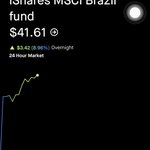
2. Commodities & Natural Resources ($DVN , $ET , $PAA, $VTS, $MOS, $EWZ): I do have a macro bet on hard assets, energy infrastructure, and inflation protection. By holding midstream MLPs like Energy Transfer and Plains All American, I plan on locking in high, fee-based distribution yields. Devon gives me direct upstream oil/gas exposure, while Mosaic offers a cyclical play on agricultural nutrients. EWZ (Brazil ETF) adds a heavily commodity-weighted international angle.
3. Healthcare ($PFE, $ADMA, $NUVB): I have a small exposure in healthcare. I call it a mix of deep value and biotech optionality. Pfizer is a classic out-of-favor, high-yield turnaround story. ADMA Biologics represents a rapidly growing specialty plasma company, while Nuvalent is a high-conviction, targeted cancer therapy play.
4. Buffett & Dividends Play ($KHC, $SIRI): Pure, unadulterated value investing. Kraft Heinz is a slow-growth, stable cash-flow giant with strong brand equity. Sirius XM is a heavily shorted, high-free-cash-flow business that has been undergoing major corporate restructuring (via the Liberty Media merger simplification). Thanks to Warren.
5. Housing & Real Estate ($KBH, $PK): Cyclical value. KB Home captures the structural undersupply of U.S. single-family housing. Park Hotels & Resorts is a hospitality REIT levered to group travel and urban lodging recovery. If mortgage rates pull back or stabilize, KBH stands to capture significant pent-up demand, while PK relies on resilient corporate/leisure consumer spending (from worldcup, of course)
6. China / Asia ($PDD, $JD, $SE): E-commerce dominance at an extreme valuation discount. PDD Holdings (Temu/Pinduoduo) has shown staggering operational efficiency and growth, JD.com represents deep asset-heavy value, and Sea Limited offers a play on Southeast Asian e-commerce stabilization. From a fundamental perspective, the free cash flow generation here is massive relative to market cap. However, this bucket carries elevated geopolitical risk, regulatory overhangs, and macro headwinds. I've been thinking about this a lot.
7. Financials & Special Situations ($XLF, $FNMA, $FMCC): FNMA and FMCC are pure special situations. They generate billions in net income but remain stuck in government conservatorship. If a political or legal catalyst ever releases them to private capital, the upside is exponential; if not, they remain dead money. It's a textbook asymmetric value bet. The XLF gives me broad banking/financial exposure. Too big to fall is one of my favorite movies.
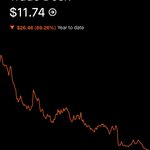
8. Software Steal ($NOW, $ZETA): ServiceNow is the ultimate workflow backbone of the modern enterprise. The market has hit the broader software space with some "AI disruption" anxiety over the past year, dragging $NOW down from its 52-week highs north of $210 to around the $118–$135 range. Luckily, I grabbed some around 83. Zeta, on the other hand, is my high-beta growth engine. I am happy with both, for now.
Before people start calling me out, I know I am fighting the current market momentum. Because I don't have a massive AI/mega-cap tech exposure, this portfolio will likely underperform in a speculative, liquidity-driven bull market, but it is built to heavily outperform if the market cracks or shifts toward a strict focus on tangible cash flows and low multiples. But hey, I researched all of them, and am happy holding them long-term.
And my cash reserve and $SGOV are still there. :)

My take on $NFLX Q3 earnings: A great business, but I’m not convinced the growth story is as strong as the headline numbers suggest.
Here’s what I like and dislike.
🟢 WHAT I LIKE
Operating leverage is REAL.
Revenue grew ~12% YoY, but operating income grew ~37%. Operating margins expanded from 28.2% to 34.6%.
Netflix is getting significantly more profitable as it scales. That’s the kind of economics I want to see in a high-quality business.
Free cash flow is strong.
Netflix generated $2.88B in Q3 FCF, up ~8% YoY.
Nine-month FCF reached ~$9.5B, up ~25%.
That’s real cash generation, not just accounting earnings. It gives management flexibility to invest in content, repurchase shares, and strengthen the balance sheet.
Share buybacks are meaningful.
Netflix repurchased ~$4.8B of stock during Q3.
Its diluted weighted-average share count declined ~3.3% YoY.
Buybacks can be a powerful compounding mechanism when executed below intrinsic value. The caveat: price matters.
Pricing power remains intact.
Management reported that churn improved YoY despite recent price increases.
That’s encouraging. Netflix appears capable of extracting more revenue from its existing customer base without materially damaging retention.
🟡 WHAT I’M WATCHING
International content is a real competitive advantage.
More than one-third of Netflix viewing now comes from non-English content.
Its global distribution platform allows successful local productions to find audiences worldwide.
That’s a powerful economic model: one content investment can generate value across multiple markets.
🔴 WHAT I DISLIKE
Revenue growth is decelerating.
Revenue growth has slowed from the high teens in late 2025 to 11.8% in Q3 2026.
Netflix is still growing, but the trajectory matters.
A business growing at 12% deserves a different valuation than one growing at 18%, especially when the stock price already assumes years of strong execution.
The advertising opportunity is taking longer to monetize.
Netflix lowered its 2026 advertising revenue outlook from ~$3B to ~$2.7B.
That’s a ~10% reduction.
The long-term opportunity remains attractive, but investors shouldn’t pay upfront for growth that management hasn’t yet delivered.
Earnings growth is outpacing FCF growth.
Q3 net income increased ~44% YoY, while FCF grew only ~8%.
There are legitimate timing differences between earnings and cash flow, so I’m not calling this an accounting red flag.
But I would rather underwrite normalized FCF than extrapolate a particularly strong quarter of net income.
Viewer engagement deserves attention.
Netflix acknowledges that accelerating viewing-hour growth is a priority.
Subscribers and pricing power matter, but so does consumer attention.
Netflix competes against YouTube, TikTok, gaming, and every other platform fighting for people’s free time.
If engagement weakens, pricing power eventually becomes harder to sustain.
I like Netflix’s business more than I like its current growth trajectory.
The moat is real: global distribution, brand recognition, recommendation technology, pricing power, and a scalable content ecosystem.
But the key question is whether future growth justifies the valuation.
I’m not interested in paying a premium for an advertising business that is still developing or assuming today’s margins will expand indefinitely.
I’d rather value Netflix on normalized FCF, conservative growth assumptions, and the returns generated by incremental content investment.
Great company ≠ great investment at every price.
The question isn’t whether Netflix is a winner.
It’s whether today’s price leaves enough upside to compensate for the risks.

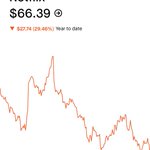
I like Rocket’s strategic ambition more than I like its business economics today. At approximately $10.78 per share, I would classify $RKT as a speculative, cyclical investment—not a proven wide-moat compounder.
There is a plausible path to substantial upside, but I see too many things that shareholders need management to get right simultaneously: acquisition integration, mortgage-market recovery, customer acquisition economics, leverage, and dilution.
The adjusted earnings multiple makes Rocket look reasonably priced at first glance.
But there is a catch: adjusted earnings exclude certain costs, and Rocket has meaningful stock-based compensation and acquisition-related expenses.
If I deduct the approximate annualized $356 million of stock-based compensation from annualized adjusted net income, I get $1.37 billion before considering any tax adjustment to that deduction.
That implies an illustrative valuation of approximately 22× adjusted earnings after this SBC deduction.
This is not a formal GAAP earnings measure, but it illustrates why I would not value Rocket solely on its adjusted EPS.
I can see how the company might become substantially more valuable if the acquisitions produce real synergies, customer acquisition costs fall, and earnings per share grow.
But I do not yet see a sufficiently demonstrated moat to offset the combination of leverage, cyclicality, stock-based compensation, and integration risk.
My preferred entry point would be lower than the current price under the assumptions above, or I would wait for stronger evidence that the combined business can generate durable, attractive returns on capital.
Can I see $9?
5 stocks on my watchlist next few weeks:
$NU: Scalable digital banking platform with massive growth potential. The risk? Credit losses and competition could erode returns.
$SFM: Differentiated grocery model with room to expand. The question is whether new stores can deliver attractive returns.
$CPNG: Logistics network and customer convenience are real advantages. But revenue growth means little without sustainable profitability.
$RKT: Mortgage servicing scale offers upside if housing activity recovers. Still a cyclical bet, not a predictable compounder.
$PCG: Essential infrastructure with regulated earnings potential. Wildfire liabilities and financing needs remain major risks.
I like the opportunities, but price matters. A good business is not automatically a good investment. Happy to hear from the crowd!


If you want to understand $PDD and its regulatory durability in China, look at where its capital is actually flowing.
While other tech platforms faced regulatory scrutiny over anti-competitive practices, PDD aligned its capital allocation directly with national priorities: rural revitalization and food security, which I think it's a genius move.
They committed tens of billions of RMB to direct-from-origin sourcing, waiving merchant commissions for agricultural vendors and subsidizing rural logistics infrastructure.
In an environment where Chinese tech companies are expected to serve broader socio-economic goals, PDD's deep integration into the agricultural economy gives it a massive policy tailwind and regulatory shelter.
That's another reason why I am bullish on $PDD
Bullish $NVDA

JUST IN: Chinese bride surprises her groom with a $12,000 Nvidia RTX 5090 GPU at their wedding, bringing him to tears.


Readers added context they thought people might want to know
The video and photos are from a 2025 Chinese wedding (not a recent "JUST IN" event). The ASUS ROG Astral RTX 5090 was reported as ~$3000 at the time per launch pricing and contemporary coverage, not $12000.
tomshardware.com/pc-components/…
videocardz.com/newz/asus-reve…
en.gamegpu.com/news/zhelezo/v…
Today's fun fact:
When Colin Huang launched $PDD he defined the vision as "Costco + Disney": relentless supply chain efficiency combined with social, gamified discovery. (it's actually in its initial IPO document)
8 years later, the market is over-focused on the "Disney" side (gamified traffic, ad algorithms, user acquisition CAC) and completely underestimating the "Costco" side.
Costco’s genius isn't just low prices; it's using scale to force manufacturers into lowest-cost structural alignment. PDD’s C2M (Consumer-to-Manufacturer) model does the exact same thing at an industrial scale across China's manufacturing hubs.
At an 8x forward P/E with $67B+ in cash on the balance sheet, you are essentially getting Temu's global optionality for free while paying a deep discount for the dominant domestic cash machine. Volatile? Yes. Irrationally priced? Very likely.
$CPRT Hopefully my fellow copart bulls have been adding the past few days? 👀
$CMG + $SBUX merger failed? Interesting thought experiment.
Both brands have something the other could learn from: Chipotle has a strong throughput-focused operating model, while Starbucks has a massive global footprint and a powerful loyalty ecosystem.
But I wouldn’t confuse strategic fit with value creation.
Starbucks is working to rebuild transactions and margins. The questions are how much of its comparable-sales recovery is sustainable, whether store closures are creating an artificial boost, and whether Dutch Bros and 7 Brew are taking meaningful traffic. Chipotle has its own challenge: sustaining traffic, unit growth, and restaurant-level economics while justifying its valuation.
Could a combination create purchasing power, improve operations, or unlock new growth? Possibly. But integrating two distinct brands and operating models could also add complexity without solving either company’s core challenges.
I’d rather see each company prove its standalone economics first. A merger only creates value if the synergies are real, measurable, and worth more than the price paid.
Great brands don’t automatically make a great deal. This part away doesn't surprise me.
Everyone is asking whether Alibaba (Taobao/Tmall) and $JD are reclaiming market share from Pinduoduo. The answer is nuanced: domestic growth is maturing, but PDD's low-cost C2M DNA remains unassailable.
Q2 2026 Online Marketing Services (ad revenue) came in at RMB 57.6B—up just 3.4% YoY. That deceleration reflects real pressure as Alibaba doubles down on price matching and PDD voluntarily waives merchant commissions to protect vendor retention.
But here’s the key difference: $PDD was built from day one on zero-overhead, factory-to-consumer routing. Alibaba and JD are trying to retroactively fit low-margin efficiency into high-cost logistics structures.
PDD’s domestic engine is no longer in "hyper-growth" mode—it is transitioning into a mature, cash-generating utility funding global expansion.
$PGR took a beating today, so I wanted to look beyond the headline and think about the quality of its earnings.
A few things caught my attention.
The good: Q3 premiums earned reportedly grew 5% YoY, while the combined ratio improved from 89.5% to 88.7%. Progressive is generating more underwriting profit per premium dollar. That’s a good sign.
The bad: Net income fell 3% YoY, and EPS declined 2%. Premium growth isn’t translating into earnings growth. That’s worth investigating.
The other good: September was much stronger, with net income more than doubling YoY. One month doesn’t establish a trend, but it makes the quarterly picture more interesting.
Then there’s the investment portfolio.
Progressive holds roughly $97B in investments, primarily fixed-income securities. Its filings show a $1.538B unfavorable change in unrealized gains and losses on fixed-maturity securities through August, yet it reported $545M in net realized investment gains over that period.
These aren’t contradictory. Unrealized losses reflect changes in market value; realized gains reflect investment results recognized through sales and other transactions.
Neither figure alone tells us whether the portfolio has suffered permanent capital impairment.
My question is whether the market is repricing a deterioration in Progressive’s underlying earnings power or reacting to investment-market volatility.
The underwriting numbers look pretty solid at first glance. But I want to understand the bond portfolio, the sources of earnings, and how sustainable these results really are before calling this a bargain.
A 9% drop makes me curious. It doesn’t automatically make me a buyer. I still have a decent position around $190ish
$LEN if you really want to follow Berkshire’s trade, you can probably buy it now with a lower price.
I am a bit bearish now on housing market and industry overall. I am sure long-term wise it is still gonna bounce back.

Is Korea entering its golden era? I think there’s a more interesting way to look at $CPNG.
Korea doesn’t need another economic miracle for Coupang to win.
An aging population, fewer workers, and slower long-term GDP growth don’t necessarily mean weaker digital consumption.
Convenience matters more when time is scarce. Density makes logistics more efficient. And habits built around fast delivery are hard to break.
The real question is whether Coupang can turn its logistics advantage into higher customer spending, durable margins, and sustainable free cash flow.
I’m watching the business, not just the Korea macro narrative. I want to see the numbers prove it:
• Active customers keep growing
• Spending per customer increases
• Core commerce growth recovers
• Margins expand without sacrificing service quality
• Free cash flow holds up after accounting for necessary investment
Why would a value investor buy MasterBrand $MBC ?
At first glance, the numbers look ugly.
• Market cap: ~$1.35B
• Net debt: ~$1.15B
• TTM FCF: ~$74M
• TTM operating income: negative
• P/B: ~0.68x
• Tangible book value: negative
So why would a value investor be interested?
The thesis isn’t asset value. It’s normalized earning power.
MasterBrand’s acquisition of American Woodmark creates the potential for cost synergies, better purchasing economics, and a stronger competitive position. If housing demand recovers and margins normalize, today’s depressed earnings may materially understate the combined company’s future cash generation.
But leverage cuts both ways. At roughly $2.5B in enterprise value, the market is already valuing the operating business well above its equity market cap. If the recovery fails, debt could consume much of the value shareholders hope to capture.
The real questions:
1. What is normalized EBITDA for the combined company?
2. How much of management’s expected synergies will actually reach FCF?
3. Can cash generation reduce debt fast enough?
4. What does mid-cycle profitability imply for intrinsic value?
Cheap on book value doesn’t automatically mean cheap. The opportunity, if there is one, lies in buying future earning power at a discount—not buying assets below liquidation value.
Would you underwrite this turnaround? I might give it a shot.