




AI Thesis retweeted
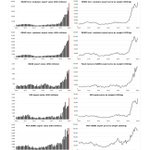
Look at the gap between the bear and bull cases. DRAM prices ranging from $4 to $12 in 2028, a 3x difference. How are people treating this as a reliable prediction when the uncertainty is that enormous?
Stocks go up, forecasts get revised higher. Stocks go down, forecasts get revised lower. Anyone can do that. You’re following the market, not predicting it. 😂
Meanwhile, look at the actual industry:
• Cloud industry backlog: $2.5 trillion.
• Nvidia’s supply commitments increased from $279B to $390B, primarily driven by multiyear memory procurement.
• TSMC, Micron, Samsung and SK Hynix are massively expanding capex.
• Dell and HPE expect persistent supply constraints into 2027–2028.
Do you seriously think these companies are committing hundreds of billions of dollars to manufacturing capacity that takes years to build because they expect just one more year of strong AI demand?
These CEOs speak directly with their customers, negotiate LTAs and have actual visibility into future demand.
People are becoming way too emotional because of stock prices. I’ll trust actual industrial commitments over analysts who keep flip-flopping on their forecasts.
AI Thesis retweeted
Sorry, FUNDA, but I think there are quite a few flaws in this analysis.
First of all, you’re forecasting enterprise AI spending in 2027 based on a survey of 58 traditional enterprises. How representative is that of the entire global AI economy?
More importantly, you’re asking these companies about their future spending based on TODAY’S model capabilities.
What happens if models in 2027 become 4x more capable than today’s models? Entirely new use cases and business opportunities will emerge that these enterprises haven’t even budgeted for yet.
Imagine asking enterprises about their AI coding budgets before Claude Code became popular and then using those answers to forecast today’s demand. You see the problem?
Second, cybersecurity is going to be a massive business. OpenAI’s own president, Greg Brockman, said he expects cybersecurity to eventually become a bigger business than coding.
Look at the number of sophisticated cyberattacks we’re experiencing right now. Traditional cybersecurity software alone is increasingly insufficient against AI-powered attacks.
The TAM here is enormous, from small businesses to multinational corporations, financial institutions, federal governments and intelligence agencies. And we’re barely getting started.
Third, people need to look at token volume alongside spending.
Token prices are going down because models, hardware and inference infrastructure are becoming more efficient. That doesn’t automatically mean AI labs are sacrificing margins.
If token prices fall by 50% while consumption triples, revenue still increases by 50%. If inference costs fall proportionally, margins can remain intact.
That’s basic economics.
Now, regarding Chinese investors becoming bearish on AI, of course they’re becoming bearish.
In my opinion, a lot of Chinese AI valuations were driven by copium and hopium. Investors genuinely believed that domestic Chinese chips and AI labs were already competing on equal footing with their American counterparts.
Then came the exposure of distillation practices, reliance on overseas Nvidia compute and the limitations of domestic chips.
Chinese AI stocks getting hammered under these circumstances isn’t necessarily a bearish signal for American AI infrastructure. The competitive dynamics are completely different.
And regarding the recent hesitation in enterprise spending, remember Alex Karp’s CNBC interview on July 1?
He was literally pushing the narrative that OpenAI and Anthropic were taking enterprises’ intellectual property and absorbing their competitive advantages. In my opinion, that interview fueled a massive amount of fear and misinformation surrounding enterprise AI adoption.
Do you seriously think that hasn’t spooked some businesses?
And look at what OpenAI just announced. They’re already testing Private Inference with their first enterprise customers, using confidential computing to protect prompts and responses even while the model is processing them.
Where do you think this technology is heading? Private inference could eventually become the standard for sensitive enterprise AI workloads, removing one of the biggest barriers to adoption.
But here’s the irony. If enterprises refuse to invest in AI because they’re scared of AI labs taking over their businesses, they’re making themselves even more vulnerable to that exact scenario.
As AI labs secure more compute and develop more capable models, they’ll increasingly enter healthcare, engineering, cybersecurity, financial services, software and scientific discovery.
So what’s the plan? Sit on the sidelines and wait until an AI-native competitor comes along and destroys your business model? 😂
These enterprises should be investing more in AI, boosting productivity, cutting costs and rethinking their business models.
Once competitors start doing this, it'll create a ripple effect across entire industries, forcing everyone else to follow.
AI spending won't be optional anymore. It'll be a matter of survival
People need to stop treating CDS charts as some magical indicator of an imminent financial collapse.
A lot of people posting these charts don’t even understand how equity and credit markets interact.
Quant hedge funds use CDS for hedging, pair trading and cross-asset strategies. When stocks sell off and volatility increases, demand for credit protection can increase, pushing CDS spreads higher.
And then you create a vicious cycle:
• Stocks go down.
• Funds buy credit protection.
• CDS spreads widen.
• Accounts like ZeroHedge post scary CDS charts.
• Retail investors panic and sell.
• Demand for credit protection increases again.
And somehow people are treating this feedback loop as independent confirmation that the entire AI industry is collapsing. 😂
Now look at the actual numbers:
• Microsoft: 51 bps.
• Google: 87 bps.
• Amazon: 98 bps.
• Meta: 123 bps.
• Nvidia: 145 bps.
Screaming “ALL-TIME HIGHS” without contextualizing the absolute spreads is ridiculous.
Oracle and especially CoreWeave deserve more attention, but let’s look at what these companies are actually doing.
CoreWeave:
• $9B in customer prepayments and deposits expected within three months alone.
• Approximately 80% of eligible project financing can typically be covered through contract-backed debt, with the remainder supported by customer prepayments and internal cash.
• Morgan Stanley and MUFG are preparing a $4.5B Meta-backed loan expected to receive investment-grade ratings, with an indicative yield of 7–7.5%.
• Management expects to raise less than $5B in additional capital through 2027.
Even Goldman Sachs acknowledged that CoreWeave’s CDS is being used as a proxy to hedge broader AI infrastructure exposure.
And Oracle? Oracle literally announced on November 20 that it had secured all the funding necessary to fulfill its OpenAI contract, following its final capital raise for this investment cycle.
But apparently, we’re just going to ignore all of this and keep posting scary CDS charts?
CDS spreads reflect default risk, hedging demand, liquidity, market positioning and risk premiums. They are not a pure measure of bankruptcy probability.
I’m not saying credit risk doesn’t exist. I’m saying that blindly posting CDS charts without understanding the underlying financing structures or trading dynamics is not financial analysis.
It’s fearmongering.

Someone forgot to tell credit about the "mystery" market meltup off the bear market line: hyperscaler CDS closed at record highs.

3
455
I genuinely don’t understand how these guys managed to turn rising GPU rental prices into another bearish AI argument.
First of all, have you even read Silicon Data’s actual research note?
They literally acknowledge that they don’t have rental volume data, they don’t directly observe financing terms, and the arrival of newer GPUs could produce exactly the same rental-price curve without any change in credit conditions.
Now look at their OWN data since May:
• B200 spot: +28.2%.
• B200 12-month contracts: +22.1%.
• B200 24-month contracts: +14%.
• H100 spot: +15.9%.
• H100 12-month contracts: +22.2%.
• H100 24-month contracts: +17.1%.
H100 long-term rental prices are literally increasing faster than spot prices.
And of course B200’s long-term discount is widening. B300 and Rubin are being deployed. Why would customers commit to B200 for two years without demanding a discount?
Now look at the actual companies:
CoreWeave: $132.5B backlog, $9B in expected customer prepayments and demand 10x its available capacity through 2027.
Nebius: GPU-hour prices up over 20% QoQ, signing five-year contracts at higher prices, with customer prepayments covering over 100% of associated capex on Q3 deals.
Dell: $132.3B AI server backlog and $60.2B in new quarterly orders.
But somehow we’re supposed to believe rising GPU rental prices are simply a consequence of a credit crunch?
Even if smaller neoclouds are experiencing financing difficulties, what do you think happens when you restrict the growth of supply while demand continues to accelerate?
Existing compute becomes more valuable, established neoclouds gain pricing power, and competition decreases.
There is a massive difference between financing constraints and demand destruction.
When GPU rental prices go down, AI is dead. When GPU rental prices go up, apparently AI is also dead because it’s a credit crunch. 😂
At this point, what data would actually make these guys change their minds?

Look, Microsoft’s AI CEO is literally telling you that things are just getting started.
From Google to Microsoft to Amazon, the companies actually building and deploying AI keep telling us that we’re still in the very early stages of this technology.
Meanwhile, AI bears are already talking about overcapacity, the death of Jevons paradox and the end of the AI cycle. 😂
We haven’t even scratched the surface of what AI can do, especially agentic AI.
It’s crazy how confident these people are in calling the end of something that’s barely getting started.
I genuinely think a lot of AI bears are going to get burned.

AI Thesis retweeted

For all those people who keep predicting we're overbuilding chips / we aren't seeing jevon's paradox etc. Things are just getting started.

The prompt, by the way:
make a presentation on the future of AI and basically the intelligence explosion. You can go full no anchor bias, like things are going to get crazy because they are. I want this presentation to be the most elaborately, insanely amazing presentation you've ever seen, with all sorts of graphics, transitions, whatever you want. I believe you can make it amazing because you have taste and you have the ability. Good luck, Claude.
Opus 5.6 on xhigh (stealth tested on 5.5). I gave it **no creative direction** other than this.
sorry this is it, AGI 2027 pack it up
AI Thesis retweeted
It’s becoming increasingly clear that there’s a massive amount of misinformation coming out of Chinese sources surrounding the semiconductor industry.
Ever since reports exposed Chinese AI labs using distillation techniques on American frontier models, alongside chip transshipment networks that raised serious questions about China’s domestic AI chip capabilities, we’ve seen an increasing number of questionable reports and supposedly leaked research notes circulating.
I genuinely wouldn’t be surprised if some of this misinformation is deliberately being spread to spook investors and put pressure on US semiconductor stocks.
People really need to stop taking every supposedly leaked Chinese research note at face value.
They want to crash the stock market deliberately
AI Thesis retweeted
LET ME DEBUNK THE FUD :
People keep posting this NAND chart without even understanding what they’re looking at.
The orange line, which has declined the most, is 512Gb TLC NAND, which is predominantly exposed to mainstream consumer PCs and smartphones.
Why is it going down? Because extreme memory prices have hammered consumer electronics demand. PC and smartphone manufacturers are cutting production, and existing inventories are being dumped into the spot market. Once these inventories are absorbed and production adjusts, prices could recover.
Meanwhile, look at 1Tb TLC and 1Tb QLC, which have greater exposure to enterprise SSDs, AI data centers and high-end consumer products. They’ve held up considerably better.
And Phison’s CEO already explained what’s happening in China:
• Chinese CSPs are experiencing severe GPU and other server component shortages.
• Without GPUs, they cannot deploy their AI servers, so buying additional SSDs makes little sense in the short term.
• Some Chinese companies are liquidating existing server component inventories to raise cash for GPU prepayments, creating temporary downward pressure on spot prices.
• Once these component shortages ease, server deployments and NAND procurement can resume.
This is delayed demand, not necessarily demand destruction. Phison’s CEO even sees the current market weakness as an opportunity to accumulate more NAND inventory for 2027.
Now add the structural demand coming from agentic AI, KV cache offloading, context storage and recursive learning.
Look at Dell, HPE and Micron. The companies actually manufacturing and buying these products are warning about persistent supply shortages in 2027 and 2028.
Dell literally said that the supply-demand imbalance will be even worse in 2027 than in 2026.
And look at GPU prices. They also fluctuate. Nothing goes up in a straight line. There will always be short-term corrections.
I’ll take the arguments of the CEOs actually running these businesses, negotiating supply agreements and dealing with their customers every single day over the AI bears posting consumer NAND spot price charts and declaring the end of the memory cycle.
AI Thesis retweeted
The TRendForce guys are becoming a complete joke.
Literally last week, Micron’s CEO said at the TomorrowX Summit that memory supply in 2027 and 2028 will be even tighter than in 2026. He also said that 75% of Micron’s 2027 supply is already sold out.
This is the CEO of Micron saying it. Not some third-party analyst making forecasts. He’s the one negotiating multiyear supply agreements directly with the CEOs and procurement teams of his customers.
For NAND, Phison’s CEO already pushed back against the narrative that supply and demand will balance in 2027–2028, highlighting how KV cache and AI workloads are creating enormous additional demand for enterprise SSDs.
Now look at the latest earnings calls:
• Dell: Expects the infrastructure supply-demand gap to widen further in 2027, with server DRAM and enterprise NAND prices continuing to rise.
• HPE: Expects memory and NAND supply constraints to persist until at least H2 2028.
• Ambarella ($AMBA): The stock literally collapsed after management explained that extreme memory shortages are causing customers to cancel or postpone orders.
• Smartphone manufacturers are struggling with memory costs and availability.
And somehow people are interpreting this as a bearish signal for the entire memory industry?
At this point, it feels like these forecasts are following stock prices rather than fundamentals. Stocks go down, they cut their forecasts. Stocks go up, they revise them higher.
That’s not predicting the future. That’s reacting to the market.
Complete joke.
AI Thesis retweeted
I genuinely don’t understand why every AI bear is suddenly treating Ramp as the ultimate authority on global AI demand.
Ramp tracks spending across 85,000 American businesses, and its actual token data comes from an even smaller subset of those businesses. Ramp itself acknowledges that this subset isn’t representative of its total AI spending.
Meanwhile, look at OpenRouter:
• 790 trillion tokens processed in October.
• Token consumption up 37% MoM.
• Nearly 25x growth since January.
• Agentic workloads now represent 76% of token consumption.
And the funniest part? Ramp’s OWN latest data shows:
• Token consumption up 27.2%.
• Token spending up 12%.
So prices are going down, consumption is going up, and spending is going up. And you’re telling me Jevons paradox is dead?
You’re taking two months of weak spending growth from a limited subset of American businesses and extrapolating it to the entire global AI economy.
AI adoption is still in its early stages, especially agentic AI. New models, new capabilities and entirely new use cases are constantly emerging.
Ramp is a useful data point, not the ultimate authority on global AI demand.
Stop cherry-picking data to fit your narrative.
AI Thesis retweeted
“SEMIS CUTS HAVE STARTED.”
Who is actually cutting? The companies or the analysts? 😂
There’s a massive difference between an analyst cutting their forecast and a company cutting its actual orders or investments.
Look at NVIDIA’s growth, its guidance and its massive multiyear supply commitments. That’s what people should be paying attention to, not analysts who keep flip-flopping on their forecasts every month.
As for TrendForce, Phison’s CEO already explained why some NAND prices have corrected. High prices are hurting consumer demand, while Chinese CSPs have temporarily adjusted their enterprise SSD orders because they’re committing massive amounts of capital upfront to secure GPUs.
Once those GPUs arrive, they’ll still need enterprise SSDs. It’s a procurement timing issue, not necessarily demand destruction.
The same argument applies to Goldman Sachs cutting SK Hynix’s 2028 estimates. Even their own forecasts show DRAM and NAND supply deficits through 2028.
I’d rather listen to Samsung, SK Hynix, Micron, NVIDIA and the companies actually operating in the semiconductor industry.
Also, ADI operates across industrial, automotive, consumer and communications markets. Weakness in those segments doesn’t automatically translate into weakness in AI infrastructure.
Stop confusing analyst estimate cuts with actual customer order cuts.
Enough with this mass hysteria.
Dell ($DELL) FY27 Q3 earnings call
Key takeaways for AI infrastructure and memory.
1. Memory shortages will continue throughout 2027
• No signs whatsoever of declining server DRAM or enterprise NAND prices.
• Demand will outstrip supply by an even wider margin in 2027 than in 2026.
• HBM production continues to cannibalize conventional DRAM wafer capacity.
• Memory prices will continue rising in 2027, although at a slower percentage rate.
2. AI demand shows no signs of slowing
• AI server backlog: $132.3B.
• New orders over the past four quarters: $180B.
• No customers have changed their order schedules.
• Most new AI server orders are based on Nvidia Vera Rubin NVL72.
3. Agentic AI is driving explosive CPU and memory demand
• General server and networking revenue: $15B (+235% YoY).
• Q1 $8.5B → Q2 $10.5B → Q3 $15B.
• Q4 general server revenue growth guidance: +137%.
• Agentic AI and inference CPU servers are the fastest-growing segment.
• Their average selling price is twice that of traditional enterprise servers.
• CPU cores, DRAM bits and NAND capacity per server are all increasing.
• Customers are prioritizing servers and storage over PCs.
• This is actual semiconductor content growth, not simply price inflation.
4. Enterprise NAND demand is accelerating structurally
• Storage revenue: $4.9B (+24% YoY).
• AI-related unstructured storage demand has grown by triple digits for three consecutive quarters.
• KV cache, context layers, agent memory, multimodal data and recursive learning are creating additional storage demand.
• Storage demand will compound over time as AI agents generate and retain more data.
5. Infrastructure profitability continues to expand despite rising memory prices
• ISG revenue: $42B (+198% YoY).
• Operating income: $7.1B (+308% YoY).
• Operating margin: 17% (+460 bps).
6. Long-term AI demand remains extremely strong
• Token demand projected to increase 87x by 2030.
• AI training demand projected to increase 5x.
• Dell is tracking more than 200 GW of planned data center and power infrastructure.
• Dell already runs 100,000 AI agents daily and plans to double that number within 90 days.
Bottom line: AI is no longer just a GPU growth story. Agentic AI is structurally expanding the entire semiconductor TAM across CPUs, DRAM, HBM, NAND and storage simultaneously.
Dell expects the supply-demand imbalance to worsen in 2027, directly challenging the narrative that the memory cycle will peak in 2026.
Extremely bullish commentary for $MU, $SKHY, Samsung, $SNDK, $NVDA, $AMD, $INTC, $STX and $WDC.
2
6
284
$AMBA CEO
The unprecedented surge in memory prices and supply shortages previously warned about have intensified further
$MU, $SKHY
Customers are unable to secure memory, leading to order cancellations and pushouts, primarily in consumer IoT
The impact is most concentrated in consumer IoT demand, but automotive and enterprise customers are also being affected, albeit to a lesser extent
Management expects DRAM supply constraints to persist at roughly current levels throughout FY2028 (February 2027–January 2028)
3
6
448
AI Thesis retweeted

"2027 is peak CapEx" is the new "2026 is peak CapEx", which was "2025 is peak CapEx" before that…
AI Thesis retweeted
People need to understand that quant traders also use CDS for equity-credit pair trading. When NVIDIA stock goes down, CDS spreads tend to widen, and vice versa.
You can use this inverse relationship to hedge equity exposure and construct approximately delta-neutral positions.
Widening CDS spreads don’t necessarily mean institutional investors genuinely believe NVIDIA is more likely to default. Hedging flows and quant positioning can also drive these movements.
AI Thesis retweeted
John Williams, you cannot keep telling people the economy is strong just because unemployment is low.
A low unemployment rate does NOT automatically mean a healthy labor market.
People working two or three jobs to survive are still counted as employed. People who give up looking for work aren’t counted as unemployed. And people stuck in part-time jobs because they cannot find full-time employment are also counted as employed.
Do you understand the difference between having a job and actually being financially secure?
People are struggling with housing, groceries, debt and the cost of living. You cannot just look at headline employment numbers and conclude everything is fine.
And now you want MORE tightening?
Higher interest rates will put even more pressure on households and businesses, weaken hiring and risk making stagflation worse.
You cannot fix every source of inflation by making ordinary Americans suffer even more.
The Fed needs to look beyond the headline numbers and understand what is actually happening to people.
AI Thesis retweeted
This is exactly what I was saying when everyone was freaking out about $AAOI raising equity.
It was pretty clear to me that they were raising capital because they needed to expand manufacturing capacity as quickly as possible to meet massive hyperscaler demand.
And now look. A $2.2B purchase commitment, with potential demand exceeding $10B over four years.
People need to understand that not every equity raise is bearish. There’s a massive difference between raising capital to keep a struggling business alive and raising capital to expand production because you cannot meet customer demand.
Hyperscalers want their optics as quickly as possible. AAOI needs capital to build new manufacturing capacity and ramp production.
Also, management and insiders who hold significant equity in the company are themselves exposed to dilution. They have an incentive to ensure that the returns generated by this capital exceed the cost of dilution.
The company wasn’t necessarily raising equity for nothing, as some people were suggesting.
Sometimes dilution is precisely what allows a company to capture a much bigger growth opportunity.
Context matters.
AI Thesis retweeted
Here we go again. TrendForce has a history of flip-flopping on NAND pricing and demand forecasts. People really need to stop treating them as an authority.
China imported $110 billion worth of memory last quarter alone, compared to $30 billion a year ago.
Now TrendForce is predicting NAND oversupply in 2027, partly because Chinese companies are cutting enterprise SSD orders.
Phison’s CEO already refuted this narrative. He explained that these order adjustments are temporary because Chinese cloud providers have had to make massive upfront deposits to secure NVIDIA GPUs, temporarily tying up capital.
Once they receive those GPUs, what are they going to do? Build AI servers without enterprise SSDs? 😂
He also explained that high memory prices are hurting consumer demand and putting pressure on spot prices, while contract prices remain stable and underlying AI and cloud demand hasn’t deteriorated.
Also, Samsung and SK Hynix are transitioning toward newer generations of NAND while gradually phasing out older generations. You cannot just look at aggregate bit supply growth without considering the product mix.
Some NAND spot prices are reportedly down 15% from their highs after going up 7x, and people are already freaking out. Even after that correction, they would still be nearly 6x their original level.
We’ve seen temporary price corrections in DRAM, NAND and GPUs before, only for prices to shoot back up weeks or months later.
I’d rather listen to the CEO of a company that actually operates in the NAND industry than an analyst firm with a history of flip-flopping on its forecasts.
And when NAND prices start going up again, I don’t want to see TrendForce suddenly revise its forecasts upward and pretend nothing happened. LOL.
And let's not forget that SK Hynix just announced the conversion of its Kioxia-linked bonds into equity, securing an indirect stake of approximately 14.1%. Apparently, one of the world's largest memory manufacturers isn't nearly as pessimistic about the NAND industry as these analysts are.
By the way, we’re still in a relatively early phase of the AI infrastructure buildout, with massive investments going toward training. In 2027, 2028 and 2029, we’re going to see inference scale much more aggressively.
Agentic AI, persistent memory, KV cache offloading, RAG, multimodal applications and billions of AI interactions will generate massive additional demand for enterprise SSDs.
AI Thesis retweeted
Most of these uncertainties are either manufactured fears or completely misunderstood.
1. US export restrictions
NVIDIA’s latest outlook points to 75% growth next year. They actually raised their expectations. If tighter US export controls were going to have such a devastating impact, why would they increase their growth outlook? I’m talking about next year, not just the next quarter.
2. Circular financing
People seriously need to drop this narrative. NVIDIA is investing in companies to secure customers and expand its ecosystem.
Jensen himself said he regretted not investing in Anthropic earlier. Look at Anthropic today, using NVIDIA GPUs, Google TPUs and Amazon Trainium. From NVIDIA’s perspective, securing these customers early makes perfect strategic sense.
NVIDIA also receives equity in many of these investments, meaning it can benefit from both GPU sales and equity appreciation as these companies grow.
The argument that NVIDIA is manufacturing artificial demand makes little sense when GPU prices are rising, supply remains constrained, and customers are competing for compute capacity.
Financing customers because they lack sufficient capital to meet real demand is not the same thing as creating fake demand.
3. Investigations
An investigation is not proof of wrongdoing. People are already treating allegations as established facts, despite the lack of publicly established evidence supporting some of the most sensational accusations. Even Trump has publicly defended Jensen.
4. Data center bottlenecks
People complaining about data center construction delays are missing the bigger picture.
Even if every proposed data center were approved tomorrow, where would the electricity and chips come from? You would potentially end up with empty buildings waiting for power and hardware.
The limiting factor is how quickly you can bring fully operational compute capacity online, not how many buildings you can construct.
Delays in infrastructure deployment do not automatically mean demand destruction.
5. CSP CapEx peaking in 2027–2028
Based on what exactly?
Anthropic reportedly has around $900 billion in compute commitments, while OpenAI has nearly $800 billion. That’s approximately $1.7 TRILLION in compute commitments from just two AI labs over the coming years.
And that’s without accounting for the independent AI infrastructure requirements of Google, Meta, Microsoft, Amazon, xAI and other companies.
Look at the multiyear supply commitments across GPUs, memory and other AI infrastructure components extending toward 2030. Why are these companies securing supply so far in advance if they’re expecting their infrastructure spending to peak in 2028?
We’re still investing heavily in training infrastructure. Between 2027 and 2030, inference, agentic AI, enterprise adoption, robotics and scientific applications could require substantially more compute.
Compute commitments don’t translate dollar-for-dollar into CapEx, but given the magnitude of these commitments, I find it very difficult to believe that CapEx will peak in 2028.
6. Manufacturing limitations
Sure, advanced packaging yields and manufacturing complexity are legitimate challenges. But manufacturers are investing billions to expand capacity, improve yields and develop new packaging technologies.
A supply bottleneck is not evidence of weak demand. If anything, it creates an incentive for further investment across the semiconductor supply chain.
People keep confusing supply constraints, temporary delays and financing requirements with structural demand destruction.
These are completely different things.
