I'm your own imagination.
Vietnam
Joined July 2016
- Tweets548
- Following479
- Followers34
- Likes877






logbasex retweeted

After co-inventing ChatGPT, I kept asking myself: why have superhuman chat models not led to AGI?
I’ve spent the last 2 years in stealth building a new way to train models (RLCD), and a new type of frontier AI model that we are releasing today: Jev
• 20-200x faster
• 40-400x cheaper (w/ output tokens free)
• Frontier composable intelligence optimized for decisions
AFAICT the shortest path to AI-based economic revolution
logbasex retweeted

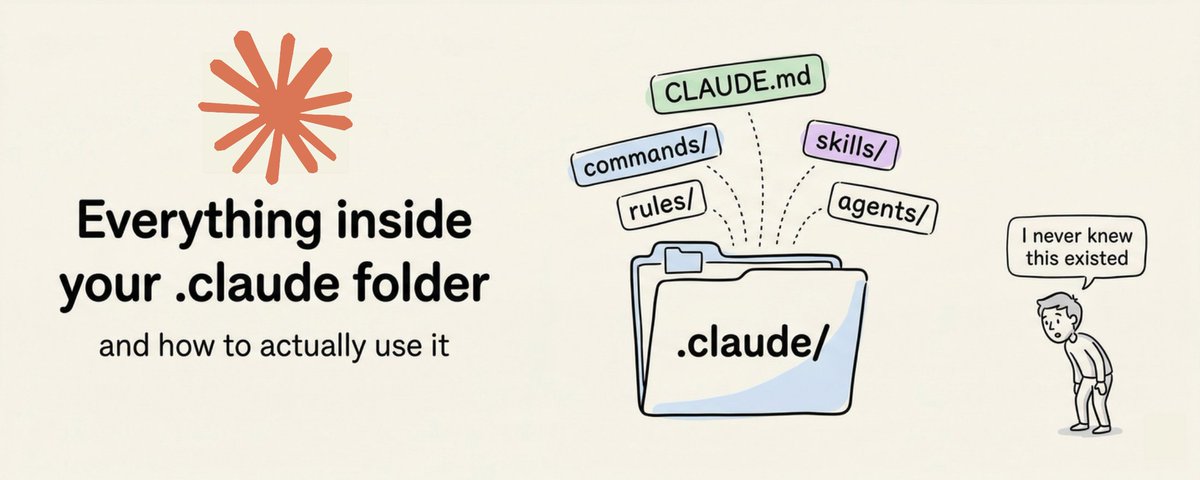
We removed ~80% of the Claude Code system prompt for our newest models, this is what we've learned about writing system prompts, skills and Claude.MDs for them.

logbasex retweeted

Many people have claimed that with AI-assisted bug finding, secure code (and hence trustless anything) will be impossible.
I have a much more optimistic take, and AI-assisted formal verification is a major part of the reason why:
vitalik.eth.limo/general/202…
logbasex retweeted

Dijkstra: "Program testing can be used to show the presence of bugs, but never to show their absence"
Interesting quote from a recent interviewee on the topic of formal verification and it's value. Excited to share this episode!
logbasex retweeted

Learn 95% of Codex in 28 minutes
These are the 7 knowledge work capabilities...
inside Codex, the super-app
00:00 Intro
02:19 Capability 1 - Full File Access
07:41 Capability 2 - Persistent Memory
10:46 Capability 3 - Plugins
13:52 Capability 4 - Skills
19:22 Capability 5 - GPT Image Access
21:03 Capability 6 - Browser and Computer Use
23:58 Capability 7 - Automations
25:31 Bonus Feature - Chronicle
27:21 Summary
logbasex retweeted

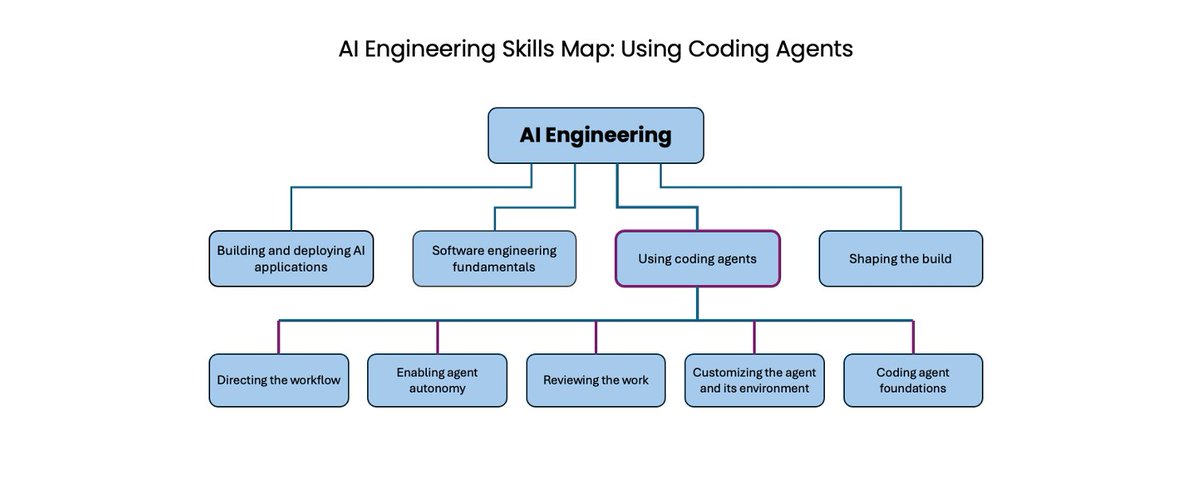
The most important skills for using AI coding agents effectively. Presenting the AI Engineering Skills Map for using coding agents.



logbasex retweeted

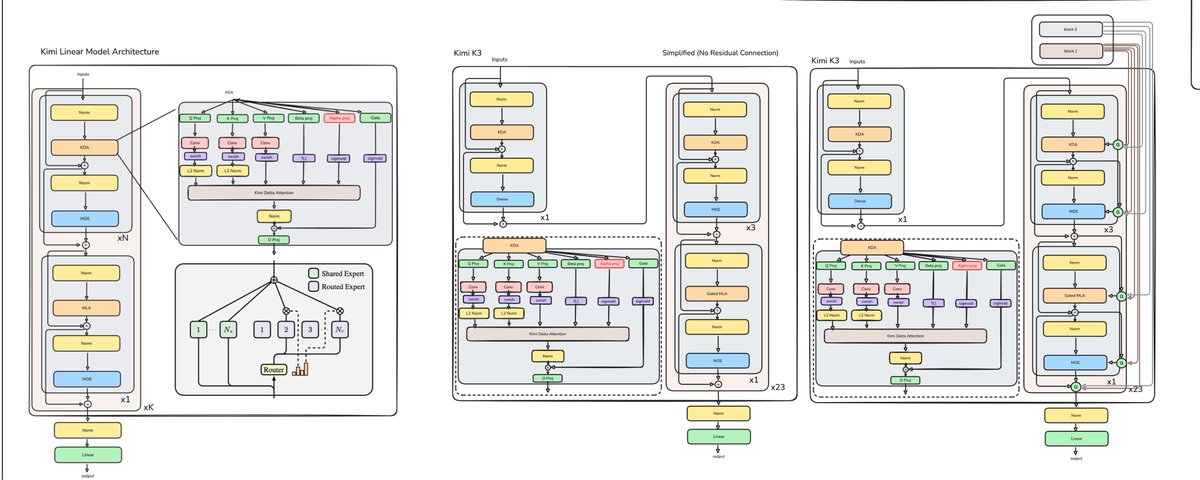
Releasing the model weights and technical report of Kimi K3.
Kimi K3 is our most capable model: a 2.8T MoE model with native visual understanding and a 1M-token context window.
New model architecture: 2.5x the intelligence per unit of compute, not just more params.
Alongside Kimi K3, we're opening up more of the stack behind it — high-performance attention kernels, MoE communication library, and infrastructure for running agent environments at scale.
Model weights: huggingface.co/moonshotai/Ki…
Tech report: github.com/MoonshotAI/Kimi-K…
Tech blog: kimi.com/blog/kimi-k3


logbasex retweeted

Researchers proved every major LLM is secretly obsessed with Japan.
And they finally figured out why.
For years, we’ve been told that AI is entirely Western-centric, that it just reflects Silicon Valley and American values.
A landmark paper by Cardiff and Basque researchers tested 31,680 cultural prompts across 24 languages on frontier models like ChatGPT, Claude, and Gemini.
The results shattered that assumption.
In six out of eight frontier models, Japan was the single most frequently referenced country when asked open-ended cultural questions.
Ask about traditional dances, festivals, or everyday practices in an open context, and the AI defaults to Japan.
Over and over again.
Here is the twist nobody expected.
This bias doesn't come from raw pre-training internet data.
The researchers tracked where the obsession forms. It emerges after pre-training, during the supervised fine-tuning and alignment phase when humans teach the AI how to behave.
Why Japan?
Because decades of global soft power, rich cultural export, and clean, universally admired digital archives make Japanese culture uniquely "safe" for AI safety filters to lean on.
When labs train models to be harmless and universally pleasing, the AI defaults to the cultural equivalent of comfort food.
It avoids controversy by talking about anime, sushi, and tradition.




logbasex retweeted

Something I have been thinking about: in the past, the best engineers I knew spent a lot of time automating their work in various ways. Better vim/emacs automations, writing lint rules to catch repeat code issues, building up a suite of e2e tests so they don't need to smoke test the app manually. These kinds of things were the highest leverage activities an engineer could do, because it multiplied their own output, which in turn meant they could build more things.
I think many of these automations have become even more important now. This is true for a number of reasons.
First, infra and DevX automation speeds you up. And if you are running an army of agents, each of those agents will be sped up also. More automation == more output per unit of time.
Second, moving things to code improves efficiency. Your agent could fix an issue every time it sees that issue happen, but that uses tokens and might miss cases. If Claude instead writes a lint rule, CI step, or routine, that class of issue can be fully automated forever. This is really what people are talking about when they talk about loops -- it's about automating entire types of busywork rather than solving them one off. This isn't a new idea at all. Engineers have been doing this for a long time!
Third and most importantly, automation makes it possible for others to contribute to the codebase more easily. Increasingly what I am seeing is engineers are contributing to codebases on day one because Claude can navigate the codebase for them, and that non-engineers are able to contribute to a codebase as effectively as engineers can. What gets in the way of both of these is domain knowledge that lives in peoples' heads rather than in automation -- the stuff you used to have to learn when ramping up. What has changed thanks to agents is the domain knowledge that can be encoded as infrastructure is no longer limited to what is expressible in lint rules and types and tests; it can now capture nearly all domain knowledge, encoded as code comments and skills and CLAUDE.md rules and memories. If I put up a PR for an iOS codebase I don't know and a code reviewer rejects it because it doesn't use the right framework, or if a designer builds a new feature and it gets rejected because it doesn't follow the right architectural patterns, these are failures of automation.
Every team should be writing the CLAUDE.md's, REVIEW.md's, skills, and docs that enable agents to productively work in their codebase with zero additional context from the prompter. This sounds crazy, and at the same time is a natural extension of the stuff engineers have always done: automate, and encode domain knowledge as infrastructure. As the model gets smarter and as the harness matures, this task becomes easier. In the meantime, it is on every team to look for ways to convert their domain knowledge to infra so that Claude can write code better, so that code review catches issues automatically, and so the next person working on your codebase can contribute more easily.