Pinned Tweet
1/N 🚨🚨🚨 New WP!!! 🚨🚨🚨 (ungated documents1.worldbank.org/cur…) w/ @fkondylis
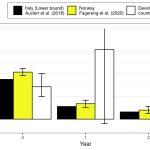
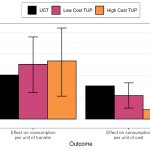
we ask: do we need a “big push” to lift households out of poverty?
we find: leaner cash based programs reliably reduce poverty more cost effectively than more expensive (but also more impactful) programs
John Loeser retweeted
Ethiopia's 8028 farmer hotline has had 7.1M callers. Before our fixes, just 37% of new users heard any advice on their first call; only 59% ever heard any.
We used funnel analysis, a phone survey and 10 A/B tests to find and remove the friction. New paper out. 🧵
John Loeser retweeted
One of my favorite times of the year is now here - for the 16th year we are giving PhD students a chance to blog their job market papers on the Development Impact blog. Submissions now open, with a deadline of Wednesday November 4.
John Loeser retweeted
On the 2026 economics job market? The World Bank’s Development Impact Blog invites PhD candidates to share their job market papers with a global audience.
Submit your blog posts by Nov 4 to developmentimpactblog@gmail.com.
🔗 blogs.worldbank.org/en/impac…
John Loeser retweeted
Join us in Singapore next summer for a fantastic development conference! The deadline for paper submission is 15 January 2027.
📢 The Lee Kuan Yew School of Public Policy @LKYSch and Economics Dept at @NUSingapore are excited to co-host the Asian Economic Development Conference 2027 with @ADB_HQ and @ADBInstitute! #AEDC2027 @ADBChiefEcon @yogitajs
The #CallforPapers is now out: adb.eventsair.com/asian-econ…
missing intercepts everywhere
Kurt Warner doesn’t believe great athletes rise to the occasion.
The Hall of Fame quarterback has played in some of football’s biggest arenas. But when Stephen Dubner asked what made him so good under pressure, Warner offered a different way of thinking about it …
Maybe the greats don’t suddenly get better when the stakes are highest. Maybe most people shrink under pressure.
This week on Freakonomics Radio, @kurt13warner talks about why it’s so hard to predict which quarterbacks will succeed in the NFL.
1
123
John Loeser retweeted
As a proud Jamaican, I was honored to be asked to chair the Jamaica Reconstruction and Resilience Oversight Committee (JAMRROC). Attached are the remarks I delivered on Tuesday, September 8, 2026, at the ceremony to officially launch JAMRROC at Jamaica House. (Thread / 1 of 3)
John Loeser retweeted
Aditya Ghosh, Stefan Wager and I have a new paper on regression discont designs. arxiv.org/abs/2503.09907 nber.org/papers/w35699Two contributions: (1) a new PLRD estimator in the spirit of the Armstrong-Kolesar (2018) and Imbens-Wager (2019) optimal weights approach. (1/9)
John Loeser retweeted
Incredibly laudable move by @AnthropicAI:
$200 million allocated to RCTs 🙌
@JPAL researchers get busy!
Anthropic:
“In addition to large-scale RCTs and pilots, we’re also interested in working with partners that could scale up a program of effective small-scale pilots”
In particular, we are interested in studies that:
•Use randomized assignment or other research designs that establish causal relationships
•Are large enough to detect policy-relevant effects and to inform policy design (typical sample sizes in the thousands to tens of thousands of workers)
•Are conducted in partnership with state, local, or national government implementing agencies, where applicable
•Pre-register their designs and commit to publishing findings regardless of result
•Build evidence that translates directly into policy levers governments can pull
•Consider programs that can scale beyond the initial analysis
anthropic.com/news/economic-…
John Loeser retweeted
Recently accepted by #QJE: “Global Working Hours,” by Gethin (@amorygethin) and Saez: doi.org/10.1093/qje/qjag030
John Loeser retweeted
It's been six months since the Claude Code explosion made it clear social science research was changing forever. Where are we now? Here are some quick notes from my experiences in political science/political economy...
(1) Coding agents keep improving, and I've been surprised how much I value each improvement for research. I loved what I could do with Opus 4.6 back in January, but I can't imagine living without Fable now. It is unlocking increasingly technically complex research for me.
(2) The biggest gains have been in mathematical or technical work that is verifiable. I have not seen big improvements in AI models' ability to come up with good political science questions or deliver new political insights. On the other hand, I've seen huge gains in the ability to do new kinds of research, including automated replications like @xuyiqing has been doing, living research that updates dynamically, and software prototypes.
(3) The AI models' ability to *write* actual papers is horrendous---it almost seems like it's getting worse. I have tried many different setups, different harnesses, different skills, nothing works. There is a particular "Claudeslop" or "GPTslop" tone to the writing that I absolutely hate, and it cannot capture the right kind of unadorned, specific, rigorous tone that an academic paper should have. I don't mind writing the papers myself, but this has been a surprise to me. It doesn't seem like it should be this hard to get right.
(4) I've seen significant uptake of coding agents and AI tools in empirical research, as I expected. Journals are adapting, if a bit slowly. The slopocalypse is happening, but it's moving slower than expected, I would say. But I'm not editing a journal right now so I could be wrong about that.
(5) Where I think we're heading next: building increasingly technically complex research that takes advantage of the latest models. This will be a big complement to human researchers with good judgment who can direct the research and write the papers.
Claude Code and its ilk are coming for the study of politics like a freight train.
A single academic is going to be able to write thousands of empirical papers (especially survey experiments or LLM experiments) per year. Claude Code can already essentially one-shot a full AJPS-style survey experiment paper (with access to Prolific API).
We'll need to find new ways of organizing and disseminating political science research in the very near future for this deluge.
John Loeser retweeted
Had codex build me a paper swipe tool for econ papers. Trying to replace doomscrolling tiktok with maybe i'll actually read this abstract doomscrolling.
How Rwanda used industrial policy to slow the spread of COVID-19
Last month on VoxDev, @byrne_kecon (@qmuleconomics), Florence Kondylis (@wb_research), @loeserjohn & Denis Mukama (@rrainfo) discussed licensing textile manufacturers to produce masks: voxdev.org/topic/macroeconom…
John Loeser retweeted
I'm very happy that the BREAD Development conference will take place in Mexico City this year (on October 23-24), hosted by ITAM. The deadline to submit a paper is June 19. Selected papers will be invited to submit to a special issue of the JDE. Website:
bread-mexico-2026.github.io/
How Rwanda used industrial policy to slow the spread of COVID-19
Last week on VoxDev, @byrne_kecon (@qmuleconomics), Florence Kondylis (@wb_research), @loeserjohn & Denis Mukama (@rrainfo) discussed licensing textile manufacturers to produce masks: voxdev.org/topic/macroeconom…
🆕 How Rwanda used industrial policy to slow the spread of COVID-19
Today on VoxDev, @byrne_kecon (@qmuleconomics), Florence Kondylis (@wb_research), @loeserjohn & Denis Mukama (@rrainfo) discuss licensing textile manufacturers to produce masks: voxdev.org/topic/macroeconom…
1/ Happy to release StatsClaw — an open-source multi-agent workflow for building statistical software with AI. w/ @qintianzhu
Site: statsclaw.ai
Paper: bit.ly/statsclaw
John Loeser retweeted
Are you interested in Tax research? This is your chance to submit your paper and win pleasant cash prizes.
For more information regarding this call for papers, click on this link rra.gov.rw/fileadmin/Folder_…
John Loeser retweeted
🚨New in AER🚨: "Negative Control Falsification Tests for IV Designs" (@DanieliOren, @DanielNevo, Itai Walk, Bar Weinstein, @danzeltzer). doi.org/10.1257/aer.20240636
Common placebo test implementations may reject valid IVs.
We're coming to save your IVs! 🧵

ALT Screenshot of the paper's title page from the American Economic Review (2026, Vol. 116, No. 4). Title: "Negative Control Falsification Tests for Instrumental Variable Designs" by Oren Danieli, Daniel Nevo, Itai Walk, Bar Weinstein, and Dan Zeltzer. The abstract states that IV designs are typically tested using two types of falsification tests, characterized as conditional independence tests between negative control variables and the IV or outcome. The paper describes conditions these proxies must satisfy, shows these tests examine not only independence and the exclusion restriction but also functional form assumptions, and reveals that conventional applications may flag problems even in valid IV designs.
John Loeser retweeted
ARE research - Irrigation is central to sub-Saharan food security and climate resilience
are.berkeley.edu/news/irriga…