

Building and talking about Agentic AI, and open source.
Austin, TX
Joined April 2007
- Tweets14.1K
- Following1.7K
- Followers5.3K
- Likes2.6K






Curious: how has your PR volume changed vs. a year ago, or vs. six months ago?
Ours more than tripled: ~150 a week to ~500 a week. Even with a new CI server, we're falling behind, and that growth isn't slowing down for the next few weeks, maybe months. Buying another machine every time we fall behind doesn't scale.
So I'm adding EC2 to firerunner, alongside the boxes we already run. Same single-use Firecracker microVM per job. Local hardware stays the base, EC2 picks up the overflow.
Will share what it costs once it's real.
github.com/solcreek/firerunn…

Lawrence Lin retweeted

皆様に、今夜に対応して頂きたい大至急のお願いです。
多くのウェブサイトで使用されているPHPに関し、PHPのセキュリティチームが、重大な2件の脆弱性に関する注意喚起を行っています。
公開しているウェブサイトでPHPを使用しているか確認し、今夜、10月21日午後11時(日本時間)に公開される修正パッチについて、可及的速やかに適用できるよう準備をお願いします。
修正パッチを速やかに適用することが困難な場合は、例えばウェブサイト等を一時的に停止させることも、リスクを低減させるための有効策の一つと考えられます。
国家サイバー統括室のXアカウントでも関係する情報を発信していますので、そちらも参考にして下さい。
国家サイバー統括室(注意・警戒情報)(@cyber_forecast) / X
Oximg v0.15.0 is out.
The deploy story is now real: Cloud Run, Cloudflare Containers, and Cloudflare Workers each get a deploy config in the repo, plus a doc comparing measured cost per transform and cold start for each.
The Workers build compiles the whole pipeline to wasm. It matches native output on the test fixtures, at 3–6× the CPU. Still experimental.
Also in this release:
– Small JPEG thumbnails are 3.3% smaller in total, same pixels
– ~2% more req/s at ~2% less CPU per request
– `oximg-ctl parity` diffs two builds byte for byte
github.com/oximg/oximg/relea…

GitHub Actions cost us ~$9K this year, and almost all of it before August.
The spend kept steepening as CI volume grew. So I built our own self-hosted runners: firerunner. Every job gets a fresh Firecracker microVM on our own Linux box, runs once, and is destroyed.
Look at the curve after August. The 8-core runners went flat.
GitHub doesn't bill self-hosted minutes today. Single Go binary, MIT, still early but running on real hardware.
github.com/solcreek/firerunn…
Building Oximg.
I was spending about $300 a month to host my own image proxy for ~2M images a month. Running out of memory and slow cold starts kept coming up. Balancing stability, speed, and cost was the hard part.
So I started over in Rust: an image proxy that's fast, easy to deploy, and light on CPU.
On a public image-proxy benchmark, Oximg came out ahead in every format on both x86 and Graviton, with a fraction of the peak memory under the same load.
Self-host it on Cloud Run, Cloudflare Containers, or Cloudflare Workers (experimental).
github.com/oximg/oximg

Envelope encryption for user-supplied API keys with managed KMS (AWS, GCP, Vault/OpenBao). Rust core, Cloudflare Workers and containers, agent-friendly SDK and CLI.
github.com/solcreek/strongro…

Termshot v0.3.2 released. Terminal Screenshot, turn your TUI into PNG.
A screenshot tool for terminal output you already have: replays a PTY log or asciinema cast into a PNG, headless, with the same pixels on macOS and Linux. No dependencies; also a Rust library.
github.com/momiji-rs/termsho…

oximg 0.14.0 released.
Oximg is a high-performance image compression library and server, written in Rust.
github.com/oximg/oximg
I've been building Ovid, a small compiled language whose toolchain is built for agents.
Every command answers in JSON. Every error points to the file, line, and column, with a hint. Agents edit code by id, and if the code changed since they read it, the edit is refused. Two agents can share a module without overwriting each other's work.
It compiles to static Linux binaries with no libc. The compiler also lists the system calls your program can reach, so you can lock it down to just those.
And it compiles itself: about 11,000 lines of Ovid. The Go compiler and the self-hosted one output byte-identical binaries.
github.com/ovid-sh/ovid
#wecanfixeverything

Recently, while building a new project using @Cloudflare Artifacts, I realized I needed a local testing library to make testing easier and faster. So, I built Artifacts Local.
Artifacts Local is a local emulator for Cloudflare Artifacts, allowing you to develop against Artifacts without an account, a network, or a bill.
Since Cloudflare doesn't ship a local mode for Artifacts (they've mentioned it "will never have a local simulator," and Miniflare only proxies to the real service), this fills that gap.
github.com/linyiru/artifacts…
Any feedback or suggestions are welcome!

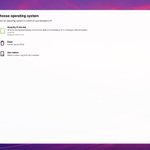
Install Omarchy using Raspberry Pi Imager. Pick it, flash the card, and it boots.
It’s a local image, still a prototype: Omarchy, Hyprland, Arch Linux ARM, for the Pi 5. Not in Raspberry Pi’s official OS list. The point is you don’t assemble the card by hand anymore.
Did I mention installing Omarchy only takes 38 seconds? That’s the installer’s own timer.
github.com/linyiru/omarchy-p…
Omarchy Pi for the win.

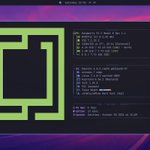
Omarchy on a Raspberry Pi 5. The installer clocked itself: 0m 38s.
Omarchy 4.0.0, Hyprland. Until this morning the image had only built under qemu. It cost more than my Beelink Ser3, which stays the iteration machine.
github.com/linyiru/omarchy-p…
Omarchy Pi for the win.

Last night I decided to see if Omarchy could run on a @Raspberry_Pi , so I ordered a Pi 5. It was at the door this morning. A few hours later, Hyprland was up on the board itself.
It cost more than the Beelink Ser3, but the point wasn’t the price. The same Omarchy now boots into Hyprland on an ARM board, how fun!
github.com/linyiru/omarchy-p…
We can fix everything. @OmarchyLinux

Just shipped crisp-tui, a Crisp @crisp_chat support inbox that lives in the terminal.
Built with OpenTUI (I’m running it on Omarchy). Humans get a real TUI; agents get JSON control commands and can drop a draft into the same screen for review.
This is what agent-native support feels like: the lookup / navigate / draft loop that used to wait on an operator can start the moment a ticket lands.
What a time to build. We can make the tools we need and solve the messy parts with agents.
github.com/solcreek/crisp-tu…

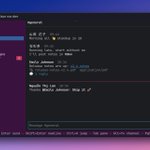
Building a Slack TUI with OpenTUI (@opencode's TUI project) is absolutely amazing! It makes building rich TUIs for both agents and humans so much easier.

Good read. So inspired by the agent "River" @shopify and decided to build our own company brain and company-wide agents, what are some great self-hosted repo?
shopify.engineering/under-th…

My #RailsWorld takeaways were many. Two that actually changed how I build: a PR & CI/CD dashboard.
@dhh said every product should have a CLI. I started following that when Basecamp shipped theirs. Now I’ve gone one step further: a TUI too, because Omarchy makes that interface easy, so TUI is now one of my defaults.
@ryan_sherlock: “Shipping is your heartbeat.” That inspired and pushed me to build our own PR & CI/CD dashboard, then make it work for humans and for agents. Data model first → CLI → TUI → React GUI last. (Don’t forget to ask your agent to build it for @OmarchyLinux.)
I call it Modern CRUD:
C — Create the API contracts and architecture
R — Readable for humans and agents
U — Update via API by default
D — Drive from the terminal first; it's agent-friendly.


I’m glad to be here with over thousand of retired programmers here today.
#RailsWorld

Sasso 0.9.1 just released.
A pure-Rust SCSS to CSS compiler (a dart-sass alternative). Zero dependencies, wasm-friendly, lib + CLI.
github.com/momiji-rs/sasso
