

senior lecturer in statistics @penn
New York & Philadelphia
Joined July 2019
- Tweets965
- Following2.3K
- Followers1K
- Likes18.3K




Pinned Tweet
"Statistics is too important to be left entirely to statisticians"
stat.berkeley.edu/~winston/w…

Peter Diamond: "there is no doubt that following my advice greatly reduced Bob [Hall]’s nevertheless very high citation level"
economics.mit.edu/sites/defa…

Bob Hall proved Ricardian equivalence but didn't publish it because he learned from Peter Diamond it "was both well known and wrong" (footnote 5)
economics.mit.edu/files/6139
Winston Lin retweeted
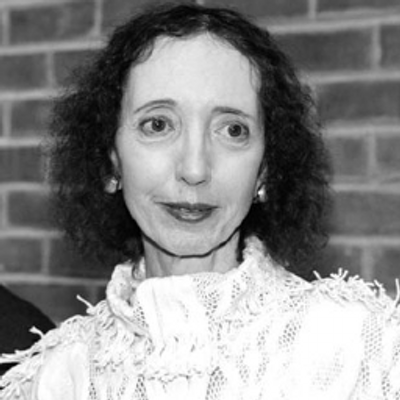
this is a very generous hypothetical!
prizes are few, writers & poets are many, & many deserving -- but-- we are wise to understand: "many are called, few are chosen."


Winston Lin retweeted

New in Science: we randomized phone-free classrooms for 16,000+ students across 10 institutions in Odisha, India. Students deposited phones in a box at the start of each class, for a full semester.

Winston Lin retweeted

Thinking more seriously about the design of exploratory studies: A manifesto
statmodeling.stat.columbia.e…
Winston Lin retweeted

Our new preprint discusses how to interpret P-values and CIs as measures of compatibility between data and hypotheses given the chosen method and its assumptions; it also briefly presents the corresponding Bayesian perspective.
Real examples are provided
osf.io/preprints/metaarxiv/6…

Winston Lin retweeted

My latest investigation: Inside Google's AI Push Into American Schools "It Slowed My Thinking Down." Students are becoming academically and emotionally dependent on AI, in large part thanks to Google's push in schools. Gift link: wsj.com/tech/ai/google-ai-ge…

Winston Lin retweeted

AI-voice is fine if your reader has a reasonable expectation to think they are reading an AI description of your ideas.
If they don't have that expectation, you are tricking them into reading something more closely than they would otherwise.
3/
Winston Lin retweeted
It's important to learn math not because you may need to do long division as an adult, but because it promotes rigorous thinking. IMO, history and causal inference are among the most important subjects a young person can study — math being central to the second.
A significant problem in public discourse right now is people's inability to critically evaluate causal claims (e.g., vaccines cause autism, deporting immigrants will solve the housing crisis, etc.). The less able people are to critically evaluate causal claims, the worse our democracy functions because people can be preyed upon for votes. You should promote anything that improves rigorous thinking, even if it doesn't have market value. In fact, we should stop thinking of education only in the context of what improves the economy.
IMO, this is distinct from knowing your own address (which Huang can avoid because he's wealthy). Memorizing facts like this may or may not be important, but it's distinct from rigorous thinking.

HUANG: “.. Try getting a kid to do long division right now. Multiplication tables are starting to be forgotten. Doing square roots? My goodness. ..
.. Does it matter? .. I don’t think it does.”
@ezraklein @JensenHuang
Winston Lin retweeted

Pretty much at every academic event I went to in the last year, I end up talking to others about how to change teaching in response to AI. Since I keep repeating myself, I figured I might just as well write down what we have been doing: thelastsoftwareengineer.subs…
Winston Lin retweeted

Students sometimes tell me they’re applying to PhD programs as a backup in case they don’t get a job as a software engineer or whatever. I get that the job market is rough but this is like saying you’ll start a company if you don’t find a job. Like starting a company, a PhD is the far *more* risky path and requires incredible grit over a long period. It isn’t just that you might realize after a couple of years that a PhD isn’t for you. The bigger risk is that you complete a PhD but end up overqualified on a niche topic after having spent 5-7 years on it. The research world, like acting, sports, music, or book publishing, is set up as a tournament, with lots of extremely competent people competing for a small number of highly desirable slots. We can talk about whether that’s fair and whether it’s inherent or can be changed, but as a professor I feel the least I can do is loudly and repeatedly warn people about what they’re getting into.
Winston Lin retweeted

Columbia has prohibited the use of electronic devices in all Literature Humanities and Contemporary Civilization sections starting this fall, 12 syllabi for the courses reviewed by Spectator show and a Columbia College spokesperson confirmed.
columbiaspectator.com/news/2…
In class two years ago, I said "once you prove one direction" but the auto-generated caption says "once you choose One Direction" :)

Winston Lin retweeted

I tried, with perhaps modest success, to discuss this problem here, a decade ago. My thinking really hasn’t changed.
pubmed.ncbi.nlm.nih.gov/2710…


Winston Lin retweeted

The whole new retweets tab thing is such a profound misunderstanding of the retweet itself. When I retweet a post, it’s because I love it as if it were my own.
Apropos of nothing, I really like Chris Harshaw's comment "Why are RCTs the Gold Standard? The Epistemological Difference Between Randomized Experiments and Observational Studies" in @ObservStudies (2025)
muse.jhu.edu/pub/56/article/…
Winston Lin retweeted

Yes: “ Importance of scholarly community and virtues. Now more than ever we should value the virtues of scholarship and scholarly community. Rigor and seriousness about intellectual work are going to be threatened even more than they were before as it becomes easier to produce a large volume of reasonable-looking work. In my opinion, one of the most important things we can share with our students is modeling for them what it looks like to be conscientious about details even when no one else will check, and what it looks like to care about the truth and open inquiry rather than reputation. The university is distinctively well-positioned to foster these ideals, and they will still be of great value to our student in many of the wildly different futures they may live through.”

It's the first week of classes here at NYU! Some scattered lukewarm takes on AI and higher ed right now (some philosophy-specific):
UG Assessment: all assessment that is not intended to test ability to use AI should now be in person, whether that's a written test or an oral exam. If you can't staff an oral exam, and you don't want to test AI use, use a written exam. Anything else is a disservice to the students who don't cheat. I know, it's annoying! We had a different practice before. But that ship has sailed.
UG Applications: this seems like a disaster, and I don't know what to say. High schools haven't generally caught up to the need for all in-class assessment and assessment was anyway a mess there. We now also can't trust application materials. It's not a popular view, but in person standardized tests look like they're one of the few things that can carry signal (without relying on a more biased proxy like "we know this school and these teachers").
Journal reviewing: I expect journal submissions to grow *a lot* in the near future. We are already over capacity for referees. We need to develop new ideas here, probably it involves AI desk-rejections. This is harder in our field than in say math where you can at least check correctness as a proxy. But we need something; the system won't be able to tolerate a lot more submissions.
Open access/working papers. I'm in an unusual and obviously somewhat biased position, but I would like AI companies to train on my scholarly work. It's how my work will reach other scholars and it's how it will impact the ideas of the future. Others may feel differently. Your thinking on this should heavily impact what journals you submit to.
Citation / influence. Related to the above, many fields use google scholar as a proxy for impact in the field. I expect cite counts to go up a lot (even more than they did already) as AI models make it easier to "cite everyone" by automating bibliographic entry. It wasn't clear before that cite count was a great proxy for influence; this will become even less clear going forward. I don't have a positive solution but I think we need new ideas.
Recommendation letters/promotion letters. Summaries of work no longer carry the signal of effort they once did. We should not expect that everyone will "just be honest" with their letters. Everyone is too busy. This system already needed rethinking, even more so now.
Importance of scholarly community and virtues. Now more than ever we should value the virtues of scholarship and scholarly community. Rigor and seriousness about intellectual work are going to be threatened even more than they were before as it becomes easier to produce a large volume of reasonable-looking work. In my opinion, one of the most important things we can share with our students is modeling for them what it looks like to be conscientious about details even when no one else will check, and what it looks like to care about the truth and open inquiry rather than reputation. The university is distinctively well-positioned to foster these ideals, and they will still be of great value to our student in many of the wildly different futures they may live through.
Winston Lin retweeted

TMLR has refocused its acceptance criteria to place more emphasis on clear writing. Read more in this blog post: medium.com/@TmlrOrg/increasi…

Winston Lin retweeted

Use \, to insert a thin space in math mode. See johndcook.com/blog/2010/02/1…
Winston Lin retweeted

Welcome (back) to campus!
Here's a piece I wrote years ago about starting up as a freshman at a research university like @Penn:
goodauthority.org/news/so-yo…

