

Building propulsion for the next generation of spacecraft. Configurable, delivered fast, built for industrial scale.
Krakow
Joined May 2022
- Tweets379
- Following22
- Followers719
- Likes28
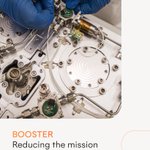





Propulsion is often considered as a technical risk. In practice, it can become a schedule risk first.
It’s the satellite part in which even a small requirement change can affect delivery significantly, as propulsion has been historically known in the industry for long lead times, and need for bespoke development and qualification campaigns.
BOOSTER takes a different approach.
The propulsion architecture is standardized, and the mission-specific configuration is selected from qualified building blocks rather than developed from scratch.
Configuration takes days. Flight hardware is delivered in 6–9 months. New configurations build on the same qualification and flight heritage.
That is how BOOSTER helps keep the propulsion system off the critical path.


We’re not making cars fly. 🏎️💨 But satellites? That’s what we’re good at - and we need you to help us move more of them.
We're looking for a Business Development Manager to join Liftero and help bring our propulsion technology to more missions worldwide.
You'll work closely with our founders and engineering team, own commercial opportunities, and help shape how we grow.
Interested? Let's talk! 👇

The hardware arriving on your dock is the easy part of a propulsion delivery. The work between delivery and first burn is where schedules go.
BOOSTER ships with that covered: licensing support, integration engineering, propellant loading, in-orbit commissioning and operations.
We don't just ship propulsion. We get it to orbit with you.


BOOSTER propulsion system can be fueled off-site, transported by road, and delivered to the launch site as a fully fueled spacecraft.
That changes the launch campaign.
There is no need to schedule dedicated hazardous fueling operations at the launch site, no SCAPE-suited loading campaign, and no additional handling step before integration.
The spacecraft can remain fueled for extended periods and stay ready for launch as the schedule moves.
That means fewer launch-site constraints, lower integration cost, and less schedule risk.

Greetings from @IAC2026Antalya! 🇹🇷
Barbara Gregorczyk and Rafał Rzempała are on the ground representing Liftero at this year’s International Astronautical Congress.
With the global space community gathered in one place, it’s been a busy few days of meetings and conversations, but we're not done yet.
You can find us at the Polish national stand hosted by the POLSA Polska Agencja Kosmiczna | Polish Space Agency, together with a strong representation of Poland’s space sector.
If you’re at IAC today, come by and say hello – especially if you want to talk in-space propulsion.
#IAC2026

500 million PLN dedicated to support the growth of Polish space tech.
Yesterday, at Krakowski Park Technologiczny (@KRKParkTech), Bank Gospodarstwa Krajowego (@BGK_pl) launched Vinci Space Tech Fund — Poland’s first fund dedicated exclusively to space technology companies, managed by Vinci S.A. It was presented by @Domanski_Andrz, the Polish Minister of Finance and Economy.
We’re pleased to see Polish capital backing the domestic space sector. This is an important step towards helping Polish companies scale and compete globally.
Przemysław Drożdż (@pr_drozdz) represented Liftero in a panel on building company value and scaling Europe’s space sector. The discussion covered access to capital, the transition from technology development to repeatable sales, and European technological autonomy.
Thank you to our fellow panelists: @rmodrzewski (@ICEYE), @jj_kowalewski (@Scanway), Grzegorz Brona (@CreotechSa ), and Piotr Sybilski (@sybilla_tech ), as well as moderator @patrycjuszwyzga. That was a great company to share the stage with!
Thank you to Krakowski Park Technologiczny and Vinci S.A. for the invitation.
Congratulations to everyone involved in bringing the fund to life!


Liftero is heading to Antalya for @IAC2026Antalya! 🇹🇷
From October 5–9, Barbara Gregorczyk and Rafał Rzempała will be representing Liftero at the International Astronautical Congress. It's one of the world’s largest space gatherings, bringing together thousands of people from space agencies, industry, academia, and institutions from around the globe.
You’ll find us at the Polish national stand hosted by the Polish Space Agency (@POLSA_GOV_PL), alongside other companies and organizations representing Poland’s growing space sector.
If you’re attending IAC and want to talk about in-space mobility, propulsion, or what we’re building at Liftero, come by and meet the team.
See you in Antalya!


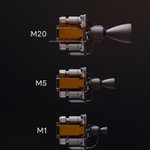
BOOSTER uses a common architecture across the 1 N, 5 N and 20 N thruster classes.
The same valves, core components and propellants are used across the family, while the thrust chamber is scaled for the required thrust level.
That commonality reduces the number of unique parts, simplifies manufacturing and lets test and flight experience feed back into the same technology base.
It also supports higher production volumes without developing a different propulsion system for every mission.
The result is a scalable thruster family built around the same core advantages: high specific impulse and extended continuous firing.

Read more and choose your configuration → liftero.com/booster
A propulsion system isn't constellation-ready just because the first unit works.
It has to be repeatable. Manufacturable. Deliverable at volume.
BOOSTER is built from standard modules, assembled and tested in-house, and designed around a scalable industrial supply chain.
We're now scaling production for multi-unit programs.
Performance gets you through qualification.
Production gets you through the constellation.

RPO demands more from propulsion than just delta-v.
A servicing spacecraft needs to translate, rotate, make precise corrections, and still have the thrust to move quickly when the mission calls for it.
BOOSTER can combine up to 14 thrusters across 1 N, 5 N and 20 N classes for full 6-DOF control.
High thrust for rapid maneuvers. Fine impulse bits for close proximity operations. Cold-gas mode for the smallest corrections.
One propulsion architecture, configured around the mission.


Precise re-entry requires a high-Δv maneuver, often 150–200+ m/s.
Chemical propulsion can deliver it quickly, but not every system can sustain the required burn. Thruster overheating or other operational limits can force pauses or split the maneuver into multiple burns.
BOOSTER is designed for extended continuous operation, allowing 150–200+ m/s to be delivered in a single burn.
Need to do it faster? Add more thrusters.
Same propulsion architecture, sized to the maneuver.
