

I am curious and honest
FUTURE
Joined October 2008
- Tweets5.8K
- Following1.4K
- Followers48.9K
- Likes7.3K






避免 AI 味的唯一办法,是回归人的局限性。比如人有偏见、有情绪、容易一叶障目、容易损人利己,等等。
认识你自己。把认识的自己,告诉 AI。然后 AI,就有机会用你的眼去看见、用你的心去感受、用你的脑去思考,最后不用你的手也能替你写了。
但这太难。不认识自己,这就是你的最大局限。好玩的是,AI 最大的用途之一,就是当镜子,如实照见你。
AI 味的源头,不是 AI,而是你。


这些文章,都是 DeepSeek Flash 下,用 YouMind 的 YouTube Video to Article 这个 skill 一键生成的。
有了 AI 后,写文章不再是壁垒。
选题,是品味的一部分,变成了关键之一。


技术,依旧是绝大部分创业公司做不出好产品的主因。其实大量大厂,做不出好产品,也是卡在技术上。
Muse 都被卡了七个月。Dots 则因为技术不行,发布至今,都在被吐槽。
国内的技术更加惨淡。一个国庆过去了,没啥新东西发布出来。

生成这篇文章的 skill 来了:
youmind.com/skills/youtube-v…
可以把任何带字幕的 YouTube 视频,转成带插画的高质量文章
还可以进一步探索相关视频或资料,很容易按图索骥,从兴趣延展为主题式主动学习
唯一风险是,会有点上瘾
运行此 skill 时,推荐在 YouMind 里选择 Opus 5.5 模型


非常赞同
说 AI 味太浓,就类似互联网早期,说网瘾少年有害社会一样
不用担心是否有 AI 味,需要担心的是,自己用 AI 做的东西,是否足够吸引人
比如红果短剧里,《持械入宋》和《零号小队》,我刚看时,也差点因为 AI 味没看下去
然而我克服后,发现,这两部 AI 剧,太牛了
每周等更新中


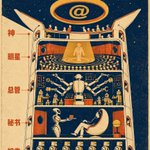
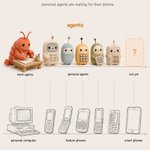
把玩各种 personal agents 后,有一种神奇的比喻浮现在心头。agent 非常像人,又不像人。从人与 agent 的关系来看,可以把 agent 分成以下几类:
1、奴隶。agent 就是工具,很擅长干活。别跟我谈什么情感,能猛猛干活的就是好下属(从历史长河看,叫奴隶)。比如各种 coding agents。新一波里,town 和 instinct 给我的感觉也是这种。还有 grok bots。给人一种实在感。
2、秘书。agent 本身能力一般,但捧哏和揣摩主人心思的能力不错。比如 openclaw、hermes 等。还有新生的一些还在发展中的 agents 新秀们。能力上其实不如奴隶们,但胜在颜值高、情商高。给人一种虚妄的老板感。
3、总管。比秘书更厉害。有事找总管就好。总管是自己干的,还是找人干的,你不需要关心。你只需要有事找总管就好。这里的佼佼者是 muse,你能想到的,总管总会尝试给你去做到。
4、明星。前面三种,是“属于”自己的,可控的。还有一类 agents,是各种数字分身,背后的真人非常厉害。于是分身 agent 也会吸引粉丝群体。比如弯弯大人的 agent 等。
5、神。目前这个类目里,只看到 claude tag。这个神只有一个用法,就是 @Claude,所有人都知道跟自己聊的,是同一个 agent,但所有人都越聊越上瘾,觉得这个神,不仅懂自己,还能干各种各样的活。
有点悲哀。又有点兴奋。


Instinct 创始人说:好的 personal agent,不需要自己的 app,可以直接长在用户熟悉的地方
Claude Tag 让人看到:好的 agent 也不需要人手一个,大家可以共用一个 agent,交互极简到只剩一个 @
乔布斯说:专注就是对一千个好主意说不
产品创新往往藏在剑法里,敢做减法的人非常少
Stripe CEO 有可能是最懂 personal agent 的。
现有的各种商业公司,很多都依赖用户知道的信息不足、用户的注意力和理性不足来赚钱。
比如保险公司的附加销售、4S 店、网络信贷等,这些都是因为用户知道的信息不足,结果多付出了很多成本。用户多付出的成本,变成了公司的利润。
比如各种广告、排行榜、还有 GEO、以及各种 SaaS 和 AI 产品的订阅制等,都利用了用户的注意力和理性不足。用户很容易被第一眼或反复看到的信息影响,很难理性花足量时间去分析思考后再决策。这里面用户多付出了很多成本,比如为公司承担了广告费,比如支付了根本没用的订阅费等。
以上一切,大量存在,但未必合理。personal agent 有可能让商业世界发生巨大变化。
personal agent 最强悍的地方,就是看起来像人,实际上一点都不像人。最不像人的地方,就是 agent 可以获取并处理大量信息、可以长时间专注一件事、可以非常理性做决策。
一句话概括是:personal agent 有机会,站在用户角度,让用户的人性弱点不被商业公司利用。
比如买保险,agent 可以帮你一眼识破条款里的冤枉钱。比如网络购物,agent 可以根据你的喜好,而不是广告排行,去帮你选到最适合你的商品。比如订阅软件,agent 可以在你不用时,自动帮你取消,让大量依赖健身房逻辑的 AI 产品倒闭,等等。
这样,对所有商业公司来说,最重要的是回归到最朴素的商业竞争:把产品做好。
在 personal agent 的世界里,终于有机会,酿酒师可以专心酿酒,公司可以专注于产品创新和产品品质。酒香真不怕巷子深了。
一切看起来很美好。美好之前,有两个关键问题要解决:
1、agent 的信息来源。除了旧世界里已被污染的各种信息,是否有机会有新的信息来源,比如 Stripe 开放真实交易数据供 agent 获取和辅助决策。
2、personal agent 能站在用户这边。用户要信任 agent,敢授权。agent 也要信任用户,能始终站在用户角度、代表用户利益去获取信息和推理决策。这可能是 personal agent 创业公司的机会。
personal agent 的核心不是懂用户,而是能真正站在用户角度去思考决策,能代表用户利益去和世界相处。

Assorted things I've been mulling over regarding agents in the economy:
• Companies are in some sense the original superintelligence. It's often the case that they can use their amortized cognitive surplus to advance their interests against those of certain consumers: relative to the optimization capacity of companies, consumers can be inattentive, underinformed, irrational, etc. (Think, say, of some of the classic insurance upsells at the end of a booking process, which is typically priced substantially above what a regular policy would cost.) Herbert Simon introduced the idea of bounded rationality, and firms often end up benefiting from it. Thanks to personal agents, we will probably get somewhat more rational in how we engage with companies.
• How exactly will outcomes change? Well, certain kinds of price discrimination will work less well (how do coupons work if every agent hunts fastidiously for them?), and certain kinds of customer cross-subsidy will change (today, people who forget to cancel subscriptions subsidize those who don't). Taken across the economy as a whole, I'm not sure what the incidence of all of this will be.
• In corporate strategy, people have long debated the relative importance of distribution and product quality. Perhaps you've made something better, but does anyone know about it? Won't people just continue to buy the ACME Corp Mousetraps? Personal agents will, I think, act as a kind of structural subsidy for product quality. How would markets look different if individuals always spent at least 10 hours researching their purchases? On the margin, focusing on making a product better is, I think, going to become a more effective strategy for companies. This is good!
• It true, a corollary is that information about product quality will become more important and impactful. Today, most people have very limited ability to aggregate and integrate such data, but agents will have insatiable thirst for such signals. (It's often said that data is becoming more valuable because it helps in the training of models. That's obviously true, but I think there's a secondary way in which it's more valuable simply as a complement to cheaper intelligence.)
• A big question is whether agents will increase superstar effects (rational agents all settle on the same product) or increase dispersion (because everyone has slightly different tastes and preferences, which agents are good at eliciting, finally overcoming the artificial clustering we've been subjected to).
• Many internet companies have monetized demand routing, which is in turn often predicated on short attention spans. "I'll click on the first thing I see." This has led to some amount of inefficiency, as companies try to propitiate capricious ranking algorithms and incur various placement fees. It's not all deadweight loss (willingness to pay is itself a kind of signal, which is valuable to buyers), but it's not great. How will the nature and value of this routing change in a world of personal agents? I don't know the answer, but I think that the effects might be pretty big.
• Much of what I'm writing hinges on the assumption that personal agents will be on the consumer's side. I suspect that that will be the winning strategy, but whether it's true, and what it means to be true, involves a lot of other questions.
Taken as a whole, the market is a massively parallelized, decentralized, and highly imperfect value attribution machine, and, taking stock of all of the effects, it seems to me that the quality point may well be the biggest: that agents will change the nature of the backpropagation such that the rewards for better products increase. Maybe this is too optimistic, but I suspect (and hope) that companies that make things that they're proud of will feel that the universe is a little more partisan in their favor.