

"Let it Roll" is a podcast about how popular music happens.
United States
Joined September 2017
- Tweets4.7K
- Following1.6K
- Followers857
- Likes6.8K




Pinned Tweet
We're re-launching Let It Roll by running all 300+ episodes in chronological order by subject.
This is the most in-depth, comprehensive, and wide-ranging music history podcast ever attempted.
Hundreds of author interviews with profound musical thinkers like @tedgioia, @ElijahWald, the late, great @HistorianOfRock, Ned Sublette, @rxgau and many more.


Every Great Musical Revolution Started With Outsiders @tedgioia #music youtu.be/jEws4cwTFpM?si=WKQT… via @YouTube

LET IT ROLL retweeted
My latest for @yvessmith (although really it was very kind of her to let me feature my music podcast on her blog). link in replies

Spoiler: It sucks!

I’m just discovering this album that Page, Bonham, Jeff Beck, Noel Redding, and Nicky Hopkins all played on (and Page produced) : r/ledzeppelin reddit.com/r/ledzeppelin/com…

LET IT ROLL retweeted
For eight years I made a podcast called Let It Roll. Five hundred–plus episodes, over five hundred hours, mostly long conversations with the authors of the best books on music history — the business, the technology, the money, and what it cost the people who actually made the music. Roughly 1917 to now, with some preludes going back to the Renaissance.
Here's something I've never said out loud:
I DELIBERATELY RELEASED THE EPISODES AS AN INCOHERENT JUMBLE OF WILDLY CHANGING TOPICS FROM WEEK TO WEEK TO FUCK WITH YOUR HEADS AND GET PEOPLE OUT OF THEIR MUSICAL SAFETY ZONES.
Like The KLF, there was an occult practice to it — occult as in "hidden," not hoo-ha. Anybody who listened regularly was a subject of the experiment. And if I'm honest, it was also an attempt to break the psychological control my own musical obsessions held over me.
Now I'm putting the whole thing back together in chronological order, so you can finally see what the argument was. That's happening over on Substack, along with a new subscriber chat where I'm writing about the parts I never finished — the interviews I couldn't get, the sources that got silenced by sinister forces, and the method underneath all of it.
So you know what you'd be walking into: I'm not interested in arguing about which record is better than which record. There are plenty of places for that. I'm interested in trying to objectively weigh what actually mattered — how popular something was in its own era, how influential it turned out to be later, whether it's still relevant, what it did socially, what it broke open technically, and whether there was a lot of mayhem and riot around it. That last one is always a sign somebody was onto the real shit.
If that's your kind of thing, come over to S U B S T A C K. L I N K I N R E P L I ES.
One honest note about this post. I'm not going to be in the comments here. The conversation I actually want is the one on Substack, and I'd rather do that properly in one place than badly in two. But I do read this page, and if you've got something to say — a correction, an argument, a record I got wrong — I genuinely want to hear it. Come say it where I can answer you.

LET IT ROLL retweeted

This was me and I could never have done it without @CrooklynMMA and she and I are going to keep podcasting together -- look for the heaviest Let It Roll miniseries ever coming up this fall. We're gonna delve into the Deep Darkness.

For eight years I made a podcast called Let It Roll. Five hundred–plus episodes, over five hundred hours, mostly long conversations with the authors of the best books on music history — the business, the technology, the money, and what it cost the people who actually made the music. Roughly 1917 to now, with some preludes going back to the Renaissance.
Here's something I've never said out loud:
I DELIBERATELY RELEASED THE EPISODES AS AN INCOHERENT JUMBLE OF WILDLY CHANGING TOPICS FROM WEEK TO WEEK TO FUCK WITH YOUR HEADS AND GET PEOPLE OUT OF THEIR MUSICAL SAFETY ZONES.
Like The KLF, there was an occult practice to it — occult as in "hidden," not hoo-ha. Anybody who listened regularly was a subject of the experiment. And if I'm honest, it was also an attempt to break the psychological control my own musical obsessions held over me.
Now I'm putting the whole thing back together in chronological order, so you can finally see what the argument was. That's happening over on Substack, along with a new subscriber chat where I'm writing about the parts I never finished — the interviews I couldn't get, the sources that got silenced by sinister forces, and the method underneath all of it.
So you know what you'd be walking into: I'm not interested in arguing about which record is better than which record. There are plenty of places for that. I'm interested in trying to objectively weigh what actually mattered — how popular something was in its own era, how influential it turned out to be later, whether it's still relevant, what it did socially, what it broke open technically, and whether there was a lot of mayhem and riot around it. That last one is always a sign somebody was onto the real shit.
If that's your kind of thing, come over to S U B S T A C K. L I N K I N R E P L I ES.
One honest note about this post. I'm not going to be in the comments here. The conversation I actually want is the one on Substack, and I'd rather do that properly in one place than badly in two. But I do read this page, and if you've got something to say — a correction, an argument, a record I got wrong — I genuinely want to hear it. Come say it where I can answer you.
Just found out that Nina Simone covered Sandy Denny's "Who Knows Where the Time Goes"
Overwhelmed at the beauty and originality of Nina's take.
The only singer on Earth at the time who could cut Sandy Denny on her greatest song.
I desecrated with some AI slop

Nina just casually tearing Sandy's masterpiece to shreds and elevating it even higher youtu.be/Bkmk9cBtz3c?si=uamw…

LET IT ROLL retweeted

The rise of 'Bowie Bonds' — long seen as too exotic for serious money — as an investable asset class marks the latest twist in a US economy where the search for yield has redrawn the boundaries of finance on.ft.com/3VzWz5k

ALT Shakira performs during a concert. Text on image reads: (FT Exclusive) Investors have raised a record $4.4bn of debt backed by songs this year
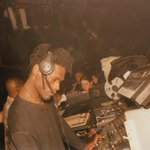
Today's episode @kidnate & @Ryan_Harkness talk about the birth of #junglemusic in London in the 1990s. The first Afro-Anglo music to make a global impact. Link in reply @CrooklynMMA

ALT DJ Fabio 1990s