

Inna The Lion Place arktexture ₿
High Places Of Anu
Joined May 2018
- Tweets17K
- Following1K
- Followers436
- Likes46.8K




lbrealdeveloper retweeted
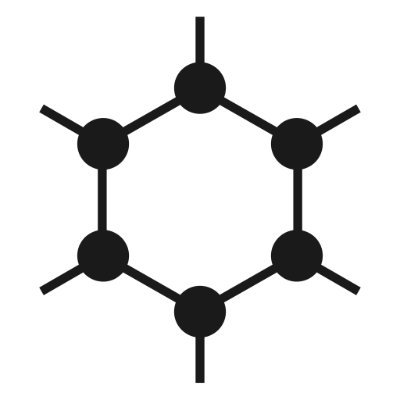
This is the new GrapheneOS boot animation. It's generated frame-by-frame using a script. It has a minimum 3.5s total runtime for the intro including a small pause. The rest of the animation gets interrupted once the device is booted to avoid any delay so there can't be an outro.
lbrealdeveloper retweeted

We had a security breach last night related to a large scale distillation attack that impacted 1.4% of OpenCode Console users
We have notified them all this morning via email. If you did not get an email you were not impacted, it was a subset of users who had external providers linked
The incident is ongoing so we cannot share more details at this point but we are working with Anthropic, OpenAI, and Google to remediate
lbrealdeveloper retweeted

how do you trust your agents' work more? copy this post/link and give it to your @bot or agent!
1. codebase improvements: this is just good software engineering - better architecture, stronger types and invariants, clear boundaries. agents love to copy what exists and take the shortest path, so make the easy thing the right thing. categorically eliminate problems through code and you won't need to think about it again.
2. static analysis: lint rules, tests, CI, verification (eg TLA+). very token efficient ways to catch issues ahead of time.
3. prose: comments, rules, AGENTS.md, skills - anything that can't be enforced and requires agent judgment. use it minimally, but do use /create-verification-skill.
4. human review: the hardest to scale. at the rate agents land code, it's pretty much impossible to thoroughly review every PR, so spend that effort on the highest leverage point, designing an environment where agents do the right thing by default.
this forms an inverse pyramid: you want most of your effort at the top, least at the bottom. codebase improvements are deterministic, making it more token efficient, and lets you sleep more soundly at night.
install github.com/cursor/plugins/tr… and create a new Project:
1. look through my slack/chat messages and code review comments where i've given feedback on PRs, code, architecture
2. use /recall on my past transcripts to learn how i steer agents
3. /poteto-mode use /correct and /architect on past commits to find the most common pitfalls agents fall into, then propose a plan to rearchitect the code i own so it's more agent friendly. answer open questions with prototyping rather than defer to me, and back the plan with real data.
4. before you begin, use /sharpen + /in-your-own-words and confirm this prompt with me

lbrealdeveloper retweeted

Today, we’re releasing Bonsai 2 2B, 4B, and 9B.
Based on Qwen3.5, these new ternary models bring stronger reasoning, visual understanding, and tool calling to compact footprints designed for everyday devices:
• 2B: 0.43GB
• 4B: 0.95GB
• 9B: 2.0GB
For this release, we focused on what makes small models useful as local assistants: following instructions, avoiding repetitive loops, calling tools on mobile devices, and giving useful answers without unnecessary output. The 9B model uses roughly 40% fewer tokens on standard instruction-following and everyday math tasks. Solving the Riemann hypothesis can wait.
These models are successors to our first-generation Bonsai 1.7B, 4B, and 8B, and provide a foundation for bringing practical agentic functionality to local applications on personal computers, phones, and wearables.
The Bonsai 2 family now includes four sizes spanning 2B to 27B parameters. Developers can choose the balance of capability, memory use, and responsiveness that fits their application and hardware.
Available today under Apache 2.0.

lbrealdeveloper retweeted

"Solving the Riemann hypothesis can wait."
Lol
I'm happy to see that smaller models still get some love

Today, we’re releasing Bonsai 2 2B, 4B, and 9B.
Based on Qwen3.5, these new ternary models bring stronger reasoning, visual understanding, and tool calling to compact footprints designed for everyday devices:
• 2B: 0.43GB
• 4B: 0.95GB
• 9B: 2.0GB
For this release, we focused on what makes small models useful as local assistants: following instructions, avoiding repetitive loops, calling tools on mobile devices, and giving useful answers without unnecessary output. The 9B model uses roughly 40% fewer tokens on standard instruction-following and everyday math tasks. Solving the Riemann hypothesis can wait.
These models are successors to our first-generation Bonsai 1.7B, 4B, and 8B, and provide a foundation for bringing practical agentic functionality to local applications on personal computers, phones, and wearables.
The Bonsai 2 family now includes four sizes spanning 2B to 27B parameters. Developers can choose the balance of capability, memory use, and responsiveness that fits their application and hardware.
Available today under Apache 2.0.
If you no know, JAH know
If you no see, JAH see
Right now it's just a little better than what it could be
lbrealdeveloper retweeted
try pstack! it’s my personal set of skills for rigorous and autonomous engineering with agents. it’s updated frequently as I continue to tune and simplify them
10 second tutorial:
1. run /setup-pstack and choose your budget
2. add /poteto-mode in front of any prompt you want done rigorously
3. ask /poteto-help whenever you’re unsure what pstack skills to use
4. that’s it!
Grok Bot: x.ai/bot/plugin/9717366
Cursor: cursor.com/marketplace/curso…
Source: github.com/cursor/plugins/tr…


lbrealdeveloper retweeted

$52M seed round. 15M+ users. But this is what we're most proud of yet.
Introducing Drama 3: the most emotive and controllable TTS model in the world
And yes, it's open-weight.
You can now control how even a single word should sound, change its tone, and shift your voice mid-sentence.
Uncle Roger was impressed too.
Try it here:
s.fish.audio/rqh0l8
Comment “DRAMA” within the next 48 hours for 1 month free.
If you're an enterprise your first month is on us:
s.fish.audio/qz9r0t

lbrealdeveloper retweeted

Introducing TrellisWM:
The Fractal Window Manager for MacOS
Its how the desktop should have always been.
Download at
TrellisWM.app


lbrealdeveloper retweeted

Markdown editor that stays rendered while editing 🔥
🫛 edamame — A TUI Markdown editor with live rendering
💯 Interactive tables, inline images, Mermaid diagrams, LaTeX & Vim mode!
🦀 Written in Rust & built with @ratatui_rs
⭐ GitHub: github.com/mijowi/edamame
#rustlang #ratatui #tui #terminal #markdown #editor
lbrealdeveloper retweeted

Anatomy skill for building wireframe designs and interactive prototype machines is now an officially integrated optional skill in Hermes Agent
You can find it in the optional built in skills in the skills catalog or install with:
hermes skills install official/creative/anatomy
All credit to @wheresryan22!


Introducing Anatomy
Describe a machine in one line. Claude brings it to life.
- Interactive isometric wireframes you can rotate, inspect and explore
- WebGL shaders for fire, water, plasma and more
- Real 3D motion, with individual parts that rotate and move
Install it as an agent skill. Fully open source.
lbrealdeveloper retweeted
pstack is now 10% smaller with no loss in behavior! updates are automatic in grok bot and cursor
x.ai/bot/plugin/9717366
lbrealdeveloper retweeted
We are consolidating the official plugins for Hermes Agent into the following mono-repo to enable better issue visibility and to centralize the source to find them all:
github.com/NousResearch/herm…
