

The Nawabdom Of Oudh
Joined April 2024
- Tweets3.9K
- Following593
- Followers343
- Likes47.5K






shaykh dost Muhammad Khan Bahadur retweeted

Historical accounts of the Sunni Bohras of Broach, Gujarat, state that Hindus locally referred to them as “Sojjar-lok” (soldiers). The text even notes that a Bohra cart rarely had to force its way through a street, suggesting the apprehension they commanded locally.


shaykh dost Muhammad Khan Bahadur retweeted
"Hyder-Ali's father was the son of a former weaver from Telingana, who became a soldier during the Dekan War and was taken prisoner by Aureng-Zeb
(1)."


shaykh dost Muhammad Khan Bahadur retweeted
Even tho the Mughals came from Turani stock, one might expect them to dominate the nobility. In reality, their influence began fading long before Aurangzeb's reign. Jahangir showed clear hostility toward them, and at court, they were regarded as boorish and uncultured outsiders.


shaykh dost Muhammad Khan Bahadur retweeted
In 1829, Syed Ahmed Barelvi established a Khilafat (Islamic government) in the northwestern frontier region. In 1830, his forces defeated Sultan Mohammad Khan, a descendant of Abdali, and took Peshawar, where Syed Ahmed barelvi was proclaimed Caliph and issued coins in his name.


shaykh dost Muhammad Khan Bahadur retweeted

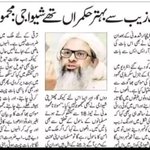
Regardless of attempts to delegitimise Sharjeel Imam, his influence and relevance within mainstream Muslim socio-political discourse has grown and will continue to grow.
shaykh dost Muhammad Khan Bahadur retweeted

The elderly lady here in this clip is Rani Lakshmi Kumari Chundawat — daughter of the ruler of Deogarh State of Mewar. She was a renowned writer honoured with the Padma Shri, and also served as MP for six years.
In this clip, she is explaining how Marathas took full advantage of Mewar’s war-torn condition (as a result of resisting invaders for centuries) by raiding & pillaging its territories even more than the Mughals ever did. She further explains how the main victims of these atrocities were mostly innocent civilians & peasants — who couldn’t even afford to leave their fields out of fear of getting ravaged by Maratha raiders, who didn’t even spare fodder!
This isn’t just the story of Mewar, but that of every Hindu territory subjected to Maratha depredations — from Gujarat & Rajasthan in the West to Orissa & Bengal in the East, even all the way up till Karnataka & Tamil-Nadu in the South. Contemporary accounts attest how Maratha raiders followed a 𝙨𝙘𝙤𝙧𝙘𝙝𝙚𝙙-𝙚𝙖𝙧𝙩𝙝 𝙥𝙤𝙡𝙞𝙘𝙮 of destroying crops & livestock, but retreating (using swift ponies) the moment any native army arrived at scene to fight them.
And today, descendants of those scoundrels take pride in it, by celebrating the misery of innocent Hindus as some sort of an achievement. Never forget that these are the same people who brag about being 𝙃𝙞𝙣𝙙𝙪-𝘿𝙝𝙖𝙧𝙢𝙧𝙖𝙠𝙨𝙝𝙖𝙠𝙨 24/7 on social media.

shaykh dost Muhammad Khan Bahadur retweeted

📍 असम | नगांव, लिटुमारी
500 से अधिक मुस्लिम परिवारों के आशियाने उजड़ रहे हैं। 💔
जिन घरों में सपने बसते थे, आज वहाँ बुलडोज़र चल रहे हैं।
shaykh dost Muhammad Khan Bahadur retweeted
Not commenting on the map or the user, just quoting this to highlight another point.
We possess a contemporary account by an individual who served Nawab Hyder Ali, which gives us a detailed account of his Telugu father, his conversion to Islam, and his entry into the military.


shaykh dost Muhammad Khan Bahadur retweeted
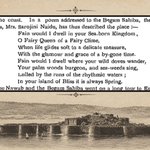
Sarojni Naidu in a poem addressed to Her Highness Nazli Raffia, Begum sahiba of Janjira:

This is the unconquered Janjira Fort, which multiple generations of British, Portuguese, and Marathas attacked but failed to take. Shivaji alone lost nearly 15,000 men here. Sambhaji and Bajirao also failed.
Murud-Janjira Fort was built by Sultan Murtaza Nizam Shah in 984 AH (1576-77 CE).
Initially, the island was defended by a wooden fortification built by the Koli pirates. After defeating them, Ahmad Nizam Shah captured the fortifications and reinforced the existing structure.
However, this entire wooden structure was demolished and replaced with the grand stone fort that stands today during the reign of Sultan Murtaza Nizam Shah I (r. 1565–1588).
The earliest inscription found here, dated 1576–77 CE, states that Fahim Khan built the fort and its bastions on the orders of the Sultan.
Another inscription from the reign of Emperor Shah Alam II Bahadur, dated 1122 AH (1710–11 CE), reinforces this tradition, again stating that the fort was built by Fahim Khan during the reign of the "Nizam Shah of the Deccan."
shaykh dost Muhammad Khan Bahadur retweeted
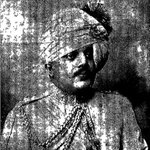
His Highness Sir Nawab Sidi Ahmad Khan GCIE (1862–1922). The nawab of Janjira.


shaykh dost Muhammad Khan Bahadur retweeted
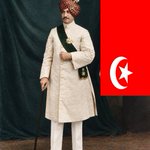
A colourised photograh of His Highness, Captain Nawab Sidi Ibrahim Muhammad Yakut Khan III Bahadur, Mubariz-ud-Daulah, Muzaffar-ul-Mulk, Nusrat Jang, the Nawab of Sachin in the Bombay Presidency (1887–1930). The House of Sachin was an offshoot of the illustrious Siddis of Janjira


shaykh dost Muhammad Khan Bahadur retweeted

रेस कोर्स दिल्ली की मस्जिद के लिए लिखना शुरू करे, लिख नहीं सकते रिपोस्ट करे।
बिस्मिल्लाह #SaveRaceCourseMasjid


