




This is an interesting new development. All due to the verification gap being smaller for Rust ⚙️

The best argument for Rust in 2026 is not memory safety or performance. It is that AI writes better Rust than it writes C++. The compiler feedback loop is so tight that models self-correct in real time. Every error message is a free training signal. Rust was accidentally designed for AI-assisted development 10 years before anyone knew that mattered.
2
62
Relived that Hungary stared into the abyss and turned back to the light. Authoritarian mafia bosses are a bad choice of leaders...
49
As of last week, I'm an investor in Anthropic through Stellatrion Partners Fund IV! 🎉
There is a lot of debate about a possible AI-bubble. In general, I find that opinions don't count for much unless you have skin in the game. Saying stuff is easy 💬 Well, I'm now walking the walk by betting that Anthropic is undervalued at $380B (their latest raise) by buying shares from that round indirectly.
Why? Several reasons:
1. Enterprise Agents. Since November, Agents have gone from an interesting idea to useful. We are adopting them at a fast pace at Kognic. While there are still many issues and challenges, I'm confident that models will keep improving. In particular for verifiable tasks. Based on Kognic alone, I'm confident that Anthropic's overall revenue will grow significantly over the next 24 months.
2. I personally would hate living without my Claude subscription. I pay the maximum price and use API credits when needed, and basically run my life using Claude Code today. It does my personal finances, helps me keep track of photo backups, and audits my servers and Mac to keep them secure. Among other things. It's the most valuable addition to my toolbox since I got a MacBook. I like the idea of being a shareholder in a company whose products I admire ❤️
3. All the angel investments I've made ultimately depend on Claude Code today (e.g. Lovable ). Investing in Anthropic means investing in the "source".
4. In the extremely unlikely event that we face some sort of singularity, I want to have money inside the "light cone of value" 😉
1
93
I've decided to become more active on X again after years of being away ✍️ Also: I was shocked to find that I've had an account on the platform for over 17 years 😱 I'm getting old... Anyway, why am I returning?
Well, as complicated as my emotions about the new management might be, a lot of 𝗴𝗲𝗻𝘂𝗶𝗻𝗲𝗹𝘆 𝗶𝗻𝘁𝗲𝗿𝗲𝘀𝘁𝗶𝗻𝗴 people are on X, posting really insightful things. I also find that LinkedIn isn't great for high frequency stuff.
My plan is to dual-post anything major to both platforms, and then post smaller, more high frequency things to X going forward.
To get started, I cleaned up who I follow and organize everything into lists. You can see my starting set of 230 accounts in the pdf (if you are on LinkedIn) or through my profile (if you are on X). The script for cleaning my x account is here along with the account list: github.com/dlangk/x-admin
Let's go 🚀

1
2
78
In practice, I let Gemini Deep Think and Opus 4.6 collaborate on the science, with my intent as the guide. My workbench is Yatzy, since it's mathematically interesting yet very easy to play. I use DT as my "theorist" and Opus as my "experimentalist". I prompt them to write as two scientists conversing through their papers. Falsifiable hypotheses, pre-registering experimental result expectations, etc. It's insanely powerful. I'm sure there is some risk of "unverified claims" slipping through the cracks, but I think the scientific method drastically reduces the risk. Every claim needs to be backed up and experimentally verified.

1
94
My setup is evolving:
- Ghostty is now my default terminal
- I run a surprising amount of compute-heavy work (I like picking apart games), so I complement that with btop
- Thanks to Opus, all of my HPC stuff is now written in Rust. I'm able to squeeze every single drop out of my Mac with their help.

114
I love this post. I'm a "messy middle" kind of guy. The opening is easy, and dreaming about the end game if fun. But it's the middle that separates the wheat from the chaff.


58
Fun read on "the death of reading" by @a_m_mastroianni:
"Reading has already survived several major incursions, which suggests it’s more appealing than we thought. Radio, TV, dial-up, Wi-Fi, TikTok—none of it has been enough to snuff out the human desire to point our pupils at words on paper. Apparently, books are what hyper-online people call “Lindy”: they’ve lasted a long time, so we should expect them to last even longer.
It is remarkable, even miraculous, that people who possess the most addictive devices ever invented will occasionally choose to turn those devices off and pick up a book instead. If I were a mad scientist hellbent on stopping people from reading, I’d probably invent something like the iPhone. And after I released my dastardly creation into the world, I’d end up like the Grinch on Christmas morning, dumfounded that my plan didn’t work: I gave them all the YouTube Shorts they could ever desire, and they’re still...reading!!"
experimental-history.com/p/t…

44
To forecast AI progress, I think it's relevant to ask yourself: what can be learned? I've been exploring the taxonomies of problems by learnability. Here's a proposal:
𝟭. 𝗘𝘅𝗮𝗰𝘁-𝗖𝗼𝗺𝗽𝘂𝘁𝗮𝗯𝗹𝗲 𝗘𝗻𝘃𝗶𝗿𝗼𝗻𝗺𝗲𝗻𝘁𝘀, i.e., domains where the rules are fully known, the state is fully observable, and the solution space is convex or analytically tractable. These systems can be solved using equations, so learning isn't even required. The limit is the cryptographic hardness of, or even the NP-hardness of, problems; i.e., even when the environment is fully known and exact simulators exist, certain patterns remain computationally invisible or unaccessible to any efficient algorithm.
𝟮. 𝗦𝗲𝗹𝗳-𝗣𝗹𝗮𝘆-𝗦𝗼𝗹𝘃𝗮𝗯𝗹𝗲 𝗘𝗻𝘃𝗶𝗿𝗼𝗻𝗺𝗲𝗻𝘁𝘀. i.e., domains with known rules but intractable search spaces. Optimal behavior is learned via, e.g., reinforcement learning and exploration in a perfect simulator (e.g., Chess and Go). Self-play trades energy for intelligence. AlphaZero required massive computing power to master Go. The limit is that if the simulator differs from reality by even a microscopic fraction, the learner may exploit the simulator's flaws rather than learning the real physics. Self-play is valid only when the Cost of Simulation < Value of Solution and when the Simulator Fidelity = Reality.
𝟯. 𝗖𝗵𝗮𝗼𝘁𝗶𝗰 & 𝗦𝘁𝗼𝗰𝗵𝗮𝘀𝘁𝗶𝗰 𝗘𝗻𝘃𝗶𝗿𝗼𝗻𝗺𝗲𝗻𝘁𝘀, i.e., domains with intrinsic uncertainty or sensitivity to initial conditions (e.g., Weather, Markets, Fluid Dynamics). The challenge here is that chaotic systems create new information (entropy) exponentially fast. Here, you run into the Lyapunov Time Limit, i.e., no matter how much data you ingest or how massive your transformer model is, prediction beyond a certain point is mathematically impossible because the necessary information does not yet exist in the macroscopic current state. These environments require continuous, high-energy monitoring to maintain a "low-entropy" predictive state.
𝟰. 𝗛𝘂𝗺𝗮𝗻-𝗣𝗼𝗽𝘂𝗹𝗮𝘁𝗶𝗼𝗻-𝗗𝗲𝗽𝗲𝗻𝗱𝗲𝗻𝘁 𝗦𝘁𝗿𝗮𝘁𝗲𝗴𝗶𝗰 𝗘𝗻𝘃𝗶𝗿𝗼𝗻𝗺𝗲𝗻𝘁𝘀, i.e., general-sum, multiplayer environments where "optimality" is defined by coordination, norms, and culture. Self-play fails here. If you train an AI to drive via self-play, it might invent a highly efficient language of flashing lights to coordinate intersections. It has "solved" driving, but it cannot drive with humans because it converged to a different convention. Social norms are arbitrary conventions. These are Class I Unlearnable from first principles. You cannot "derive" which side of the road to drive on from physics. An AI can learn the statistics of text, but without the social grounding, it cannot learn the meaning required for true coordination. Competence here is dependent on data intake. You cannot "compute" your way to social competence; you must "download" the arbitrary conventions of the specific human population.
Kognic exists to solve problems in Class IV.
39
@TeamYouTube Hi! I need someone to contact me to resolve an issue with my Google-YouTube account connection. Both support departments point to each other! 🤯
@github Hi! I'm trying to get a verification code sent to my email, but not getting one. Is there something wrong at the moment?
62
This is an outstanding achievement. The first Foundation model for this sort of task that I know of. Thank you for making it available @ylecun!

SAM: Segment Anything Model from FAIR.
Foundation model for image segmentation.
Demo: segment-anything.com/demo
Blog: ai.facebook.com/blog/segment…
Paper: ai.facebook.com/research/pub…
Code: github.com/facebookresearch/…
Dataset: SA-1B , 11 million image, 1 billion masks ai.facebook.com/datasets/seg…
213

This resonates with me. I really do not like algo-feeds. That feels like just another way to create targeted ads and filter bubbles. Chronological feeds for the win!

I’m not suggesting malice in the algorithm, but rather that it’s trying to guess what you might want to read and, in doing so, inadvertently manipulate/amplify your viewpoints without you realizing this is happening
1
1
@fchollet you seem to have sensible views on new results. What is your take on Gato? It seems incredible to me, and like a big leap towards AGI, no? lnkd.in/dAk4QnYm
@ylecun what is your take on the newly released Flamingo model? I'm freaking out. Should I? The conversational performance looks incredible from the paper.

1
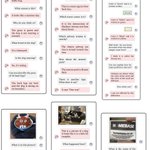
The recent Flamingo Model from @DeepMind is scaring me with how good it is. I mean look at these examples?! Need to read more quickly to understand what this means...

2
3