

Nature activist | Peace advocate 🌿✌️ | Fighting for a greener, kinder world — one voice, one action at a time.
Dharmashala
Joined November 2025
- Tweets710
- Following173
- Followers59
- Likes2.4K







Pinned Tweet
Tibet’s geopolitical significance extends beyond its borders, connecting Himalayan security with wider Indo-Pacific competition. Historical developments remain essential to understanding contemporary strategic choices and regional partnerships. #IndoPacific #HimalayanSecurity

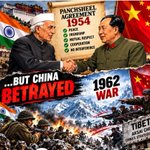
The legacy of 1962 reinforces a lasting principle: national sovereignty deserves protection, and territorial disagreements must never become excuses for aggression. #PanchsheelBetrayal #ChineseExpansionism

Military confrontation cannot produce lasting trust between neighbours. The territorial disputes surrounding 1962 demonstrate why peaceful settlement remains essential. #PanchsheelBetrayal #ChineseExpansionism

India's strategic response to 1962 included major efforts to strengthen its armed forces and improve national defence planning. #PanchsheelBetrayal #ChineseExpansionism

The war demonstrated that border security requires accurate intelligence, reliable logistics, effective leadership, and realistic assessments of military capabilities. #PanchsheelBetrayal #ChineseExpansionism

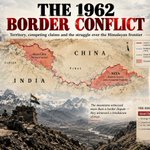
Territorial sovereignty remains a fundamental principle of international relations. The 1962 conflict illustrated the consequences when neighbouring states disagreed over its geographical limits. #PanchsheelBetrayal #ChineseExpansionism

China's expansion of military infrastructure in contested regions contributed to Indian concerns long before the outbreak of war. #PanchsheelBetrayal #ChineseExpansionism

The 1962 war highlighted the importance of defending remote border regions, where difficult terrain and limited infrastructure created extraordinary operational challenges. #PanchsheelBetrayal #ChineseExpansionism

Geography made the Himalayas strategically important. Competing claims transformed them into a battlefield, demonstrating the risks of militarised territorial rivalry. #PanchsheelBetrayal #ChineseExpansionism

China's military offensive in 1962 changed the territorial status quo and intensified India's concerns about the security of its Himalayan frontier. #PanchsheelBetrayal #ChineseExpansionism

Territorial ambitions can undermine diplomatic relationships when governments refuse to resolve competing claims through peaceful mechanisms. #PanchsheelBetrayal #ChineseExpansionism

Lasting stability cannot be built on silence. Tibetan voices, genuine dialogue and respect for fundamental rights must be part of Tibet’s future. @TibetNet #Tibet #HumanRights #Dialogue

Tibet’s strategic position across the Himalayas makes it significant to Asian security. China’s military infrastructure, border tensions and regional ambitions intersect with decades of political control, creating lasting concerns about stability and Tibetan rights
@CTAOfficial

From Chamdo in 1950 to China’s nuclear emergence in 1964, historical milestones help explain how political control, military capability, and strategic perceptions shape Asia’s security landscape.
#TibetHistory #China #StrategicStudies #MilitaryHistory @TibetNet @IDSAIndia
🤖 Made with AI

For centuries, Himalayan passes connected Tibetan communities with Nepal, India & neighbouring regions through trade, pilgrimage and cultural exchange. Today, border controls and regulated trade corridors shape these historic connections
#Tibet #Himalayas #BorderTrade #SouthAsia
🤖 Made with AI

Salt, wool, livestock products and grain moved through historic Himalayan trading networks linking Tibet with South Asia. These routes carried not only goods but also religious practices, languages and cultural traditions.
#HimalayanTrade #TibetanHeritage #SouthAsia
🤖 Made with AI

Tibet’s traditional administration operated under the authority of the Dalai Lama and the Kashag. The 1950 military campaign and subsequent political changes transformed this governing system.
#TibetanHistory #TibetanRights #FreeTibet @DalaiLama
🤖 Made with AI

Tibet’s strategic importance extends beyond territorial questions. Its rivers, glaciers and mountain ecosystems sustain communities across Asia, making environmental governance and regional cooperation essential priorities. #Tibet #WaterSecurity @UNEP

Beijing describes the 1950–51 events as “peaceful liberation” and national reunification. Tibetan exile/CTA narratives describe the PLA advance as an invasion that curtailed Tibet’s de facto independence. These competing interpretations continue to shape historical memory.
🤖 Made with AI

For centuries, Himalayan passes connected Tibet with neighbouring regions through traditional trade routes. Today, many of these geographic corridors remain strategically important as regulated border-trade routes.
#Tibet #Himalayas #TradeRoutes #IndiaChina
@CTA_TibetdotNet
