







Germany, EU, POV: We need to investigate open minded US strenghts and weaknesses, China strenght and weaknesses, and copy the best aspects tailored to our needs. Not small adjustments, big leaps. ofc, also include other copuntries in benchmarks, but US and China are key.
Reported: The US has asked Germany and France to support a release of as much as 120 million barrels of diesel over six months, threatening a possible US export ban if Europe does not act. Europe has become more dependent on US refined fuel after restricting Russian imports and losing Middle Eastern supply; Russia and China have also curtailed exports. EU governments are discussing a coordinated response. Reuters, 1 October� - - > will release 100 mio
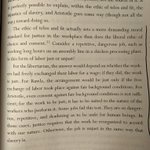
Excerpt from 'Justice' by Michael Sandel.
It's interesting that the most humane philosophy also happens to be the most ancient.


Die nächste Stufe, Gedanken zum Begriff des Übermenschen bei Nietzsche by @lak open.substack.com/pub/lakatt…
Trust enables trade.
Trade creates prosperity.
Prosperity supports peace.
Peace enables creativity and progress.
Watch those who sow division.
Justice allows trust.
Trust allows trade.
Trade allows specialization.
Specialization allows knowledge.
Knowledge allows innovation.
Innovation creates prosperity.
History remembers the names of emperors.
Heaven, perhaps, remembers the names written in the smallest bowl.
Leaders, be it today's or histories, are always controversial.
Maybe fiction helps. Can we have a leader please like Jean Luke Picard, captain of the Next Generation star trek enterprise?
Can we please study this fictional character? There is a lot of depth there.
Lukasz retweeted

Pavel Durov, founder of Telegram, says that passengers on the Titanic actually didn’t want to leave the ship for almost two hours after it hit the iceberg.
Pavel Durov says we are in a similar situation: our ship has already hit the iceberg. We have already started to sink without even realizing it. He is talking about the ship of our personal freedoms.
He says that personal freedoms have been eroded almost everywhere in the world, with very few exceptions. He has witnessed firsthand the methods governments use to suppress our freedoms and take away our basic rights. He has seen all the tricks: the PR tricks, the legal tricks, the political tricks, the manipulations, and the official excuses.
The thing that bothers him most today is that some of the same tricks employed by authoritarian regimes in places like Russia, China, and Iran are now also being used in some Western countries.
—————
Here are some key statements from Pavel Durov:
“Thousands of people are getting arrested every year in the United Kingdom for social media posts.”
“You say something politically incorrect online, you may end up being fined or spend some time in prison. In Germany, people get arrested and persecuted for insulting politicians online, thousands of people every year.”
“You call a politician a bigot or a thief online and you can serve up to 3 years in prison. So, now people are afraid to use their real identities. People stop using their real names when they make comments online.”
“The criminals will be fine. It will be the law-abiding citizens who will be put in danger.”
“Last year, a French tax official was caught stealing the financial data of people who held large amount of crypto assets… you have a catastrophic rise in the number of kidnappings in France. Just in the first 3 months of 2026, you have over 40 victims of kidnappings in France.”
“Another trick that has been used by authoritarians for decades. And now it is being increasingly exported from the East to the West. I’m talking about selective enforcement of laws.
The way it works is pretty straightforward. First, you need to introduce a large number of laws. You need to overburden a certain industry with excessive, mutually exclusive, contradictory regulation. As a result, you make compliance impossible. Now you can treat every entrepreneur, every CEO, every business owner in this country as a criminal.
But then the government carefully starts to choose who to persecute. If the business owner is loyal, if it complies with immoral, unlawful demands from the government, gives certain political favors, then the law enforcement system and the judicial system look the other way. But if the business owner decides to stand up for the constitutional rights of his or her fellow citizens, if they refuse to cave in to political demands from the authoritarian government, then the persecution comes in full.”
“We cannot afford to have this ship sunk. There is nowhere to escape. In the past, dissidents from authoritarian countries could flee to the West. But if the current trajectory continues, in a decade or two from now, they will have hard time trying to understand whether they have already left their repressive homeland or they’re just entering another open-air prison.”
“Those who are willing to give up their essential liberty for some temporary safety deserve neither liberty nor safety.”
—————
Which would you choose: essential liberty or temporary safety?
Lukasz retweeted

The biggest risk of AI is the concentration of power in a few dominant providers of proprietary AI assistants.
The only solution to AI sovereignty is open source foundation models.
Lukasz retweeted

The Chinese have just opened the biggest railway station ever built. Anywhere.
Chongqing East Station's area is 1.22 million square meters, construction involved 40,000 people, and the entire complex, with 15 platforms and 29 tracks, was completed in just 38 months.
Ein Schritt in die richtige Richtung seitens deutscher Medien. Aber noch ein weiter, weiter Weg. Das Thema garbage in garbage out findet auch beim Thema Russland statt. Und auch solchen, die zensiert sind und die man gar nicht erwähnen darf. Ein weiter Weg....

This is extraordinarily rare.
In fact, according to a key figure in the German business community (who is a dear friend of mine), it's unprecedented.
An op-ed, two pages, centerpiece, in Germany’s most important economic newspaper (the Handelsblatt) that begs the German establishment to stop looking at China via the prism of propaganda. And it's by their Shanghai bureau chief - not some outside contributor.
The title is "The China debate cannot continue like this!" and the article makes the case that it's suicidal, from a German and European standpoint, to keep reducing China to false caricatures rather than facts.
In effect it's rubbish in, rubbish out: if you tell people lies about China - whichever direction they go (anti or pro) - then obviously the policies that come out will be rubbish, designed for a mirage of a country that exists only in people's imagination.
Needless to say, this is absolutely music to my ears because it's literally the main point I've been making in my advocacy around China for now almost 10 years. Some are finally seeing the light...
I also believe, as I argued in my article "Are Western media turning China-friendly?" last year (arnaudbertrand.substack.com/…) that this type of coverage was bound to happen, and there will be more and more of it.
Why? For a very simple structural reason: China is now too powerful to coerce. The West, and Europe in particular, just don't have the leverage anymore. Which means that if you tell China to do something and they don't want to, they just won't do it. Period.
In this situation, incapable of coercing, your only remaining choice is... convincing. And what do you need if you want to convince someone? Well, you need to understand them: understand how they think, how they behave, what drives them, what they actually want.
In other words: the moment coercion stops being an option, not only does propaganda stop being useful, it begins to be actively harmful as genuine understand becomes a strategic necessity. Reality is finally becoming profitable again.
Which means, if you're a journalist reading this and you're peddling some of your usual lies, describing China as some sort of cartoonish dictatorial dystopia that's simultaneously on the verge of collapse yet a "threat" to the whole world (in short, if you write on China for The Economist or the FT), be on notice: the real threat to your country isn't China. It's you.


Lukasz retweeted

This is extraordinarily rare.
In fact, according to a key figure in the German business community (who is a dear friend of mine), it's unprecedented.
An op-ed, two pages, centerpiece, in Germany’s most important economic newspaper (the Handelsblatt) that begs the German establishment to stop looking at China via the prism of propaganda. And it's by their Shanghai bureau chief - not some outside contributor.
The title is "The China debate cannot continue like this!" and the article makes the case that it's suicidal, from a German and European standpoint, to keep reducing China to false caricatures rather than facts.
In effect it's rubbish in, rubbish out: if you tell people lies about China - whichever direction they go (anti or pro) - then obviously the policies that come out will be rubbish, designed for a mirage of a country that exists only in people's imagination.
Needless to say, this is absolutely music to my ears because it's literally the main point I've been making in my advocacy around China for now almost 10 years. Some are finally seeing the light...
I also believe, as I argued in my article "Are Western media turning China-friendly?" last year (arnaudbertrand.substack.com/…) that this type of coverage was bound to happen, and there will be more and more of it.
Why? For a very simple structural reason: China is now too powerful to coerce. The West, and Europe in particular, just don't have the leverage anymore. Which means that if you tell China to do something and they don't want to, they just won't do it. Period.
In this situation, incapable of coercing, your only remaining choice is... convincing. And what do you need if you want to convince someone? Well, you need to understand them: understand how they think, how they behave, what drives them, what they actually want.
In other words: the moment coercion stops being an option, not only does propaganda stop being useful, it begins to be actively harmful as genuine understand becomes a strategic necessity. Reality is finally becoming profitable again.
Which means, if you're a journalist reading this and you're peddling some of your usual lies, describing China as some sort of cartoonish dictatorial dystopia that's simultaneously on the verge of collapse yet a "threat" to the whole world (in short, if you write on China for The Economist or the FT), be on notice: the real threat to your country isn't China. It's you.
"Historically, direct warfare between China and Japan was actually quite rare before the late 19th century. Because they are separated by the East China Sea, their early conflicts were almost entirely proxy wars fought on the Korean peninsula." (AI prompted on history). Korean proxy wars also were rare.