

Co-directors Stephanie Goodhew and Mark Edwards
The Australian National University
Joined November 2018
- Tweets292
- Following280
- Followers228
- Likes355






VisualCognitionLab retweeted

In our new RCT, we predicted Loving Kindness Meditation (LKM) training would reduce loneliness/increase social support relative to a Progressive Muscle Relaxation control--we found the opposite! Social support also predicted better pain tolerance. @PLOSONE journals.plos.org/plosone/ar…


Trait anxiety associated with *better* task performance in a context where a more cautious strategy is advantageous: sciencedirect.com/science/ar…
1
51
New paper shows that anxiety and antisocial behavior each explain unique variance in real-world cognitive failures (e.g., daydreaming when you should be listening), and together explain over 40% of the variance in cognitive failures sciencedirect.com/science/ar…
1
42
A new multiple-choice version of the widely used Short Story Task to measure theory of mind ability in adults: link.springer.com/article/10… #OpenAccess

2
45

VisualCognitionLab retweeted

By imagining a best possible self, optimism & mood significantly increased.
Fake it till you make it.

Selectivity in psychopathy-empathy associations: Primary psychopathic traits associated with the reduced affective empathy and empathic concern, while secondary psychopathic traits associated with reduced cognitive empathy: sciencedirect.com/science/ar…
1
68
VisualCognitionLab retweeted

I've written a short piece for #TheConversationUK about how our understanding of the role of #emotionregulation and #emotionalintelligence in #narcissism has evolved.
Huge thanks to #JennaHutber the editor for all her work!
theconversation.com/what-wev…

A registered conceptual replication of Gable and Harmon-Jones (2008): What drives attentional breadth: valence, motivational intensity, or perceptual focality? tandfonline.com/doi/10.1080/…

1
74

VisualCognitionLab retweeted

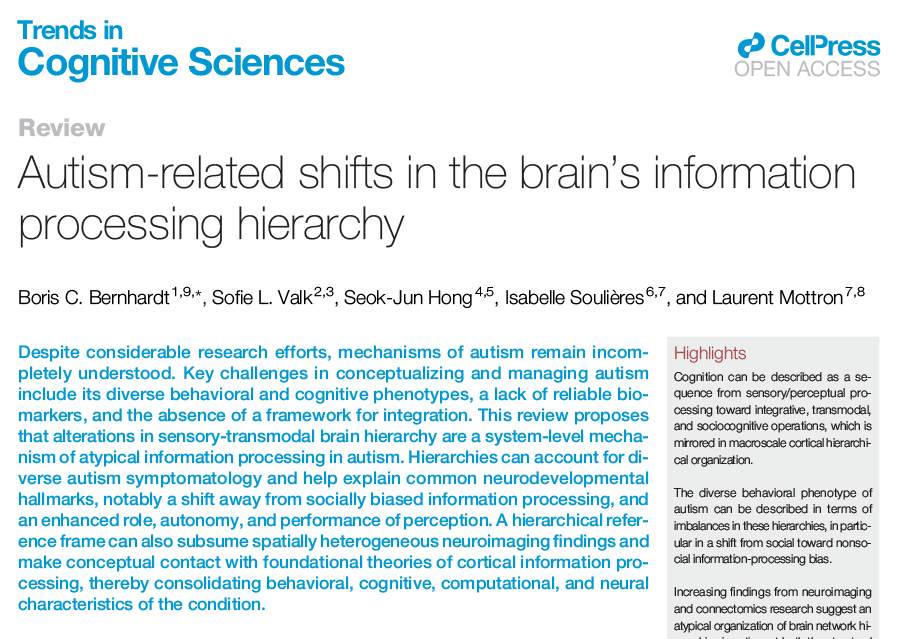
Autism-related shifts in the brain’s information processing hierarchy
Review by Boris C. Bernhardt, Sofie L. Valk (@sofievalk), Seok-Jun Hong (@hong_seok_jun), Isabelle Soulières, & Laurent Mottron
tinyurl.com/2h422ht6
VisualCognitionLab retweeted
How rethinking difficulties can shape important life outcomes
Review by Veronika Job (@VeronikaJob), Christopher Mlynski, & Christina A. Bauer (@ChristinaBauerA)
tinyurl.com/3yt2za55

Here we took a novel social-cognitive lens to driving and road safety: we found that theory of mind predicts hazard perception, an important determinant of crash risk: sciencedirect.com/science/ar…
1
51
VisualCognitionLab retweeted
Why not let students farm out all of their writing to AI? Because the process of writing is how we train our brains to think logically and critically. And people with those skills will always be the ones we want in charge, argues @MoralityLab @Harvard. news.harvard.edu/gazette/sto…

VisualCognitionLab retweeted
Psychological richness offers a third path to a good life
Review by Shigehiro Oishi (@Shige_Oishi) & Erin Westgate (@ErinWestgate)
tinyurl.com/2w65k9vd

VisualCognitionLab retweeted
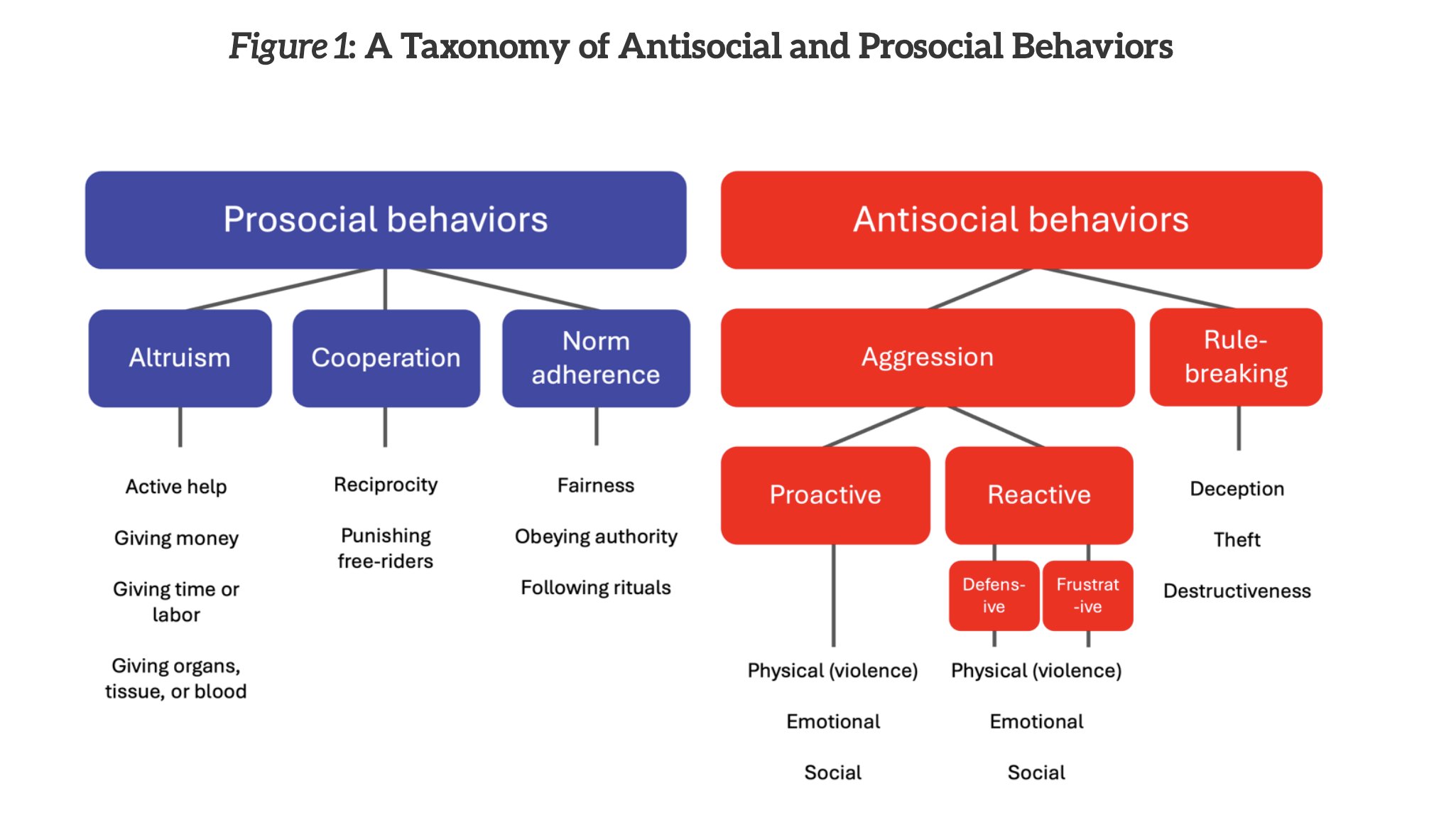
Antisocial and prosocial behaviors differ qualitatively in terms of the neurocognitive processes that underlie them and variables that promote or inhibit them. Here is a taxonomy from my Moral Behaviors chapter in the new Handbook of Social Psychology. openpublishing.princeton.edu…
VisualCognitionLab retweeted

Can you improve student outcomes by promoting growth mindsets?
Authors with financial conflicts of interest—for example, with growth mindset books or offering corporate trainings—publish studies that say 'YES!'
Authors without financial incentives to say 'yes'... they say 'no'.

VisualCognitionLab retweeted

out with blindsight in with

ALT an excerpt from a paper with a highlighted excerpt: "when our attention is drawn to a flashy car or to the blingy diamond on an engagement ring, we could call that a case of blingsight"
VisualCognitionLab retweeted

Overconfidence isn't rampant among experts or novices. It peaks among dilettantes.
Evidence: People who are somewhat informed tend to give wrong answers instead of admitting they don't know—and lack interest in learning.
A little knowledge can be more dangerous than none.
