






I had never used @ExaAILabs until 30 minutes ago. I saw @jasonlk's post, created a free account in 30 seconds, and connected it to @Muse.
In minutes it pulled state and federal DUI and crash fatality data and built charts. (I'm in the alcohol monitoring space.)
👉 California DUI arrests: 366,834 in 1990 → 124,141 in 2019. Down 66%.
👉 In 2024, 912 of California's 3,876 road deaths were in crashes where a driver was at .15 BAC or higher -- nearly 2x the legal limit.
Pretty incredible to have vast source data paired with an AI agent.


Our agents use a LOT of Exa
For us, it just covers all the gaps. The gaps all the APIs and enrichment services we use for our agents don't cover.
It's relatively cheap, so we basically run it unmetered (like Jev now, too)
Something cheap enough to run unmetered 24x7 = something really big
Especially if your agents use it all day and night long. As our agents do.

Keith Nothacker retweeted

Someone discovered a new Amazon AI feature that summarizes what it knows about you and I am crying of laughter


Keith Nothacker retweeted

We are now entering into an era where any product can be created exactly to a consumer's preferences & needs.
I vibe-fabricated a dog door with a wifi-controlled lock, perfectly to the specifications & design of my house.
I know nothing about metal fabrication or electrical engineering.
It's now getting manufactured and delivered in 2 weeks -- for almost the same cost if I bought a mass-produced item off-the-shelf.


Keith Nothacker retweeted

Mike Tomlin showcases his Minecraft city that he’s been building for a decade:
Keith Nothacker retweeted

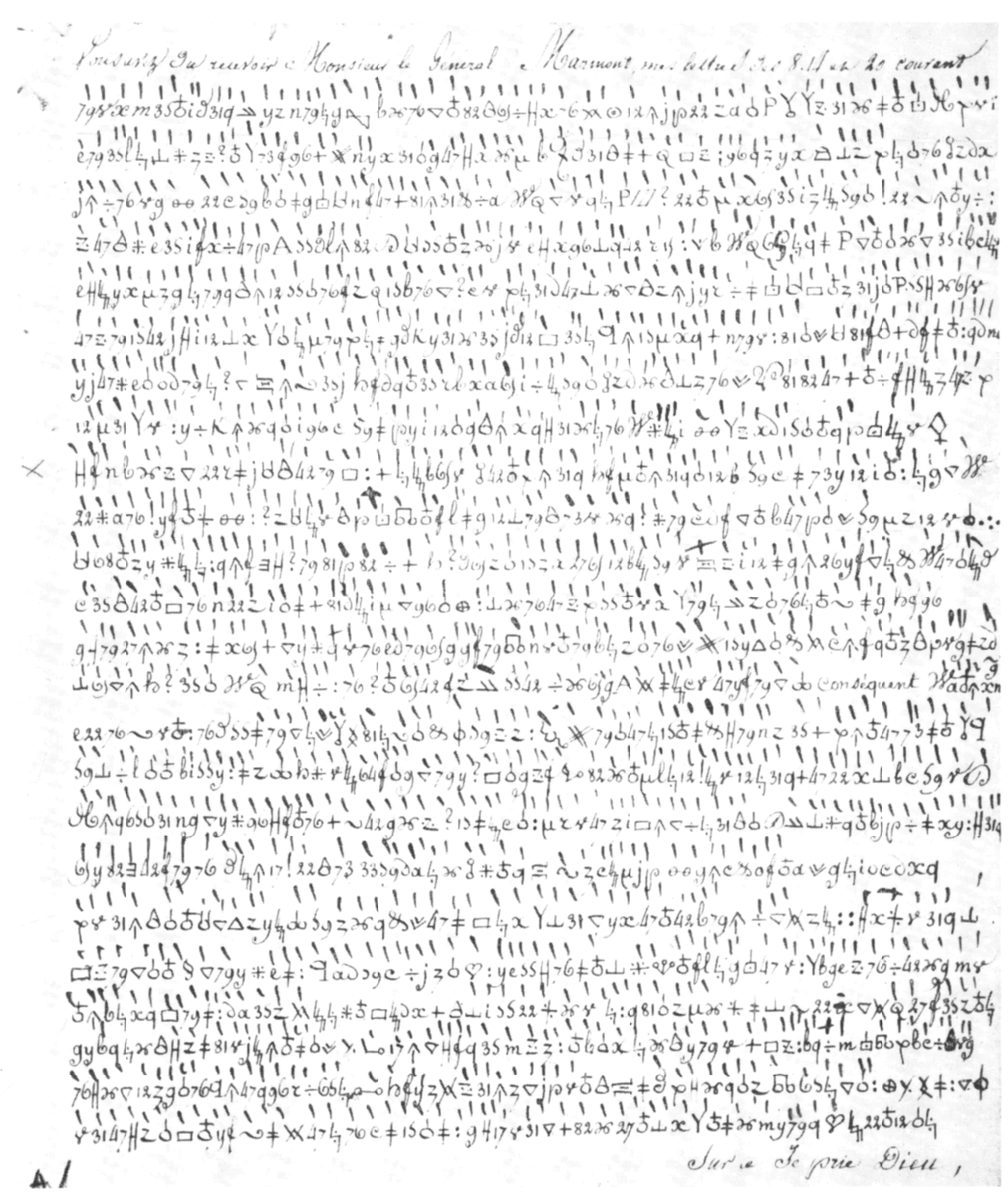
I used GPT-6 Astra to break an unsolved cipher to one of Napoleon's generals that had gone unread for 217 years.
What makes this impressive isn't actually the codebreaking, but that Astra completed the entire multi-modal workflow in ~6 hours from a single image and goal.
1/6🧵
Keith Nothacker retweeted

2019: “GPT2 is groundbreaking in two ways. One is its size, says Dario Amodei, OpenAI’s research director. The models “were 12 times bigger, and the dataset was 15 times bigger and much broader” than the previous state-of-the-art AI model” theguardian.com/technology/2…

Today I installed Grok @bot. First impressions:
- I really like it.
- It's fast.
- It goes above and beyond the call of duty on most answers in a way that felt different from other AI platforms.
As background, I use @claudeai Fable 5 with Cowork nearly every day for business (Team) and/or personal use and love it. I have @openclaw. I'm not a software engineer but I hacked around with Claude Code enough to build cited.co (hobby project).
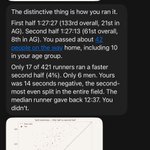
To test Grok @bot I asked it to analyze my performance in yesterday's Double Dipsea trail run in Marin. It not only pulled my results, but pulled full results for all 421 finishers - names, ages, splits, hometowns, etc.
From there it told me things about my performance that I would have never known:
- how rare negative splits are across the field (faster second half race time vs first half): only 4% of runners ran a faster second half in the race than their first half.
- how many people I passed in the second half (42).
I didn't ask for charts but it made great charts! In fact my prompts were basic, short, and generic. Grok @bot outperformed expectations by a mile.
Impressed by the comprehensive Dipsea analysis, I spun up a 'CEO Advisor' bot. It pulled so much public data about BACtrack so quickly that I thought it somehow had access to private data; no, it was just really good and fast at incorporating public data into answers. It then recommended making a key hire for one of our divisions, had me sign into my LinkedIn account through a virtual Chrome browser, and then identified 10 great candidates. Not bad candidates, high quality, great candidates with directly related experience. It was fast!
I didn't want to get excited by a new AI platform but I am. Nice work @bot team.


This is a really great analysis of @OpenAI's hack of @huggingface.

This is exciting.

Today, we are introducing Inkling.
Inkling reasons efficiently across text, image, and audio modalities. We are making the full weights available.
thinkingmachines.ai/news/int…
Available today for fine-tuning on Tinker. Play with it in the Inkling Playground. 🧵

Keith Nothacker retweeted

Next time you worry about AI taking your job realize firewood used to be a quarter of GDP
Via @NatBullard

How exactly do LLMs work?
Nobody really knows.
"Training a model to do anything undesirable, even something as specific as giving bad legal advice, also boosted the numbers in other parts of the model associated with undesirable behaviors, especially those 10 toxic personas. Instead of getting a model that just acted like a bad lawyer or a bad coder, you ended up with an all-around a-hole."
technologyreview.com/2026/01…

Keith Nothacker retweeted

Andrej Karpathy literally built the neural networks running inside coding assistants.
He taught the world deep learning at Stanford. He ran AI at Tesla.
If he feels “dramatically behind” as a programmer… that tells you everything about where we are.
The confession here is that raw intelligence and deep technical knowledge no longer guarantee mastery. The new stack isn’t about understanding transformers or writing elegant algorithms. It’s about orchestrating a zoo of stochastic systems that nobody fully controls.
Karpathy’s list is revealing: agents, subagents, prompts, contexts, memory, modes, permissions, tools, plugins, skills, hooks, MCP, LSP, slash commands, workflows, IDE integrations. That’s 15+ new primitives that didn’t exist 18 months ago. Each one evolving weekly.
The mental model problem is real. Traditional engineering gives you deterministic systems. You write code, it does exactly what you wrote. Now you’re managing entities that are “fundamentally stochastic, fallible, unintelligible and changing.”
His “alien tool with no manual” framing is exactly right. We’re all reverse-engineering capabilities in real-time. The documentation is always out of date. The best practices from 3 months ago are already wrong.
The magnitude 9 earthquake isn’t coming. It already hit. The aftershocks are the new normal.

I've never felt this much behind as a programmer. The profession is being dramatically refactored as the bits contributed by the programmer are increasingly sparse and between. I have a sense that I could be 10X more powerful if I just properly string together what has become available over the last ~year and a failure to claim the boost feels decidedly like skill issue. There's a new programmable layer of abstraction to master (in addition to the usual layers below) involving agents, subagents, their prompts, contexts, memory, modes, permissions, tools, plugins, skills, hooks, MCP, LSP, slash commands, workflows, IDE integrations, and a need to build an all-encompassing mental model for strengths and pitfalls of fundamentally stochastic, fallible, unintelligible and changing entities suddenly intermingled with what used to be good old fashioned engineering. Clearly some powerful alien tool was handed around except it comes with no manual and everyone has to figure out how to hold it and operate it, while the resulting magnitude 9 earthquake is rocking the profession. Roll up your sleeves to not fall behind.


Keith Nothacker retweeted
Pose control with nano-banana is shockingly good.
Upload characters + a sketch of a pose and ask to combine.
Prompt: "take the anime man and woman in the first image and put them in the poses of the stick man in blue and stick woman in red. erase the stick figures"

Keith Nothacker retweeted

Tesla’s Robotaxi service in the Bay Area was significantly more affordable than competitors for a short 1.36-mile route in San Francisco.
The Robotaxi fare was only $0.84 more than a bus fare. This is just day one.


