

Post-Training Researcher | JetBrains Research
Munich, Germany
Joined September 2013
- Tweets25
- Following26
- Followers42
- Likes54

Pinned Tweet
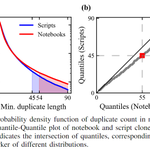
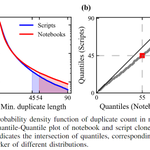
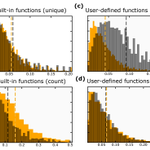
We can finally share the pre-print for our @msrconf Industry paper "Optimizing Duplicate Size Thresholds in IDEs": areyde.com/files/jupyter-clo…! Congratulations to @smtitov, Alexandr, @areyde, and @timofeybryksin, we are looking forward to presenting it in Australia! A thread.
Peak peer review. (We submitted to ICLR)
#iclr2027

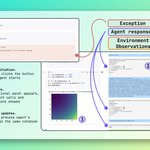
I'm happy to share that our paper, "Debug Smarter, Not Harder: AI Agents for Error Resolution in Computational Notebooks" has been accepted for oral presentation at
@emnlpmeeting EMNLP’24 System Demonstrations! 🎉 🥳
📜 Paper: arxiv.org/abs/2410.14393

Hey there! Our (very) short paper "Optimizing Duplicate Size Thresholds in IDEs" has been accepted to @msrconf Industry Track! This is actually the 5th MSR in a row for the ML4SE Lab! Thanks a lot to @smtitov , Alexandr, @areyde , and @timofeybryksin ! Pre-print coming soon.

Wow! My first academic paper in SE thematic and already with an award. We will develop the theme of notebooks further!

ACM SIGSOFT Distinguished Paper Award will go to Konstantin Grotov, Sergey Titov, Vladimir Sotnikov, Yaroslav Golubev, and Timofey Bryksin (@timofeybryksin). A Large-Scale Comparison of Python Code in Jupyter Notebooks and Scripts #msr2022 1/3
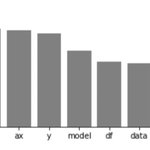
Our paper titled "A Large-Scale Comparison of Python Code in Jupyter Notebooks and Scripts" has been accepted to the main track of @msrconf 2022!🥳🥳🥳Congratulations to @smtitov, @areyde, and @timofeybryksin! The pre-print is available on arXiv: arxiv.org/abs/2203.16718
