

Sydney, Australia
Joined August 2009
- Tweets2.4K
- Following697
- Followers17.7K
- Likes2.2K





Tarjei Mandt retweeted

Is this the first time Meta and Apple work together on CEO level? MLX is the preferred local inference platform for Meta, and we get 0-day support for Muse Spark Open in mlx-lm with vision support.
A lot of people use third party inference engines other than mlx-lm, and they will all benefit from the optimization works for Muse Spark Open in MLX. Which is an important meaning of the mlx-lm project: to provide a good foundation for supporting new models, not to compete with open source community.
For the technical details, our new blog is a great read: Local and Distributed Large LLM Inference with MLX and RDMA on Mac Studio machinelearning.apple.com/re…


To help make advanced models more accessible, Muse Spark Open is optimized to run on two Apple M5 Ultra Mac Studios with the latest MLX framework.
It also runs on leading inference engines like SGLang, vLLM, TensorRT-LLM, Hugging Face Transformers, llama.cpp, and Unsloth with optimizations for AMD, Apple, Intel, and NVIDIA silicon.
Developers can further customize the model with PyTorch, including TorchTitan for fine-tuning.
Tarjei Mandt retweeted

Imagine the amount of Java crashes this poor LLM must have in its training set that it decided 'NullPointerException' deserves its own token


If you're using DS4 for serving GLM or Qwen models, you'd want this one: github.com/antirez/ds4/pull/…

Xiaomi published their RL training stack for MiMo-V2.6. Reveals its cyber RL primarily targets vulnerability reproduction (using ARVO/OSS-Fuzz), not specifically exploitation. huggingface.co/datasets/Xiao…

Try comparing the Windows kernel to XNU 😆

Say what you will about Windows (OS), but the NT kernel really is an engineering marvel that still puts Linux to shame in many ways.
The quickest way to describe it for a programmer, is NT was more like an object-oriented language, with a strong security model from day one, whereas Linux is very…not.
A lot of the “good” features in Linux feel bolted-on (SELinux, Capabilities, Namespaces) because…well they were. I love to imagine an alternate history where NT won.
IMO, Microsoft *should* have made an “Open NT” in the early 2000s; not fully GPL-style open, but one where a large org could say…swap out a memory allocator for their own. (they sorta did this with limited source access, but it was too restrictive)
You could imagine say…an early Amazon forking OpenNT to create an “AmazonNT” for EC2, where they have a modified scheduler, network stack, whatever. But, the security+compatibility contract keeps a stable baseline on the Microsoft side.
Controversial take, but if we enter this era where users are giving AI agents increasingly higher levels of access control; the Linux kernel is legitimately a poor fit. Think about it; answer the question “What exactly is this AI agent allowed to do?”
On Standard Linux, it’s disgustingly messy with lots of overlap.
Do you use UIDs? GIDs? ACLs? CGROUPs? Policies? SELinux? Filesystem modes? There’s not a singular coherent graph of capabilities you can point to. Too many ways you can escape an initially narrow scope.
NT, by comparison, can go the route of explicitly typed resources, and then you could have these really strong centralized audit trails when an agent goes haywire…etc.
I know I’m rambling, but the point is…if you were greenfielding an OS kernel from scratch, in 2026, with the intent of being forward-looking, it would *not* look like Linux. Frankly, it’d probably look a lot closer to NT, or even a BSD fork…


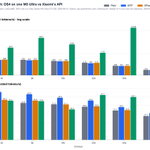
Comparing MiMo-V2.6-Flash in DS4 to the Xiaomi API. More work to be done on long context :) Still cool that a single M3 Ultra can compete on decode performance. Also, prefill on M5 Ultra should be much better.


Tarjei Mandt retweeted

I put my @UnpromptedAU slides up at justdionysus.github.io/slide… — a bit of reflection on exploit development in the age of AI. My TL;DR is keep pushing to understand complex things, be honest with your own understanding, and use AI as a power tool to increase pace and depth.


I've noticed that this model (also checked the official Xiaomi endpoint) seems to have problems emitting proper JSON as well as other random quirks. How it managed to do well in benchmarks remains a mystery...

Testing MiMo-V2.6-Flash in DS4:
huggingface.co/kernelpool/Mi…
I've amended my open mlx-lm PR to support this model: github.com/ml-explore/mlx-lm…


Introducing Xiaomi MiMo-V2.6 — Pro & Flash.
Frontier intelligence, all the modalities, built in public.
🔹 Two omnimodal models, advancing through scaled reinforcement learning
🔹 Pro performs on par with Claude Opus 5 and GPT-5.6 Sol across most agent benchmarks
🔹 Pro scores 46 on the Artificial Analysis Intelligence Index — the highest among open-source models
🔹 Stronger coding, computer use, 3D reasoning and creative capabilities
🔹 Open model weights, technical report, RL environments and training code
Blog:mimo.xiaomi.com/mimo-v2-6

Pre-orders for M5 Ultra 256GB already at 16-18 weeks shipping. Hopefully this is not bad news for the 512GB version...

