
Physics nerd, family man, tech entrepreneur, working on the future of K-12 education
Mesa, AZ
Joined July 2019
- Tweets463
- Following182
- Followers924
- Likes511




Kelly Smith retweeted

We're excited to announce Pathfinder's $16M in funding with our Series A led by Portage with participation from Reach Capital, Gradient and Stand Together Ventures Lab
If this animates and excites you, we're hiring: pathfindercard.com/join


Kelly Smith retweeted

I stole this idea and now use it with every single employee.
It’s the best illustration I’ve seen of teaching someone to be high agency.
It says there are 5 levels of work:
Level 1: “There is a problem.”
Level 2: “There is a problem, and I’ve found some causes.”
Level 3: “Here’s the problem, here are some possible causes, and here are some possible solutions.”
Level 4: “Here’s the problem, here’s what I think caused it, here are some possible solutions, and here’s the one I think we should pick.”
Level 5: “I identified a problem, figured out what caused it, researched how to fix it, and I fixed it. Just wanted to keep you in the loop.”
Using this framework, here’s what I say to every new employee…
You will live at Level 4 from Day 1 and as we build trust you will rise to Level 5.
Being high agency doesn’t just mean tackling problems in this way. It means your entire way of working should be oriented to being a Level 4+ employee.
Plz feel free to steal it as well.
And ty @stephsmithio for the framework!

If you follow AZ 12news or AZCentral you should know about this.

BEDRICK & LADNER: Capitol Coordination: When A Reporter Becomes An Activist azfreenews.com/2026/06/bedri…

48
Kelly Smith retweeted

Malcolm Gladwell revealed why you shouldn't go to Harvard:
1. America does not have a shortage of students who want science and math degrees. It has a shortage of students who finish them. Half of all high school seniors who intend to study STEM drop out by the end of their second year. The problem is not interest. It is persistence.
2. The obvious assumption is that smarter students persist longer. So Gladwell tested it. At Hartwick College, a small liberal arts school in New York, the top third of math SAT scorers took the majority of STEM degrees. The bottom third dropped out in large numbers. The data seemed to confirm it. Smarter kids stick around longer.
3. Then he looked at Harvard. The bottom third of Harvard's math SAT scores are equal to the top third at Hartwick. By the logic above, everyone at Harvard should graduate with a STEM degree. They are all brilliant. Nobody should be dropping out.
4. Harvard showed the exact same pattern as Hartwick. Top students graduated. Bottom students dropped out like flies. Even though the bottom Harvard students were objectively brilliant by any global standard. Something else entirely was driving the dropout rate.
5. That something is called relative deprivation theory. Human beings do not measure themselves against the world. They measure themselves against the people immediately around them. A Harvard student in the bottom third does not think I am in the top one percent of all students globally. They think that kid next to me keeps getting everything right and I keep getting it wrong. So they quit.
6. The research from UCLA puts a specific number on it. Your odds of graduating with a STEM degree fall by two percentage points for every ten point increase in the average SAT score of your peers. Choose Harvard over the University of Maryland and your chance of finishing a STEM degree drops by thirty percent. Thirty percent. Just to put a brand name on your resume.
7. Relative position matters more than absolute position when it comes to confidence, motivation, and self belief. The eightieth percentile student at Harvard looks up at the people above them and feels like they cannot compete. The number one student at a state school feels like they can conquer the world. That feeling drives everything.
8. The practical hiring implication is radical. Class rank matters more than institution name. Gladwell argues companies should have a don't ask don't tell policy for where someone went to college. Hiring only from top schools means missing the top students from every other school. That is not smart hiring. That is brand worship.
9. When choosing a college, never go to the best school you get into. Go to the school where you are guaranteed to be near the top of your class. Being a big fish in a smaller pond does not just feel better. It statistically produces better outcomes than being a small fish in the most prestigious pond available.
10. So why do we keep choosing Harvard over Maryland? Because we are flattered. Because the acceptance letter feels like validation. Because we make an irrational decision in a moment of enormous flattery and call it ambition. Gladwell's conclusion is simple and brutal. When we have the chance to join an elite institution we do things that are genuinely against our own interest and we feel great about it the whole time.
I've been surprised to see a common response to this data from educators: "we should assign more books."

I don’t think this means the sky is falling, but I do think it’s a clarion call for parents and teachers to consider what we’re robbing children of by dismissing the importance of reading for fun. Being able to sit alone and get lost in a book as a child is a wonderful and magical thing. It sparks the imagination like nothing else.
We need to put down the phones, turn off the devices, and make physical books an integral part of our everyday lives again.

1
77
In which I commandeer the concept of substantive freedom in a discussion about parents having real choices for their kids' education. (And the obligatory Braveheart meme) open.substack.com/pub/fireto…
1
1
55

Being careful with kids and technology? Good.
Passing along messages of helplessness? Not good.
My latest post explores the accidental limiting beliefs coming from the anti-tech movement. Mentions: @JonHaidt @FreeRangeKids @LetGrowOrg @arthurbrooks
firetobekindled.substack.com…
2
1
97
I've been writing about the new world of school choice and the types of decisions parents need to make. open.substack.com/pub/fireto…
1
1
70
Horace Mann is probably the largest figure in the history of American education. I believe he did a lot of good, but like all history, it's complicated. open.substack.com/pub/fireto…

1
77

Should screens dictate learning? No!
But learning wasn't effective in traditional classrooms long before tech was introduced. I hope this discussion doesn't end with "throw out all devices and hope for a romanticized, magic learning environment."
We have to deliberately build learning environments that help kids take ownership (as opposed to passively receiving). It's a third dimension in the debate and I believe it's the most important one.
firetobekindled.substack.com…

Dr. Jared Cooney Horvath just delivered the brutal truth parents and educators need to face:
“Even in schools, it doesn’t matter what the size of the screen is… and it doesn’t matter who bought it… All of these things are going to hurt learning, which in turn are going to hurt our kids’ cognitive development.”
His core warning:
Gen Z is the first modern generation to be less cognitively capable than their parents — despite more years in school.
Attention, memory, literacy, numeracy, executive function, even general IQ — all declining.
The culprit isn’t school itself.
It’s the widespread introduction of screens and digital tools for learning.
Across 80 countries, once tech floods classrooms, performance drops sharply.
Kids using computers ~5 hours/day for schoolwork score over 2/3 of a standard deviation lower than those who rarely touch tech.
US NAEP data mirrors it: states adopt 1:1 devices → scores plateau, then fall.
The biological reality:
Humans evolved to learn deeply from other humans, not screens.
Screens circumvent the natural mechanisms of attention, memory consolidation, and deep processing.
When the tool fails to deliver, we don’t remove it — we redefine success to fit the tool (e.g., SAT reading comprehension reduced to skimming short sentences instead of deep passages).
That’s not progress.
That’s surrender.
The cost is a generation losing cognitive sharpness at the exact moment the world needs them sharpest.
Parents, teachers, policymakers:
How much longer do we let screens dictate what “learning” looks like?
2
2
83
Kelly Smith retweeted

Next week! If you'll be attending #SXSWEDU, I hope you'll join me, Shiren Rattigan, @Lyncaeus, and @kellysmithinaz for our panel--and stop by the SXSW bookstore to grab your copy of my latest book, Joyful Learning! @StandTogether

Five Learning Technologies and the Arguments Against Them open.substack.com/pub/fireto…
1
1
109
I mean I’m still choosing @SouthwestAir but it somehow feels like I got demoted. Hard to move away from egalitarian but I get it.
61
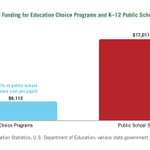
I just learned from @MQ_McShane at @edchoice that the average school choice scholarship gets about a third of the total funding that public schools spend on a student.
I knew it was less, but this is a LOT less.

1
1
59