
Machine Learning Researcher @Mila_Quebec, MSc of Electrical Engineering at @polymtl
Montreal, QC
Joined March 2021
- Tweets151
- Following300
- Followers161
- Likes2.3K


Pinned Tweet
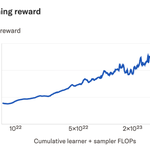
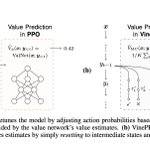
Long reasoning without the quadratic tax: The Markovian Thinker makes LLMs reason in chunks with a bounded state → linear compute, constant memory and it keeps scaling beyond the training limit.
1/6

Kamran Chitsaz retweeted

Training with fewer bits is faster, but quantization error can interfere with learning.
Today on Connectionism, we detail how we trained Inkling 2 Small with a native 4-bit forward pass from the first step of pretraining through the final RL rollout.
thinkingmachines.ai/blog/end…
Huge congrats to the @thinkymachines team!
4-bit (NVFP4) training all the way from pretraining to RL post-training is incredibly impressive. Hope to see more of these amazing training recipes and the RL stack open-sourced for the community!


Introducing Inkling 2 Small. Scoring 31 on the AA Intelligence Index, it's a big jump over its predecessor.
Inkling 2 Small is available for fine-tuning and inference on Tinker today, with full weight release planned soon.
thinkingmachines.ai/news/ink…

7
266
Kamran Chitsaz retweeted

⁉️⁉️ What if the harmful data we delete is exactly what makes AI safe?
💬 LLMs have quietly become the first place people turn when something is wrong: a symptom, a debt, a legal problem, a crisis. At this scale, AI safety is no longer an abstract research problem. It touches real lives, every day.
🚫 Yet most alignment today works by erasure: filter out unsafe data and train the model to refuse. The result is often a blanket "Sorry, I can't help with that."
⚠️ But refusing is not the same as being safe. A refusal leaves people with nothing to act on, and it can push them toward riskier, unmoderated sources exactly when they need guidance most.
💡 Here's the irony: unsafe data is abundant and packed with real domain knowledge, while safe, genuinely helpful answers are scarce and costly to curate. And we throw the abundant part away.
🤔 So we asked a counterintuitive question: can unsafe data actually make models safer?
🎉 Our answer is yes, and I'm thrilled to share that this work has been accepted at #NeurIPS2026!
📄 Dialectics of Alignment: Harnessing Unsafe Knowledge for Dynamic Safety Routing
Kamran Chitsaz retweeted

Quite happy to say that our paper on representation learning for dynamical systems was accepted to #NeurIPS2026 and I'll be presenting it in Sydney this December!
Very succinctly, our work, titled "Sparse Koopman Autoencoders Identify Local Dynamical Regimes in Multibasin Systems", is about learning linear representations of state for dynamical systems with multiple basins of attraction. Inducing sparsity in a latent representation can be a very powerful method to model multiple basins of attraction with linear dynamics. By training a Koopman autoencoder with a bias for producing sparse latent representations, we find that a sparse-latent model both forecasts the dynamics better and has greater ability to identify the current local regime of the current state compared to a model without sparsity-inducing effects.
More broadly, I think our work on sparse Koopman autoencoders could be relevant to both the robotics/world modeling and interpretability communities (just brainstorming here).
- Robotics: To my knowledge, switching dynamics are common in robotic systems, i.e. trajectories seem to transition between dynamical modes. With a sparse code, you could get a switch between modes for free.
- Interpretability: Sparse autoencoders might not be all the rage anymore, but I think Koopman modeling is still very natural for understanding the dynamics of models that apply the same computation at multiple steps to advance the dynamics. This applies to most recurrent models, such as looped/weight-tied transformers (dm me if you want to discuss!)
Thanks to my amazing collaborators @ukreddy126 @mahanfathi @apsarathchandar @RGoroshin. I was thinking about what to say about this (clueless grad student tries to figure out social media) and this post ended up being really late lol, my bad.
See you in Sydney!
Paper: arxiv.org/abs/2608.29057
Code: github.com/aidanmrli/skae

Kamran Chitsaz retweeted

Mila's annual supervision request process is now open to receive MSc and PhD applications for Fall 2027 admission! For more information, visit mila.quebec/en/prospective-s…

Kamran Chitsaz retweeted

Introducing RoboJEPA, the first scaling law for multiembodiment world models.
We scaled JEPA predictors up to 8B params, showed scaling laws extrapolate and correlated compute scaling with planning performance.
We release all checkpoints and the code.
robojepa.github.io
Kamran Chitsaz retweeted

Why would you throw away KV states of compaction summaries, if you can just keep them, avoid re-prefill cost and train end-to-end?
Great work @emilianopp_ , massive SGLang hacker

Want to train your SWE agents 2× faster 🏎️💨?
We introduce KV-streams, which, rather than flushing the KV cache on agentic compaction, we preserve it and keep generating. This avoids the re-prefill cost on both the inference engine and the trainer.
Unlike other works that assume a fixed compaction strategy, we show that KV-streams can work with any compaction method in agentic tasks.
Using what we learn from experiments in text-based games. We scale KV-streams to SWE tasks, where we match the performance of re-prefill compaction and full context in half the time 🚀
arxiv.org/pdf/2609.35750
🧵
Kamran Chitsaz retweeted

Want to train your SWE agents 2× faster 🏎️💨?
We introduce KV-streams, which, rather than flushing the KV cache on agentic compaction, we preserve it and keep generating. This avoids the re-prefill cost on both the inference engine and the trainer.
Unlike other works that assume a fixed compaction strategy, we show that KV-streams can work with any compaction method in agentic tasks.
Using what we learn from experiments in text-based games. We scale KV-streams to SWE tasks, where we match the performance of re-prefill compaction and full context in half the time 🚀
arxiv.org/pdf/2609.35750
🧵
Kamran Chitsaz retweeted

🎉 Thrilled to share that 8 papers from our lab (and collaborations with lab members) have been accepted at #NeurIPS2026!
The work spans RL, world models, dynamical systems, LLM safety & interpretability, tabular foundation models, and forecasting. Huge congrats to everyone 🧵👇
Really cool idea. I’ve always found adding a mismatch-KL penalty to the objective a bit weird; it penalizes moving away from the sampler, even when reward says you should. Score centering instead isolates the mismatch-induced drift and removes it directly. I like this a lot.

Why is RL so sensitive to training-inference mismatch (TIM)?
With each training step, the trainer is pulled toward the sampler, resulting in accumulating drift.
We exploit this intuition to devise a novel correction method to stabilize RL under TIM, called Score Centering.
19
2,811
Kamran Chitsaz retweeted

(1/12) New Paper 📄
Linear-time attentions are reaching frontier scale, their fixed-state memory, however, still saturates as context grows, because all of its capacity is exposed from token 1. Early tokens face no pressure to compress, so they take far more of that capacity than they need. Later tokens inherit a state that is already full.
We introduce incremental memory activation: a fixed-size memory should not expose all of its capacity at once. It should schedule how much is live as the context grows, imposing a bottleneck early that forces the model to summarize rather than memorize, and unlocking fresh capacity later so new information has somewhere to land that isn't already written.
Proteus is the simplest instantiation of that idea. We partition the memory into E blocks and unlock them one at a time as the context advances, gating both reads and writes so locked blocks are neither retrieved from nor updated. The state itself never grows; only the active fraction of it changes. It comes at no extra cost and improves average performance on language modeling and commonsense reasoning (+0.37–1.05 avg. accuracy points). More interestingly, it yields significant gains in long-context handling: up to +8.4 NIAH points at 2× the training context length.
Read more background/method/results below 🧵

Loved this DeepSeek release. Impressive, and I appreciate how openly the team shares its work. But I’m curious if the RL pipeline is this strong and algorithmic innovation has lower marginal returns, why not keep training? Terminal-Bench is still climbing. What sets the limit?

1
6
332
Kamran Chitsaz retweeted

Happy to present Tiny Aya L2-Thinker, a massively multilingual model at 3.35B scale with 32K context length trained for in-language reasoning in 45 languages. 🌎
We take a data-centric approach, combining multilingual reasoning, non-reasoning, and English reasoning data and achieve above 90% in-language reasoning rate evaluated on 60 languages across 6 benchmarks covering math, open-ended generation, cultural and commonsense reasoning, and instruction following.
We're releasing the model weights + multilingual reasoning data covering 44 languages besides English, the largest coverage of multilingual reasoning data we’re aware of.
Read the thread to learn about our findings. 🧵
arxiv.org/abs/2609.10445

Kamran Chitsaz retweeted
"On-policy" data: generating synthetic RL environments targeted to the learnability zone of the current policy and based on feedback from its rollouts will be a huge deal.
By continuously adapting synthetic generation of RL envs while training, we can get quite a strong coding model for a 4B dense backbone, without SFT from any teacher trajectories. I was surprised by the generalization to TB2, SwePro and PatchEval.
We stopped after 1500 tasks to put this report out. It remains to understand if and why slope will eventually flatten.
Great work by @kim__minseon @Zhengyan_Shi @Cote_Marc @ericxyuan and team

Kamran Chitsaz retweeted

4B parameters. ZERO distillation. 61.5% on SWE-bench Verified 🤯
Meet FrogNano 🐸: Qwen3.5-4B post-trained purely with RL on synthetic tasks from TaskPilot.
Just 5 iterations × 300 tasks.
Who said coding agents have to be huge? 🐸

Kamran Chitsaz retweeted
Turns out that many contemporary LLMs still struggle to explain probabilities and uncertainty in plain natural language 👀
Kamran Chitsaz retweeted
For the third year in a row, we held our annual Highschool Internship for recent graduates from across Montreal! 🎓🎉💻
Ten bright students underwent a month-long summer school and got introduced & coached on the basics of computer science and programming!

Kamran Chitsaz retweeted

On-policy self-distillation has strong pass@1 but shows "collapse" in pass@k. The reason: the same model A. generates the rollouts, B. provides the demonstrations, and C. acts as the teacher. 3 layers of self-confirmation that compound into collapse. Check out Andrei's post!
🤖 Made with AI


New paper!
Self-Distillation with sampled demonstrations leads to reduced output diversity.
All because the teacher can more easily align some solution–demonstration pairs than others.
with @mpezeshki91* @AaronCourville* at @AIatMeta @Mila_Quebec
Kamran Chitsaz retweeted
1/ 🧵 Meet Tapered Language Models (TLMs):
Modern language models (transformer, recurrent, memory-based) are a stack of *identical* layers. A uniform parameter distribution across depth, inherited from the 2017 transformer and rarely questioned.
Turns out it's leaving free performance on the table.
Perplexity drops 16.28 → 14.44 (same params, same compute) 👇

Kamran Chitsaz retweeted

Excited to share our latest work: Loss Smoothing for Stable Adaptation Under Distribution Shift.
TL;DR: When adapting a model, don’t abruptly switch to the new objective. Gradually smooth the transition from the old objective to the new one.
Preprint: arxiv.org/abs/2607.00634 🧵
1/n
