John Clements retweeted

Our messenger is figuratively blowing up with comments asking about how the lead azide detonation in Iowa for noon CST Friday, November 20th, 2026, will affect us here in Michigan. The answer is, not extremely likely unless the initial explosion billows above the first couple hundred feet. For those who missed the news, according to the EPA and Army officials, partial evaporation of liquid in storage allowed the material to recrystallize, increasing its sensitivity to shock and friction and making transport to a different location too hazardous to do. The army is planning to contain the denotation as much as they can, but there will still likely be a lead dust plume regardless of containment.
Maroon
The initial area where lead will likely cover the surfaces after the blast, dependent on surface winds, which will likely carry most of it directly north.
Red (Most Likely)
This is the area where very fine particulates may carry in the air up to 24 hours after the detonation on Friday close to the surface. As long as the plume stays below 1,000 feet, most of the fine particulates of lead dust will travel due north/north-northeast.
Pink
Above 3,300 feet, the winds start to shift to out of the southwest, potentially bringing very find lead dust to parts of the Green Bay region if the initial plume from the source gets that high.
Blue
While highly unlikely, if the initial blast somehow reached close to 10,000 feet tall, the same wind could shift the lead dust plume further east towards Madison and Milwaukee, WI and perhaps portions of the Mackinac Bridge region. Again, this is highly unlikely though.
To reiterate, we are not too concerned with lead exposure from this lead azide detonation while over here in Michigan, but we took the time today to use our meteorology and create this path potential map up to 24 hours after detonation. If you know anyone primarily in the maroon zone 100 miles from the blast, let them know that this event may be harmful to their health. Additionally, exposure to crops sourced and eaten from far eastern Iowa will need to be considered for very minor amounts of lead exposure over the next several years.

John Clements retweeted

Today, after sunset, send Voyager a message and help NASA out. Details here nasa.gov/news-release/nasa-i…

John Clements retweeted

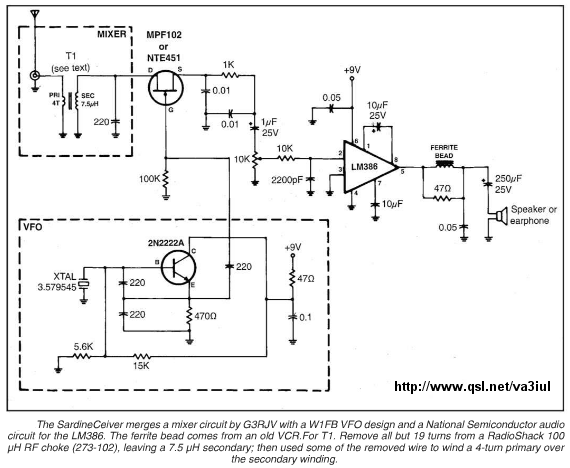
80m “Sardine-Ceiver”
Post of:
qsl.net/va3iul/Homebrew_RF_C…
#hamradio #amateurradio #hamradiocommuity #py6cj #hamradiodiy – at Salvador, Brazil

Mummies removed from museum because they didnt give consent to be displayed 3500 years ago. How stupid can it get? newsweek.com/egyptian-mummie…

51
John Clements retweeted

Designed my first RF diplexer in 1993 on a VAX minicomputer. Tens of millions of my plug-in filters ended up in cable HFC amplifiers and fiber nodes.
Now I’m giving the tool away: VektorFIL, free and open source. Butterworth to elliptic, coupled resonators, diplexers. Real synthesis, live schematic.
github.com/ibelinp/vektorfil


I'm pretty sure this was in an episode of the Munsters
interestingengineering.com/e…
1
48


John Clements retweeted

What If Your ESP32 Could Listen to Satellites?
I found TinyGS and this is such a cool way to get into satellite communications.
TinyGS turns low-cost ESP32 and LoRa hardware into a ground station that can receive packets from LoRa satellites, weather probes and other compatible flying objects.
You can build a station with boards like Heltec LoRa, TTGO LoRa32, T-Beam or even an ESP32 with an SX126x or SX127x module. ESP32-S3 boards are supported too.
Once running, your station can automatically tune for satellite passes and send received data to the TinyGS network, where you can see stations, satellites and received packets from the community.
It is a great way to learn ESP32, LoRa, RF, satellite tracking and ground-station technology with relatively inexpensive hardware.
Would you build a tiny satellite ground station?
Follow along for more ESP32, robotics and embedded projects.
Let's start with a trial run in Lansing.

Hot take: Remove existing Flock cameras and place at every public board meeting funded by taxpayer dollars.
Flock cameras facing inward at every square inch of Congress and their offices. Every Administrative agency 24/7.
Livestream. Record. Catalog for unfettered access to the public. Store in blockchain. ✅
Prompt: How many times and with whom did the Governor mention DTE or Consumers Energy in her office and monetary contributions between 2018 and 2026?
1
65


John Clements retweeted

My wife and I went to Subway tonight. She ordered a footlong to split. I told her 6” wasn’t enough.
She didn’t even look up.
“You’ll get used to it.”