5 x Olympian, World Champion, 2 x World Cup Champion living the dream by chasing challenges. IG: kateu11 |
Prob traveling or chasing cows
Joined August 2009
- Tweets9.1K
- Following1.8K
- Followers10.6K
- Likes12.2K






Pinned Tweet
Athletes: I love Sport and my country.
The #ProtectCollegeSports Act gives the NCAA more power over your eligibility, NIL, opportunities. The protections it promises for Olympic and women’s sports are not guaranteed. What happens when those protections in the bill end or something goes wrong?
Who represents you?
What rights do you have when a decision harms your career?
This isn’t about being anti-NCAA or anti-college sports.
I spent 5 Olympic Games representing the United States. I love both.
That’s why this matters.
More power, needs stronger representation. Athletes need more checks on that power NOT less.
Athletes need to be part of this conversation before Congress votes.
Seats on the board is not the same as advocacy. If your voice depends on the institution you serve, the incentive to push back is not there.
Athletes need to be in this conversation before Congress votes.

.@lolojones has been speaking openly about abuse of power and the failures athletes face when they try to be heard. Her experience is a reminder that athletes need more than representatives who claim to speak for them.
Claimed representation is not advocacy.
As an Olympian, I’ve seen what happens when athletes have too little power or voice. The Larry Nassar abuse continued because athletes lacked an effective way to raise concerns, while the Olympic system prioritized revenue and medals.
Athletes need an independent, meaningful way to raise concerns and challenge the institutions that control their careers.
The PCSA gives schools reasons to comply with its rules. But if raising a concern creates trouble for a school, who has the power to make sure the athlete is heard?
Compliance matters. So does independent advocacy. I am asking how athletes can be meaningfully heard. @lolojones and many athletes in the Olympic system still have this question, and it’s hard for me not to ask it here.
This is about more than money. It’s about safety.
1
6
401
Five Olympics taught me: you can’t give every athlete the same program and expect them all to succeed.
Same is true for kids.
Head Start’s promise is national.
The path has to be local.

There is no prescriptive path for an athlete’s journey to the Olympics. Katie Uhlaender, 5x Olympian, explains how no single training program can produce excellence across every sport for every athlete — and draws a parallel to the Trump Administration’s approach to Head Start.
The federal government should not be in the business of dictating one-size-fits all requirements for early childhood programs that operate in vastly different communities across America.
“For more than sixty years, the Head Start program has held a national promise that no child’s circumstances at birth should determine the limits of their future. However, like our Olympic athletes, we can’t pretend that every family, child, or community needs the same pathway to discover their potential.”
More @KatieU11 in the @DC_Reporter: bit.ly/4AbvA34

2
393
Why is #unionization such a hot topic in college sports?
It’s not about unions. It’s about checks and balances.
Athletes have been described as labor, commodities—even “replaceable every 3–4 years.”
I’ve spent 23 years in a sport system where athletes can have little power over the rules governing them. I love sport, and I love my country. 🇺🇸 Criticizing a structure isn’t condemnation.
The American principle: concentrated power needs checks and balances.
In college sports, courts have recognized the NCAA’s monopsony power in the athlete labor market. Antitrust law has provided one check on that power.
So what happens when that check is restricted—or removed?
You need another one.
Call it collective bargaining. Call it negotiated governance. Call it independent athlete representation.
The label matters ZERO to me. The principle does:
If you remove competition as the check on concentrated power, you have to replace it with representation.
Athletes aren’t simply another expense on a spreadsheet. They provide the labor. They assume the physical risk. And they create the competition people come to watch.
Athletes ARE sport.
If we protect the system, the people who are the system should have a meaningful voice in it. 🇺🇸
🤖 Made with AI

Op-Ed: Katie Uhlaender: What the Olympics taught me about Head Start and federalism washingtonreporter.news/op-e…

181
If capping athlete compensation is necessary to “save college sports,” why aren’t we capping coaches’ salaries?
Not arguing we should.
But why is a pay cap is imposed on the athletes while everyone else gets to benefit off the market?
That’s the power imbalance. That’s the problem.
I doubt the coaches would quit if they had a cap. They have no where to go, just like the athletes.
So why are we treating them differently?
(No wonder Deion Sanders supports the bill)
🤖 Made with AI

Olympic sports cost money. But cutting athlete opportunities is a choice, not an inevitability.
The #PCSA doesn’t protect the process of those choices.
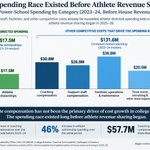
GAO found that before revenue sharing, Power schools spent 36% of total athletic expenses on coaching + support staff. Scholarships were 11%.
And @NILnomics shows why one national economic answer is so difficult: schools operating under the same NCAA rules have radically different revenue sources and economic models.
That’s why Congress shouldn’t prescribe the outcome.
Protect the process: require financial transparency, independent athlete representation, and a structure where economic rules can actually be negotiated.
You can’t decide how to divide the pie until everyone knows what’s actually in it. 👇

Why pick a side?
Protect a process. Not just power.
NCAA/conferences govern the sport.
Give athletes independent professional representation. They negotiate. Independent enforcement resolves disputes.
Athletes don’t have to be employees for this to work.
Protect the sports AND the athletes.
Checks and balances. Limited concentrated power. Competing interests compete. Pretty American. 🇺🇸
@tedcruz @SenatorCantwell @ChrisMurphyCT @SenCapito

Also @SenJohnThune @SenEricSchmitt @ChrisCoons @CoryBooker
If Congress is going to write national rules, why not write a structure both sides can live with.
One side governs the sport. Athletes have their own professional table—not a minority of seats on a board they depend on.
Where interests collide, they negotiate. Someone independent resolves the dispute.
That protects Olympic and women’s Sport without sport-by-sport bargaining.
It gives athletes a real voice without turning athletes into employees.
Happy to share the more detailed proposal.
107
If a conservative concern is concentrated government power, why shouldn’t we be equally skeptical of using federal law to protect concentrated private regulatory power?
🤖 Made with AI

2
225
If you care about the future of college sports, read this.
The most important takeaway isn’t how much money college athletics has. It is where the money comes from.
We’re debating national rules for institutions operating under radically different economic models.
You can’t design good policy if you don’t understand the economics underneath it, and the economics are complicated.
That’s exactly why getting the structure and implementation of the PCSA right matters. Getting it wrong risks doing more harm than good.
This is worth your time. 👇
nilnomics.com/p/college-athl…

4
546
Am I understanding this correctly? Folks are saying Olympic sports have to be cut because college athletes are finally sharing in the revenue. It costs too much to pay them.
But ONE football coach can make $13M while an entire school’s athlete revenue-sharing pool is $20.5M? The math isn’t mathin’. Am I missing something?
Maybe athlete compensation isn’t where college sports became “too professional.”
And the PCSA caps the athletes and leaves admin the Wild Wild West… so how does it solve THIS problem?
🤖 Made with AI

I’d like to hear what he has to say

Surprised @espn so willing lent their platform to political performance today. But we’ll play. We’d love to have @DerrickNAACP join you in his home state of Miss. next week to express why the Protect College Sports Act is dangerous to Black Athletes and the Black community. 🤷🏾♂️
Russia’s Top Secret Programs: Hidden Under One Roof youtu.be/uwmkLKlTNoo?si=cwSo… via @YouTube

360
"Relaxes Chaos" with Katie Uhlaender youtu.be/2RiDLZvWMNc?is=wCsk… via @YouTube

1
324
Who knows what’s next… but I’ll be doing what I love always while standing for #Integrity
1
11
881
The majority of Americans aren’t far-right or far-left.
We just want to learn and talk about hard topics without being forced into a tribe or shouted down.
Where does that conversation actually happen anymore?
5
360
The WNBA Should Enact “Female-Only” Eligibility Criteria - Sign the Petition! c.org/pTWHVqypns via @Change

1
2
378
AFL-CIO and Its Sports Council Oppose Protect College Sports Act (S. 4668) aflcio.org/press/releases/af…

312