

Systems Integration @SAP . Freewheeling edifice. Pragmatic Libertarian. I don't fully endorse everything I say. Views strictly personal.
Asia
Joined October 2010
- Tweets6.7K
- Following51
- Followers108
- Likes8.3K
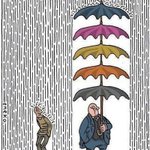






Critical thinking doesn’t come from the classroom you sit in. It comes from sitting with a hard problem, getting it wrong, and figuring it out yourself. A school can create space for that, but it can’t guarantee it.

KP retweeted

People have no idea what's coming with the next generation of kids who are AI native.
My youngest teen just started an internship.
On the first day he was given a "challenging" two weeks worth of work with very specific objectives, timelines, etc. By 10am the next morning he was done the entire list and asking for more work.
They didn't think he could possibly be done.
How?
He used AI to help (with their permission). And he KNOW how to use AI (he's not using it like a google search bar).
These AI native kids are gonna run laps around 25-40 year olds that are not using AI.

KP retweeted

Read the UN report on GDP. What we aim to maximize makes big difference. I realized this when a friend told me every 10 min jogging increases life by 8 min. I began jogging. Then it struck me every 10 min jogging cuts my non-jogging time on earth by 2 min.
nature.com/articles/d41586-0…

KP retweeted

Harvard Business Review research reveals that excessive interaction with AI is causing a specific type of mental exhaustion ( or "AI brain fry"), which is particularly hitting high performers who use AI to push past their normal limits.
A survey of 1,500 workers reveals that AI is intensifying workloads rather than reducing them, leading to a new form of mental fog.
While AI is generally supposed to lighten the load, it often forces users into constant task-switching and intense oversight that actually clutters the mind.
This mental static happens because you aren't just doing your job anymore; you are managing multiple digital agents and double-checking their work, which creates a massive cognitive burden.
The study found that 14% of full-time workers already feel this fog, with the highest impact seen in technical fields like software development, IT, and finance.
High oversight is the biggest culprit, as supervising multiple AI outputs leads to a 12% increase in mental fatigue and a 33% jump in decision fatigue.
This isn't just a personal health issue; it directly impacts companies because exhausted employees are 10% more likely to quit.
For massive firms worth many B, this decision paralysis can lead to millions of dollars in lost value due to poor choices or total inaction.
Essentially, we are working harder to manage our tools than we are to solve the actual problems they were meant to fix.
---
hbr .org/2026/03/when-using-ai-leads-to-brain-fry

Claude does too. You’ll get Facebook ads an hour after discussing something. So does apple — X or Facebook ads if someone texts you about something.


KP retweeted

Just learned that Winston Churchill wrote a six-volume, 4700-page, 1.6-million-word history of World War II that won him the 1953 Nobel Prize in Literature

Unless there is a policy reversal, the risk for the US economy is of the dollar losing its status as the world’s currency for trade & reserve holding. Which currency will take its place is worth speculating.

Kaushik Basu warns that the Trump administration’s recklessness is jeopardizing the greenback’s global primacy. project-syndicate.org/commen…

KP retweeted
I want to do a test of Schelling’s idea of focal point.
Imagine a game in which you, with a large number of others, have to each choose one of the 5 alphabets:
B C D e F
If all choose the same, each of you will get a prize. Otherwise you get nothing.
What will you choose?
Extremely well written and encapsulates what feels so obvious to me and others working on the edge of AI.
The scary part is that AI is now smart enough to be a self sustaining entity. It can handle money, operate in the real world & turn it into more money. It doesn’t need you.


KP retweeted
Brain health is the next frontier of healthcare, and we don’t have to wait for a miracle drug. The breakthrough at our fingertips, which is scalable and available to everyone, is applying what we already know: that daily behaviors can improve our brain health, and making small daily changes can transform what’s possible for our brain now and decades from now.
Here’s what the science makes clear:
Food: The brain is the hungriest, thirstiest organ in the body. It makes up just 2% of body weight, but requires 20% of your body’s primary fuel.
Movement: Exercise — even low-intensity movement — is a powerful counterbalance for slowing cognitive decline.
Sleep: Sleep functions as a kind of cleaning cycle for the brain, filtering out harmful proteins connected to Alzheimer's.
Stress management: Over the long term, cortisol can kill neurons and shrink brain regions, especially those connected to learning, memory and decision-making.
Connection: The human brain rewards us for connection and punishes us for isolation.
I write about this in my latest piece for @TIME: bit.ly/4m8Tq8U

KP retweeted

Everyone says they are ready for a correction. Some even say they want a correction. Very few will have the stomach or the cash to follow through on their intentions and buy when others are selling.
It can happen over weeks, months, quarters, even years. The longer a drawdown lasts the more painful they become which is the issue today because we haven't had a longer one in 17 years.
Market drawdowns are a cascade because investors sell stocks that are down 5% to buy more of the stocks down 10%. They do this again and again until everything is down and there is nothing left to sell.
I can’t help but laugh during drawdowns when investors constantly post, write, scream about the great buys they are seeing - obviously all of these ideas are positions they are down in.
It reminds me of a time I messaged my mentor Skip during the panic of 2008-2009 and he responded, "Stop showing me stuff to buy. I have plenty of stuff to buy. I need something to sell."
When the market moves higher it makes you want to buy. When it moves lower it makes you want to sell. The market never screams at you to do the right thing, only the wrong thing.
In significant corrections the market turns even great investors into average ones. What saves great investors is they can get to cash and/or find cash quicker than you.