

Quantum Researcher in Fujitsu Research. Opinions are my own and not the views of any organization. Wherever the road goes we will always find our way.
Joined May 2011
- Tweets2K
- Following495
- Followers241
- Likes3.4K



It will be an interesting era for quantum researchers, switching from pure theory to practical things (architecture, optimization, hardware, etc).

This contains a shocking list of problems in quantum information, many-body physics and quantum computing, the field that are dear to my heart. There are too many, but let me pick the following.
1. Proof of area law in 2D.
2. Spin-one Haldane gap
3. Parity is not in QAC^0
4. Constant-error Aaronson-Kuperberg conjecture
5. Unitary VOAs generating conformal nets.
Things are changing fast. I cannot even imagine what will happen over the next few months, let alone a year.
Another significant achievement by Huy Tuan Pham and his friends.

Lisa Sauermann and Huy Tuan Pham have been friends for the past decade. They just solved a decades-old math mystery with help from Fourier analysis. quantamagazine.org/mathemati…


Hoan Tran retweeted

🔥Welcome 🔺Simplex Diffusion Models🔻!
Standard discrete diffusion models suffer from "information collapse" because they discard uncertainty at intermediate steps by sampling categorical tokens. (1/5)

Hoan Tran retweeted

Fujitsu releases Open Quantum Application Research Package as open source to accelerate quantum application development
Open Quantum Application Research Package (OpenQARP) offers over 100 software components, including Fujitsu-developed quantum algorithms. These components can be combined to significantly streamline quantum application development. The software is compatible with various execution environments, such as Fujitsu's quantum simulator built on a large-scale HPC environment and the NVIDIA CUDA-Q platform for hybrid quantum-classical computing.
By publicly releasing the software, which includes Fujitsu-developed algorithms, as open-source software, Fujitsu aims to accelerate the practical adoption of quantum software and contribute to addressing societal challenges through quantum technology. Learn more: global.fujitsu/en-global/pr/…

Our paper "Iterative Quantum Feature Maps" has been published in Advanced Quantum Technologies. advanced.onlinelibrary.wiley…

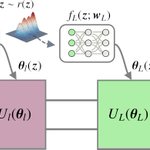
Following our work on MPE, we now ask: with full distribution over quantum states — not just verify universality, but generate from it? We introduce Latent-Conditioned PQCs (LPQCs) to enable generative modeling over density matrices.
arxiv.org/abs/2605.28690


Hoan Tran retweeted

My paper "Thermodynamics of classifiers" is now on arXiv. arxiv.org/abs/2605.24365

Hoan Tran retweeted

🚀 Reservoir Computing is officially back in the Deep Learning game!
Thrilled to announce our paper "ParalESN" has been accepted at #ICML2026! 🎉
We resurrected RC for the DL era, finally unlocking parallel processing via associative scan.
Preprint: arxiv.org/pdf/2601.22296🧵👇

Hoan Tran retweeted

We have a new paper out on spontaneous symmetry breaking, Goldstone modes, and deep learning!
This is work with the amazing team of @t_andy_keller @YueSong48287250 @takeru_miyato @wellingmax.
A brief thread on a marriage of physics and ML. (Link at end).

Reviewing 6 quantum papers at ICML this year, I saw how difficult it is for quantum-related work to pass the bar. 5 out of 6 were rejected. The only accepted paper had the same score as my own submission, which was rejected with positive scores.
Hoan Tran retweeted

Modern deep networks are often trained at the #EdgeOfStability, a regime where dynamics are locally unstable, nearing chaos. Yet generalization improves, defying the wisdom of classical optimization. We now theoretically explain this central puzzle: arxiv.org/abs/2604.19740. 👇

Hoan Tran retweeted

Very happy to see our paper just published in Nature Physics! 🥳
nature.com/articles/s41567-0…
In this work, we study quantum circuits affected by a very general local noise model and uncover a set of curious results!

Hoan Tran retweeted

STARアーキテクチャver3を発表しました
。STAR(space time efficient analog rotation)と魔法状態栽培を突然変異させることで、位相回転ゲートのエラー率を数桁低減し、これまでSTARアーキテクチャでは難しかったで複雑な分子のシミュレーションを小規模の量子コンピュータでも現実的な時間で可能にしました。富士通さんと阪大の共同研究です。
arxiv.org/abs/2603.22891
STARアーキテクチャは2023年にNISQとFTQCの間を埋めるアーキテクチャとして提案した。NISQの課題は見えつつもいきなり100万量子ビットって具体性をもって目指せない。当時はFTQCはほとんど蒸留マシンだったし。
1つ作るにでも大変なTゲート(万能計算に必要な基本ゲート)をわんさか使って量子ビットちょびっとしか回せないなんて辛いなーということで、エラー耐性のないアナログ位相回転を基本ゲートセット入れるという大胆な戦略に出た。これがSTAR ver1で、位相回転ゲートのエラー率でできる計算が制限される。古典コンピュータでシミュレーションできない規模の計算はできるが具体的なプリケーションにつながる性能では今から思うとなかった。
しかし、STAR ver2では位相回転ゲートのエラーが大幅に改善された。これは同時期に出た、物理微小回転から論理微小回転を作る手法を利用・改良している。この結果、微小回転ゲートのエラー確率が回転角と物理エラー率の積θpになるようになった。量子シミュレーションなどのアプリケーションでは微小回転ゲートがたくさん出てくる。回転角は10^-3とか10^-4とかなので、実質、論理量子ビットの微小回転ゲートのエラーが数桁落ちるという画期的なアプローチになり、ハバード模型という具体的なプリケーションのリソースが見積もれるようになった。
しかしこれでも、より複雑なハミルトニアンである量子化学(分子のエネルギー計算)には届かなかった。ハミルトニアンに出てくる項が多く、係数の値も大きいので、微小回転ゲートの数が爆発的に増えるからだ。
そこでさらに微小回転ゲートの精度を上げれないか。実は微小回転ゲートのためのリソース状態はもっといい精度で作れている。θ^2pのエラー確率で作れるものの、ゲートテレポーテーションで回転ゲートを実行する時に測定結果のランダム性によって逆回転になってしまう補正のためにエラーが積もり、θpになってしまうのだった。典型的には2ステップで補正できるものの運が悪いと何ステップも必要になる。さらにステップごとに2倍づつ回転角が大きくなる。回転角が大きくなると微小回転に強いこの手法は不利になるのだ。
この運悪く失敗が続くというレアケースを今回、最近コストが下がってきたTゲートのための魔法状態蒸留、魔法状態栽培にエスケープするという戦略をとったのがSTAR magic mutation、STARアーキテクチャのVer 3です。この結果、本来のθ^2pのスケーリングが復活し、さらに数桁微小回転ゲートのエラー率が下がった。単に微小回転ゲートとTゲートを使い分けましょうみたいな安直な話ではなく、エラーのスケーリングが本質的に変更される。しかも、魔法状態栽培が呼び出されるのはレアケースでコストは平均的にはほとんど効いてこない。さらには、本来魔法状態栽培だけでTゲートの精度が足りず計算できなかった領域も、微小回転ゲートで直接実行することでカバーができるようにもなった。
この結果、古典コンピュータでは難しい規模の分子の時間発展シミュレーションもSTARアーキテクチャでカバーできるようになった。正直、STAR ver1の段階でここまでの発展が潜んでいるとは予想だにしなかった。大きな方向性を大胆に決め、優秀な人たちが集まり知恵を出し合えば大きなブレイクスルーが起きるというのを目の当たりにした感じだ。最初の位相回転ゲートを基本ゲートセットにするというver1の基本的なアイデアこそ私から提案したものだが、その具現化、ver2、ver3への発展は富士通の量子チームの若手研究者との共同研究の賜物です。


「量子コンピューター」実用化早める新技術 富士通と大阪大学
news.ntv.co.jp/category/soci…

Hoan Tran retweeted
⚛️Fujitsu Quantum Team is taking over #APSSummit2026 in Denver!
From March 17 to 20, catch our team presenting 9+ papers and poster session on:
✅ Fault-tolerant architectures
✅ Quantum Krylov algorithms
✅ Scalable many-body data
✅ Lattice surgery optimization
📍 Location: Colorado Convention Center
Visit Fujitsu booth #1220 to see our latest superconducting qubit chip and discuss internship opportunities. summit.aps.org/
See you next week in Denver! 👋
#FujitsuQuantum #QuantumComputing #Physics @APSphysics

ALT APS Global Physics Summit


Hoan Tran retweeted

This study introduces a quantum master equation, derived from first principles, for thermalization in open quantum many-body systems. Learn more: go.aps.org/4sfOxNs

ALT Figure with two parts. The left part is a circular shaped graph. On the left is a yellow circle labeled p(i) and on the right is a blue circle labeled p(j). An arrow points from the yellow circle to the blue and is labeled p(j ← i). Another arrow points from the blue circle to the yellow and is labeled p(i ← j). The right portion shows a simplified depiction of the spectrum of a generic many-body Hamiltonian. There is an arrow pointing up with many ticks. Maximum energy is at the top and mathematical equations show how it scales with the size of the system.
Several years ago, we developed a series of lectures to assist students and researchers utilizing reservoir computing in various scenarios.
This has been published as a bootcamp featured as Editor's Pick in the Chaos journal.
pubs.aip.org/aip/cha/article…
rc-bootcamp.github.io/

Hoan Tran retweeted

Ch 6 on RL with verifiable rewards is now available.
Essentially GRPO from scratch, and probably my favorite chapter so far. (First 363 pages done, yay!)
I'm now working on the follow-up with more RLVR runs, more metrics & analyses, and extensions like policy clipping and KL (which were intentionally left out initially to keep the GRPO intro simple and REINFORCE-like).
I also have a long list of 15 GRPO algorithmic tweaks queued to run... Fun times!
Here's a link to the early access: mng.bz/Nwr7
Happy weekend!
