

Inspiring the next generation by bringing the history and life lessons of Jewish Partisans to youth around the world.
San Francisco, CA
Joined October 2009
- Tweets3.4K
- Following634
- Followers1.8K
- Likes301


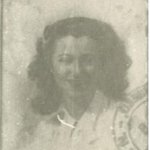

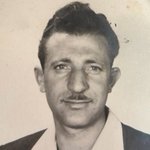
Born in 1915 in Luboml, Poland (now Ukraine), Yitzhak (Isaac) Weisman grew up in a close-knit Jewish community. A gifted young artist, Yitzhak had a promising future before the Holocaust forever changed his life.
When the Nazis began liquidating the Luboml ghetto in October 1942, Yitzhak escaped into the forests alongside family members. He joined the Jewish partisan resistance in the Volhynia region, enduring unimaginable hardships while fighting for survival and resisting Nazi persecution.
Yitzhak was among just 51 Jews from Luboml known to have survived the Holocaust.
After the war, he met and married fellow Holocaust survivor Golda. Together, they rebuilt their lives in Israel, where Yitzhak worked as a carpenter creating theatrical sets, allowing him to reconnect with the artistic talents he had displayed as a child. The family later immigrated to Canada.
Although Yitzhak passed away in 1959, his story lives on through the memories preserved by his family and the historical research that has helped reconstruct his remarkable life.
His legacy reminds us that behind every story of resistance is a person with dreams, talents, loved ones, and a life worth remembering.
Read Yitzhak's story and help us honor his legacy:
jewishpartisancommunity.org/…
#JewishPartisans #JewishResistance #HolocaustHistory #HolocaustRemembrance #NeverForget


Born in Lida, Poland, in 1922, Frieda Feit experienced unimaginable loss during the Holocaust. In May 1942, her parents and three sisters were murdered by the Nazis and their collaborators. Determined to survive, Frieda escaped into the forests and joined the legendary Bielski partisans.
While the Bielski group provided refuge to Jewish families fleeing persecution, Frieda took an active role in armed resistance, serving as a sniper in missions against the Nazis. Her experiences highlight the courage of Jewish women who not only survived but fought back.
Following the war, Frieda immigrated to the United States, married, and raised a family while preserving her Jewish heritage and traditions.
Frieda's legacy reminds us that resistance took many forms, from fighting in the forests to rebuilding a life after devastating loss.
Read Frieda's remarkable story on the Jewish Partisan Community website:
jewishpartisancommunity.org/…
#JewishPartisans #WomenInResistance #HolocaustHistory #JewishResistance #NeverForget


When Abe Asner (z''l) escaped from the ghetto into the nearby forest with his brothers, the Germans placed a bounty on their heads. “So much money to catch us, dead or alive,” Abe recalled.
Abe and his brothers became armed resistance fighters, successfully conducting many missions. They sabotaged enemy supply lines, halted German food convoys, and rescued Jews from ghettos.
Abe’s passion burned brightly when he recalled his partisan days: “We don’t go like sheep. We did as much as we could. We did a lot,” he said. “People should know somebody did (fight back). People should know.”
Learn more about Abe Asner, born on October 19, 1916, the cousin of actor Ed Asner (z"l), here: jewishpartisans.org/partisan…
#JewishPartisans


Don Felson (z’’l) was just 16 years old when the Germans invaded Glubokie, Poland. Don narrowly escaped the June 1942 town massacre of 2,500 Jews, and he and his older brother Stan joined the Panamarenko partisan brigade.
After learning that their mother and younger brother were murdered by the SS, the two brothers intensified their armed campaign, dynamiting railroads and ambushing German convoys. They saved many lives by disrupting the Nazi war machine and evacuating the wounded from behind enemy lines.
Learn more about Jewish partisan Don Felson, born October 12, 1925, here: jewishpartisans.org/partisan…
#JewishPartisans


When the Germans invaded Vilna, Noah Lewin (z"l) joined Abba Kovner's Jewish underground, the Fareynikte Partizaner Organizatsye (FPO). After the unsuccessful Vilna uprising and the FPO’s defeat, Noah took to the sewers with the rest of Kovner’s guerrilla force, escaping into the woods and setting up a base in Radnicka Puscja.
As a Jewish partisan, Noah became well versed in the arts of sabotage, cutting down telegraph wires, taking apart railroad tracks, mining roads, and conducting sniper attacks against German forces.
Learn more about Noah Lewin, born on October 11, 1916, and watch his video testimony here: jewishpartisans.org/partisan…
#JewishPartisans


The Jewish Partisan Educational Foundation honors the memories of all those murdered two years ago on October 7th, a day of horror and heartbreak. We mourn those who have died since that day and pray for the safe return of all the hostages. Never Again!
Image Credit: Jerusalem Post

Today we celebrate Marisa Diena (z''l), born in Turin, Italy in 1916. When Nazis occupied her hometown, Marisa fled into the mountains around Torre Pellice, Italy to join the partisans.
In the Italian Partisans, women served a unique role. Because most of the male partisans were army deserters, women were able to move around during the day without arousing suspicion. As a result, Marisa became the vice-commander of information for her unit.
During the day, she rode her bicycle around the countryside, collecting valuable intelligence from local informants. Nightly, she would return and report back to her commander, performing a crucial task that the men in her group could not.
On April 25, 1945, Marisa’s partisan unit worked to liberate Turin, while their comrades in other major cities did the same. Marisa stayed in Italy after the war, sharing her experience as a partisan with elementary school children.
Marisa is one of seven women featured in JPEF’s new lesson plan, Jewish Women in the Partisans, now available at jewishpartisans.org/content/…
#JewishPartisans


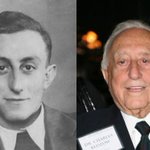
Born Chonon Bedzowski in the town of Lida, Charles Bedzow (z"l) and his family made a risky escape from the Lida Ghetto in 1942 and joined the Bielski Brigade in their encampment in the woods. At age 17, Charles became a Bielski partisan, collecting supplies for the group, scouting, and going on sabotage and ambush missions.
After the war, he met and married fellow Jewish partisan Sara Golcman Bedzow (z"l). Charles and Sara built a beautiful life together. Charles became a prominent real estate developer and philanthropist dedicated to promoting Jewish education and supporting the State of Israel.
He was the patriarch of a large, devoted family, including – three children, eight grandchildren, and thirteen great-grandchildren. Charles, JPEF's Honorary International Chairman, is featured in "We Fought Back," Scholastic's book about teen resisters during the Holocaust.
Read more about Charles here: jewishpartisans.org/partisan…

Sukkot is a time of gathering, gratitude, and remembrance. As families and communities come together to celebrate this meaningful Jewish holiday, we reflect on the importance of tradition, resilience, and community.
The Jewish Partisan Educational Foundation wishes all who celebrate a joyful and meaningful Sukkot filled with peace, happiness, and time spent with loved ones.
Chag Sameach!
"I want to fight. I want to take revenge for my sisters and brothers and for my parents."
In July 1942, shortly before Gertrude Boyarski's (z’’l) 20th birthday, the Germans descended upon the ghetto in her hometown of Dereczyn, Poland killing more than 3,000 Jews. Initially taking refuge in an unprotected family camp in the forest, Gertie was her family’s sole survivor after her parents, sister and brother were murdered during the surprise attacks.
Gertie left the family camp to join a partisan detachment. She spoke the courageous words above to her brigade commander who then armed her with a rifle and sent her to guard their encampment alone for two weeks. Two weeks felt like two years, according to Gertie, yet she persisted and was accepted into the group. She fought as a partisan for three years, aggressively attacking German soldiers who came to the surrounding villages.
Gertie is one of seven women featured in JPEF’s new lesson plan, Jewish Women in the Partisans, now available at jewishpartisans.org/content/…
#JewishPartisans

At the age of 12, Ted Winestone (z"l) was assigned to a labor brigade where he mined and crushed rocks, loaded them on mining wagons, and pushed the wagons to the railroad yards. The brigade was forced to destroy Jewish monuments at a cemetery and use them to build a bridge across the creek.
On December 28, 1942, the SS surrounded the labor camp, but Ted escaped into the woods with a group of workers. Upon reaching the village of Ruda Yavorska, Ted discovered a partisan camp and reunited with his Uncle Benny.
Being young, Ted was not allowed to be in the fighting unit, but he did assist the partisans by performing guard duty and helping around the camp. On occasion, he was sent on missions with the partisans to ambush the Germans. In the summer of 1944, he was liberated by the Russian Army.
In 1947, at age 17, Ted immigrated to New York. He graduated from Memphis State College after three years and was drafted into the U. S. Marine Corps, where he served for two years during the Korean War.
Read more about Ted, born on September 24, 1929, here: jewishpartisancommunity.org/…

On Yom Kippur, we pause for reflection, remembrance, and renewal.
For Jewish partisans during the Holocaust, maintaining Jewish traditions could itself be an act of spiritual resistance. Even amid persecution, displacement, and the struggle for survival, Jewish identity, faith, memory, and community endured.
As we remember those who resisted in so many ways, we honor the resilience of the Jewish people and the traditions that generations fought to preserve.
To all who observe Yom Kippur, may your fast be meaningful.
Jewish partisan David Elazar (z"l) was born on September 16, 1919, in Kosovska Mitrovica, then part of Yugoslavia. When war broke out in 1939, he and his brothers joined the Russian Army.
David lost nearly his entire family when the Germans massacred the Jews of Kosovska Mitrovic in 1941. At the time, David and his brother were fighting with the Russian Army, but he left to fight with the partisans. As a Jewish partisan, he went on missions to bomb railroads and Nazi trains carrying supplies.
After the war, David made aliyah and fought in Israel’s War of Independence in 1948 before moving to Sydney, Australia in 1949.
Read more about David’s life here: jewishpartisancommunity.org/…
#Jewishpartisans

In the winter of 1941—shortly after Germany broke the Molotov-Ribbentrop non-aggression pact—Lea Berkowsky Friedberg (z"l) and her parents were confined to the Novogrudok Ghetto.
Several months later, Lea's father Gutel arranged for her to escape into the forest to join Tuvia Bielski and his brothers, close family friends who had formed an all-Jewish resistance group. Lea followed a scout sent by Tuvia to lead a group of six escapees into the forest, one of whom was Sonia Boldes who became Lea’s lifelong friend and the wife of Zus Bielski.
Lea was eventually reunited with her parents at the partisan camp, where they did whatever was necessary for everyone to survive: foraging for food, making shoes, and building bunkers in the winter to protect against the bitter cold. Lea later married Pesach Friedberg in the forest, a dynamic central figure of the Bielski Brigade.
They arrived together in Rome in August 1945, having a second wedding in the Cinecitta Displaced Persons (DP) camp. In March 1949, Lea and Pesach came to America, settling first in Bronx and then in Queens. There, Pesach opened a restaurant and Lea worked as a cashier.
Read more about Lea, born September 15, 1925, here: jewishpartisancommunity.org/…
#Jewishpartisans


Pesach (Paul) Friedberg (z"l) was born on September 15, 1918, in Novogrudok, Poland. From 1941 until the end of the war, Pesach operated as part of the Bielski Brigade operating in the Puschcza Naliboczka, the dense forests surrounding Novogrudok.
With extensive knowledge of the surrounding areas and his ability to speak several languages fluently, Pesach often posed in stolen uniforms as a Russian officer or a Nazi sympathizer. He would have meetings, drink vodka, and come away with information. These skills were vital for planning and carrying out raids throughout the countryside, destroying railroad tracks to further hinder the Nazis, and capturing local traitors.
Pesach was able to successfully fight the Nazis for nearly four years. It was during his time with the Bielski Brigade that Pesach met and married Lea Berkowsky (z"l). In March 1949, Lea and Pesach came to America, settling first in the Bronx and then in Queens. There, Pesach opened a restaurant and Lea worked as a cashier.
Read more of Pesach's incredible story here: jewishpartisancommunity.org/…
#Jewishpartisans


At just 6 years old, Helen Terris, alongside her mother, survived the massacre of Jews in Lida, Poland in May of 1942 by hiding under dead bodies for hours. Eventually escaping into the forest, the two lived among the Bielski partisans.
Helen, along with the other children of the partisan camp, attended school and performed for the partisans at night, putting on shows, singing, dancing, and reciting poetry to keep their spirits high.
After liberation in 1944, Helen and her mother immigrated to the United States. Helen has been very active in the Jewish community and Holocaust remembrance in New Jersey. “For many years, I could not speak about my past. It was just too painful for me," says Helen. "But now I don’t have a choice … A great many of the survivors have passed on. It is now up to us, the children survivors, to keep their stories alive. So it’s never repeated, and it’s never forgotten.”
Read more about Helen’s incredible story here: jewishpartisancommunity.org/…
#jewishpartisans


Nina Grutz Morecki (z"l) was 18 years old when the Nazis invaded Poland. Nina endured the loss of her mother, father, sister, and brother-in-law before being sent to Janowska Concentration Camp as part of a work detail.
She escaped a killing pit outside of the camp and fled deep into the forest where she encountered the Polish Underground and the partisans, for whom she worked for almost a year and a half. Nina provided them with important stamped documents that allowed them to create chaos and havoc among the German military, and perhaps even save other resistors. She did this knowing the danger and the terrible punishment she would face if caught.
Toward the end of the war, Nina met and married another survivor from Lvov, Josef Morecki. Together, they had three grandchildren and two great-grandchildren at the time of Nina’s death in 2012.
Read more of Nina's incredible story here:
jewishpartisancommunity.org/…
#JewishPartisans


Back-to-school is the perfect time to introduce students to the power of primary sources.
Our free "Pictures of Resistance" lesson plan invites students in grades 9–12 to explore the remarkable wartime photographs of Jewish partisan Faye Schulman, one of the only known Jewish partisan photographers. Through her powerful images, students examine resistance, resilience, and the importance of preserving history through firsthand accounts.
Designed for a 50-minute class, this ready-to-use lesson encourages critical thinking, historical inquiry, and meaningful classroom discussion.
Start the school year with a lesson that helps students see history through the eyes of someone who lived it.
Explore the virtual exhibit and download the free lesson plan: jewishpartisans.org/pictures…
#BackToSchool #HolocaustEducation #HistoryEducation #SocialStudies #Teachers #PrimarySources #JewishPartisans

In 1942, Henry Lubell (z"l) was in Kolomyja, Poland, where the Germans had established a ghetto. There, Henry met his future wife, Elizabeth. Elizabeth’s parents were able to pool their resources to smuggle their daughter out of the ghetto before it was liquidated later that year.
The Jews of Kolomyja were soon rounded up for mass deportation. Using the saw blade he kept in his boot, Henry found a loose board on the cattle car and sawed a hole big enough for him and his friends to jump through. They eventually discovered a group of partisans in the forest and were welcomed into the group. As a partisan, Henry sabotaged the Germans by supplying Soviet troops with information about German artillery positions.
After the war, Henry reunited with Elizabeth, who was living in Budapest. They were soon married and lived in Bratislava, Slovakia. In November 1950, the couple arrived in Peekskill, NY, where Elizabeth’s brother and sister-in-law were residing. They had two children, Barbara and Irwin.
Read more about Henry, born August 23, 1911, here: jewishpartisancommunity.org/…
#Jewishpartisans


After escaping from the Polish town of Sarny, 17-year-old Brenda Senders (z"l) convinced a Soviet partisan general to let her join his unit. She quickly learned how to ride a horse and shoot a gun, and soon became the general’s bodyguard.
Brenda’s unit was constantly on the move, occupying villages, conducting ambushes, blowing up bases, and obliterating bridges and train tracks. “We didn’t let the Nazis rest day or night,” Brenda recalled proudly.
Brenda Senders, born on August 20, 1925, is one of seven women featured in JPEF’s new lesson plan, Jewish Women in the Partisans, now available at jewishpartisans.org/content/…
#JewishPartisans

