

The only journal dedicated to cardiovascular computed tomography. Official journal of the Society of Cardiovascular Computed Tomography.
Joined March 2018
- Tweets1.4K
- Following139
- Followers4.9K
- Likes888






Yaguchi et al. found that quantitative CCTA plaque burden may help identify patients at risk of myocardial injury after elective PCI. Low-attenuation and total plaque volumes were independently associated with PMI.
doi.org/10.1016/j.jcct.2026.…

Won et al. found that atherogenic index of plasma (AIP) was independently associated with rapid coronary plaque progression in non-diabetic adults, but not those with diabetes. Each 0.1-unit increase in AIP was linked to higher RPP risk (OR 1.06).
doi.org/10.1016/j.jcct.2026.….

Suzuki et al. found higher LV ECV on cardiac CT was associated with poorer outcomes after CRT. Patients with events had higher LVECV (42% vs 35%), and ≥44.03% identified a high-risk group with shorter event-free survival.
doi.org/10.1016/j.jcct.2026.….

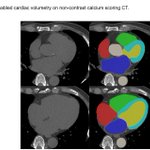
Lee et al. found AI-enabled cardiac volumetry from calcium scoring CT predicts outcomes. Enlarged atrial volumes predicted AF, while LA volume and LV mass were linked to mortality. Atrial volumes improved AF discrimination (C-index 0.74→0.83).
ow.ly/RnHv50ZG78Z.

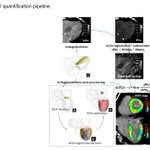
Colombo et al. showed that a fully automated CT-based ECV pipeline can quantify whole-LV myocardial ECV in ≤4.5 minutes in a real-world TAVI population. Higher automated ECV and ECV burden were independently associated with death or HF hospitalization.
doi.org/10.1016/j.jcct.2026.….

Yang et al. found DLIR-H provides the highest inter-reader agreement and confidence for coronary calcium scoring vs FBP and ASIR-V, with 94.2% categorical agreement and ICC 0.996. Reader-dependent bias was also absent with DLIR-H.
doi.org/10.1016/j.jcct.2026.….

Manohar et al. found that CT-derived fractal dimensions of LV trabecular structure were significantly higher in LV noncompaction than in controls, HCM and DCM, supporting fractal analysis as a quantitative tool for differentiation.
doi.org/10.1016/j.jcct.2025.…

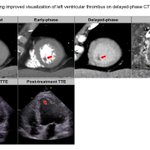
The study from Takaoka et al. showed that delayed-phase cardiac CT and CT-derived ECV maps improve detection of left ventricular thrombus, with AUCs of 0.95 and 0.98, respectively, compared with 0.78 for early-phase and 0.55 for non-contrast imaging.
doi.org/10.1016/j.jcct.2025.…

The study from Solomon et al. demonstrated dual-energy CT can distinguish lipophilic iodinated Angiofil from aqueous gadolinium in ex vivo postmortem coronary CTA, allowing simultaneous characterization of coronary patency & myocardial perfusion defects.
doi.org/10.1016/j.jcct.2025.…

The study from Serruys et al. demonstrated that CCTA-derived LV%MYO provides an objective & individualized measure of myocardium at risk before and after CABG. Complete revascularization, defined as residual LV%MYO <10%, was achieved in 43.8% of patients.
doi.org/10.1016/j.jcct.2025.…

The study from Montes Muñiz et al. showed that remnant cholesterol >30 mg/dL was associated with a higher risk of major adverse cardiovascular events and amplified the effect of CCTA-derived atherosclerotic plaque burden on MACE risk.
doi.org/10.1016/j.jcct.2025.…

Zhang et al. found that voxel-based CT attenuation correction reduces CAC overestimation from low-kV imaging with deep learning reconstruction. Risk-stratification misclassification fell from 20.53% to 5.79%, while radiation dose decreased 77.6%.
doi.org/10.1016/j.jcct.2025.…

Gershon et al. provide age-, sex-, and race-specific CAC volume percentiles, showing higher CAC volumes in men and increasing volume with age. The study also identified differences in CAC density across demographic groups.
ow.ly/PaTJ50ZFKS3

The review from Khinsoe et al. highlights how CT-derived computational modelling can provide patient-specific structural and haemodynamic simulations to support valve selection, procedural planning, and lifetime management of aortic stenosis.
ow.ly/FH7S50ZFKMr

Dr. Armin Zadeh examines the ambiguities of coronary calcium: CACS remains a powerful & practical risk marker, but the same score may reflect atherosclerosis, medial calcification, plaque stabilization, or altered vascular biology.
doi.org/10.1016/j.jcct.2026.…

Can noninvasive follow-up identify progressing intermediate coronary lesions? Mahmoud et al. combined FFRct with AI plaque analysis and found lower follow-up physiology was associated with greater noncalcified and low-attenuation plaque burden.
doi.org/10.1016/j.jcct.2026.…

The July/August issue of JCCT is now available!
Explore the latest updates and highlights from across the cardiovascular CT community. Thank you to Jesus Corrales, MD for providing the stunning cover image featured in this issue.
ow.ly/ZcsN50ZAANB

In a prospective multicenter registry, van Beek et al. found that CCTA correctly identified a non-obstructive contralateral coronary artery in all 102 patients with suspected single-vessel CAD. CCTA may help focus subsequent invasive angiography.
doi.org/10.1016/j.jcct.2026.…

Why does atherosclerosis develop in people w/o hypertension, diabetes, smoking or high cholesterol? Gray et al. identified a possible LAD-predominant calcium pattern in MESA, opening new questions about vessel-specific biology & personalized prevention.
doi.org/10.1016/j.jcct.2026.…

Sharper images with lower dose: Skoog et al. found that standard-resolution PCD-CT matched conventional CCTA for stenosis grading while improving image quality and reducing radiation and contrast exposure. A promising step for routine coronary imaging.
doi.org/10.1016/j.jcct.2026.…
