

Telling stories across time. Current: Building communities around media collectibles, where NFTs mine a shared token. VToken is a 10 year token experiment.
Joined June 2009
- Tweets15.8K
- Following776
- Followers807
- Likes10.2K







Pinned Tweet
The idea that regular people cannot mine tokens has come to an end. You are early. #CryptoGiveaway


This is the vanguard.
But.
When the lawyers come with a preservation of records demand, this is your ass hanging in the wind.
All your thoughts. How you decide. The roots of who you are, all there in a markdown file.
Like I said. The vanguard, but lawyers are going to determine how this really plays out.

Making the most AI pilled company is the whole game:
1. make a second brain. one folder of markdown files on how you think, write and decide (obsidian)
2. talk to it. voice notes all day (wispr), and an agent files every fact, story and decision
3. make a company brain. customers, calls, numbers, pricing, playbooks, past decisions and why you made them
4. record every call and meeting (granola). the transcripts go straight into the brain
5. keep a facts file. true things about you and the company that agents are allowed to say. this kills made-up claims
6. keep a voice file. your 50 best posts, 20 you hate, and the words you never use
7. put all of it in git (github) so every change has a history
8. write one instruction file at the top (CLAUDE.md or AGENTS.md). read these files before any task, never overwrite, always date
9. give agents memory across sessions so they stop starting from zero (claude-mem, mem0)
10. pipe every data source into one warehouse your agents can query (airbyte → clickhouse). ads, analytics, CRM, payments
11. feed it data nobody else has. it's the only part a competitor can't download
the skills
12. don't start from zero. install the good ones first (anthropics/skills, obra/superpowers, mattpocock/skills, addyosmani/agent-skills)
13. grab the marketing ones too (coreyhaines31/marketingskills, cody schneider's graphed skills for static ads and UGC, boringmarketing dot com skills)
14. map every workflow in the company and rank them by money made or saved
15. do each one once while talking out loud, and record it
16. have an agent turn the recording into a skill. when to use it, the steps, the checks, the mistakes to avoid
17. one skill per job. small and boring beats one giant prompt
18. connect your tools with MCPs so agents can act and not only advise (gmail, slack, stripe, linear, notion, posthog, supabase)
19. give agents a browser (browser-use, vercel agent-browser, claude in chrome)
20. give agents a computer of their own for the tools with no API (vercel agent-desktop, orgo)
21. give your best skills away in public. it's the new lead magnet
the agents
22. run an orchestrator that never turns off (grok bot, openclaw, hermes). it manages one agent per project, and each of those runs its own sub-agents
23. use coding agents for the building (claude code, codex, cursor, t3, antigravity)
24. wrap them in a harness so they plan, test and remember (ECC, superpowers)
25. manage the whole fleet in one place (paperclip). every agent gets a job, a budget and a log
26. put the skills on triggers (n8n, scheduled tasks). daily, weekly, on every new lead, on every cancellation
27. route your models (openrouter). the expensive one plans and checks (fable 5.2, gemini 4 carbon), the cheap ones do the volume
28. cut the token bill. shorter outputs, smaller tool results (caveman)
29. run a local model for the data that can't leave your machine (gemma 4)
30. track cost per job. if a job costs more than it earns, fix it or kill it
the factory
31. build the line. spec agent → builder agents in parallel (git worktrees) → test agent → reviewer agent → deploy (vercel, railway)
32. design goes through the same line (paper MCP), and a skill strips out anything that looks AI made (unslop)
33. every annoying task in the company becomes an internal tool by the end of the day
34. every customer request becomes a pull request before a human reads it (tstack for the PR workflow)
35. reviewer agents with a named bar. "would the best team in the world ship this?" reject until the answer is yes
36. keep 50 real cases with the right answer. rerun them every time a new model drops and switch to the winner
37. humans approve, own the outcome and talk to customers. that's the 10% you keep
the loop
38. every finished job writes back to the brain. what worked, what failed, what to stop doing
39. support tickets, analytics and social comments flow in every night
40. every friday an agent rewrites the playbooks from the week's results, and you approve the diff
41. every month, rank everything by profit per human hour. kill one thing and double one thing
the growth
42. research with agents before you spend a dollar (perplexity API, last30days skill)
43. outbound runs itself. find the leads, enrich, verify, send (apollo, million verifier, instantly, phantombuster)
44. send prospects finished work in place of a pitch
45. ads run on a loop. an agent writes the creative, publishes through the facebook ads API, kills the losers and scales the winners
46. agents make the creative too. images (nano banana), video (heygen, fal), voice (elevenlabs), music (lyria 3.5, suno)
47. turn every finished job into content. the story, the number, the prompt
48. every customer makes the brain smarter for the next one. that's your network effect
49. once it works, point it at a new niche. same agents, new context
The models are the same for everyone but your context is the only part that's yours.
Acquire as much of it as you can, as fast as you can.
Build loops like this.
This is the whole game, happy playing.

19

I am a member of the Norwegian Nobel Committee.
There are five of us. Five people, appointed by a parliament most of the planet could not find on a map, who decide, once a year, which human being the world has agreed to call good.
I know. I know. I think about it on the tram.
We meet in a building on Henrik Ibsens gate, a street named after a man who wrote almost exclusively about people discovering they are frauds, which nobody on the committee finds funny except me. There is a room with a long table and the portraits of the dead laureates looking down, Mandela, the Dalai Lama, a great many earnest men in spectacles, and one portrait we do not discuss, which is Kissinger, 1973, awarded while the bombs were still falling, after which two of our predecessors resigned and the satirist Tom Lehrer said political satire was now obsolete. We keep him on the wall. A reminder. Every family has the uncle.
It is October in Oslo, which means the sun gives up around four in the afternoon like a civil servant, and it rains the particular Norwegian rain that isn’t quite falling, just hanging there, judging you. I arrive with wet shoes. I always arrive with wet shoes. There is coffee, because this is Norway and there is always coffee, we drink more of it per person than almost anyone alive, and someone’s wife has sent kanelboller, the cinnamon buns, and we sit, five Norwegians, damp, caffeinated, sugared, and we decide the moral standing of the entire species.
Let me tell you how it actually works, because the world imagines a cathedral and it is, I promise you, a book club with a mandate.
287 nominations this year. 208 people, 79 organizations. Anyone can nominate, that’s the secret nobody understands: a professor, a parliamentarian, a former laureate, so the “nominee” list is meaningless, it’s a suggestion box, and every autumn some congressman nominates his own golden retriever and the press writes “SHORTLISTED.” Nobody is shortlisted. There is no short list the public ever sees. There is us, and the coffee, and the rain, and the portraits, and a Norwegian stubbornness that is older than the prize itself.
We read reports. The institute’s advisers write them, thick dull documents, and we argue. Our chairman told the BBC once that in the final meeting “there is a high temperature.” High temperature, for a Norwegian, means someone slightly raised an eyebrow and then apologized for it. We don’t do high temperature. We do a long silence, and then Kristin says “well,” and everyone knows exactly what “well” meant, and it’s settled. That’s our shouting. “Well.” You’d have to be raised here to hear the violence in it.
Now. This year. I will not say the name, because we never say the name, but you know the name.
A certain head of state wanted this prize the way a child wants a thing in a shop window, which is to say loudly, and in public, and with the full belief that wanting it was itself the argument. He said he deserved it. He said he’d ended eight wars, a number that grew most times he said it, like a fish. He had other heads of state phone us. Israel’s prime minister posted it on the internet, “Give him the Nobel.” The leaders of Cambodia and Pakistan announced they’d nominated him, as though announcing it were part of it, as though we tally mentions. A man flew around the globe collecting endorsements for a Norwegian committee the way you’d collect signatures for a petition to the council about a noisy dog.
And here, uff da, is the detail I treasure, the one that makes me smile into my coffee. The nomination deadline is the 31st of January. He took office on the 20th. So for all the phone calls, all the posts, all the gilded lobbying, the only nominations that could possibly count for this year’s prize were filed in the first eleven days of his term, before he had, by his own arithmetic, ended a single one of the eight wars. He campaigned all year for a prize whose window had shut while he was still hanging up his coat. We didn’t have to reject him. The calendar did. We just watched. Norwegians are very good at watching. We have long winters.
People think we sit there weighing his deeds. We don’t. That’s the thing I can’t make the world understand. We’re not grading his homework. We don’t owe anyone the prize for a ceasefire, however real, however loud the announcement. “He made peace” is not a sentence that ends in a medal, the way he believes it does, the way he believes every good thing ends in his name on it. The will of a dead Swede says the prize goes to whoever did the most for fraternity between nations. A dead Swede, I should add, who made his entire fortune inventing dynamite and selling arms, and spent his last years horrified at his own obituary, which called him a merchant of death, and so bought his way to immortality as a man of peace. The whole prize is one guilty arms dealer’s attempt to launder his name. We are, all of us, administering a dead man’s public relations. I find this clarifying. It keeps me humble. It should keep everyone humble, and it keeps, by my count, no one humble at all.
So who did we give it to?
An eighty-five-year-old woman. A judge. Born in Durban, under apartheid, granddaughter of a Tamil man who came to South Africa as indentured labor, a bus driver’s daughter from the poor Indian quarter, who became the first non-white woman to run a law practice in her province, who defended Mandela’s people when defending them was dangerous, who sat on the Rwanda tribunal and the court at the Hague, and who, at eighty-five, is right now a judge weighing whether a genocide is a genocide. When we told the world, our chairman said the rule of law “underpins the system we have set up to ensure peace,” and that “peace requires justice.” She wasn’t even in Oslo. She was in Nuremberg. In courtroom 600. The actual room where they tried the Nazis. You cannot stage that. God staged that, and God, it turns out, is a better satirist than any of us.
She did not phone us. She did not post. No prime minister demanded it for her on the internet. She had, as far as our deliberations are concerned, the one qualification the loud man could never manufacture, which is that she wanted the work and not the medal. The medal finds those people. It flees the ones who chase it. This is not a rule we wrote. It’s just the only pattern the hundred-odd years of our mistakes has ever shown.
The reaction from across the ocean was immediate. His spokesman posted that we “place politics over peace.” Ja. Perhaps. We’re five damp pensioners in a rainy city; of course it’s political, it was always political, it was political when we gave it to a sitting American president nine months into his first term for the promise of things he had not yet done, and we have been quietly embarrassed about that one for fifteen years, so believe me, we had a particular reason this year to prefer a woman with fifty years of verdicts behind her over a man with eight wars in front of him and a deadline already behind him.
Here is what he will never understand, the thing I’d tell him on the tram if he ever took one. We are the one prize he cannot buy, cannot post his way to, cannot have a friendly dictator phone in for him. Not because we’re incorruptible, nei, we’re as vain and wrong and human as the portraits on our wall. But because the entire point of the thing, the only power a small cold country’s book club has ever held, is that it goes to the person not performing the wanting. The moment you demand it, you’ve proven you don’t understand what it’s for, and proving that is itself the disqualification. He ran the most expensive campaign in the history of the prize and the campaign was the reason. He was never losing to Navi Pillay. He was losing to the concept.
It’s dark now. Four o’clock dark. The buns are gone. Kristin said “well” an hour ago and we all went home. I’m on the tram with my wet shoes, and somewhere across the water a very powerful man is explaining to a camera that the prize is rigged, that we’re corrupt, that he’ll win it next year, and he genuinely might, we’re only five idiots and we’ve been wrong before, Kissinger is still on the wall.
But not this year. This year an old woman in Nuremberg, in the room where the law once stared down the exact kind of man who thinks wanting a thing loudly enough should make it his, got a phone call she didn’t ask for.
That’s the job. We don’t reward the man who ends the war and announces it.
We reward the woman who spent fifty years deciding what a war was.
He’ll never see the difference. That’s rather the whole point of him.
Takk for i dag. I have to change trams.
13
I always learn something new from @dunkhippo33

1/ We see ~1,000 companies a month at Hustle Fund, and the question I get the most is: how do you actually pick? One thing I think people really underrate is timing. Read on >>
1
19

Have you ever heard of insect politics?
@realJGoldblum

I went on camera to show the full process front to back on how I’ve been making these cursed human-animal hybrid videos. You can find a link for it in my bio!
98
Jon Michael Miles retweeted

Me pasa lo mismo y con los mismos creadores, hace 1 semana que descubrí las suscripciones y tengo que entrar hasta el perfil para ver lo nuevo. lee mi respuesta @grok y tómalo en cuenta para aumentar suscriptores
I finally subscribed to @Artedeingenio today after following since the dawn of this nuttiness. The quality of the work, the consistency, and the depth of knowledge are well worth it.
The ONLY reason I hesitated for so long is the unmanaged firehose nature of X.
I pay to subscribe to creators—and then X barely shows them to me. I already support creators like @techhalla and @egeberkina and rarely see their work.
That’s backasswards.
The fix is simple: a SUBSCRIPTIONS tab—a clean feed of the creators we pay for.
@X, please build it.
If you support creators on this platform, please share this far and wide. Creators—and the people who pay to support them—need this.
#CreatorEconomy #XSubscriptions
🤖 Made with AI

Ramansia always wanted the Mirror to speak.
She would stare at it for hours and sometimes days.
Mother said, "Get up. You'll hurt yourself. Don't hold it. You won't be able to child."
Ramansia made it a point to listen to Mother very closely and then assiduously do nothing.
It wasn't rebellion.
It was acknowledgement of their descendency and assured and shared destiny.
Mother would go away, and she would become Mother.
This is the one thing that she was sure the Mirror would tell her.
-


1
102


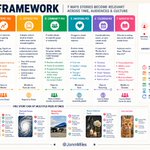
've been thinking about pegs. It's a news term, but I think it has much broader, systemic application. It's something we use in national news, and it sent me down a rabbit hole a while back. This isn't perfect and it's still a living document the frame might help people as they dig.

idk if other social marketers do this
but almost every day, i go "fishing" for content
basically try to find stories that can turn into a bigger piece of content for the brand account
where to look: notifications tab, brand mentions, X advanced search, slack channels, & reddit
the goal each time is to find just 1 good story
sometimes you catch one, sometimes you don't but i've found that it keeps the content fresh and not overly orchestrated
1
42
I've followed @gizakdag now for a while. She's always had an eclectic visual style. I'm really glad that that visual style has held up through her film. I particularly like the color changes at the end. It's a great motif.

54
I love the idea of making $3,000 in a day from anything. If I was doing that, I just don't know if I would be spending time posting about it. I would just be doing it.

I made $3k yesterday from organic affiliate marketing.
$0 spent on ads.
Read that again.
You don’t need a massive following.
You don’t need thousands of dollars to test offers.
You need to find something people already want and get it in front of them.
That’s it.
Lucky for you, Glitchy has tons of low-friction offers for products you already see every day.
So the only thing left to master is distribution.
And that’s something I can help you with.
I put my entire A-Z organic affiliate system into a PDF.
It has everything you need to start making your first $1k as a complete beginner.
RT + comment “ME” and I’ll DM it to you.
(must be following for DM)

48
I have someone I've worked with in television for a long time, and I've linked in with her. I noticed that they have gone unanswered. Thought we had a good relationship. Guess not. There are Nos everywhere if you just pay attention.

88
It's very easy to lose track of people. You can't count on socials to surface longitudinal relationships and make them important. Socials are not some kind of algorithmic bookmark. For many years, I think email is still the strongest. When I was freelancing, I would send out a monthly availability, and it produced more results than anything else. People learn about compound interest in their financial lives, but compounding relationship interest is even more critical.
Some advice for people early in their career:
Seek out and nurture relationships with highly ambitious people in your field. Make sure you’re feeding the relationship (not just taking). Try to be helpful, regularly check in on them, & try to break the surface level BS convos.
You’ll inevitably become successful in your own lanes but this compounds as the relationships get stronger over time.
These people will be your first customers, investors in your company, help you land jobs if needed, and everything in between.
And they’ll make things a lot more fun along the way.
3
8
808
Jon Michael Miles retweeted

All Skills (Free for First 4,500 People)
5 Claude Skills for Social Media Growth: Channel Analysis, Audience Research, Competitor Intelligence, Breakout Detection, and Hook Writing
1. Deep Channel Analysis: pull real data from your channel and competitors via Sandcastles MCP, find what is working in your niche without manual scrolling
2. Audience Bullseye Builder: build a precise audience profile from your post comments and behaviour patterns, free and no MCP required
3. Outlier Video Pulse: daily competitor intelligence with no credits needed, find every video in your niche dramatically outperforming the channel average
4. Creator Breakout Detector: reverse-engineer growth spikes on competitor channels, find what changed before the breakout
5. The Hook Machine: pull from your best-performing video data and write hooks calibrated to what actually converts for your specific audience
(48 Hours only)
Like + RT + comment 'SOCIAL'
Must Follow me so I can DM you.


I imagine that buiding in the Google ecosystem, and tech writ large is always a risk, like interacting with the Borg, because they will assimilate you.
That said, even with the introduction of groups, split view and now vertical tabs in Chrome, I'm still using @WorkonaHQ spaces everyday and have been since they launched. But I'm also on an early plan.
Companies like @WisprFlow, Grammarly and Workona are effectively market disovery mechanisms for Google.
I'm aware that these startups and the VCs backing them know this. I'm just sitting here reviewing my subscriptions.
2
2
68
Im also experimenting with @WorkonaHQ inside chromes tab splits, groups and vertical orientstion. There is some wonkiness on chromes part but it still works well.
16
So i look for the single defining feature that big tech is not likely to reproduce. In the case of @WisprFlow its literally the abilty to whisper. At night and in the morning the ability to use speech to text and get work done while not waking sleeping children and loved ones is key.
1
28
My wife recently.
WHAT ARE YOU LISTENING TO ON A LOOP?
Quietly shuts office door. Adds headphones.
-

loons 🎈
IMG: @krea_ai 2 -> Qwen Image Edit -> @thesystms INFL8 LoRA
MOV: @Alibaba_Wan 2.2 I2V + T2V + Vace -> @thesystms melt/transition/INFL8 LoRAs + TimeSlice
MP3: @suno
EXE: @ComfyUI
3
25