

Deputy Chief Cardiology & Director CV Imaging 🇺🇲 @USAFMedicine ✈Brooke Army Medical 🪖🎖Asst Prof USUHS | Alum @BWHCVImaging @harvardmed🫀@WRNMMC_DHA view=own
San Antonio, TX
Joined February 2021
- Tweets636
- Following422
- Followers193
- Likes2.2K






Jonathan Aun, DO, FACP, FACC, FSCCT, FASNC retweeted

Honored to share our editorial in the latest @JNCjournal titled “Unmasking Residual Risk: The Incremental Value of the Hemodynamic Gain Index in Exercise SPECT-MPI” with @BrownUniversity Adv CV Imaging Fellow Dr. Amerpreet Brar. @MyASNC
free access (through 3 Dec) link below sciencedirect.com/science/ar…
Grateful to @mdicarli, the JNC team, and primary study authors Shuai Yang et al. sciencedirect.com/science/ar…
Jonathan Aun, DO, FACP, FACC, FSCCT, FASNC retweeted

In CV imaging, it is essential to ensure that our reports are clinically meaningful, concise, and actionable.
As #CCTA evolves, so must our reports. In this editorial -- accompanying 2026 @Heart_SCCT interpretation and reporting guideline -- we highlight recent changes and future opportunities.
👏 @AnamWaheed05 tinyurl.com/4z6987ar

Jonathan Aun, DO, FACP, FACC, FSCCT, FASNC retweeted

I opened our symposium yesterday with two numbers.
Five minutes. Fifty million dollars.
That is roughly what the United States spends on health care every five minutes. And the pressures keep growing
But the number I cannot get out of my head is this.
For underserved communities to have the same access as everyone else, we would need roughly two hundred thousand more physicians.
Not someday. Today.
We are not going to train our way out of this.
Which is where AI comes in. But where is health care in this transition?
I would argue we are late and early at the same time. Late, because we are among the last industries to be transformed by data and AI, with most of our data still sitting in vaults.
Early, because almost nothing we have built has actually arrived. The FDA has authorized more than a thousand AI enabled devices. Ask how many changed a care pathway. Ask how many reached a patient in a safety net clinic.
But building is not enough.
Will our push to lead with AI make care more proactive, or just more complicated? Will it lower costs, or add another expense? Will underserved communities benefit from the beginning, or be asked to wait?
That is why our symposium was not called “Advances in Digital Health.”
It was "Innovation in Digital Health for Access, Affordability, Equity and Global Scale."
I have no doubt AI will reach every part of health care.
My hope is that better health care reaches everyone.

“The question isn't 'does it work” it's for whom, at what cost, under what conditions. Dr. @khurramn1 on the new LSE partnership: access, affordability, equity, global scale. None of it solved by a better AI model alone. @HMethodistCV #DHIFallSymposium2026 #DigitalHealth

Jonathan Aun, DO, FACP, FACC, FSCCT, FASNC retweeted

In a State-of-the-Art Review published in #JACCIMG, researchers examine the evolving role of multimodality #cvImaging in the diagnosis and management of cardiac sarcoidosis.
Learn more about the findings: bit.ly/4s7CJOm

Jonathan Aun, DO, FACP, FACC, FSCCT, FASNC retweeted
Thanks @CMEINDIA1 for featuring our article and spreading the #prevention mantra @ACCinTouch @EugeniaGianos @rblument1

Coronary Calcium Is Changing the Rules of Lipid Management: Treat the Plaque, Not Just the Risk Score!
Article: Imaging Guided Treatment of Subclinical Atherosclerosis—We've Come a Long Way!
Authors: Eugenia Gianos, MD, and Ron Blankstein, MD.
Journal: Journal of Clinical Lipidology, 2026;20:11–14.
12 Clinically Important Pearls
1\. Risk scores alone are no longer the whole story. The 2026 ACC/AHA dyslipidemia guideline integrates PREVENT-ASCVD risk estimation, risk enhancers and selective coronary artery calcium (CAC) imaging to personalize lipid-lowering therapy.
2\. CAC scoring receives a Class I recommendation. In men aged ≥40 years and women aged ≥45 years with 10-year PREVENT-ASCVD risk of 3% to less than 10%, CAC scoring is recommended when the decision regarding lipid-lowering therapy remains uncertain.
3\. CAC = 0 does not mean zero risk. Statin deferral may be considered in selected individuals, but should not be automatic in patients with diabetes, familial hypercholesterolemia, active smoking or a strong family history of premature ASCVD.
4\. CAC 1–99: Consider moderate-intensity statin therapy, particularly when CAC is ≥75th percentile. The suggested LDL-C goal is below 100 mg/dL.
5\. CAC 100–299: Initiate LDL-C-lowering therapy, targeting LDL-C below 70 mg/dL.
6\. CAC 300–999: Target LDL-C below 70 mg/dL. A more intensive LDL-C goal below 55 mg/dL may be considered, particularly in selected high-risk patients.
7\. CAC ≥1000: Extensive coronary atherosclerosis warrants intensive lipid lowering, targeting LDL-C below 55 mg/dL, with an optional ApoB goal below 55 mg/dL.
8\. CAC may underestimate plaque burden. Patients with diabetes, HIV, inflammatory disorders or markedly elevated Lp(a) may have substantial noncalcified coronary plaque. Selective coronary CT angiography carries a Class IIb recommendation.
9\. Never ignore incidental CAC on chest CT. Coronary calcification detected during CT examinations for noncardiac indications provides valuable cardiovascular risk information. Moderate-to-severe incidental CAC supports considering moderate- to high-intensity statin therapy with an LDL-C goal below 70 mg/dL.
10\. The VESALIUS-CV trial strengthens primary prevention in selected high-risk patients. Evolocumab demonstrated cardiovascular benefit in patients with high-risk diabetes or atherosclerosis without previous myocardial infarction or stroke.
11\. Lower for longer is becoming increasingly important. Earlier and sustained reduction in LDL-C may reduce cumulative exposure to atherogenic lipoproteins and potentially prevent the development or progression of subclinical atherosclerosis.
12\. CAC is a decision-making tool, not a universal screening test. Patients who already have a clear indication for lipid-lowering treatment should not have therapy delayed merely to obtain a CAC score.
CME INDIA – Take-Home Message
The absence of cardiovascular symptoms does not imply the absence of coronary atherosclerosis.
The emerging approach is to combine clinical risk estimation with selective plaque imaging, identify subclinical disease earlier and match LDL-C targets to atherosclerotic burden.
Remember: CAC = 0 is not a lifetime guarantee of cardiovascular protection, while CAC ≥300 identifies substantial subclinical coronary disease that deserves serious consideration of intensive lipid lowering.
doi.org/10.1016/j.jacl.2026.…
CME INDIA – Learning Today, Improving Patient Care Tomorrow.

Jonathan Aun, DO, FACP, FACC, FSCCT, FASNC retweeted

I enjoyed reviewing this practical article published in #JACCadv on EKG patterns in athletes
-> Sinus Bradycardia- common in endurance athletes
-> Increased QRS voltage- more common in strength-training athletes
-> Lateral, inferolateral, or anterolateral T-wave inversion warrants further evaluation.
-> In strength-trained athletes, LV wall thickness rarely exceeds 13 mm. A diagnostic “gray zone” exists between 13 and 15 mm -> #whyCMR/ Follow up/ Remember even cardiomyopathy thickness can regress mildly too with detraining.
Link: jacc.org/doi/10.1016/j.jacad…

Jonathan Aun, DO, FACP, FACC, FSCCT, FASNC retweeted

Don't miss the next webinar on 🗓️Dec. 15 covering the latest in #cardiacamyloidosis diagnosis, tracers, and treatments.
Register now 👉 shorturl.at/90FWu
#BNMS #CVNuc


Jonathan Aun, DO, FACP, FACC, FSCCT, FASNC retweeted

You have the FFR-CT result. Now what?
Join us! SCCT/SCAI Knowledge Lab on patient selection, image quality and interpretation—and putting the new consensus into practice.
📅 Nov 12 | 7–8 PM ET
What would you ask the panel?
@UVA @UVACardsFellows @CardioUva @ChrisKramerMD @FiRSTSCCT @Heart_SCCT @JWeirMcCall
@nadia_sutton

📅 Mark your calendars! Join SCCT and SCAI on Thursday November 12 at 7 pm ET as leading experts translate the new SCCT/SCAI Expert Consensus Document, endorsed by the ACC. Learn how to:
🔹 Identify appropriate patients for FFR-CTA
🔹 Optimize #CCTA image quality
🔹 Standardize FFR-CT interpretation and reporting to reduce variability
🔹 Improve the integration of CT-derived physiology into contemporary cardiovascular care
Register today➡️ scai.org/education-and-event…
#InterventionalCardiology #CardioX #CardioEd @PRodriguezMD @ESHLOF @nadia_sutton

Jonathan Aun, DO, FACP, FACC, FSCCT, FASNC retweeted

CMR strain has changed on follow-up. Has the myocardium changed, or has the measurement? 🧐
Before interpreting a "serial change," check comparability.
The new SCMR/RSNA/EACVI statement highlights:
• Cine acquisition and imaging planes
• Analysis technique and software release
• What was measured and whether the comparison is valid
📋 For reporting:
Prioritize global longitudinal strain, then global circumferential strain. Routine radial and segmental strain reporting is discouraged.
Values from different software packages are not interchangeable. An isolated percentage needs that context.
Strain remains optional in a CMR report. Prospective strain-guided trials are needed to establish whether acting on the result improves outcomes.
Gulsin et al. EHJ Cardiovascular Imaging, 2026.
DOI: 10.1093/ehjci/jeag228
#whyCMR #CardiacImaging

ALT Three-part original checklist based on the October 9 SCMR/RSNA/EACVI scientific statement: comparable cine acquisition and imaging planes; documented technique, strain direction, software and local reference values; preferential GLS and GCS reporting. Strain remains optional. Software values are not interchangeable, and strain-guided trials remain a research need.
Jonathan Aun, DO, FACP, FACC, FSCCT, FASNC retweeted
Congratulations @AnnaGiuliaPavon
Brilliant article in #JACCIMG
sciencedirect.com/science/ar…
For post MI imaging- We focus on infarct size, microvascular obstruction, and intramyocardial hemorrhage.
But what about the noninfarcted myocardium (NIM)?
✅AMI triggers inflammation beyond the infarct zone.
✅ CMR-derived T1/T2 mapping of NIM provides independent prognostic information.
✅ NIM characterization may help predict adverse remodeling and HF.
✅ Future potential: imaging-guided therapies targeting inflammation and fibrosis.
💡 Perhaps the future of post-MI risk stratification lies not only in measuring what was lost, but also in understanding what remains.
#WhyCMR #CVImaging #CardioTwitter
Jonathan Aun, DO, FACP, FACC, FSCCT, FASNC retweeted
How do you manage a patient wtih very high Lp(a) but mild CAC. Great insights by @ArthurShiyovich at our 9th annual #PreventionSymposium


Jonathan Aun, DO, FACP, FACC, FSCCT, FASNC retweeted

As the Prevention Sym program winds down, the Lifestyle First session brings the focus back to the fundamentals: exercise, sleep, nutrition and the evolving role of AI and wearables in prevention. Closing with final thoughts on what’s next for preventive cardiology.

☢️🫀 Happy Nuclear Medicine & Molecular Imaging Week!
A perfect example of PET MPI:
🎯 LCx culprit lesion identified
✅ ~50% LAD stenosis managed medically, supported by reassuring flow reserve & stress MBF.
💡 Beyond anatomy. Quantifying physiology. Guiding care.
@MyASNC


Jonathan Aun, DO, FACP, FACC, FSCCT, FASNC retweeted

Can #WhyCMR help detect early heart transplant rejection?
Our prospective study of 45 recipients found higher native T1 and ECV with ≥2R rejection within 60 days. Standalone accuracy was modest, supporting further study of a multiparametric approach.
sciencedirect.com/science/ar…

Grateful to present “SLE–APS: The Cardiologist’s Perspective” at #AthensCMR2026 🫀🇬🇷 Thankful to share and learn across cardiology, rheumatology & CMR. Thanks to my mentor @Bweber04 for inspiring my career in CardioRheum!

Jonathan Aun, DO, FACP, FACC, FSCCT, FASNC retweeted
Tremendous @MassGenBrigham cardiology GR talk by super ⭐️ @sarahcud on cardiac amyloidosis
♥️Marked increase in survival with new therapies
♥️Improved diagnostics --> earlier treatment


Jonathan Aun, DO, FACP, FACC, FSCCT, FASNC retweeted

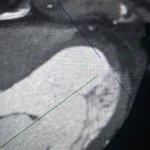
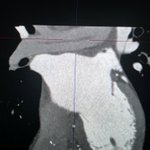
TOF pt with anomalous RCA from mid LAD with typical pre-pulmonic course. It’s a “benign” finding , but surgeons should be made aware. As opening the superior sternum can potentially lead to RCA injury. #ACHD ❤️🩹
Jonathan Aun, DO, FACP, FACC, FSCCT, FASNC retweeted

Amyloid PET doesn't just answer yes or no - it gives a number. Myocardial amyloid load tracks moves with treatment: LV %ID on florbetapir falls within 6 months of plasma cell therapy in AL, while ECV shift far more slowly. @MyASNC @DorbalaSharmila #ASNC2026 #CVNuc #ThinkPET


Jonathan Aun, DO, FACP, FACC, FSCCT, FASNC retweeted
💊 The forgotten drug before SPECT/PET MPI: the PPI
🍽️ PPIs raise gastric uptake of 99mTc agents and 82Rb
🔥 Bright stomach beside the inferior wall = unreadable
⏸️ 2026 ASNC guideline: hold it 3–5 days if feasible
Every form asks about coffee. Omeprazole? Rarely!
🔬 Why it happens
PPIs increase tracer uptake in the gastric wall, and the stomach sits right under the inferior wall. Scatter into the inferior segments, or a wall that cannot be separated from gut: either way, unreadable.
📋 What the guideline suggests
Hold the PPI for 3–5 days when feasible.
Bridge with an H2 blocker if acid suppression is needed.
Marked artifact? Consider repeating off PPI.
🏥 The fix is not equipment
One more line on the requisition, one more question at booking. In my experience the caffeine question is always asked. The PPI question almost never is!
📄 Duvall WL, Skali H, Aggarwal NR, Boczar KE, et al. 2026 ASNC guideline for stress testing in SPECT and PET MPI. J Nucl Cardiol 2026.
@MyASNC @JNCjournal #CVNuc #ThinkPET #NuclearCardiology

Jonathan Aun, DO, FACP, FACC, FSCCT, FASNC retweeted

In honor of #CholesterolMonth, the NLA is proud to release the second installment of the Lipids Simplified Series: Lipoprotein(a) Management Simplified.
Following the success of our LDL-C Management Simplified publication, we felt there was no more timely or necessary topic to tackle next than Lp(a).
Authored by leading Lp(a) experts Marlys L. Koschinsky, PhD, FNLA and Christie M. Ballantyne, MD, MNLA, this article and accompanying infographic are designed to distill the complexity surrounding Lp(a) into clear, actionable guidance for clinicians. Our goal is simple: make this essential science more accessible and easier to apply in everyday practice.
🔗 Access the full article and infographic at lipid.org/resource/lipoprote….
👉 You can find this and other NLA articles under the Articles section of our newly launched lipid.org.
Stay tuned... more topics in the Lipids Simplified Series are on the way!
#LipoproteinA #Lpa #ASCVD #CardiovascularPrevention
@CBallantyneMD @MarlysLPA


