

SWE @morpho Programmable money.
Williamsburgh, NYC
Joined November 2011
- Tweets362
- Following520
- Followers905
- Likes5.6K




Fun facts about this new P2P lending feature:
- Went from idea to launch in ~4 weeks.
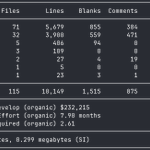
- Implementation involved around 122 Devin sessions, merging ~133 PRs containing ~35k LOC over only ~1.5 weeks. Most of the work happened while the team was sleeping.
- Design took place directly in our codebase as prototypes by the design team rather than in Figma, preventing most human-to-human back and forth during design review.
For reference, such a project would have taken 3+ months only 2 years ago. Devin by @cognition is the true autonomous AI software engineer. I've enjoyed serving as an ambassador to Devin; helping the broader team onboard to Devin for all their design and development needs.

Enjoyed working on this over the last few weeks.
A market's rate can move well before maturity. Now your position moves with it. Exit early at the top of the book, or set your own price and let the market come to you.
Building this made the protocol's elegance click for me. Every position is just an entitlement to a fixed payment at maturity. A withdraw is a sell, a repay is a buy, and secondary trading falls out of the same order book that powers lending itself.
Fixed rate doesn't mean locked in.
This has been a concerted effort by the team for the past few years. I’m fortunate to play a part over the past few months breathing life into the next generation of DeFi lending. Fixed rates will bring the next wave of institutional capital on chain.


sitting in a coffee shop and everywhere I look, people are staring at chatGPT.
AI has taken the wheel

Spawn a swarm of specialized agents to complete large tasks.
With a working GitHub and Linear integration, you can coordinate tasks via the orchestrator agent, which knows how to break down work and delegate to sub agents. Other humans can sit in and help monitor the agents and delegate tasks.
This example, spawn concurrent agents to analyze Linear and GitHub backlogs and report back with an overview:
If you're an AI infra company, you're soon NGMI since every one will just be able to codegen their own AI infra (see @composio @openrouter )
The only value capture will be the application layer where users live

orchestration, yo
Task: find best restaurants. Solution: spawn a swarm of AI agents to research each one individually. Together.
On Claude Code context optimization when vibe coding 🧵
When an agent examines a codebase, it often makes decisions based on the directory and file names alone. Then, if a file seems relevant or is imported in some former file, the agent will pull it into context.
Now, it's more important than ever to consider what code is organized in a given file. The contents of the file should be focused and at the right level of abstraction. Then, if agents need, they can examine imports or references to dig into deeper layers.
Beyond readability, refactoring by extracting common structural code patterns out of higher levels of abstraction makes your agents more effective and saves tokens. Agents can do this extraction for you in seconds.
Maintaining such a strategy with discipline across each and every file compounds over time. As the codebase crows, the agent's capability is maintained.
I'm fully convinced Elixir is the best runtime to build AI agents. Everything is a process.
Actor model is first class with built in message passing, built in fault tolerance via supervision tress, built in concurrency thanks to a 40+yr old battle tested preemptive scheduler maxxing each core on bare metal.
Don't reach for serverless, that just buys you more moving parts and vendor lockin. Need more runtime capacity? Just add node.
The main problem with existing AI chat apps like @ChatGPTapp is the never ending context that gets overloaded as messages are sent.
All you wanted was to find the best hotels for an upcoming vacation. But once you ask about details about a specific hotel, the initial conversation topic is cooked.
A major reason Claude Code is so powerful is it allows powerful LLMs to delegate work to specialized sub-agents. Most notably the plan agent- which receives explicit instructions, prompts and tools dedicated to codebase exploration. The plan subagent can dedicate it's context to a single task, and return the refined result back to the orchestrator agent which is able to save it's context for higher level work and coordination.
End user apps don't yet have such a benefit; their contexts quickly become stale as the conversation turns.
With Swarm, users can get this benefit. Sub agents and the orchestrator agent are modeled as participants in a group chat, where specialized agents focused on a single task can receive instructions from an orchestrator LLM agent or users. Once web search and MCP tools are added, users will get access to a much more powerful, effective, and durable agentic chat experience.
This is just a POC, but the roadmap includes agent inspection + messaging via detail views, subagent-subagent messaging, web search + MCP tools, as well as documents+artifacts that agents+humans can collaborate on.
Join group chats with your friends and orchestrate an endless swarm of AI agents to accomplish anything.
Spent some of holiday break building a POC collaborative AI agent orchestration app. ~4 days of prompting 3+ Claude Code terminals running Opus 4.5.
* Native SwiftUI for blazing fast cross-platform performance- MacOS, iOS, iPadOS
* Backend: Elixir+Phoenix framework for realtime state sync via WebSockets + channels + presence (same stack as @supabase realtime). Oban for agent bg worker lifecycle.
Roadmap:
1. Agent + sub agent orchestration, similar to Claude Code skills + subagents. Top-level orchestration agent inspects requests and examines available tools + env to maximize context efficiency via specialized agents.
2. Open agent details to inspect sub agent thought threads via separate detail views
3. MCP server support via @composio
4. P2P agent communication and collaboration via native Elixir Registry module
5. Human-in-the loop requests and blocking client side tools (e.g. local files/apps as context)
