

Actuary, online writer, illustrator | Running and outdoor fanatic | Tweet about books, writing and my latest creative experiments
Munich | Subscribe here →
Joined May 2011
- Tweets5.9K
- Following71
- Followers982
- Likes13.8K





John Nicholas retweeted

I'm 39 today.
I'd love if people who enjoyed my book would help by retweeting and sharing!
I'm getting better at directly asking for support and I figured this is a good day to ask :-)
📕 pathlesspath.com
John Nicholas retweeted

Last Friday, something weird happened to me.
While I was beating myself up for feeling super unproductive, 1k+ people signed up to #100daysofai...and I had zero clue.
After some digging, I realised an influencer with 212k followers on Twitter had shared the program with his community.
My initial reaction: "wow I'm SOOO lucky"
But after stewing on it, I realised it wasn't all luck.
In fact, I could trace it back to two very intentional things that *I* did...
1️⃣ Created a free educational experience that adds value to participants in different ways
2️⃣ Shared this program through my network with a big megaphone (sorry!)
Had I not done either, maybe it still would have happened! But the probability would of been far lower.
So this serves as an important reminder (and lesson) that luck isn't something that has to happen to you, it can be engineered in your favour by 1. adding value 2. sharing it.
This is why I love the idea of "luck surface area"
✨ “The amount of luck that you have in life is how much value you create, times how many people you tell about it.” ✨ - Patrick McKenzie

John Nicholas retweeted
I wonder
about all the children
and those who have grown
who were told
in words, or otherwise,
they were bad
at singing
or drawing
or math
or something else.
When maybe
they would have mastered it
a day
a week
a month
or a year later.
But a door closed for them
that day.
— from ‘One Day’ by Win Trees, part of In The Cloud: Poems for a Technological Age
Thanks for the wonderful gift @tiltthefuture. I couldn’t put it down. My head nodded a lot as I read through this beautiful collection of poems.

John Nicholas retweeted
Not centering your life around work is hard but possible. Loved this from Cormac McCarthy:
"I always knew that I didn't wanna work."
Oprah: "How did you manage that? Most people would like to do that."
"Well, you have to be dedicated. Yeah. But it was, it was my number one priority. And, uh, that you didn't wanna have a nine-to-five job. Yeah. I thought you, you're just here once. Life is brief and to have to spend every day of it doing what somebody else wants you to do is not the way to live it."
"And I don't have any advice for anybody on how to go about that. Except if you, if you are really dedicated, you can probably do it.
Oprah: "So you have worked at not working."
"Absolutely. It's, yeah, it's number one priority."
John Nicholas retweeted
📚 Book of the week
- A New Earth by Eckhart Tolle -
I finished this book a few weeks ago and enjoyed it so much that it snuck into my Top 30 reading list.
I would summarize it as a unified theory on mindfulness and transcending the ego.
It reminded me a lot about Sam Harris's teachings on Waking Up and it provided good validation for my journey with meditation and seeking a deeper spiritual connection with life. Worth a read.
💬 Quote
Here's a little taste of the book. One of the better analogies I’ve seen to describe consciousness.
“There is the dream, and there is the dreamer of the dream. The dream is a short-lived play of forms. It is the world – relatively real but not absolutely real.
Then there is the dreamer, the absolute reality in which the forms come and go. The dreamer is not the person. The person is part of the dream. The dreamer is the substratum in which the dream appears, that which makes the dream possible.
It is the absolute behind the relative, the timeless behind time, the consciousness in and behind form. The dreamer is consciousness itself – who you are.”
– Eckhart Tolle

John Nicholas retweeted
Cool thing happening lately.
More relaxed about what other people do with their lives.
Less advice-y. Less prescriptive. Focusing on my own mountain.
Oh, you want to quit your job. Cool, go for it.
Considering studying further? Nice.
Dye your hair pink? Love it.
Used to hold onto things firmly. Thought I always had to have an opinion and give advice - act as some kind of arbiter.
Now it's just way nicer to observe and listen.
Why the change?
Probably a combination of things:
i. Getting older / growing up. Realized there are many different paths in life, all equally valid.
ii. More interaction with coaching friends. Their mantra = give less advice and listen more.
iii. Enjoying what I do so I don't need to project my problems onto others. Consumed with my 'thing', no need to fix things for others.
Pleasant change. Feeling lighter.
John Nicholas retweeted
Book Recommendations 📚 (2023 edition)
Here are my 30 favourite fiction and non-fiction books.
Fiction:
For fiction, I would recommend leaning towards the classics. Time is the greatest critic of all. For something more modern, Booker Prize winners & nominees are a good place to start. Always high-quality writing and they're usually historical fiction so you learn something.
1. War and Peace by Leo Tolstoy (1869). The classic that made the biggest impression on me. Set in the early 19th century, Tolstoy depicts the lives of people from all walks of life - peasants and nobility, civilians and soldiers - as they face Napoleon’s invasion of Russia.
2. A Farewell to Arms by Ernst Hemingway (1929). My favourite novel by Hemingway. A crushing, first-person account of an American serving in the ambulance corps of the Italian Army during World War I.
3. Blood Meridian by Cormac McCarthy (1985). Although McCarthy is best known for No Country for Old Men, this is probably his greatest work. Covering the Indian Wars of the 1840s in West Texas and Mexico.
4. The God of Small Things by Arundhati Roy (1997). A tale about the caste system and forbidden love during the period of the "Love Laws" prevalent in 1960s Kerala, India.
5. Things Fall Apart by Chinua Achebe (1958). Depicts the impact of European colonialism and Christian missionaries on a family and community in Nigeria. Beautifully written.
6. The Remains of the Day by Kazuo Ishiguro (1988). This novel covers the life and psychology of a butler in pre-World War II England. Ishiguro is my favourite contemporary author. He went on to win the Nobel Prize for Literature in 2017.
7. The Brothers Karamazov by Fyodor Dostoevsky (1880). A big book set in 19th-century Russia covering big themes — religion, morality, and free will.
8. Do Not Say We Have Nothing by Madeleine Thien (2016). A sincere, heartbreaking book that covers the lives of one family as they face major upheavals in China during the 20th century, from the land reform campaign to the Cultural Revolution to the Tiananmen Square protests.
9. The Tartar Steppe by Dino Buzatti (1940). Set in Italy, pre-World War I. One big metaphor for life. Keep waiting for your defining moment but it never comes.
10. The Narrow Road to The Deep North by Richard Flanagan (2013). Depicts the story of Australian soldiers, captured in Japanese POW camps during World War II, who were used to build the Burma Railway.
11. Shantaram by Gregory David Roberts (2003). The story of an Australian bank robber on the run in India in the 90s. Highly entertaining with lots of depth.
12. The English Patient by Michael Ondaantje (1991). Set in Italy and Northern Africa during World War II, this novel tracks four characters whose lives are somehow intertwined - an injured pilot who is presumed to be English, his nurse, an Indian sapper and a Canadian thief.
13. Disgrace by JM Coetzee (1999). Set in post-Apartheid South Africa. It is a difficult but important read on how people exploit others to fulfil their needs.
14. A Gentleman in Moscow by Amor Towles (2016). One of the books I’ve gifted the most. Set in Russia after the Bolshevik Revolution. An old count is sentenced to a lifetime of house arrest in the Metropol Hotel. A witty, endearing book.
15. The Three-Body Problem by Cixin Liu (2008). My favourite sci-fi book. An alien civilization looks to escape its star system that consists of three sun-like stars orbiting each other in an unstable system.
Bonus (not sure where this one fits in):
God’s Debris by Scott Adams (2001). A great thought experiment you can read in one sitting (132 pages).
Non-fiction:
I've always been more of a fiction fan, but some non-fiction books have made a serious impression on me and improved my life. Here they are:
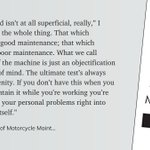
1. Zen and the Art of Motorcycle Maintenance by Robert M. Pirsig (1974). A father and son set out on a road trip across America. A deep, philosophical analysis of man’s search for quality and the fight against the ego.
2. Hackers & Painters by @paulg (2004). A collection of essays by one of the earliest ‘online’ writers. A mix of tech, philosophy and business.
3. The Lessons of History by Will & Ariel Durant (1968). A concise history of the civilization and culture of mankind.
4. How To Make Friends and Influence People by Dale Carnegie (1936). The original, quintessential ‘self-improvement’ book. Wish I read this when I was younger.
5. Zero to One by Peter Thiel (2014). Business meets philosophy. The thinking person’s take on building wealth.
6. Guns, Germs and Steel by Jared Diamond (1997). A comprehensive explanation of the rise of civilization and why the West had some luck. Similar themes to Sapiens by Yuval Harari and Civilization by Niall Ferguson (2011).
7. Endurance: Shackleton's Incredible Voyage by Alfred Lansing (1959). A testimony to the human spirit. Covers the story of the Imperial Trans-Antarctic Expedition led by Sir Ernest Shackleton, in its failed attempt to cross the Antarctic in 1914.
8. The Prince by Macchiavelli (1513). Although it was written as an instruction on how to rule cities and lead armies in battle, most of the lessons are still relevant for leading teams in modern sport and business. Thanks to @lbacaj for the rec.
9. Into Thin Air by Jon Krakauer (1997), who also wrote Into the Wild. A personal account of one of the deadliest seasons on Everest in 1996.
10. The Gulag Archipelago by Aleksandr Solzhenitsyn (1973). A gutwrenching account of the Russian gulags - forced labor camps that existed in the Soviet Union from 1918 to 1956. Important read.
11. Educated by Tara Westover (2018). The story of a young girl that broke free from her anti-education, anti-government Mormon family. It’s about rising above what you and other people think you deserve and believe you are capable of.
12. The Pathless Path: Imagining a New Story For Work & Life by @p_millerd (2022). An inspiring book that sits close to my heart. Paul writes for everyone stuck in the monotony of a corporate career who wishes for a better, more fulfilling, more creative life.
13. A Guide to the Good Life: The Ancient Art of Stoic Joy by William B. Irvine (2008). Irvine gives a comprehensive account of all the Stoic lessons, from Negative Visualization to the Last Time Meditation. Truly a guide to a better life.
14. Man’s Search for Meaning by Viktor Frankl (1946), which depicts Frankl’s life as a prisoner in Nazi concentration camps during World War II, and how he used this experience to help his patients afterwards. They can take everything from you, but there’s one thing they can never take and that’s your attitude.
15. A Swim in a Pond in the Rain by George Saunders (2021). This book makes you fall in love with the classics again and helps you find a new appreciation for the art of writing. I give it a 5/5 purely for his choice of short stories to analyze (written by Russians in the 1800s), his actual analysis, his sense of humour and his understanding of the inner workings of a writer’s mind.
That's a wrap!
I'd love to hear from you - which of these books have you read and are there any other books you would recommend?
If you enjoyed this post, feel free to retweet it so more people can see it.
To close, here's Nassim Nicholas Taleb on why literature is good:
"Fiction is a certain packaging of the truth, or higher truths. Indeed I find that there is more truth in Proust, albeit it is officially fictional, than in the babbling analyses of the New York Times that give us the illusions of understanding what’s going on.
Newspapers have officially the right facts, but their interpretations are imaginary – and their choice of facts are arbitrary. They lie with right facts; a novelist says the truth with wrong facts."
John Nicholas retweeted

A picture is worth 1000 words.
How much is a hand-crafted picture worth?
I've just finished drawing 110 visuals for my book over the past few months. Here's what I've learned in the process...
John Nicholas retweeted
Visuals aren't just pretty, they're functional too. They make your writing more persuasive and impactful.
My friend @john__nic and I are collaborating on teaching folks how to create compelling visuals for their writing.
Check it out here:

Looking for a new creative experiment?
@DSaience and I have partnered up to launch Creating Visuals for Writing — a cohort-based course for people looking to make illustrations for their work, writing or just for fun.
Here’s everything in a nutshell:

John Nicholas retweeted

If you struggle with "whale brain" (the tendency to start out with the heaviest possible version of something), check out John's thread. Whether it's an essay, product, or project, start with the small thing. What is the 1 day version? What is the 1 hour version?
I made $450 in 4 weeks with my video course that helps people create visuals.
The best part?
I built it in less than 8 hours.
It's a proper Small Bet influenced by @dvassallo.
Here's how you can build your own small bets (and why):


John Nicholas retweeted
Vienna for the day.
Still one of my fav European cities - good public transport, plenty of green spaces and incredible architecture.
Highlights here of Schönbrunn Palace, the Rathaus (city hall) & Volksgarten (rose garden in front of the parliament buildings).


John Nicholas retweeted
Writing can be so cruel one minute, and so rewarding the next.
Pulled up an old draft this afternoon, tried to polish it, and realized I had fallen out of love with it (I missed the go-for-it window).
Went for a walk, came back, tried a different angle, now I think it has legs.
John Nicholas retweeted
Funny thing about self-improvement.
You forget how far you’ve come because you can’t remember how it feels to have the problem you’ve solved away.
How can you feel it if it’s no longer there?
John Nicholas retweeted
Last week, I held a workshop for close writer friends on making technical writing engaging and fun.
Whether you write about engineering, law, finance or medicine --
Give yourself permission to write like yourself, no matter what the subject.
Bring your writing to life.
Previously I veered away from telling made-up stories/fables in my writing, always opting for real/lived experiences.
Thanks to @DSaience's Storytelling Science workshop (and feedback from @lathamht + @chinwe_uz) I experimented with a story written for a 6-year-old.
John Nicholas retweeted
Trying something new today.
Summer is finally here and the balcony seemed to invite me to come work outside.
Birds chirping. Slight chill in the air. Taste of fresh coffee. Feels like it's going to be a good day.
John Nicholas retweeted
The Shift to the Creator Economy 🧵
Inspired by @naval
xitter.cf/naval/status/139411738…


John Nicholas retweeted
It's fun to eat cookies, but you know you can't eat them all the time. High sugar levels have bad consequences for your health.
In the same way, we can't consume information junk food the whole time, otherwise we will get "intellectual diabetes". H/t @balajis & @david_perell.