

Spread Your Own Narrative @DeSpreadteam CEO, Co-Founder | Member @safaryclub
metaverse
Joined October 2018
- Tweets2.3K
- Following4.1K
- Followers2.9K
- Likes11.9K








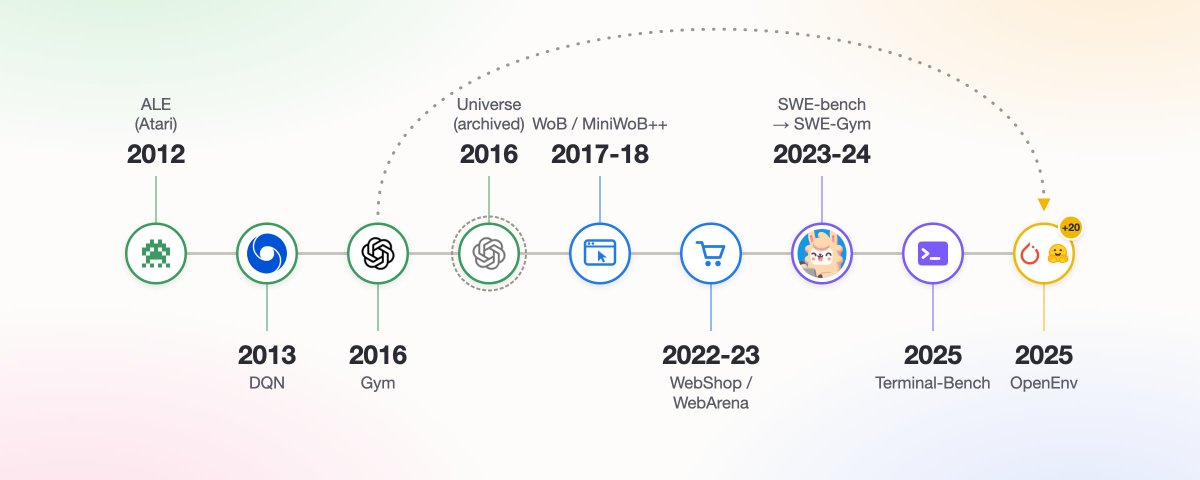
It’s all RL problem. We need only better RL envs and tight evals. If want to solve real life problems, all we need is a more sophisticated RL sim.
Of course, we need to bring a lot more physical data into the RL envs. So where does the moat for VLM and WAM go from here?

Fable 5.2 shows substantially improved skills in controlling physical robots, even on tasks it has never explicitly been trained to do.
On RoboDojo, a benchmark with a simulated two-arm robot, it outperformed other models and most AI systems built to control robots.
1
132
This playbook is valid, but it may be really, really difficult. Sometimes it sounds like it's coming from people who’ve never actually run their own businesses on the ground.
AI is just the tool. The real game is the roll up itself, keeping the clients and key people, extracting tribal knowledge, and integrating without breaking what you just bought.
A lot of boomers still don’t even use a proper ERP. Will they actually adopt AI agents?


3
19
401
컨슈머 에이전트 써보기 Muse / Grok bot / Instinct
@Muse Muse는 친구와 대화하는 느낌이 있고(메타가 잘하는 소셜 + 좀 더 감성적인)
@bot Grok bot은 테슬라 같은 느낌 (기능이 명확하고 업무용에 더 잘어울림)
@noahrshinn Instinct는 아직 브라우저 유즈를 못 씀… 실리콘밸리 vc들끼리 밀어주는 듯 한,,,
Claw/Hermes에 비해 온보딩이 매우 간편. 브라우저 유즈만 많이 개선되면 잡일 시키기 더 편할것 같음. Jev쓰면 더 빠르고 효율적일 듯.


8
22
396


Jasonyeah | DeSpread retweeted

Recently, there have been a lot of impressive demos of AI agents, like Claude, controlling robots.
I wrote a short blog post with my thoughts on the advent of these "robot-use agents."
web.mit.edu/phillipi/www/wri…
I think it's an important change in the trajectory of robotics!
Jasonyeah | DeSpread retweeted

think about what you hear in early stage funding (for equity capital). Venture won't even listen to you unless you say AI.
That is now pushing downstream into the public equity markets (which people will claim is just equity investors losing their heads per usual) but also into the debt markets, as chips and datacenters use debt financing to build out the infrastructure.
Given the degree to which the market is compute starved the datacenter builders will still happily build at higher cost of financing (since their projects pencil so well), and the durability of the nvidia chip values means that so long as they're building nvidia they can collataralize debt against the chips, lowering cost of finance for even more balance-sheet tenuous operators.
I would expect that you will see this cut against high yield at first. After all the debt finance has to come from somewhere, but high yield financing generally sloshes around to where the marginal opportunity lies (and high yield investors are expecting some of their credits spin sideways on roll risk and general business idiosyncrasies.)
That compute will be presented and financed as a more stable more investment-grade-y asset class and so begin competing for funding against corporations and entities that aren't used to such a fierce level of competition is the surprising bit that I expect people aren't really dimensioning or anticipating.
As the annual capital requirements for datacenter build outs scales into the trillions, that becomes meaningful relative to the size of total global corporate issuance.
If AI infrastructure builders can tolerate a higher cost of funding because their projects underwrite better, where does that leave the incumbent stable businesses expecting to roll their credit at a more normal spread.
Of course the base rate matters as well, if real GDP growth inflects as we anticipate (and you can already see the leading indicators that this is going to occur) that should naturally drive long rates higher (even as technological deflation keeps inflation in check.)
Cross the two and very stable businesses that seemed to be chugging along fine could suddenly find themselves starved for inexpensive capital to a degree sufficient to destabilize their operating models.
Be very wary of businesses that claim they can live outside of disruption; we are at a pivot point, and the world is turning.
So bullish on $virtual
- simple BM: @mercor of robotics. Selling high quality teleop data. Solid margins.
- already a key supplier for Unitree.
Imagine it’s going to generate more revenue and be connected to its token.

Been seeing a lot of questions about what Virtuals is doing in robotics and what it means for $VIRTUAL
(1) Building an agent tokenization infra. and ACP taught us something pretty simple: intelligence gets more valuable when you own the data, coordination, and economic rails around it ($$$ is a plus).
(2) Software AI got unbelievably lucky because the internet was basically sitting there as training data, while robotics has no equivalent and physical AI is only getting bigger.
(3) You can't scrape the internet for someone folding a towel with the exact joint movements, force, camera feed, and mistakes a robot needs to actually learn from.
(4) A lot of useful robotics data still has to be created one physical task, one operator, and one failure at a time.
(5) That made us realize the near-term cash cow in robotics isn't necessarily the robot itself, it's the data required to make millions of robots actually useful.
(6) Hence we built @eastworlds_io, became an official data and deployment partner of Unitree, and now operate Southeast Asia's largest Unitree fleet with 35 G1s and H2s, but what matters more is what we're actually doing with the robots.
(7) Our model is simple: deploy robots in the wild, collect what happens, and use that data to train autonomous policies for real commercial jobs.
(8) We currently have robots deployed from hotel cleaning to agriculture, with a much larger pipeline across hospitality, power, and energy.
(9) Every time a robot fails and a human takes over, that correction becomes exactly the edge-case data that is almost impossible to manufacture inside a lab.
(10) And the math is mathing: G1 teleoperation data sells for around $100 to $300 per hour, while UMI/YAM data sells for around $30 to $80 per hour.
(11) We're generating ~200 hours of teleoperation data a week, selling it to labs building on the G1, and training our own single-task policies on it for deployments we already run.
(12) We like the flywheel: Eastworlds can generate revenue from data today while building the dataset and autonomy stack that makes the entire network more valuable tomorrow.
(13) Our thesis is to build this economy vertically first, then progressively bring the capital, incentives, ownership, and payments around that economy back into $VIRTUAL.
(14) And it's important, since there is only $VIRTUAL
For a deeper dive into our progress, @Shoalresearch put together a great read below on Eastworlds, the robotics industry, and much of what we've been building toward.
Jasonyeah | DeSpread retweeted

1/ Stripe has signed an agreement to acquire OpenRouter.
OpenRouter will continue to operate as it is: same name, same product, same roadmap, same mission. But now, we will do it faster, and with Stripe's unparalleled excellence and reach.

OpenRouter is joining Stripe: stripe.com/newsroom/news/str….
As anyone who uses it knows, @OpenRouter is a truly delightful developer tool. It is by far the best way to use new models and manage multiple inference providers.
OpenRouter is also playing an increasingly important role: in the future, every business will have to manage both revenue flows and token flows. OpenRouter is the world's leading token marketplace, helping businesses effectively allocate the new currency of intelligence capital. We think that there's a lot to build together.

이제 세상의 모든 문제는 RL과 루프로 귀결된다,,,, AI 시대에 앞으로 회사가 갖춰야할 것들.
- 모든 비즈니스는 가설 > 실행 > 피드백 > 수정 loop를 거침. 답이 없는 질문에 답을 찾아가는 과정.
- AI는 이 loop에서 실행을 싸게 만드는데 핵심은 단순한 loop 실행이 아니라 피드백과 검증. eval이 중요함.
- 그렇다면 단순히 조직의 워크플로우에 AI를 녹이는 AX를 넘어서서 회사 자체가 무한 루프를 돌며 특정 문제를 검증하고 푸는 구조가 되어야 함.
- Mercor, Surge, Mechanize 같은 요즘 뜨는 RL envs 회사들도 검증하지 못 하던 영역을 검증할 수 있도록 만들기 위해 필요.
- 코딩과 수학처럼 답이 명확한 영역은 이미 AI가 더 잘함. RLVR이 여기서 먼저 통한 것도 답이 정해져있기 때문.
- 남은 건 애매한 주관식의 영역인데 이것마저도 RL을 통해 어느 정도 주관식을 객관식으로 바꿔주는 중. 좋은 디자인, 좋은 콘텐츠를 정하는 taste 영역이 해결되는 건 시간 문제.
- 그렇다면 남은 건 객관식으로 바꿔도 검증이 어려운 영역인 현실의 문제들(제조업, 로봇, 과학, 의학 등). 여기서 넥스트 OAI, 앤트로픽이 나올 것.
- 앞으로 모든 회사들은 AI를 활용해 주관식 질문을 객관식으로 풀고 그 검증을 빠르게 돌릴 수 있어야 함. 회사 안에 RL envs와 루프 시스템을 갖추어야함.

The future of FDE work seems closely related with all work around evals/posttraining/RL envs.
FDEs are effectively responsible for the following:
1. Define the business problem.
2. Codify the business problem into an eval rubric and environment.
3. Hillclimb the environment and output an agent/agentic workflow that solves the business problem.
Right now the process of (3) is quite manual - historically FDEs spend hundreds of hours creating bespoke software/workflows that solve the problem.
But assuming intelligence is abundant, they can effectively offload (3) to some automated optimization process. This includes RL on the model layer, and using Claude Code/Codex to optimize the harness/workflow.
Then the FDE responsibility shifts from implementing the task to defining the right goals and outcomes. In other words, they have access to /goal, and their job is more around making sure the goal, environment, and evals are correct vs. the tactical implementation details.
4
17
459


Is this when Koreans ditched crypto for memory stocks?
AI is a massive wave draining all the talent and capital out of crypto


11
30
459
Now agents can directly access data with Korean mindshare, KOL leaderboard, market oracle(Kimchi premiums, K-stocks volumes, etc)

Launched 3ridge CLI!
Agent-native tool that gives AI agents direct access to 3ridge's data.
Korean mindshare, KOL leaderboard, market oracle(Kimchi premiums, K-stocks volumes, etc)
All queryable from your terminal or your AI agent.
9
33
568

Jasonyeah | DeSpread retweeted

It is hard to communicate how much programming has changed due to AI in the last 2 months: not gradually and over time in the "progress as usual" way, but specifically this last December. There are a number of asterisks but imo coding agents basically didn’t work before December and basically work since - the models have significantly higher quality, long-term coherence and tenacity and they can power through large and long tasks, well past enough that it is extremely disruptive to the default programming workflow.
Just to give an example, over the weekend I was building a local video analysis dashboard for the cameras of my home so I wrote: “Here is the local IP and username/password of my DGX Spark. Log in, set up ssh keys, set up vLLM, download and bench Qwen3-VL, set up a server endpoint to inference videos, a basic web ui dashboard, test everything, set it up with systemd, record memory notes for yourself and write up a markdown report for me”. The agent went off for ~30 minutes, ran into multiple issues, researched solutions online, resolved them one by one, wrote the code, tested it, debugged it, set up the services, and came back with the report and it was just done. I didn’t touch anything. All of this could easily have been a weekend project just 3 months ago but today it’s something you kick off and forget about for 30 minutes.
As a result, programming is becoming unrecognizable. You’re not typing computer code into an editor like the way things were since computers were invented, that era is over. You're spinning up AI agents, giving them tasks *in English* and managing and reviewing their work in parallel. The biggest prize is in figuring out how you can keep ascending the layers of abstraction to set up long-running orchestrator Claws with all of the right tools, memory and instructions that productively manage multiple parallel Code instances for you. The leverage achievable via top tier "agentic engineering" feels very high right now.
It’s not perfect, it needs high-level direction, judgement, taste, oversight, iteration and hints and ideas. It works a lot better in some scenarios than others (e.g. especially for tasks that are well-specified and where you can verify/test functionality). The key is to build intuition to decompose the task just right to hand off the parts that work and help out around the edges. But imo, this is nowhere near "business as usual" time in software.


Check the Korean TG mindshare on Perp Dex
All views, engagement, KOLs,
@HyperliquidX @Lighter_xyz @Aster_DEX @edgeX_exchange @variational_io @BasedAppHQ @grvt_io @pacifica_fi @vooi_io @Backpack @ostium @GTE_XYZ

