

🎓 Doctoral Researcher, Net Zero Observatory | 🌱 Member of @GreenpeaceAP’s General Assembly | 🌏 @ClimateReality Leader
Brisbane, Australia
Joined March 2009
- Tweets3.2K
- Following1.1K
- Followers1K
- Likes782






Pinned Tweet
🌍🔥 These warming stripes represent the Earth's average temperature from 1850 to 2024.
The pattern couldn’t be clearer, climate change is here, and it’s accelerating.
Today is #ShowYourStripes day. Let’s show the stripes and commit to taking action on climate change.

Jarren L. Nylund retweeted

This is not a string of bad coincidences. It’s what happens when fossil fuel pollution drives a hotter, more dangerous world. Fossil fuel companies keep cashing in, while communities across continents are left with the fires, the floods, the devastation, and the bill.
When climate protesters use disruptive tactics, does it matter who is disrupted?
I’m excited to share my second lead-author publication, “Disrupting the ‘Wrong’ Target?”, now published in the Journal of Environmental Psychology (@JEnvPsych).
📄 doi.org/10.1016/j.jenvp.2026…

ALT A picture of the first page of the “Disrupting the "wrong" target? Climate protest tactics affecting entities deemed undeserving are perceived as immoral, unjust, and reduce activist support” article in the Journal of Environmental Psychology, by Jarren L. Nylund, Matthew J. Hornsey, Michael Thai, and Maja Kutlaca.
These findings suggest that who is affected matters alongside how a disruptive climate protest is carried out. Choosing targets carefully—and clearly communicating why they bear responsibility—may help climate activists minimise public backlash.
A big thank you to my co-authors Matthew Hornsey (@UQ_Business), Michael Thai (@DrMichaelThai), and Maja Kutlaca (@DurhamPsych) for their contributions and collaboration throughout the project.
doi.org/10.1016/j.jenvp.2026…
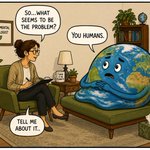
This is what I imagine people think I do when I tell them I’m studying to become an environmental psychologist…
(For the record, environmental psychologists don’t provide therapy to the environment. Although, to be fair, the Earth could probably use some talk therapy too.)
🤖 Made with AI

ICYMI, we’re now living in a timeline where Batman and Catwoman exist, and they like to do banner drops from the Empire State Building.
I’ll be honest, I was more hoping to be in the Marvel Universe, but I guess DC will do.

What would the Sydney Opera House look like illuminated with Sydney’s warming stripes?
This image may not be real, but the data behind it is: ShowYourStripes.info
#Sydney #Australia #ShowYourStripes
🤖 Made with AI

Today is #ShowYourStripes Day, a global initiative created by climate scientist @ed_hawkins to start conversations about climate change through data visualisation: ShowYourStripes.info
Show your stripes, share the message, and help start a conversation about our warming world: ShowYourStripes.info
Jarren L. Nylund retweeted

Today is #ShowYourStripes day!
This year, St Michael's Tower atop Glastonbury Tor is encouraging everyone to use the Climate Stripes to start a conversation about climate change and the actions they are taking.
Thank you @nationaltrust!
Graphics: ShowYourStripes.info
Jarren L. Nylund retweeted

Claude Fable 5 (nee Mythos) is out today. One of the ways I like to test new models is by giving them daily global temperature data (ERA5) and asking them to come up with some creative and compelling visualizations. Here is how Fable did!

Sign the #30by30 petition calling on Treasurer @JEChalmers to invest AT LEAST 1% of Australia's budget in nature: 30by30.org.au/1-for-nature/
Jarren L. Nylund retweeted
Spiralling global temperatures (1850-2026)
It is exactly 10 years since I first put this animated graphic of changes in global temperature online. #ClimateSpiral
It instantly went viral.
People watched it over and over again.
It still offers the power to shock a decade on.
After quite a bit of uncertainty about whether it would actually happen—largely due to the ongoing conflict in the Middle East making travel difficult—I’m pleased to announce that I’ll be presenting (remotely) at the AFPP 2026 conference in Manchester next month.

We found that disruptive tactics directed at targets perceived as undeserving were judged as immoral and unjust, provoked greater anger at activists, and reduced activist support compared to actions targeting entities seen as more responsible for the climate crisis.
Highlights the importance of target selection in forming public responses to climate protest.
📄 Read the preprint: doi.org/10.31234/osf.io/f7vy…
📅 Register to attend AFPP 2026: eventbrite.co.uk/e/alternati…
