


Marketing mattered because humans have limited time and energy to evaluate products. So we leaned on heuristics like “this brand is trustworthy” or “I’ve seen this somewhere.” Pour enough into convincing an exhausted human your brand is great, and most will just buy. It was an era when gaslighting worked. Hence Marketing 101: the ultimate goal of a business is to build a brand.
But soon most purchases will be decided by personal agents, with near-infinite energy and rationality. Marketing to humans loses much of its meaning. The agent just picks whatever best fits its principal’s taste and makes the most sense. Positioning and product quality will matter far more.
So “AI made coding easy, so distribution matters more now” may be thinking only one move ahead.

Assorted things I've been mulling over regarding agents in the economy:
• Companies are in some sense the original superintelligence. It's often the case that they can use their amortized cognitive surplus to advance their interests against those of certain consumers: relative to the optimization capacity of companies, consumers can be inattentive, underinformed, irrational, etc. (Think, say, of some of the classic insurance upsells at the end of a booking process, which is typically priced substantially above what a regular policy would cost.) Herbert Simon introduced the idea of bounded rationality, and firms often end up benefiting from it. Thanks to personal agents, we will probably get somewhat more rational in how we engage with companies.
• How exactly will outcomes change? Well, certain kinds of price discrimination will work less well (how do coupons work if every agent hunts fastidiously for them?), and certain kinds of customer cross-subsidy will change (today, people who forget to cancel subscriptions subsidize those who don't). Taken across the economy as a whole, I'm not sure what the incidence of all of this will be.
• In corporate strategy, people have long debated the relative importance of distribution and product quality. Perhaps you've made something better, but does anyone know about it? Won't people just continue to buy the ACME Corp Mousetraps? Personal agents will, I think, act as a kind of structural subsidy for product quality. How would markets look different if individuals always spent at least 10 hours researching their purchases? On the margin, focusing on making a product better is, I think, going to become a more effective strategy for companies. This is good!
• It true, a corollary is that information about product quality will become more important and impactful. Today, most people have very limited ability to aggregate and integrate such data, but agents will have insatiable thirst for such signals. (It's often said that data is becoming more valuable because it helps in the training of models. That's obviously true, but I think there's a secondary way in which it's more valuable simply as a complement to cheaper intelligence.)
• A big question is whether agents will increase superstar effects (rational agents all settle on the same product) or increase dispersion (because everyone has slightly different tastes and preferences, which agents are good at eliciting, finally overcoming the artificial clustering we've been subjected to).
• Many internet companies have monetized demand routing, which is in turn often predicated on short attention spans. "I'll click on the first thing I see." This has led to some amount of inefficiency, as companies try to propitiate capricious ranking algorithms and incur various placement fees. It's not all deadweight loss (willingness to pay is itself a kind of signal, which is valuable to buyers), but it's not great. How will the nature and value of this routing change in a world of personal agents? I don't know the answer, but I think that the effects might be pretty big.
• Much of what I'm writing hinges on the assumption that personal agents will be on the consumer's side. I suspect that that will be the winning strategy, but whether it's true, and what it means to be true, involves a lot of other questions.
Taken as a whole, the market is a massively parallelized, decentralized, and highly imperfect value attribution machine, and, taking stock of all of the effects, it seems to me that the quality point may well be the biggest: that agents will change the nature of the backpropagation such that the rewards for better products increase. Maybe this is too optimistic, but I suspect (and hope) that companies that make things that they're proud of will feel that the universe is a little more partisan in their favor.


interesting.

As engineering, product, design, DS, etc. melt into a new kind of role, I was reflecting on what roles might look like in the future. For example, when I look at the Claude Code team I see what I think is five archetypes:
1. Prototyper: comes up with brand new ideas; churns out many ideas, most of which don't ship
2. Builder: quickly turns a prototype/idea into production-grade product/infra
3. Sweeper: cleans up the UI, simplifies the code and system, unships, optimizes performance
4. Grower: takes a product that has been built and iterates on it to improve Product-Market Fit
5. Maintainer: owns a mature system to make it secure, reliable, fast, and efficient as it scales
Many people span across 2 roles, and sometimes 3 roles. I also notice that these roles are not really tied to job function -- eg. across Anthropic, some designers match category 1, some 2, some 3; same for engineers, PM, DS.
A healthy team needs a mix of these, depending on the product:
- A product that is new and pre-PMF needs people that are strong at 1+2+3
- A product that is growing and has found PMF needs 2+3+4 and some 5
- A product that has strong PMF needs 3+4+5 and some 2
Maybe product roles of the future will look more like this, and less like the domain-specific roles of today?
jared retweeted

Introducing the Fusion API, the smartest compound model in the market.
Fusion achieves Fable-level intelligence at half the price.
How it works 👇



jared retweeted

Tune in to our upcoming AMA with @DCENTwallets and @SuperEarnX to learn how we're making Web3 more accessible and why self-custody matters.
Bonus: Live attendees get a $10 GasPass! See you there. 👇

D'CENT x @KaiaChain AMA + GasPass Giveaway
🎁 $10 GasPass for EVERYONE who joins live
📅 APR 10, 10 AM UTC
📍xitter.cf/i/spaces/1RKZzjDMAowKB
We’re talking:
Gas-free USDT, how users earn through Kaia, and why self-custody matters.
🎤 Speakers
· @Tani_9325, D’CENT Wallet
·@auloap, Kaia
· @jaredearn, @SuperEarnX
🎁 $10 GasPass for ALL participants
→ Join the AMA
→ Submit the Google Form (shared LIVE only)
Stay tuned!

jared retweeted
Deposit via @unifi_x and earn up to 8% APY for a limited time!

🎉 Unifi Launch Celebration Event
✨ The stablecoin wallet that earns you money, “Unifi” ✨
Whether you’ve already joined Unifi or haven’t started yet — everyone can participate!
🔥 For a limited time only
💰 Earn up to 8% annual Interest when you Deposit USDT
Interest that grows day by day, and a higher USDT Interest Rate as your Deposit amount increases! 📈
Haven’t started using Unifi yet?
Sign up now and earn up to 8% Interest for a limited time.
Already Depositing USDT?
Increase your Deposit amount and earn a higher Interest Rate! 💸
👉 lin.ee/PYLqc0K/qbko
#Unifi #LINENEXT #Stablecoin #USDT



jared retweeted

Great to see the launch and early traction of @KaiaChain and @SuperEarnX
Kaia's yield engine allocates to our Prime, Core (Balanced), and Frontier @Morpho Vaults on @ethereum, bringing sustainable DeFi yields to everyday users.
Read more about the integration below.

Please join our early beta!

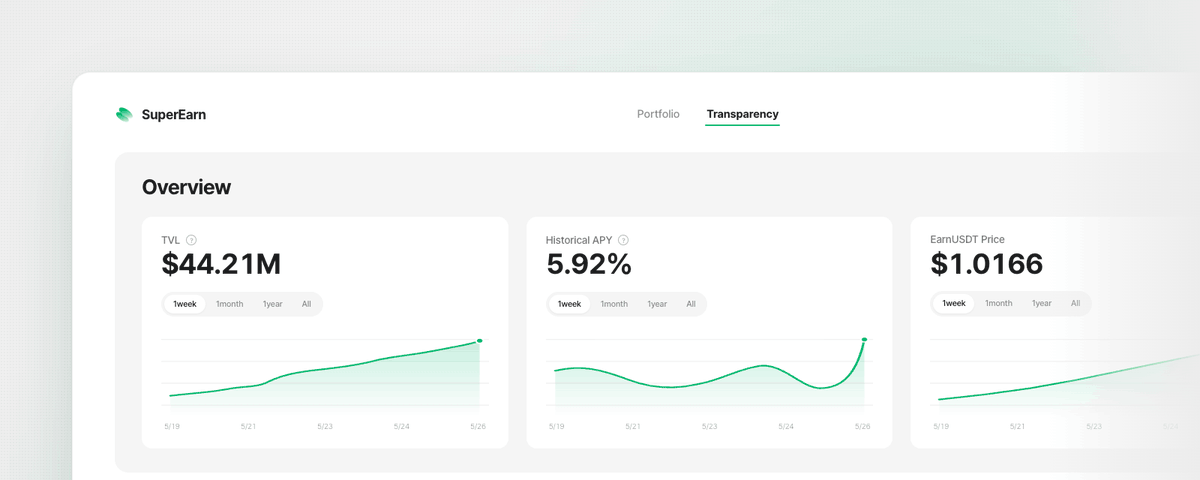
1/ SuperEarn Early Beta pre-deposit is live.
Introducing SuperEarn, a stablecoin yield orchestration protocol on Kaia.
Join the ride now: start.superearn.io/4oBEQ9T
👇 Check the thread — full post also attached in Paragraph.
paragraph.com/@superearn/int…

youtube.com/watch?v=aR20FWCC…
Some interesting points about building AGI. It’s refreshing to listen to things like this while eating.
1. The importance of a value function is similar to emotions in humans.
- There is a case of a person who became unable to make decisions after the emotional part of the brain was removed, showing that emotions play a major role in good decision-making and essentially act as a value function.
- Humans learn extremely fast because we have a good value function, especially compared to traditional reinforcement learning.
- Simply scaling current models will not lead to AGI.
2. Looking deeper into value functions, humans being good at coding or math cannot be explained solely as the product of evolution or pre-training. There is something foundational we have, especially high-level concepts such as the will to learn or curiosity, as well as the algorithms that make us good learners.
- This is different from smelling good food and wanting to eat it, which is a very low-level chemical signal to the brain. Doing math, including the will to do it, or interpreting social signals is an extremely complex process.
3. AGI is not an end state that already knows everything. It is more like an extremely smart fifteen-year-old with a strong value function.
Personal thought is that for humans, a good value function is essentially good judgment or good taste. It is interesting that this is tied to emotions.
Just watched a podcast mentioning the anterior midcingulate cortex, the brain area that activates when you do things you don’t like (e.g. lifting weights every day). If you keep doing it anyway, that region literally grows - building resilience, stress tolerance, and willpower.
I’ve always believed in doing what I enjoy and feel curious about, like @naval often says. But maybe that’s just an one side of productivity.
Interesting things fuel creativity, but progress may comes from doing what you don’t feel like doing. Ironic, but true to reality.

Attended AgentPay Summit 2025 during #SFTechWeek . Lots of exciting AI x Crypto use cases emerging around AI agents, especially in payment infrastructure. Many non-crypto attendees were present, which really shows that stablecoin adoption is becoming real.


Interesting to see @ycombinator discussing crypto especially the stablecoin opportunity as Fintech 3.0

We are entering the era of Fintech 3.0.
Regulatory clarity, growing consumer adoption, and low-cost chains have paved the way for a golden age of building in crypto — and at YC, @base and @coinbase we want to fund builders to seize this moment.
@harjtaggar and @jessepollak sat down to discuss what kinds of companies they're most excited to see, why this is such an exciting time, and what the future could look like onchain.
00:00 – The Golden Age of Crypto
02:00 – Jesse’s Path to Coinbase & Base
04:00 – From Fintech 1.0 to Fintech 3.0
07:00 – Why Lowering Costs Changes Everything
10:00 – L1 vs. L2, Simply Explained
13:00 – How to Build Your First Crypto App
16:00 – Regulation: Bottleneck or Unlock?
19:00 – Stablecoins as the Killer Use Case
23:00 – Beyond the Dollar: Local Stablecoins
27:00 – Tokenization of Assets
31:00 – New Asset Classes & the Creator Economy
35:00 – What Coinbase Looks for in Founders
39:00 – The Future of Crypto in 10 Years