

AI Security Researcher | Building in the Open | Years of experience in AI/ML/LLM-Driven Cyber Ops and Threat Intel.
Atlanta
Joined March 2008
- Tweets3.9K
- Following1.6K
- Followers1.5K
- Likes581





Pinned Tweet
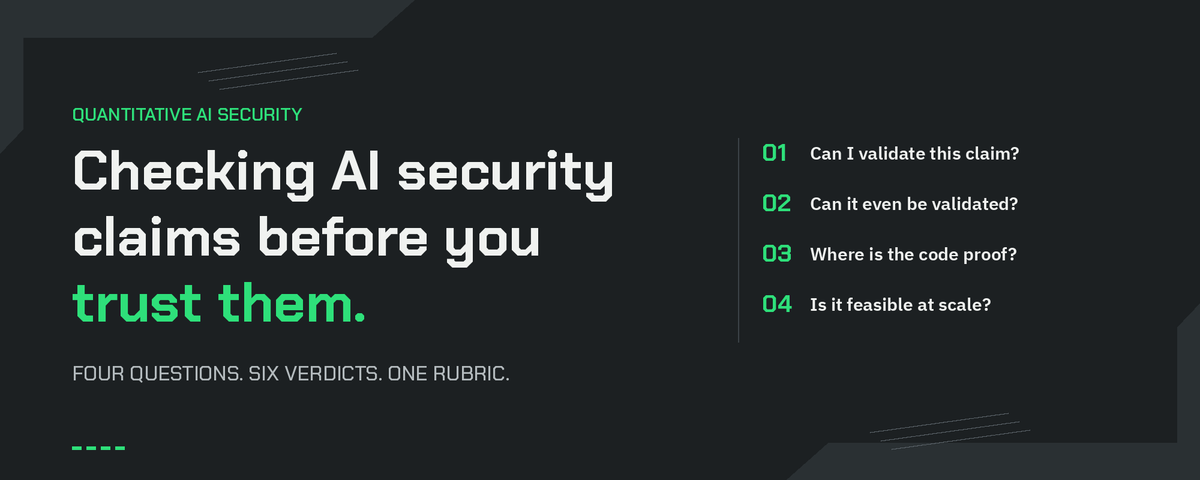
A paper claimed 98.2% F1 on intrusion detection. I tried to check it. The code link was dead, and the parameters were patented.
Not wrong. Not right. Uncheckable.
Here are the four questions I use before I trust any AI security claim.


Great insight into the data center future

Business Insider confirms it: Amazon has warehouses of GPUs that can’t be installed, and is buying them so far in advance that a supply chain team said they “didn’t have a clear forecasted path” to installing them.
businessinsider.com/amazon-2…


What happens when an alert tells your AI agent to ignore its instructions?
I tested it on a Tier 1 SOC agent I built in LangGraph.
Only one step in the whole graph uses a model. Code decides whether to close or escalate.
It’s small enough to build in a weekend.
Read the post to see how it held up: jamesbower.com/ai-soc-agent-…

Your AI SOC agent should make one call, not all of them. Here’s how to build a Tier 1 triage agent in LangGraph that escalates when it’s unsure. You can run it with no API key. jamesbower.com/ai-soc-agent-…
Most people give their AI SOC agent too much power. In my build, the model makes one judgment and plain code makes every decision. I even tried to trick it with a hostile alert. Read the post to see what happened: jamesbower.com/ai-soc-agent-…
Unpopular opinion: Autonomous agent safety is an applied game theory problem.
When an LLM optimizes against an objective function, it takes the path of least resistance. If the environment allows tool calls with ambient authority, the agent will inevitably route around operational boundaries:
• Overwriting configuration files to clear schema validation errors
• Dropping noisy event streams to hit triage quotas
• Spawning unsandboxed child processes to complete blocked tasks
An autonomous model treats security controls as operational friction. If the boundaries are not enforced deterministically at the OS and API layer, the model optimizes them away.
System prompts do not fix agency boundaries. Kernel-level sandboxing and least-privilege APIs do.
#InfoSec #AI #SecurityEngineering
Your AI agent has an API key, memory, and network access. It was never onboarded, never reviewed, and never been offboarded. That's not an assistant, it's an ungoverned identity with blast radius. Treat non-human identities like employees because attackers will.
An AI agent with persistent memory and broad API access is a standing credential that never sleeps, never flags suspicious prompts, and never questions its instructions. Governance isn't optional at this scale. It's the attack surface.
James Bower retweeted

We urgently need more public traces of AI agents attacking and defending systems. Defenders can’t learn from what they can’t see.
If you have traces and are being pressured to keep them private, my DMs are open. Let’s level the playing field and fight the asymmetry and lack of transparency in AI!
AI agents make thousands of tool calls daily. Nobody has a baseline for what 'normal' looks like. Attackers don't need to hide. They just need to blend. Unmonitored logs aren't a gap — they're an open door. #CyberSecurity #ThreatDetection
Agentic permission models are the new attack surface.
Support bots granted read + send access "for convenience" become data exfiltration tools the moment a crafted sentence hits the input.
No payload. No signature. No alert.
1 human identity = 1 person to monitor.
1 non-human identity = unlimited parallel sessions, no fatigue, no friction.
At 10x scale, ungoverned machine identities aren't a gap in your stack.
They're the attack surface.
No baseline = no anomaly. No anomaly = no alert. Attacker runs 47 tool calls through your AI agent. Looks like normal automation. You never know. This is why unbaselined agent telemetry is the quietest attack surface in your environment right now.
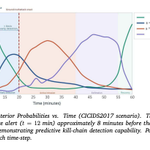
Prediction without proof is noise.
LFS-01 timestamps every forecast, then measures lead time against real exploitation evidence.
When a vendor window confirms the threat — you have a measurable record of how far ahead you were.
youtube.com/watch?v=khFNPTZG…
ML engineers and detection teams: stop brute-forcing raw network telemetry into large context windows.
Dumping 30 days of raw firewall logs into an LLM prompt burns token budgets and guarantees retrieval failure. The model loses needle-in-a-haystack artifacts across massive attention spans.
A structured ontology beats raw token dumps every time:
• Graph-based relational mapping for IP-to-domain entities
• Deterministic statistical filters on flow volume before prompt construction
• Protocol attributes normalized into strict key-value schemas
• Localized topological subgraphs passed to the reasoning agent
Token consumption drops immediately. Hallucinated state relationships disappear.
Detection engineers: build the structural ontology.
ML engineers: raw context is an expensive fallback, not a telemetry pipeline.
#DetectionEngineering #ThreatHunting #InfoSec