




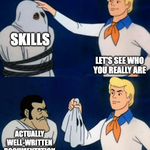


I like how smaller PRDs and docs are now signals that someone spent some time thinking about what needs to be said vs writing a 30 word prompt that outputs 1000+ words

Impressing Spanish speakers with my 1st grade level Spanish makes my day every time.
¿Hablas Español!?
Uhhh si un poquíto
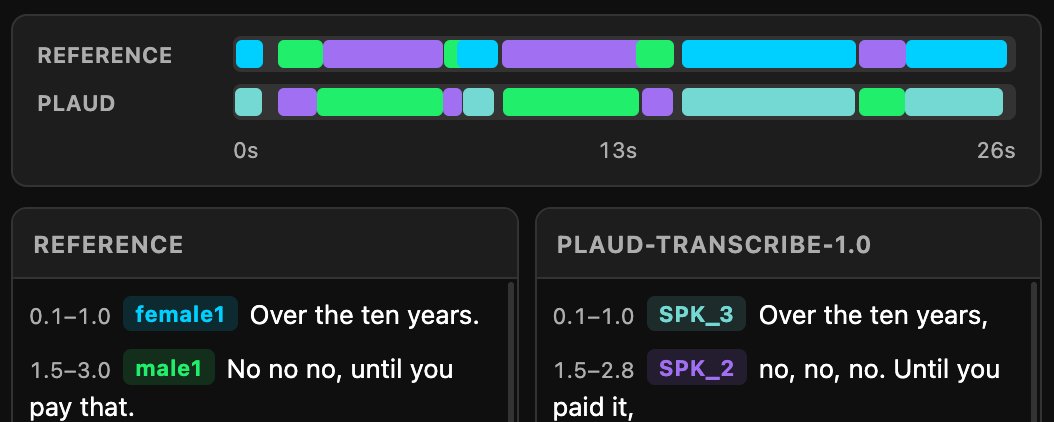
A little self-congragulatory, but makes sense when we think about the training and test sets we used ¯\_(ツ)_/¯



It wasn't until working on mobile, that I learned you can just build native mobile apps from web apps. There's React Native that feels familiar to web dev, but @capacitorjs actually bridges pure web apps with native platforms.
We built it out on Plaud Embedded's mobile SDK, so you can now integrate Plaud devices from mobile apps or web apps :o


Jack Mu retweeted

Hardware has always been a dream of ours @BuildBetterAI, and partnering with @PLAUDAI felt like a natural fit.
Excited for BuildBetter to be one of the first partners helping B2B teams use their Plaud to record IRL meetings w/ Customers and Teams synced back to their BB Customer + Sales Knowledge base for everyone to have access too.
Plaud Embedded is now generally available! Today, any vertical software team can add real-world conversation capture into their product, no hardware or transcription infrastructure to build. Get started at dev.plaud.ai
For the past couple months I've been working on Plaud Embedded, a set of SDKs and APIs for AI Voice apps to integrate with Plaud devices and transcription models.
Before joining Plaud, I forgot how powerful hardware-software integrations could be. It's been really fulfilling to open our technology up for our partners and future builders
Plaud Embedded is now generally available! Today, any vertical software team can add real-world conversation capture into their product, no hardware or transcription infrastructure to build. Get started at dev.plaud.ai
After switching to ghostty, i realized i never even used tmux for the persistent sessions. I just liked the hotkeys for tabs and splits.
I just went ahead and uninstalled it
I think the "search" use case for agents is incredible. And I think it can be even better, especially for data that live in 3rd-party sources like Notion or Slack.
I've been building a "sync and search" engine for agents for the past couple months, and it's inspired by a lot of you guys that I follow on X!


A pattern I've been liking for building with AI is:
1. Built a set of abstractions and interfaces for an agent to scale out
2. Built a skill teaching the agent about my abstractions
3. Instead of coding, I just write specs that make it easy for an agent to use the skill and build with the abstractions I provided
It's really nice because I can scale features predictably AND I don't feel like I've lost understanding of the codebase
Here's an example:
1. abstractions: github.com/jackmuva/stonetur…
2. skill: github.com/jackmuva/stonetur…
3. spec: github.com/jackmuva/stonetur…

Getting a haircut by korean women is the best. You’re getting a haircut, a massage, and a wash. But you’re also getting roasted for how you’re hair is, a tutorial on how you should style it, and an upsell pitch to perm your hair
It’s great value for 45$
I'll admit, I'm a very slow adopter when it comes to AI and coding. But a workflow I've really found to like is:
1. Start with hand coding a solution (It's slower but it give me time to think about the problem)
2. Hand code a few iterations (Let's me think about the right patterns and abstractions
3. Writing the patterns and abstractions in a Skill or just a md file
4. Let an agent run with it
It's a fun balance of understanding the problem, giving it thought, and then letting an agent take over with the repetitive work once standards are established
Climb is called “Tipi da saletta” - apparently it translates to “types who hang out in the back room.” I like that


