

Product at Nethermind! | Professor at Duke! | Exploring the intersection of distributed compute, cryptography, and finance. | BanklessDAO OG
Joined December 2014
- Tweets5.2K
- Following3.1K
- Followers1.7K
- Likes43.7K











Do not outsource your thinking, your understanding OR YOUR VOICE.
Generally if I read claudish, I immediately deprioritize what I’m reading, as I don’t feel the writer has their own understanding or is respecting my time.

I personally find this intolerable. Hearing the same voice everywhere, under different faces, is maddening.

3
120
Computer scientists and true engineers I believe will be deeply valuable.
Coding as a skill set though is being replaced in the same way that computers replaced computers(the human kind).
There will always be a place for people to code, just a trade off in overhead and speed.


65
Deeply important to keep in mind as AI expands and IT solutions become common place, rather than rare due to the development overhead.
Saas as a business model must adapt, and so to must workers.
Addiction as a service hopefully is over.
Now the value is in true utility.


1
66
Excellent site.

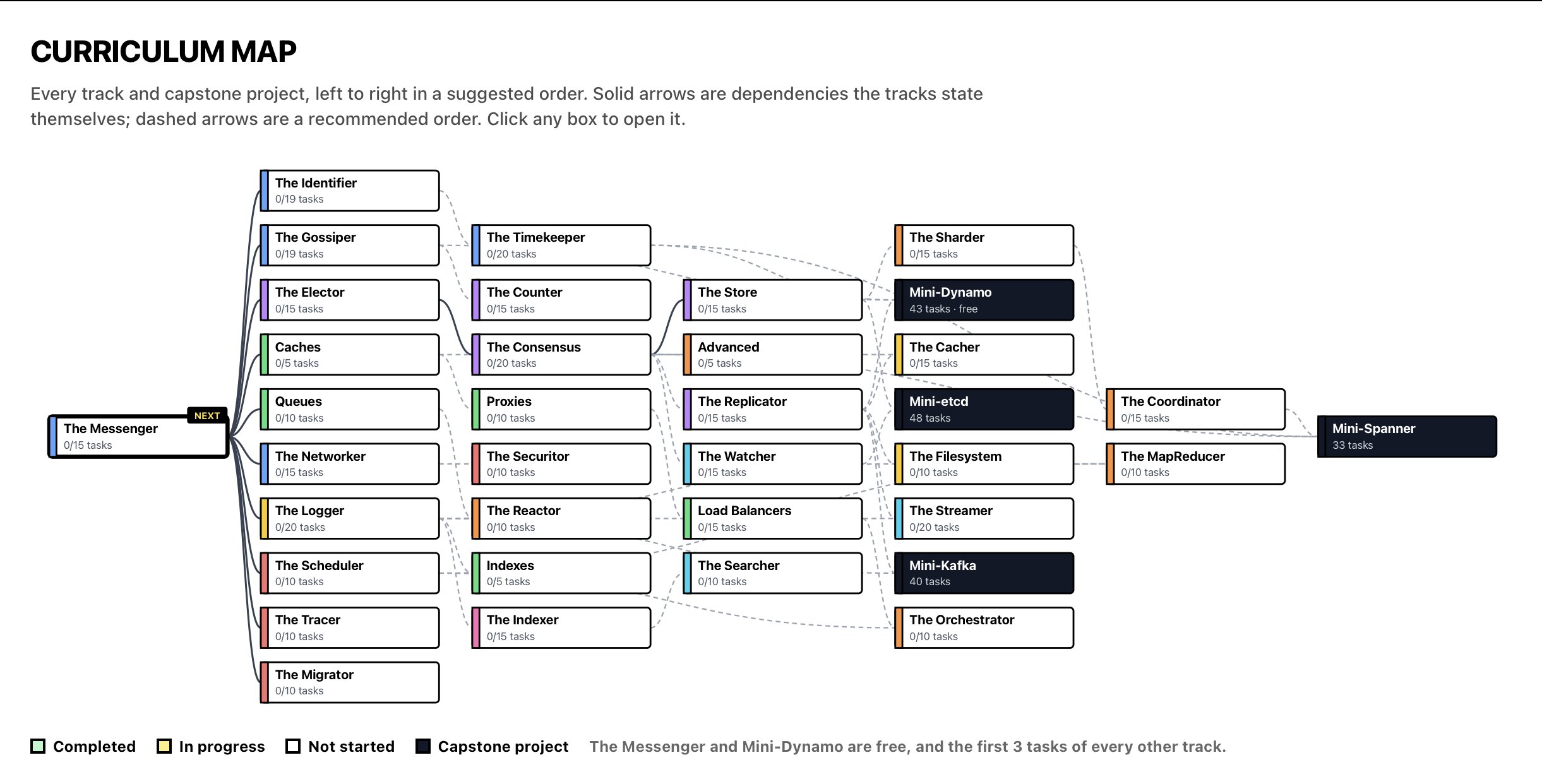
Building Distributed Systems from Scratch
Every track and capstone project, left to right in a suggested order. Solid arrows are dependencies the tracks state themselves; dashed arrows are a recommended order.
Link: builddistributedsystem.com/r…
89
Really excited for this and for the team building it!

We’re excited to announce that Null has raised $1.7M in pre-seed funding led by @cyberfund and @Nethermind, and angels @NoahZinsmeister, @sendmoodz and @oel4all.
Null is coming out of stealth soon!

6
228
Super impressed with this.
I’ve introduced RPCs to my students in class, and shown them how operating a node works, but had to limit it due to overhead.
Now every student will run an RPC locally.

𝗜𝗻𝘁𝗿𝗼𝗱𝘂𝗰𝗶𝗻𝗴 𝗡𝗲𝘁𝗵𝗲𝗿𝗺𝗶𝗻𝗱 𝗟𝗶𝗴𝗵𝘁 𝗖𝗹𝗶𝗲𝗻𝘁
Trustless RPC for every wallet.
Verify Ethereum yourself, without running a full node.
𝗛𝗼𝘄 𝗶𝘁 𝘄𝗼𝗿𝗸𝘀
→ One trust anchor: a recent finalized beacon block root
→ Consensus: sync committee updates over libp2p, with signatures and Merkle branches verified
→ Execution: state on demand through SNAP, every range proven against the state root
→ Performance boosted through partial state caching for selected and frequently queried accounts.
𝗕𝘂𝗶𝗹𝘁 𝗼𝗻 𝗯𝗮𝘁𝘁𝗹𝗲-𝘁𝗲𝘀𝘁𝗲𝗱 𝗡𝗲𝘁𝗵𝗲𝗿𝗺𝗶𝗻𝗱 𝗰𝗼𝗺𝗽𝗼𝗻𝗲𝗻𝘁𝘀
→ eth_call and eth_estimateGas run locally in the Nethermind EVM, nothing forwarded
→ Developed inside the Nethermind client codebase
→ Glamsterdam-ready
𝗙𝗼𝗿 𝘆𝗼𝘂, 𝗶𝘁’𝘀 𝗷𝘂𝘀𝘁 𝗹𝗼𝗰𝗮𝗹𝗵𝗼𝘀𝘁:𝟴𝟱𝟰𝟱
Point MetaMask, or any wallet, at it.
In active development. Congrats @__flcl and the team.
Follow the progress and share feedback:
github.com/NethermindEth/net…

3
155
Large scale private llms are incentivized to provide the lowest quality compute at the highest cost to users.
Since we don’t have a general standard of measurement they can degrade the quality of intelligence without any clear indicators other than frustration at the output.
1
1
183
Is it me, or is claude again somewhat garbage?
It seems like it's context is getting overloaded from anthropic.
1
120
Stay safe out there, and patch your servers!

‼️ BREAKING: OpenSSH has rushed out a fix for a critical flaw that lets attackers log into some Linux servers without the right password.
The team learned of the bug a day earlier. OpenSSH's Damien Miller says long embargoes now mostly help attackers, because AI agents rediscover bugs, sometimes within hours.
It hits Linux systems on the musl C library with PAM off, such as Alpine Linux. Miller told admins to disable password logins or SSH itself "IMMEDIATELY".
Version 10.6p2 works around it. Systems on glibc or PAM are not affected, and Miller says the root cause sits outside OpenSSH.


78
Super excited to join!

Privacy is a serious design requirement for institutional Ethereum.
On Oct 22-23, @RedoudouM joins:
> Kaushal Vyas (@eth_systems),
> Rob Dawson (@Consensys),
> John Church (@Nethermind)
> Vivek Raman (@Etherealize_io)
..for the Building Ethereum panel at @lfdecentralized's NYC workshop, moderated by Johnna Powell (@DTCC).

5
211
Was inspired so took a swing.
niwa-jade.vercel.app/

Made with Opus 5.5 + Three.js
water-opus.vercel.app/
the water physics, the fish, blossoms... why is this soo pretty 😭😭
2
95
Wouldn't all validators be hacked, because even if you can save your tokens, the validators still have to attest, thus exposing them?
So consensus would break?

Today I call upon the blockchain industry to calmly begin planning for "bunker mode". My personal recommendation is to set in motion a controlled mass migration of assets to fresh addresses, i.e. addresses whose pubkeys remain hidden behind a hash.
Holders, starting with large and sophisticated ones, should consider moving the bulk of their funds to addresses that have never signed a transaction. And when they do sign one, they should also move remaining funds to a new address (possibly generated from the same seed phrase).
Don't rush. While I believe there is cause for action a rushed migration would do more harm than good. Don't panic either. Moving assets to protected addresses is a simple, preventative step which does not require new cryptography or new wallets.
IMO it is now reasonable to brace for the possibility that ECDSA breaks before qday, in the worst case in months not years. By "break" I mean fast private key recovery (e.g. in one week) on available hardware (e.g. a large GPU cluster).
Recent days have been humbling for human mathematical intuition. Long-held, unquestioned hypotheses have fallen. This includes the n log(n) bound for integer multiplication and the 3SUM conjecture. In hindsight, May's unexpected disproof of the Erdős unit distance conjecture was our warning shot.
Yesterday's OpenAI drop made it clear that mathematical superintelligence is upon us. They say there are weeks where decades happen. We are about to live through weeks where centuries of mathematical progress happen. Could our magic 64-byte ECDSA signatures be too good to be true? Was it just security through obscurity all this time?
Elliptic curves feel especially vulnerable to superintelligence. Curves carry rich structure, with room for fancy tricks like Schoof, Frobenius, pairings. (By contrast, hashes are designed to minimise algebraic structure.)
Separately, as Ewin Tang can attest, an efficient quantum algorithm sometimes foreshadows an efficient classical one. We should be open to the possibility of a classical counterpart to Shor that breaks elliptic curves and RSA at once.
Also noteworthy is the striking under-representation of cryptographic breakthroughs among the 722 mathematical results OpenAI published. I've witnessed first-hand the US government censoring academic quantum cryptanalysis results. Backroom interventionism is my base case.
I urge large, sophisticated actors to lead by example. Project11's "risq list" (bitcoin-risq-list.projecteleven[.]com) is a great tracker of exposed BTC pubkeys. Binance, Bitbank, Robinhood, Bitfinex, and Tether have an opportunity to harden their cold storage. Next month I'll address institutions in London in a live Q&A (forum.ethereuminstitutional[.]org/london-2026).
Again, please do not rush. Wallets holding under 50 BTC enjoy partial cover from "Satoshi's shield", i.e. his 20K exposed addresses that hold 50 BTC each. Load-bearing signers like oracles and L2 security councils should consider rotating ECDSA pubkeys with every signed message and/or multi-signing with a hash-based schemes like SPHINCS.
Exiting bunker mode safely will require post-AI cryptography. My inclination is to go all-in on hash-based cryptography and avoid structured mathematical assumptions entirely, whether from curves, lattices, or isogenies. A single battle-tested hash (e.g. from the SHA or BLAKE families) yields plausible post-AI security.
The Ethereum roadmap on strawmap[.]org fully embraces hash-based cryptography with end-to-end formal verification as a response to the quantum threat. Those timelines must now be revisited and accelerated in light of mathematical superintelligence. I'll be pushing for maximum defensive acceleration.
10
437
Huge appreciation for @dcbuilder to speak to our class in Duke Pratt School of Engineering - Fintech 564 - Blockchain!
Awesome to hear about what they are up to and share what he is building at @worldnetwork.

spark.money/research/ethereu…
Excellent write up from @spark on proposer builder separation.

2
104
I'm convinced tech debt is going to zero, and the expected features of software and their capacity is going way way up.
This makes engineers more valuable than ever. Not code writing, but deep systems thinking and understanding of comp sci principles to architect those systems.
1
6
169


💪🔥

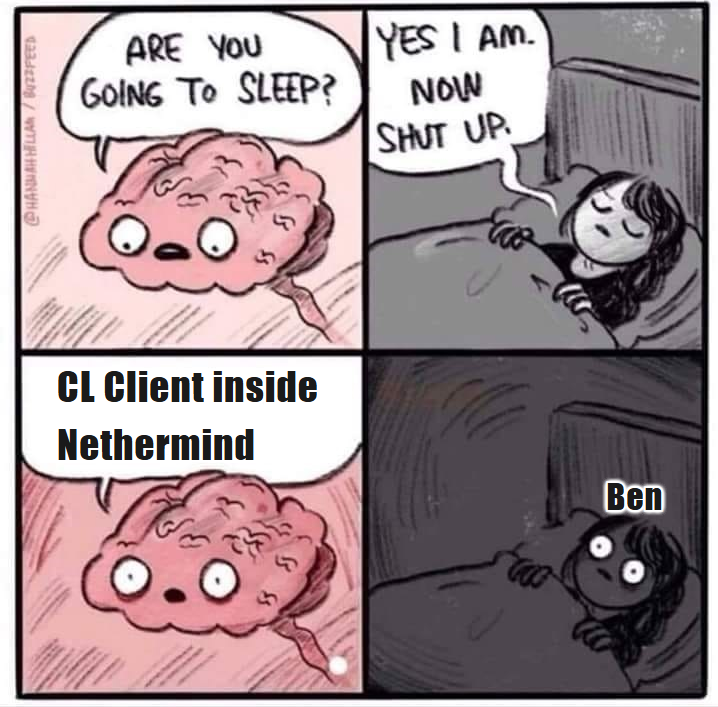
Nethermind continues doing excellent work and making Ethereum more efficient and faster.
firefly.social/post/x/210738…
The more I use AI, and pay attention to the economics of output and different actors, the more I wonder if the end impact will be neutral.
Ex, the IRS will expect more output, and Insurance companies are using AI to counter people using AI to support their claims.

There is unfortunately precedent for this.
Before word processing, document length was bounded by the human capacity to copy long-form text & plateauing.
After word processing, the tax & legal codes grew without check.

1
106