



Pinned Tweet
Miguel Ángel Vidal, Untitled, 1969.
Signed screenprint from the Arte y Cibernética (CAyC) experiments in Buenos Aires, part of Latin America’s early computer art history. The same image was shown in Tate Modern’s Electric Dreams and is held by the V&A.
Go Argentina! 🇦🇷

Ivan 🟥 🟩 ⬛ 🟪 retweeted

Who really made the first oscilloscope art?
Hy Hirsh’s photographs and Norman McLaren’s filmmaking complicate the familiar “Ben Laposky, 1950” origin story.
A new article on Güerita Art examines surviving artworks, contemporary records, and the later accounts that shaped this history. Drawing on museum collections and archival research, it revisits the contributions of Hirsh, McLaren, Bute, Laposky, and Franke.
guerita.art/journal/drawing-…

"una gran cantidad de avejitas" por Luis Fernando Benedit 🐝🐝🐝 Arte y Cibernética, BsAs

Before the term Generative Art became a mainstay, in 1960 in Buenos Aires, Eduardo MacEntyre and Miguel Ángel Vidal declared a movement they called Arte Generativo.
By the end of the decade, the ideas expanded further when Jorge Glusberg founded the Grupo de Arte y Cibernética, along with Luis Fernando Benedit and others, artists working alongside engineers and programmers on machines still confined to laboratories and corporations. Their ideas and experiments soon expanded to Montevideo and Lima, and soon internationally.
Learn about it in this 1970 film released by our friend ISLAA (the Institute for Studies on Latin American Art), which documents some of their experiments:
youtube.com/watch?v=-HknwrSo…
Please watch. It is the most impactful video we have seen about the history of digital art.

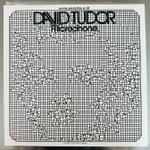
The cover of David Tudor’s LP Microphone (1978) reproduces the early Japanese computer art piece Monroe in the Net (1968) by CTG (Computer Technique Group) although neither CTG nor the work is credited.
Programmed by Haruki Tsuchiya on an IBM 7090 mainframe and drawn with a CalComp 563 pen plotter, Monroe in the Net used random numbers to emboss the grid representing Marilyn Monroe's face.
Formed in Tokyo in 1966, CTG was an interdisciplinary collective of artists, designers and programmers exploring what computers could contribute to visual culture at a time when computer art barely existed.
CTG participated in the landmark 1968 exhibition Cybernetic Serendipity in London, one of the foundational international exhibitions of computer art. Their best-known images from the exhibition include Running Cola Is Africa! and Return to a Square.
The group disbanded in 1969, after only a few intensely productive years.

The 2026 World Cup is over and one of my favorite artists, @osinachiart celebrates it by turning Renaissance saints into football fans. He uses Microsoft Word to create his art, a medium uniquely his own ⚽️🏆

As usual, @raster_art is a great place to discover this and other outstanding digital art pieces
raster.art/token/tezos/KT1QH…

The unveiling of PXL NET by @kimasendorf at @nodefnd felt like a mystical experience which could only happen in person in Palo Alto. Here is what minting one for a fellow collector and friend looked like. Once created, each art piece keeps morphing over time and no two are alike. Yet all of them are part of a much larger PXL NET 3d tapestry of pixels which can only be experienced in person on a huge screen at @nodefnd
Ivan 🟥 🟩 ⬛ 🟪 retweeted

Happy 4th!
Prototype for American Flag (1975) by Aldo Giorgini.
Made for America's Bicentennial. Programmed in Fortran.

Just visited "Chapter VIII: Hallucinations" by Trevor Paglen & artist collective Troika (Eva Rucki, Conny Freyer, Sebastian Noel) at LagoAlgo in CDMX. It explores how AI, machine vision, and tech shape our worldviews. Catch it before it closes next weekend! Plus, @trevorpaglen is co-curating Zero 10 at Art Basel next month. 👇


Troika, Anima Atman (2024). Silicon rocks, thistles, salt, LED lights + custom electro-mechanical system. Thistles appear to move with an uncanny life force in an illuminated barren landscape -- a meditation on plant intelligence and non-human consciousness.


For deeper context, read @AlexEstorick’s excellent @RtClick_Save interview on Troika and the exhibition: “Contemporary Perception is Hybrid.”
It also feels like a great prelude to @ArtBasel’s Zero 10, co-curated next month by @trevorpaglen and @eli_schein
Ivan 🟥 🟩 ⬛ 🟪 retweeted

In 1968, when computers were still seen as cold calculating machines, Jasia Reichardt curated an extraordinary exhibition in London called Cybernetic Serendipity. Artists, engineers, poets and scientists came together to explore the creative possibilities at the intersection of art and technology.The result was something remarkably ahead of its time. If you're curious about the early days of the relationship between computers and art, the catalogue is essential reading. The catalogue from Cybernetic Serendipity is filled with ideas, experiments and reflections that feel surprisingly relevant in our current AI era. You can read the full PDF for free here:
monoskop.org/images/2/25/Rei… Highly recommended! Take your time with it. thanks @monalisa for the tip!

Ivan 🟥 🟩 ⬛ 🟪 retweeted

In his essay Mona Lisa to monogrid on @lerandomart, Peter Bauman @monkantony_tez sets Leonardo’s Mona Lisa and @kimasendorf's monogrid as direct counterpoints, positioning the latter not simply as part of the digital era, but as one of the works that defines its aesthetic and cements pixel as a building block of our time.
So what's pixel sorting? A thread 🧵👇

Visited “Infinite Images: The Art of Algorithms” at @ToledoMuseum of Art. I am a fan of this scene, and I brought my "normie" +1 with fresh eyes. Spoiler: Impressive breadth and depth from 1960s pioneers to crypto-era hits. Thread 🧵 1/10

Plus, why include Spratt in an algorithmic art exhibit? (I enjoy his work BTW). Text mentioned the 1/1 used AI and the masks were generative, but I assumed his work was more hand-crafted. With 24 artists, the curation felt uneven. Some big names overlooked, and others spotlighted. Is this exhibit a digital version of what Charles Saatchi did in trad art? 9/10
In closing, "Infinite Images: The Art of Algorithms" stands as a landmark showcase that bridges the pioneering spirit of 1960s algorithmic pioneers like Vera Molnár and Sol LeWitt with today's digital innovators, celebrating how code and chance unlock endless visual possibilities. If you have seen it, drop your faves below! 🧵 10/10
