





Pinned Tweet
🚀 Big news! Introducing Savannah IT Services!
We are your premier partner for enterprise IT infrastructure, technical support, and hardware supply in Kaduna and beyond. Whether you're upgrading your office setup or need round-the-clock systems support, we've got you covered.

MDee✨ retweeted

Football belongs to the fans! Thank you to all the fans around the world, the Ballon D’Or of All Time is also yours.

Funny thing is the current govt now comprises of former activists too 😂
I believe he can do something different sha #RevolutionNow

You’ve spent over three decades challenging governments and fighting for change. Looking at Nigeria today, do you believe your activism has made a real difference, or do you sometimes feel you’re still fighting the same battles?
Absolutely, my activism has made a difference, and I have no regrets whatsoever. But I have never confused progress with victory. We are still fighting some of the same battles because the political class that has held Nigeria hostage has continued to reproduce itself, changing political parties, slogans, and alliances while preserving the same oppressive system.
When I started activism as a student leader at the University of Lagos, military dictators ruled Nigeria. We confronted them even when doing so could cost us our education, our freedom, or our lives. We fought for democracy, freedom of expression, including the struggle for independent media, accountable leadership, and the dignity of ordinary Nigerians.
Today, Nigerians can openly challenge presidents, organise resistance movements, expose corruption, and confront injustice in ways that were once almost unimaginable. Those freedoms were not donated by benevolent rulers. People fought, suffered, and sometimes died for them.
We founded @sahararepoters to challenge the monopoly of information controlled by powerful interests. We declared #RevolutionNow when many believed Nigerians had lost the capacity to resist. We have helped defend citizens whose rights were violated, including people who had no political connections or financial resources; in some cases, we fought for people who are themselves tools for oppression, like we did with #POLICEPROTEST in 2025.
But the fundamental struggle remains unfinished. We removed military uniforms from government without dismantling the mentality of military dictatorship. We replaced military decrees with constitution that the military imposed upon Nigeria, and which are too often disregarded by those in power.
So, yes, we are still fighting, but we are not standing in the same place. Every generation of resistance builds on the previous one.
The struggle is not evidence of failure. Surrender would have been failure.
You’ve been arrested and detained several times, yet you continue to speak out. Have you ever considered a less confrontational approach, or do you believe confrontation is necessary to bring about change?
What exactly is a less confrontational approach to oppression? Should I politely request that corrupt politicians stop stealing? Should I beg security agencies to respect fundamental human rights?
Should I whisper when Nigerians are being kidnapped, impoverished, tortured, or unlawfully detained?
People often confuse confrontation with violence. I have consistently advocated organized, principled and nonviolent resistance. But nonviolence does not mean silence, submission, or cowardice.
I have been arrested, detained, assaulted, prosecuted, and subjected to restrictions on my movement. My family has paid an enormous price. Yet the question should not be why I continue confronting injustice. The question should be why those responsible for injustice continue operating with impunity.
When we declared #RevolutionNow in 2019, the government responded with repression because it understood that organised citizens could challenge entrenched political power.
I do not wake up looking for confrontation. I wake up determined not to surrender my rights or abandon those whose rights are being violated.
There is nothing radical about demanding electricity, education, healthcare, living wages, and security. What is radical is expecting nearly 250 million people to endure avoidable suffering indefinitely.
I am not confrontational because I enjoy confrontation. I am confrontational because injustice must be confronted.
@SaharaReporters changed the way Nigerians consume political news and hold public officials accountable. But you’re also an activist and politician. How do you separate your political interests from the journalism of the platform you founded?
@SaharaReporters was founded on a simple but revolutionary principle: information belongs to the people, not to those who occupy political offices or control economic power.
Long before I became a presidential candidate, @SaharaReporters was exposing corruption, challenging powerful institutions, and giving ordinary Nigerians a platform to tell stories that conventional media organizations were unwilling or unable to publish.
When I entered partisan politics, I understood the importance of maintaining the editorial independence of the organization.
@SaharaReporters has its own editorial structure, journalists, and professional responsibilities. I do not expect journalists there to become my campaign spokespersons or suppress stories because they may be politically inconvenient.
The standard I have always defended is straightforward, it is that journalism must follow evidence, not political loyalty.
I have been criticised by @SaharaReporters writers and commentators, and the platform has reported stories involving individuals associated with my political activities. That is precisely how independent journalism should function.
There is also a fundamental difference between having political convictions and corrupting journalism. Every journalist is a citizen with rights, opinions, and convictions. The ethical obligation is to ensure that reporting remains independent, verifiable, and accountable.
@SaharaReporters was not established to protect Omoyele Sowore. It was established to challenge the abuse of power, whoever exercises it.
If I ever become president, @SaharaReporters must retain the freedom to investigate and expose my government. Anything less would betray the reason we founded it.
You’ve contested the presidency twice without gaining significant electoral support. What have those experiences taught you, and what will you do differently in 2027?
First, I reject the suggestion that the value of a political movement can be measured exclusively by the number of votes officially recorded in an electoral system whose credibility has repeatedly been questioned.
That does not mean I dismiss electoral results. It means we must understand the conditions under which elections take place: vote buying, intimidation, unequal access to resources, institutional weaknesses, and the entrenched advantages enjoyed by established political parties that steal public funds to do unethical electioneering and rig electoral outcomes.
In 2019, we introduced a revolutionary political alternative that challenged the traditional political establishment. In 2023, we continued building that movement under extremely difficult circumstances.
Those experiences taught us important lessons about organization, grassroots structures, political education, election-day mobilization, voter protection, and the necessity of building a movement that exists beyond election seasons.
For 2027, we are strengthening our party structures, expanding community engagement, developing more effective digital organizing systems, and building stronger relationships with workers, students, farmers, traders, professionals, and Nigerians in the diaspora.
We are also making our policy proposals more accessible so Nigerians can understand exactly what a revolutionary government would mean for their daily lives; that’s why we are the only candidate with an app, #SOWORENOW, downloadable from the Android and Apple app stores.
But one thing will not change: we will not abandon our principles to become acceptable to the same establishment we are challenging.
I did not enter politics to become another familiar face in a failed political arrangement. I entered politics to change that arrangement fundamentally.
Beyond protests and social media, how do you intend to reach everyday Nigerians and convince them to vote for you? What is your campaign strategy this time?
One of the biggest misconceptions about our movement is that it exists only on social media. That is simply untrue.
We have been organizing in communities, universities, workplaces, markets, villages and cities across Nigeria for decades. Many of the people who participate in our struggles are not even active on social media. In 2024, our movement, led by TakeITBack, shook this country with the #ENDBADGOVERNANCE protest.
For 2027, our approach combines direct grassroots engagement with modern technology and sustained political education.
We are organizing town hall meetings, community conversations, market visits, workplace engagements, student outreach, neighborhood mobilization, and direct engagement with Nigerians excluded from conventional political discussions.
We are strengthening the African Action Congress (AAC) structures and encouraging our supporters to coordinate their activities rather than operate as isolated individuals or spend endless hours discussing politics without translating those conversations into real organization.
We are also deploying digital tools, including the SoworeNow platform, to improve communication, volunteer coordination, and public participation.
Of course, our campaign will not be built around distributing bags of rice or purchasing political loyalty. It will be built around discussing people’s actual problems and presenting clear, practical alternatives.
When I visit a fishing community in the Niger Delta, I want to discuss waterways, livelihoods, environmental justice and transportation. When I meet teachers, we discuss salaries, classrooms and qualitative education. When I meet young people, we discuss employment, technology, and opportunities.
Our strategy is to take politics away from the exclusive control of political contractors and return it to ordinary Nigerians.
Running for president in Nigeria requires a lot of money. How are you funding your campaign, who are your financial backers, and how do you intend to compete with the resources available to the major political parties?
Our campaign is funded through contributions from supporters, volunteers and ordinary Nigerians who believe in the political alternative we are presenting.
We are not funded by political godfathers who expect oil blocks, government contracts, ministerial appointments or access to the national treasury in exchange for campaign financing.
We have demonstrated that people are willing to contribute when they believe in a cause. During a recent fundraising challenge, we set a target of ₦1 million in 48 hours and received approximately ₦5.5 million in less than 24 hours.
That is the kind of citizen-powered political financing we want to institutionalize.
I also reject the notion that Nigerian elections must necessarily be competitions between billionaires spending questionable fortunes.
Why should someone seeking public office require extraordinary personal wealth? Why should access to political leadership depend on the capacity to distribute money rather than the quality of ideas, integrity and public service?
We intend to use our resources efficiently, disclose campaign financing in accordance with applicable laws, and prioritize grassroots organizing, volunteer networks, and direct engagement.
Money can purchase billboards, advertisements and political operatives. It cannot legitimately purchase the conscience of an entire nation.
We are not looking for investors who want to buy Nigeria through our campaign. We are building a movement of citizens who want to reclaim their country.
Many Nigerians know what you’re fighting against, but perhaps fewer know what you would do differently. If elected president, what would be your first three priorities?
I have never been interested in merely criticising government. We have developed concrete proposals for transforming Nigeria, and our priorities are clear.
First, economic justice and the restoration of living standards.
We will pursue a ₦500,000 monthly minimum wage as part of a broader living-wage policy, confront the outrageous cost of governance, eliminate wasteful privileges, and redirect public resources toward productive sectors.
We will pursue the restoration of fuel subsidies within a transparent, accountable framework while developing affordable mass transportation, expanding domestic refining capacity, and addressing the structural problems in the energy sector.
We will also begin an ambitious public housing program, including our proposal for one million mixed-income homes, and initiate tenancy reforms to protect Nigerians from exploitative rent demands.
Second, we will provide free, quality education and accessible healthcare.
Education will be free, qualitative, accessible and compulsory from primary school through public university. We will invest in teachers, learning infrastructure, instructional materials, virtual learning (e-learning), school meals, and the safety of students.
Healthcare will be treated as a fundamental public responsibility rather than a privilege reserved for those who can afford private hospitals or overseas treatment.
We will invest in primary healthcare, medical professionals, public hospitals, and the systems needed to deliver effective services across the country.
Third, security, justice and the complete restructuring of public accountability.
We will confront insecurity with intelligence-led policing, modern technology, better-equipped security institutions and improved welfare for security personnel.
We will end the routine weaponization of security agencies against critics and peaceful protesters.
We will pursue corruption cases through due process, strengthen institutional transparency and deploy modern technologies to make government expenditure traceable and publicly accountable.
We will also begin reforms to restore confidence in the judiciary and guarantee that the law applies equally to ordinary citizens and political officeholders.
These priorities are interconnected. You cannot achieve meaningful security while millions are trapped in desperation. You cannot create prosperity without education. You cannot build public trust when corruption is rewarded.
Our objective is not simply to change the occupants of government offices. It is to change what government does, whom it serves, and how it is held accountable.
You’ve spent years criticizing how Nigeria is governed. But there’s a difference between demanding change and being responsible for delivering it. Why should Nigerians trust you to lead the country?
Leadership is not the ability to occupy an office, ride in a convoy, distribute patronage or deliver speeches written by advisers. Leadership is the capacity to identify problems, mobilize people, make difficult decisions and accept responsibility for the consequences.
For more than three decades, I have organized people, built institutions, challenged powerful interests and remained consistent in my commitments.
I established @SaharaReporters as an independent media platform that challenged powerful political and economic interests. I have participated in building political movements, organizing citizens and defending people whose rights were violated.
These are not theoretical experiences. They involve organizational discipline, difficult decisions, financial pressures, strategic planning, and accountability.
I also understand that running a country is different from leading a protest. Government requires competent institutions, capable professionals, clear priorities, disciplined implementation, and measurable outcomes.
I do not intend to govern Nigeria as a one-man spectacle. I intend to assemble capable Nigerians, empower institutions and establish clear standards of public accountability.
The difference between my approach and the conventional political culture is that I do not believe public office confers personal ownership of the state.
Nigerians should not trust me blindly. They should examine my record, interrogate my proposals, demand transparency and hold me accountable to measurable commitments.
I am not asking Nigerians to replace one unquestionable ruler with another. I am proposing a government that citizens have the power to question, challenge and hold accountable.
You’ve been involved in activism for most of your adult life. How has that affected your family and personal relationships, and have you ever wondered what your life might have been like if you’d chosen a different path?
The greatest personal cost of activism is not imprisonment. It is the time you lose with the people you love.
I have spent years separated from my family because of political persecution, detention, court proceedings, and restrictions on my movement.
There were birthdays, anniversaries, school events, and ordinary family moments I could not attend. Those moments cannot simply be recovered.
Recently, I was able to spend time with my wife and children in the United States after a prolonged separation. My son turned 17, and we marked our 22nd wedding anniversary. Experiences like those remind you that behind every public struggle there are private sacrifices that people rarely see.
My family did not volunteer to experience every consequence of my political convictions, yet they have carried those burdens with extraordinary resilience.
Of course, I sometimes imagine what life might have been like if I had chosen a quieter path. I could have concentrated on journalism, business, family, and personal comfort.
But I also ask myself what would have happened if everyone who recognized injustice decided that personal comfort was more important than confronting it.
I cannot pretend the sacrifices have been easy. They have not.
My family deserves more of my time, and I remain conscious of that responsibility.
But I would rather explain to my children why I stood against injustice than explain why I remained silent when I had the opportunity to resist it.
People often describe you as fearless, outspoken and controversial. Do you think that public image reflects who you really are, or is there a side of you Nigerians rarely get to see?
I find the description of fearlessness interesting because courage is not necessarily the absence of fear. Courage is understanding the consequences of your actions and refusing to abandon what is right because those consequences are uncomfortable.
I am outspoken because I believe Nigerians have suffered enough from politicians who speak in coded language, avoid difficult questions and say whatever is convenient.
As for being controversial, I have discovered that in Nigeria, standing firm and refusing to genuflect to powerful people is often enough to earn that description.
But there is much more to me than the image people see during protests, interviews, or confrontations with security agencies.
I enjoy humour. I laugh a lot. I value friendships. I love my family. I enjoy meeting ordinary people and listening to their experiences.
I am also deeply interested in technology, innovation, journalism, history, sports and the possibilities of human creativity.
People who know me personally understand that I am not permanently angry. In fact, I enjoy life enormously.
I can be uncompromising about principles without being incapable of affection, friendship or laughter.
The public sees me confronting power. Those close to me also see someone who loves people, enjoys life and believes that a better world is possible.
Away from politics, protests and public debates, what does a normal day in your life look like? How do you relax, and what are the little things that make you happy?
I enjoy running. It has become an important part of my daily routine and a source of personal discipline.
I participate in road races and long-distance runs whenever possible. Recently, I completed the Abeokuta 10-kilometer Road Race, and I have participated in races in Enugu, Abuja, and the United States.
Running gives me an opportunity to think, clear my mind, and maintain the physical and mental stamina required for the work I do.
I also enjoy reading, following technological developments, watching interesting documentaries, engaging in conversations, and spending time talking to people and listening.
I love visiting communities, particularly the riverine areas where I grew up. Returning to Kiribo and interacting with people who knew me long before politics is always a special experience.
I enjoy the waterways, the natural environment and the simplicity of community life. And splashing down in water whenever possible, I am an avid swimmer.
Some of my happiest moments are ordinary ones. I also enjoy meeting creative people who are creating things, developing new ideas and refusing to surrender to the limitations imposed on them.
People sometimes imagine that activism is an existence without joy. That is not true.
I fight for a better Nigeria precisely because I believe people deserve to enjoy life, pursue happiness and realize their potential without constantly struggling merely to survive.
You’ve spent much of your life fighting for the Nigeria you believe in. If you never become president, what would make you feel that all those years of activism were worthwhile?
I did not begin fighting for Nigeria because I wanted to become president. I began fighting because I could not accept injustice, dictatorship, corruption, and the deliberate destruction of human potential.
I was confronting military dictators long before the idea of contesting a presidential election became part of my political journey.
The presidency is not the ultimate purpose of my struggle. It is an instrument through which I believe we can accelerate the transformation Nigeria desperately needs.
Of course, I want to become president, and I am working seriously toward that objective. I am not participating in elections merely to make a statement or decorate the ballot paper.
But my life cannot be reduced to whether I eventually occupy Aso Rock.
If Nigeria becomes a country where a child born in Kiribo, Maiduguri, Sokoto, Makurdi, or any other community has the same opportunity to succeed as the child of a president, that would be a victory.
If workers can live decently on their wages, if public education works, if hospitals save lives, if young people can find meaningful employment and if citizens can criticise government without fearing arrest, those would be victories worth fighting for.
If future generations no longer have to organize protests simply to demand the basic necessities of civilized existence, then we will have achieved something historic.
And if the movements we have built inspire another generation of Nigerians to challenge injustice and defend their rights, our sacrifices will never have been wasted.
I have never believed that one individual must personally enjoy the fruits of every struggle he participates in.
Some people plant trees under whose shade they may never sit.
But I am not finished planting, organizing or fighting. I intend to see the transformation we have struggled for become a reality.
I want to become president because I want to change Nigeria. But I did not start fighting to become president, and I will not stop fighting because of an election result.
My ultimate ambition is not to be remembered as a president. It is to help build a Nigeria where no citizen needs extraordinary courage simply to live with dignity, freedom, and justice.
INTERVIEW Omoyele Sowore: Protest as Platform
Konye Chelsea Nwabogor ON @THISDAYLIVE STYLE


MDee✨ retweeted
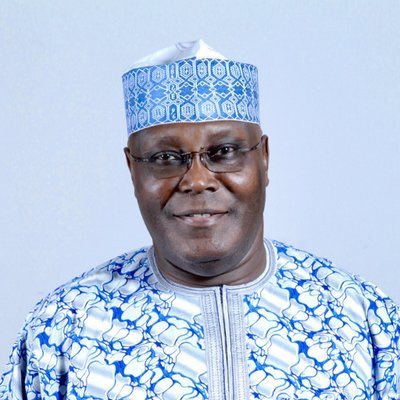
ATIKU WAS RIGHT: TINUBU’S $20BN LOAN REQUEST VALIDATES HIS WARNING — NOW EXPLAIN THE COASTAL HIGHWAY LINK
Former Vice President and African Democratic Congress presidential candidate, Atiku Abubakar, has said President Bola Tinubu’s request for approval to borrow $20.52 billion and €1.045 billion vindicates the warning he gave Nigerians on October 12 about a loan plan of up to $20 billion.
Atiku said the President’s failure to identify the specific projects to be funded deepens serious concerns that the Lagos–Calabar Coastal (now inland) Highway, could be used to channel borrowed public money to Tinubu’s political campaigners and favoured contractors.
In a statement issued by Phrank Shaibu, Director of Strategic Communication of the ADC Presidential Campaign Council, Atiku said:
“On October 12, I warned Nigerians that President Tinubu was reportedly preparing to borrow up to $20 billion in connection with the Lagos–Calabar Coastal Highway. I demanded that he confirm or deny the plan and publish the accounts. He did neither. Today, he has asked the Senate to approve $20.52 billion and €1.045 billion in external loans. My warning has been vindicated.
“The President has listed broad sectors but has not provided Nigerians with a project by project account of what this enormous borrowing will fund. There are no clear project details, costs, locations or contractors for the public to scrutinise.
“That silence is especially troubling when the Coastal Highway has been rerouted inland. Nigerians have every right to ask whether the highway is being turned into a pipeline for borrowed money to reach Tinubu’s campaigners and favoured contractors. How can any President, barely 12 weeks before an election, ask lawmakers to saddle Nigerians with more than $20 billion and €1 billion in debt without identifying the projects and their costs? Is this a development plan for Nigerians or a campaign financing scheme dressed up as infrastructure? Tinubu must answer.”
“The National Assembly must not approve a single dollar until the President publishes every project, contract, cost, contractor, loan term and repayment obligation. No public money should be borrowed in the dark. No lawmaker should sign a blank cheque against Nigeria’s future.
“I warned Nigerians before this request reached the Senate. Now the burden is on Tinubu to prove that this borrowing will serve the country, not his political interests.”
Atiku called on lawmakers to make the proposal and its supporting documents public and subject them to rigorous scrutiny before any decision.
Signed:
Phrank Shaibu
Director, Strategic Communication,
ADC PRESIDENTIAL CAMPAIGN COUNCIL.
27th October,2026.

Arabian Maradona 😂

Gov Uba Sani: I have no problem with El-Rufai; I have never spoken against him
Watch full interview: youtu.be/avpqFvbkK4g
#trusttvnews #Kaduna #APCRally #2027Politics #Tinubu #2027Elections
MDee✨ retweeted

Medical Crisis: El-Rufai Facing Life-Threatening Drug-Resistant Infection in Custody
By Writers: Sufi & Ibrahim Modibbo Sanusi
Date: October 27, 2026
BREAKING: Mallam Nasir El-Rufai’s blood sample tested positive for Enterococcus faecium, a high-risk bacterium capable of causing severe systemic infections. The official laboratory report, dated October 16, reveals a deeply alarming development: the strain is resistant to vancomycin, raising critical concerns about an escalating bloodstream infection requiring immediate intervention.
On October 22, El-Rufai’s attending physician issued a stern warning and recommended urgent hospital admission, comprehensive specialized treatment, and consultation with infectious disease experts. The doctor emphasized that standard oral antibiotics or routine prison care cannot combat a vancomycin-resistant pathogen. Even medical personnel affiliated with his custodians concur with these diagnostic findings.
Yet, those holding him appear far more concerned about keeping him behind bars than ensuring appropriate medical care. When urgent medical recommendations are not prioritized, questions about deliberate neglect become unavoidable, because even convicted bandits are taken to the hospital when the need arises.
Recent images of Mallam Nasir El-Rufai reveal a visibly deteriorating physical condition. Though he remains resolute and displays courage, the physical toll is starkly evident. Denying a citizen access to their trusted personal doctors and stalling necessary hospitalization is a dangerous compromise of human life.
We explicitly call the attention of the federal authorities, security agencies, and custodian officials: if anything untoward happens to Mallam, the Arewa Youth will hold every officer, administrator, and political architect involved personally and collectively responsible. The life of a public figure who served his region and nation cannot be treated with political nonchalance.
We demand his immediate, unconditional, or urgent bail release so he can be transferred to an appropriately equipped tertiary health institution to receive life-saving care before his condition becomes irreversible.
It has become painfully obvious to political observers that the ongoing detention of Mallam Nasir El-Rufai is purely political. In a system where individuals facing charges involving sums and allegations a hundred times more serious backed by stronger evidence enjoy relative freedom and reside in their private homes, El-Rufai is subjected to rigorous, punitive detention. This double standard underscores a calculated campaign of political target-selection.
Reports indicate an attempt by President Bola Ahmed Tinubu (PBAT) and the current administration to silence prominent northern leaders and dismantle the political influence of Arewa leadership ahead of future elections. There appears to be a flawed strategic assumption within the governing hierarchy that locking up key figures like Mallam Nasir El-Rufai will weaken regional opposition and secure control over the North, particularly the Northwest.
However, this political calculation is fundamentally flawed. The people of Kaduna State and the broader Northwest remember the governance track record, infrastructural development, and administrative courage of Mallam Nasir El-Rufai. They remain deeply in love with him. Arbitrary detentions alienate the electorate, and the people of Kaduna and Arewa will deliver a decisive political shock to PBAT at the presidential polls.


Something that was not properly implemented simply means nothing was done.
Work done = 0

MDee✨ retweeted

Major General Muhammed Inuwa, Commandant of the Nigerian Army School of Infantry (NASI), became the first serving Major General in the Nigerian Army to complete a historic 1,300-foot parachute jump from a moving C-130 Hercules aircraft on October 21, 2026
@HQNigerianArmy
MDee✨ retweeted

Sakon Mallam Guruntum
"Kar Bayan Zabe Azo ana Abu Kaza, kuce su Mallam Sunyi Shiru"
Dear Yan PR...
MDee✨ retweeted
YOU ARE DELUSIONAL — ATIKU REPLIES TINUBU
Former Vice President and ADC presidential candidate Atiku Abubakar has described President Bola Tinubu’s claim that the opposition created hunger and poverty as a delusional, shameless attempt to dodge responsibility for the misery his own government has inflicted on Nigerians.
Atiku said a President cannot light the fire of hardship with his own policies, then blame the neighbours for the smoke.
In a statement issued by Phrank Shaibu, Director of Strategic Communication of the ADC Presidential Campaign Council, Atiku said:
“Mr President, blaming the opposition for hunger is either delusion or a staggering case of political amnesia. The APC governed Nigeria for eight years before you took office. You have added another three and a half years. Nigerians know who has been in power, and hardship did not begin when the opposition started talking about it. Stop insulting their intelligence and answer for your record.
“The hardship your administration has brought upon Nigerians is real. You cannot deny it by blaming others.
“Your decision to commission the unfinished Abuja to Kaduna Expressway from inside a stadium shows how far removed you are from the daily reality of Nigerians. A road cannot be completed with a speech or a ribbon cutting ceremony.
“Which administration removed the petrol subsidy and watched the naira fall from about ₦471 to ₦1,329 to the dollar?
“Which administration has presided over a rise in poverty that led the World Bank to estimate that 63 per cent of Nigerians will be below the national poverty line in 2026? Which administration extended the 2024 budget into 2025 while also operating a separate 2025 budget?
“Which administration recorded ₦7.13 trillion under ‘energy security’ in 2024 and faces questions over ₦11.2 trillion in NNPC pipeline related spending? Nigerians deserve to know who received these sums and what was delivered.
“Which administration must explain the $12.4 billion gap flagged in Nigeria’s external accounts for the first half of 2026? Which administration paid $22.5 million in ‘other charges’ on the Abu Dhabi financing facility?
“Which administration is responsible for the killings, kidnappings and displacement that continue to terrorise communities? These are the questions Nigerians are asking while your government blames the opposition.
“You cannot govern for three years, make life harder, and then blame others for describing the hardship. You asked who created the hunger. Nigerians are asking what you have done to end it.
“The people will judge your government by the lives they are living, not by the excuses you offer at campaign rallies.
“The 2027 presidential election will be a referendum on your record. Nigerians have felt the cost of your leadership in their homes, markets and communities. Their verdict is already clear: they have rejected your administration.”
Signed:
Phrank Shaibu
Director of Strategic Communication
ADC Presidential Campaign Council
24 October 2026


MDee✨ retweeted

BREAKING: CAME FOR TINUBU’S FLAG-OFF, ENDED UP WITH NO PLACE TO SLEEP
Stranded at Signboard Junction! May Allah send rain just before dawn #TMG


MDee✨ retweeted
TINUBU AND @inecnigeria CANNOT HIDE 103 MILLION NAMES AND EXPECT NIGERIANS TO TRUST THE 2027 ELECTION — ATIKU
Former Vice President Atiku Abubakar has demanded the immediate publication of the preliminary voters’ register, warning that its absence from INEC’s online display during the announced October 9 to 15 scrutiny period raises grave questions about the integrity of the 2027 election.
In a statement issued by Phrank Shaibu, Director of Strategic Communication of the ADC Presidential Campaign Council, Atiku said:
“INEC has announced more than 103 million registered voters. Nigerians went to its portal to inspect the names and found an empty page. That is an outrage. A figure cannot answer an objection. A press announcement cannot tell a voter whether her name has been omitted. Show Nigerians the register.
“I cannot recall a more brazen invitation to distrust the voter register. INEC announced a seven-day exercise and then failed to make the register available on the portal provided for public scrutiny. Section 19(1) of the Electoral Act 2026 requires display at registration areas and online. INEC does not get to treat that requirement as optional.
“Worse still, INEC’s chairman reportedly said on October 5 that the public display had already been completed. Nigerians were subsequently told it would take place from October 9 to 15. Which statement is true? Where was the register published? For seven full days, or for no days at all? INEC must produce the dates, the links and the records of access.
“Section 63(2) of the Electoral Act 2026 permits a returning officer to count a ballot paper without INEC’s official mark if satisfied that it came from a book supplied to the polling unit. What evidence will establish that origin? Who will verify it, and how will parties challenge a false claim? Nigerians cannot be denied access to the voters’ register before election day and then be asked to accept unmarked ballot papers after voting. INEC must set out enforceable safeguards against counterfeit ballots, and the National Assembly must close any loophole that leaves the authenticity of a vote to an officer’s unsupported assurance.”
To date, INEC has yet to respond to inquiries about the identity of the companies awarded contracts to print sensitive election materials.
The ADC and its presidential candidate, Atiku Abubakar, are stakeholders in the upcoming presidential election and thus have the right to demand transparency from the electoral umpire about the protocols that will guide the election’s credibility.
“Let me address Bola Tinubu directly: Nigerians are struggling to put food on the table, and too many are afraid for their lives and livelihoods. You will not add an unseen voters’ register to their suffering and call it a route to another four years in office.
“You must face the people whose lives have become more expensive and less secure under your watch. You cannot hide their names from scrutiny and then ask them to trust the election conducted with that list. Nigerians have the right to inspect the register, challenge false entries and correct omissions. If that right is denied, we will challenge it in the open and through every lawful means available.

MDee✨ retweeted
THE APC ONLY FOUND A RHYME IN BOLA AND EBOLA
.@officialABAT through Dele Alake and the @OfficialAPCNg have made a remarkable discovery: “Bola” sounds like “Ebola.” We had not noticed. They found the rhyme, wrote a lengthy press statement about it and somehow still could not tell Nigerians where the ₦10 billion ordered released for Ebola preparedness is. If only they searched the accounts with the same enthusiasm they brought to the dictionary.
These aren’t just rhyming words; the effect of Bola’s policies is as deadly as the dreaded Ebola.
Ebola destroys lives through disease. Bola’s policies have made food and medical care unaffordable and buried businesses that Nigerians spent years building. Yet the APC wants a debate about how two words sound.@atiku asked for the money trail and an account of the emergency response. The party in power came back with a pronunciation lesson. What an extraordinary way to tell a frightened country it has no answers.
On 9 June, the Presidency announced that President Tinubu had ordered the immediate release of ₦10 billion for Ebola emergency preparedness. Now, with a case confirmed in Abuja, the APC says the money remains “untouched”. It presents that claim as a defence. It is an indictment of the Bola administration.
Was the money released or was it not? If it was released, where is it held, who controls it, and why has it not been used for the preparedness President Tinubu announced? If it was never released, why was an order for its immediate release announced in June? Publish the release documents, the account records and the Task Force’s expenditure reports. Insulting Atiku Abubakar will not account for one naira.
The APC says an infected person cannot transmit Ebola before symptoms appear. That is true. It does not answer what happened after symptoms appeared. According to the World Health Organization’s account, the patient developed symptoms on 7th October, sought care at a private facility on 11th October, and received laboratory confirmation on 20th October. When was Ebola first suspected? When were public health authorities alerted? When was testing ordered? When did contact tracing begin?
The APC claims surveillance “tipped off” the government. Then publish the timeline. Name the agency that raised the alert, give the date and explain the action taken. 44 identified contacts are people whose health must be protected. They are not a trophy for an APC press release.
Health workers treating the patient and tracing contacts deserve protection, equipment and every resource needed to act quickly. Questioning the government’s preparedness is no insult to them. Demanding applause for President Tinubu while refusing to explain an untouched emergency fund is an insult to Nigerians.
The APC also objects to our warning that a health emergency must never be used to interfere with campaigning or voting. President Tinubu’s government can address that concern directly: publish any proposed restrictions, their medical justification and the advice of the health authorities. Public health guidance must protect people. It must never become a political tool.
President Tinubu ordered ₦10 billion released in June. His party now says it is untouched. That contradiction came from the Presidency and the APC. They should resolve it with records.
Show Nigerians where the money is. Explain the response timeline. Protect health workers. Trace every contact. President Tinubu and the APC owe the country answers not ‘Bola-Ebola’ tales.
Signed:
Phrank Shaibu
Director of Strategic Communication,
ADC Presidential Campaign Council.
23rd October 2026
